V2G Guide: Is Selling Electricity Back to the Grid Worth It?
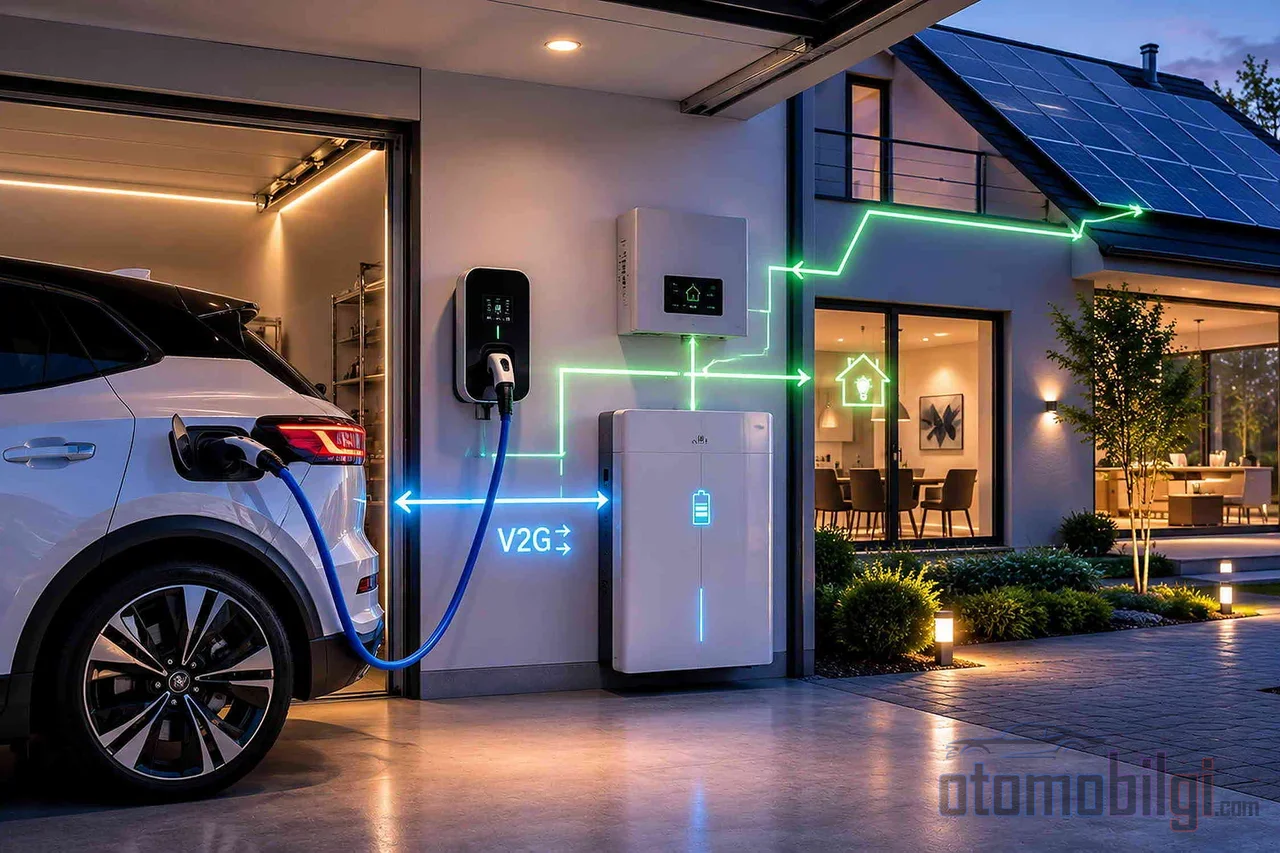
Your electric car's battery sits in the wallbox it is connected to for most of the day. What if the same battery sold energy back to the grid during the evening hours when electricity prices are highest, and recharged at the cheap overnight rate? That is exactly the promise of V2G, or vehicle-to-grid technology. However, there is a significant distance between the promise and an implementable reality as of 2026: from the vehicle's hardware to the charger, from certification to the agreement to be made with the energy supplier, every link in the chain sets its own condition for this technology.
In this article, we take a step-by-step look, with engineering logic, at how V2G works, how it differs from V2L and V2H, which vehicles can genuinely do this today, and the economic reality of selling energy to the grid.
What Is the Difference Between V2G, V2L and V2H?
The concept of bidirectional charging is often confused with V2G. Yet the two are not the same thing: bidirectional charging describes the general capability that allows energy to flow in both directions; V2G means that this energy is fed back into the grid specifically, that is, exported from vehicle to grid. The same bidirectional principle underpins three different usage scenarios:
- V2L (vehicle-to-load): The vehicle supplies power directly to a device plugged into an outlet. No household wiring or special charger is required; this is the most common bidirectional feature in practice.
- V2H (vehicle-to-home): Energy is directed to the home; the vehicle can partially or fully cover the home's consumption. It relies on the same physical principle as V2L but requires a connection to the household installation and additional hardware.
- V2G (vehicle-to-grid): Energy is exported to the grid. Since it requires synchronization with the grid's frequency and voltage, metering, and regulatory approval, it is the option with the highest technical and administrative burden.
This distinction has a practical consequence: the fact that an electric car can do V2L does not mean it can sell energy to the grid. V2G is the last and most demanding link in the chain.
Key Highlights
- Globally in 2026, more than 75 EV models offer V2G and V2H support; in 2022 that number was 15.
- The EU AFIR regulation makes bidirectional communication mandatory at all charging stations from January 2027 onwards.
- Most of today's V2G-compatible systems are based on the CHAdeMO standard; on the CCS side, work is ongoing via ISO 15118.
- Germany has removed the double grid fee for bidirectional charging.
- Vehicles are parked for about 95% of the time - this is where the idle capacity that V2G technically makes possible lies.
How Does V2G Work? The Logic of the Bidirectional Inverter
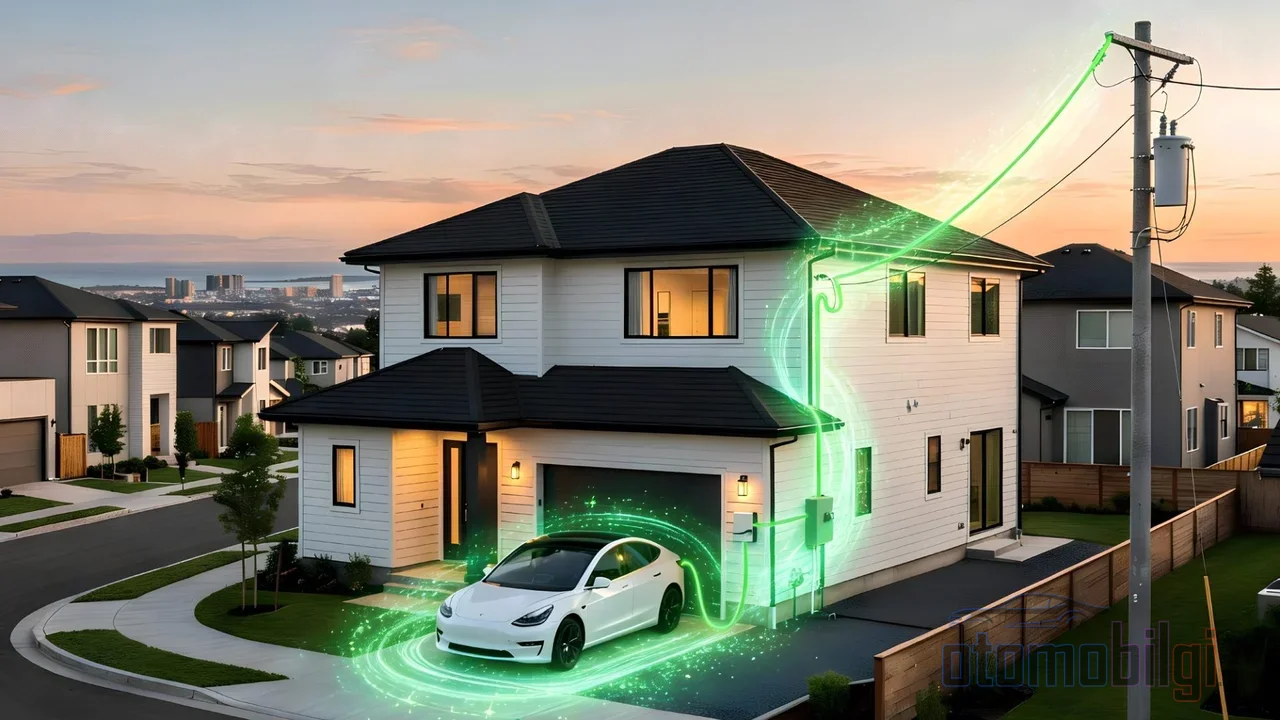
Normal charging converts the grid's alternating current (AC) into the direct current (DC) required by the battery. V2G reverses this process: the DC energy in the battery is converted back into grid-compliant AC and returned. The charger that does this effectively acts as an inverter and takes on two critical tasks. The first is ensuring that the energy it produces is synchronized with the grid in terms of frequency and voltage. Second, there is the islanding function, which in the event of an outage isolates the building from the grid, protecting the electricians working on it as well as maintenance crews.
For the system to materialize, four stakeholders must come together in the same chain: the user, the e-mobility service provider (EMSP), the charge point operator (CPO), and the aggregator, which will carry the vehicle's energy to the energy markets. V2G is therefore not merely a vehicle feature, but an ecosystem matter.
AC or DC? The Role of Standards
To do V2G over AC charging, the vehicle must have a special bidirectional onboard charger; most vehicles on the market today lack this hardware. For this reason, most V2G-compatible chargers on the market are DC-based and rely on the CHAdeMO standard. On the CCS side, which is widespread in Europe, bidirectional capabilities are being developed via the ISO 15118 protocol; AC wallboxes are also making progress in this area. The difference in standards is one of the fundamental technical reasons explaining why some models have been able to do V2G for years while others cannot yet.
What Is Required for V2G: Vehicle, Device, Certification and Agreement
If we were to list, item by item, the conditions that must be met to sell energy from your electric vehicle to the grid:
- Compatible vehicle: An EV that can deliver energy from its battery to the grid and supports bidirectional charging at the hardware level.
- Charger with a bidirectional inverter: A unit compliant with the relevant standards, with synchronization and islanding capability.
- Smart metering: Energy delivered and received must be measured separately and verifiably.
- Certification: Approval of the device and vehicle combination for grid connection. The EU's new grid code draft (RfG 2.0) moves certification from a product basis to a product pair, that is, mutual verification between two manufacturers.
- Agreement with the energy supplier and a V2G tariff: A contract under which the energy sold will be priced. When this article was being prepared, there was only a single V2G tariff on the market in the United Kingdom.
What keeps this list so strict is safety and accounting: any generation source connected to the grid, if it disrupts the frequency, affects the entire distribution network. That is why the regulatory burden is many times heavier alongside V2L.
Which Vehicles Can Do V2G?
Market data is presented with different methodologies depending on the source: one count reports that as of 2026 more than 75 models offer V2G and V2H support, while another, more conservative count lists only 2 models with official V2G/V2H capability against 54 models offering V2L. The difference in between stems from whether V2L is also counted and the degree of officialness of the manufacturer's claims. In short: the models that can actually deliver energy to the grid are far fewer than the models that merely appear to be bidirectional-capable.
The reference point of V2G is still the Nissan Leaf. Through its CHAdeMO socket, this model has for years been the de facto standard for bidirectional charging and it maintains that position. On the manufacturer side, besides Nissan, Mercedes-Benz and Honda are counted among V2G-compatible vehicles; some models from brands like Renault, Volkswagen and Volvo also appear on these lists. On the V2H side, the Ford F-150 Lightning is considered the reference model with its 9.6 kW feed power.
In Which Countries Does V2G Work? The Map of Regulations
The feasibility of the technology largely depends on regulations. In the European Union, the picture is rapidly taking shape:
- The EU AFIR regulation mandates bidirectional communication at all private and public charging stations as of January 2027; in addition, bidirectional capability is planned to be made mandatory in new public devices by 2026.
- Directive 2019/944 encourages consumer-focused markets and aggregation; Regulation 2019/943 requires non-discriminatory tariffs for storage; Directive 2023/2413 defines bidirectionality as a flexibility tool.
- Germany removed the most tangible economic barrier to bidirectional charging: it ended the double grid fee practice.
- In Spain, a regulatory amendment being prepared defines electric vehicles as distributed storage, making it possible for users to give energy to their home or the grid without financial penalties.
V2G programs have been launched in the EU and the United Kingdom, and vehicle owners can participate in energy and grid services markets; however, most projects are still in the pilot stage. In the US, FERC Order 2222 paves the way for distributed energy resources, and therefore EV batteries, to participate in grid markets; but implementation is uneven across states. In Australia, bidirectional charging has become legal and installable. California and New York are also preparing similar regulations.
How Much Can You Earn with V2G? The Economic Reality
The earning mechanism is simple: buy when low, sell when high. Charging the battery when electricity price and demand are low, and selling it back to the grid during peak hours. Since vehicles are parked about 95% of their time and the average daily trip is short, there is theoretically surplus energy available to sell. V2G can also suppress prices during peak hours by reducing dependence on gas-fired peaker plants; it can lower the total cost of ownership for fleet operators.
However, it is not possible today to give a net annual earnings figure worth writing on the fridge; this stems from the fact that widespread, verified user data does not yet exist worldwide. Market forecasts also reflect this uncertainty: while one report measures the global V2G market at 18.10 million dollars in 2026 and 93.77 million dollars in 2034 (22.80% annual growth), another speaks of a market of approximately 2.3 billion dollars in 2026, reaching 5.8 billion dollars by 2036 (9.7% annual growth). The gap between the figures stems from different market definitions: whether it is measured by hardware sales or by service revenue completely changes the conclusion.
The point that really deserves attention is the cost side: V2G support makes both the vehicle and the charger more expensive, and this extra cost can exceed the savings achieved or extend the payback period to an unacceptable length. There are also alternatives that deliver similar savings without the systematic regulatory burden: high-power charging on a night tariff and a stationary home battery storage system. In the scenario examined in the German study, the impact of V2G use on the battery remained small, but it provided no economic benefit.
Battery Warranty and Degradation: Does V2G Wear Out the Battery?
The most frequently voiced concern about V2G is that the battery both drawing and supplying energy will accelerate degradation, which in turn will reduce range and resale value. Yet the picture painted by studies on the subject is more reassuring than expected:
- The German study by RWTH Aachen and Mobility House, dated August 2025, found the impact of V2G on the battery to be small; in the scenario examined, the battery aged by roughly 18% over 10 years.
- The TU Delft study shows that when degradation is explicitly optimized, the additional deterioration remains limited to only 0.9% per year.
- A 2020 academic study revealed that using V2G for frequency regulation at moderate currents (C/5 - C/3) resulted in acceptable levels of degradation.
- An earlier finding from the University of Warwick suggests that V2G use does not necessarily degrade the battery, and that keeping the battery at its optimal charge level could even extend its life; this result should be treated with caution, as it is based on an older study.
In summary, current research indicates that the impact of V2G, when combined with smart charging, is very limited, and may be similar to or even slightly lower than conventional charging. Still, there is a critical gap: as of this writing, there is no clear statement from manufacturers on how they adjust warranty terms for V2G use. The warranty issue is a heading for which written confirmation must absolutely be obtained from the seller when making a V2G decision.
Conclusion: Can You Sell Your Electric Car's Power to the Grid?
The short and honest answer is this: yes, it is technically possible; but only if the right vehicle, the right charger, smart metering, certification and a supplier agreement offering a V2G tariff are all available at the same time. CHAdeMO-based models like the Nissan Leaf have been doing this for years; in Europe, AFIR and national regulations are rapidly preparing the groundwork toward 2027. On the other hand, the number of vehicles is limited, tariffs are few, and the extra hardware cost can eat into the gains. V2G today is a technology at the stage of just emerging from infancy, only recently moving beyond pilots: a sensible investment in the long term, but one that only pays off in the short term if special conditions come together. For wider audiences, the most realistic path right now is smart charging on a night tariff; Selling to the grid, however, is the next step, awaiting the maturation of standardization and tariffs.
Sources
- V2G - Vehicle to Grid: what it is and how it works
- Vehicle-to-Grid technology: How bidirectional charging works
- Vehicle-to-Grid (V2G) Explained
- Vehicle-to-grid technology
- Bidirectional Charging and Electric Vehicles for Mobile Storage
- A quick guide to bidirectional charging
- V2G Charging Explained: Can You Power The Grid
- Guide to bidirectional charging in Australia: V2G, V2H and V2L