Why Can't Plug-in Hybrids Charge Quickly?
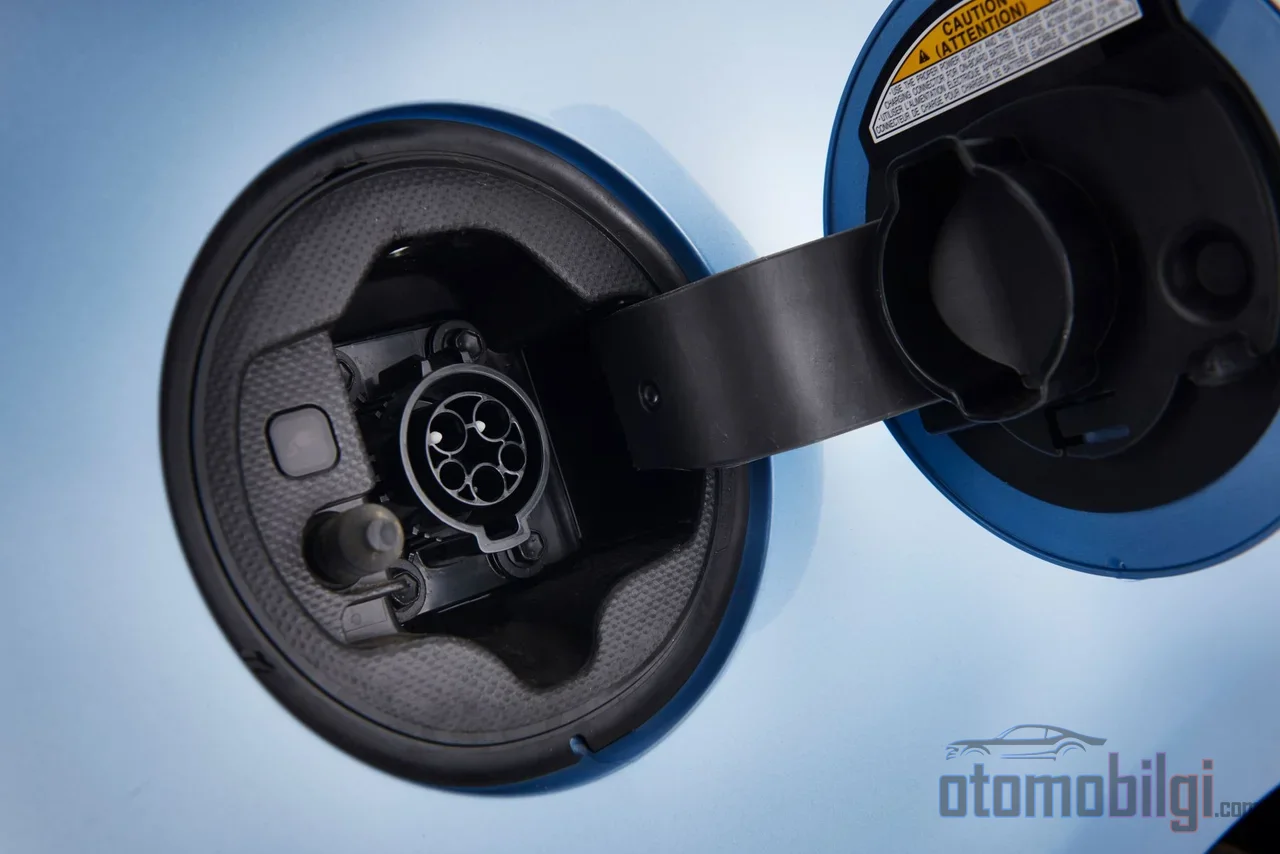
The frustration plug-in hybrid owners experience in front of a highway fast charging station is one of the most discussed technical limitations of these vehicles: most PHEVs cannot even plug in, while the fully electric car next to them charges to 80% in 20 minutes. Physically, the socket is incompatible. Owners usually discover this after the purchase, on their first long journey. So did manufacturers deliberately omit this port? The answer comes down to a single decision, the battery's capacity, and the cost equation of the power electronics.
On this page, we cover why plug-in hybrids support only AC charging, why DC fast charging is technically pointless for most PHEVs, the exception models, and how daily usage habits are shaped by this limitation.
The Critical Difference Between AC Charging and DC Fast Charging
To understand the technical origin of the problem, we first need to clarify the type of current the grid delivers. The energy coming out of the socket is AC, or alternating current; the battery, however, can only store DC, or direct current. Where this conversion takes place determines the vehicle's charging architecture.
In AC charging, the conversion happens inside the vehicle: the alternating current from the wall socket or wallbox is converted to direct current by the vehicle's internal charging unit (on-board charger) and transferred to the battery. The power capacity of this unit sets the upper limit of the charging speed. In PHEVs, this limit typically falls within the 3.3-7.2 kW range; in fully electric vehicles, it goes up to 11-19.2 kW.
In DC fast charging, the conversion takes place at the station. The station sends direct current straight to the battery and bypasses the vehicle's internal charging unit. Powers above 50 kW, or even values of 150 kW and higher in fully electric vehicles, are only possible with this architecture. However, this architecture requires additional hardware in the vehicle: a charging port rated for DC input, suitable wiring, and a battery management system capable of handling it.
The Simple Way to Check for DC Pins
So does your vehicle have this hardware? Most PHEVs have only a J1772-type AC inlet on their charging port; there is no physical socket for DC connectors such as CCS or CHAdeMO. The check is simple: if there are two extra DC pins below the J1772 inlet, the vehicle supports DC charging. If the pins are absent, charging at a highway DC station is physically impossible; it is not a capability that can be gained later with an adapter or software update.
Highlights
- Most PHEVs accept only 3.3-7.2 kW AC charging; there is no DC fast charging inlet.
- A typical PHEV battery is 10-20 kWh; the batteries DC was designed for are 60-100 kWh.
- In 2026, only 26% of the UK's 20 best-selling PHEVs could use fast charging above 50 kW.
- Even in the exception models that support DC, the speed does not exceed 60 kW.
- A 32 A AC unit overnight is sufficient for nearly all PHEVs.
Small Battery, Small On-Board Charger
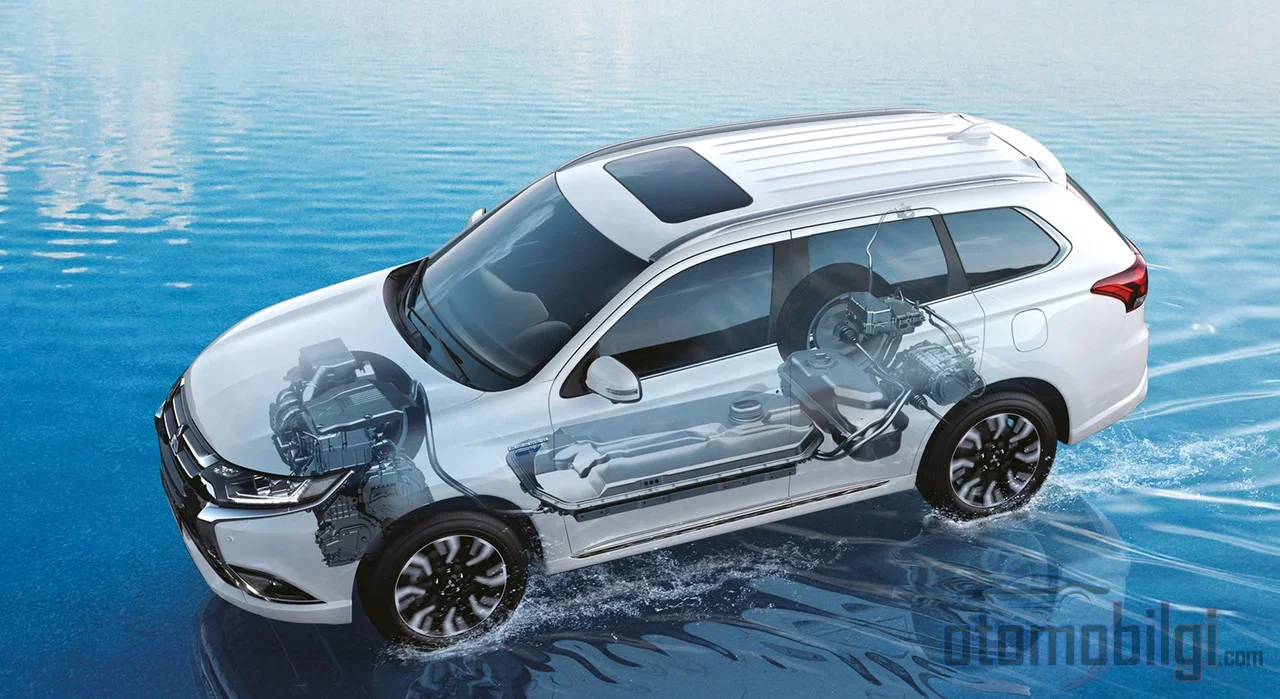
So why do manufacturers choose to stay within this limit? The first reason is the battery itself. DC fast charging is a solution designed to fully charge 60-100 kWh pure electric batteries in 30-60 minutes. A PHEV battery, on the other hand, is typically 10-20 kWh; roughly 10% of a pure electric vehicle's charge capacity. Filling such a small pack at over 50 kW is technically meaningless, because charging time is already short, and sizing components to withstand that power creates unnecessary cost.
The onboard charger's capacity is limited by the same logic. In power electronics, every extra kilowatt means larger cooling, heavier magnetic components, and higher cost. In-vehicle charging circuits are designed under weight, space, and cost constraints; since the internal combustion engine already provides range assurance in a PHEV, there is no need for a massive charging unit. A reference calculation makes this concrete: a 3.3 kW onboard charger brings a depleted 16 kWh PHEV battery to about 95% in roughly 4 hours from a 240 V source. That duration is reasonable enough that it cannot be compared with the DC charging expectations of a pure electric vehicle.
The second reason is the safety architecture. If the vehicle's charging input circuit and battery management system are not rated for DC input, the right move for the manufacturer is not to include that input at all. Not adding to the hardware list a feature that carries the risk of the user damaging their vehicle is the only clean solution, both legally and technically.
How Long Does AC Charging Actually Take in Practice?
When the numbers are laid on the table, it becomes clear that AC charging is actually not slow at the PHEV scale. The basic formula is simple: battery capacity (kWh) divided by charging power (kW) gives the approximate charging time. As for effective power, it is whichever is lower: the vehicle's onboard charger or the station's output power. In other words, if your vehicle takes a 3.5 kW charge, a 7.4 kW unit will not speed up charging.
Typical values are as follows: from a standard 230 V / 10 A household outlet (2.3 kW), a 12 kWh battery fills completely in about 5 hours; a 15 kWh battery fills in about 4 hours at 3.7 kW, or about 6.5 hours from an outlet. Both fit comfortably within a single night. With a Level 2 wall unit (3.3-7.2 kW), times drop to 1.5-3 hours. An official example: the Toyota RAV4 Plug-in Hybrid fully charges in 7.5 hours from a 10 A household grid, and the vast majority of owners have made overnight charging a routine.
No Socket Means No Roadside Solution Either
There is a critical practical warning here: a PHEV without a DC socket, with only a J1772 port, physically cannot charge at roadside DC stations. In other words, the plan of "letting my charge run out and quickly topping up on the road" is invalid from the start for most PHEVs. When the electric range runs out, the internal combustion engine kicks in; fast charging in a PHEV is not a necessity - if present, it is a comfort feature. The only penalty for not charging the vehicle is a loss of efficiency: the plug-in hybrid keeps running on gasoline alone and becomes a vehicle that hauls a heavy battery with poor fuel economy.
The Current State of the Market: What Do the 2026 Figures Say?
The subject is not just theory; field data confirms the picture too. In the UK in 2026, two-thirds of the 20 best-selling PHEV models (74%) cannot use fast charging stations above 50 kW; only 26% can, and none of them can benefit from ultra-fast stations above 150 kW. The top 20 fully electric models in the same market, by contrast, can use all rapid chargers, and 64% of them can use ultra-fast stations.
The sales-weighted averages from the same analysis clarify the difference between the two categories: the top 20 PHEVs have an average maximum charging speed of 31.9 kW, an average battery of 22.1 kWh and an average maximum AC speed of 8.1 kW. The top 20 BEVs offer a 76.3 kWh battery, 168 kW maximum charging speed and an 11.3 kW average AC speed. So the PHEV charges slower on average not only on DC, but on the AC side as well; which is the natural result of its small onboard charging unit.
Exception Models That Support DC Charging
The rule is not absolute. There are PHEVs on the market that offer DC fast charging, but even these exceptions do not come close to fully electric models in terms of speed.
| Model | Battery / Range | DC Charging | Duration |
|---|---|---|---|
| Mitsubishi Outlander PHEV | ~61 km of electric range | CHAdeMO port | ~80% in about 38 minutes |
| Mercedes-Benz GLC 350e (2025) | 23.3 kWh / ~87 km | 60 kW | Full charge in 30 minutes |
| Toyota RAV4 PHEV (2026) | ~80 km of electric range | DC fast charging | 30 minutes for 10-80% |
| Dodge Ramcharger (2025, EREV) | 92 kWh | 350 kW | 45 minutes (about 8 hours with 11 kW AC) |
Two details in this table stand out. Although the Outlander PHEV is the most established known example offering DC charging, it uses the now-outdated CHAdeMO standard. Mercedes and Toyota, meanwhile, stay in the 60 kW band; doing the same job with 11 kW AC would take hours. As a rule, even DC-capable PHEVs do not exceed 60 kW. What truly breaks the rule is the range-extender (EREV) class: the Dodge Ramcharger, with its 92 kWh battery, supports 350 kW DC, cutting a charge that takes about 8 hours on 11 kW AC down to 45 minutes. As batteries grow, the cost equation for DC becomes workable again.
Choosing the Right Home Charging Hardware
This technical picture also guides the home charging setup. For a PHEV owner, a 32 A (7.7 kW) Level 2 wall unit is more than sufficient for almost all models; 40 A or 48 A units are a waste of money, because speed is limited by the capacity of the vehicle's onboard charging unit. Every PHEV comes with a standard AC charging cable, and buying a dedicated charging unit is not mandatory; an overnight charge covers most users' daily electric range needs with plenty to spare. Indeed, Level 2 charging adds about 40 km of range per hour; a Level 1 cable adds about 8 km per hour.
Is Fast Charging Really Necessary for Battery Health?
It is known that frequent DC fast charging use can typically lead to 5-10% additional capacity loss over the battery's lifetime, while charging speeds above 4C can degrade battery chemistry. In modern systems with properly functioning thermal management, responsible fast charging causes no sudden harm. However, in the PHEV context this debate remains largely theoretical: small batteries already charge quickly on AC, and the internal combustion engine serves as a backup safeguard. In a PHEV, fast charging is a matter of economics and habit, not battery health.
From the industry's perspective, the picture is more contradictory. Charging infrastructure operators complain that PHEVs, which are slow chargers, occupy high-power stations for long periods and reduce station profitability. On the other hand, it is argued that on the public charging side, 22 kW AC - which quickly fills small batteries and adds a negligible cost to the manufacturer - could be a semi-fast solution for PHEVs. Meanwhile, the transition to the NACS (SAE J3400) standard, which combines AC and DC in a single plug, could open the way for DC charging in more PHEVs in the coming years.
Short Answer: Why Can't Plug-in Hybrids Fast Charge?
The summary of the summary is this: Most plug-in hybrids, with their small 10-20 kWh batteries and 3.3-7.2 kW onboard chargers, do not carry the cost and weight burden of DC fast charging, so their charging ports have no physical DC socket and they cannot be charged at fast stations. AC charging provides a full charge in a few hours at this battery size; overnight charging easily covers daily use. If the electric range runs out, the internal combustion engine kicks in, so fast charging in a PHEV is a convenience feature. As batteries grow and single-plug standards become widespread, it is not so remote a possibility that this picture will change.
Sources
- Can a Plug-in Hybrid Charge at a Fast Charging Station?
- UK's top 20 plug-in hybrids lack basic charging standards
- Three-quarters of UK's popular plug-in hybrid cars unable to use rapid chargers
- Is It Safe to Use Level 3 Charging for a PHEV?
- PHEV Charging at Home: Costs, Times, and How to Choose a Charger
- New SR Drive With Integrated Charging Capacity for Plug-In Hybrid Electric Vehicles (PHEVs)
- Charger Types and Speeds - U.S. Department of Transportation
- Is it worth having a wallbox for my PHEV?
- How do I charge a plugin hybrid - Toyota
- The truth about plug-in hybrids