Junior Dragster: Entering the Quarter Mile at 8 Years Old
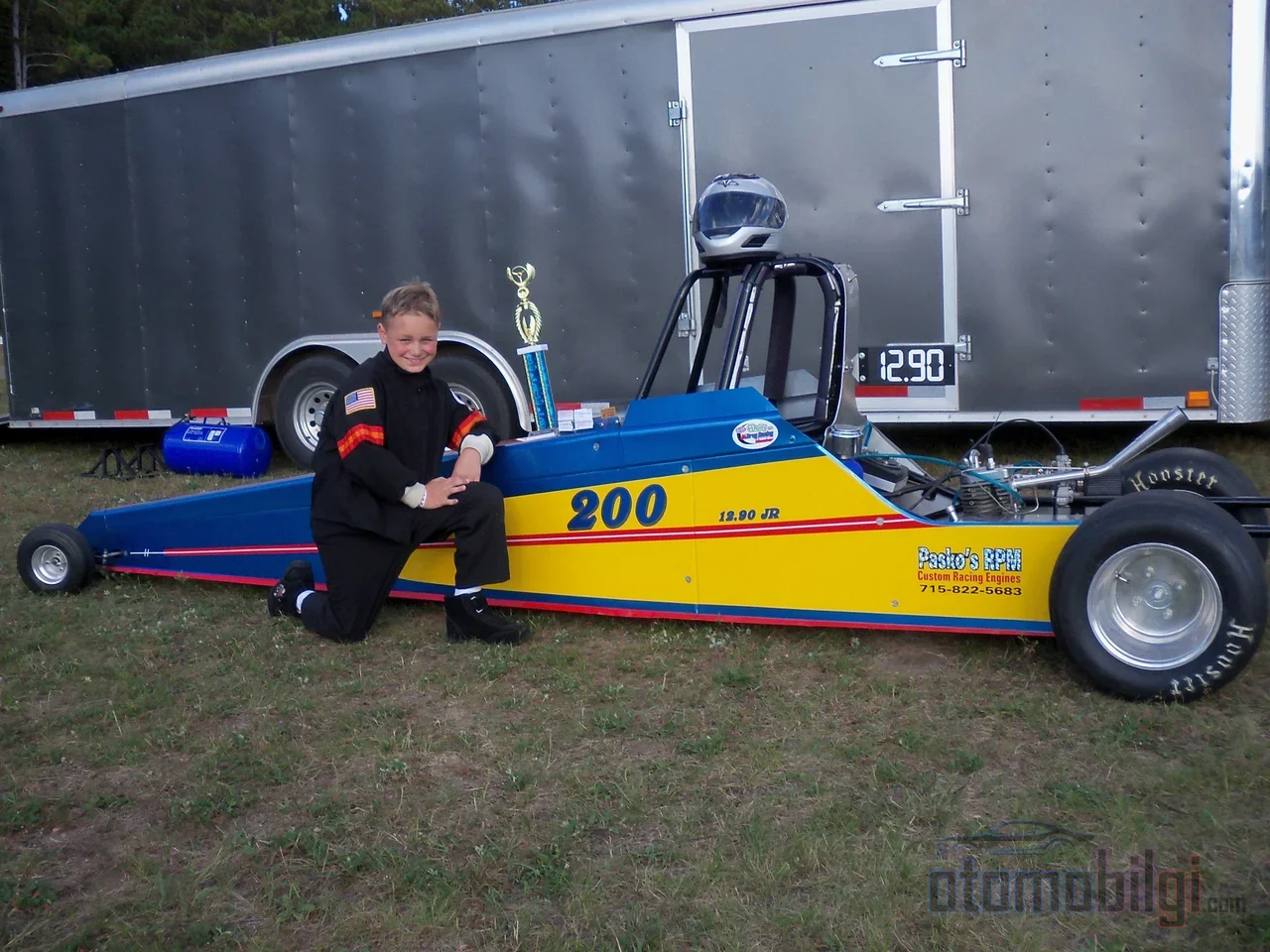
Suppose you're 8 years old and you're just barely tall enough for your head to reach above the steering wheel. The question is: at this age, is it possible to pull up to the starting line on a quarter-mile track, with a helmet registered in your own name? The answer is both yes and less systematic than you might think: rather than throwing kids straight into the middle of speed, the NHRA's Junior Dragster program, created for young drivers, builds a ladder that progresses by age and experience. Each rung of this ladder, which starts at 12.90 seconds and climbs to 7.90, and from there extends into the 6.90-second, 110 mph world of the new JR COMP class, has a different vehicle, a different set of rules, and a different set of responsibilities.
So why is such a system needed? Because drag racing is a craft where reaction time and speed control must be learned with discipline at a young age. In this article, I'll walk you through that ladder from bottom to top - all its rungs, from an eight-year-old novice to a 6.90 JR COMP machine. If you're ready, let's pull up to the starting line.
What Is a Junior Dragster, and What Kind of Vehicle Is It?
A Junior Dragster is roughly a half-scale version of a Top Fuel dragster. So picture a miniature copy of that massive, long-nosed, open-wheel silhouette; except the driver sitting inside is of elementary school age. The engine side may surprise you: a small four-stroke engine with 5 horsepower, single cylinder and single spark plug. Yes, 5 horsepower. But remember, these vehicles don't race at full length; they race over 1/8 mile, and in such a light vehicle, 5 horsepower is enough for speeds of up to 85 mph (approximately 137 km/h) and times down to 7.90 seconds.
The engine specification is tightly defined by the rules: either a stock engine in flathead configuration or a factory-sealed Briggs & Stratton 206 crate engine may be used. Superchargers and turbochargers are banned, fuel is limited to gasoline, alcohol or gasohol, and nitromethane is strictly prohibited. So the logic here is clear: it's not power that's racing, it's discipline.
Highlights
- The Junior Dragster program is open to drivers aged 5-17 at 130 member tracks in the USA and Canada
- A new basic Junior Dragster costs around $5,000, safety equipment around $500
- The age ladder: 8-9 years 12.90, 10-12 years 8.90, 13-18 years 7.90 second index limits
- The fastest class of youth, JR COMP: 6.90 seconds and 110 mph
Which Age, Which Index? The Rungs of the Age Ladder
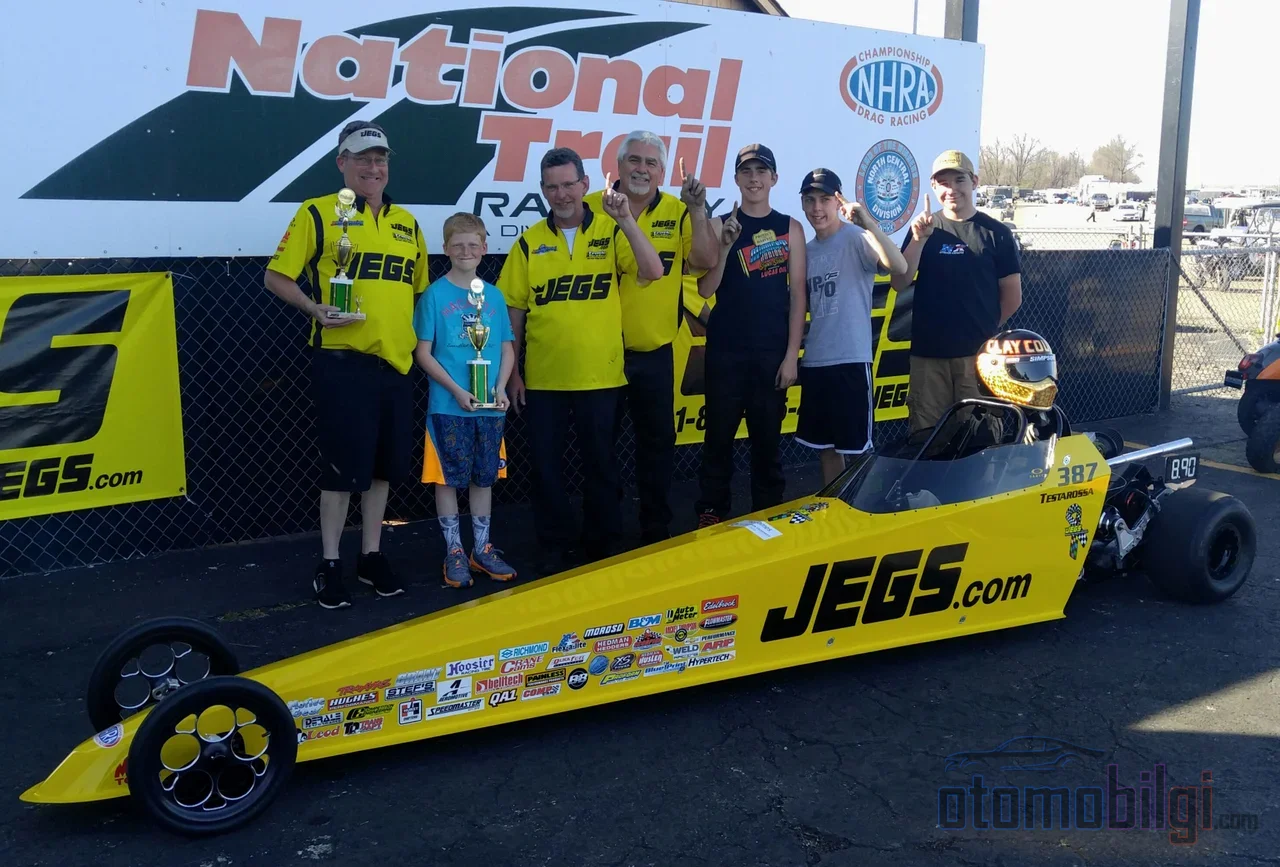
The backbone of the program is the index limits determined by the driver's age and experience. There are three main tiers - Novice, Intermediate and Advanced - and each has its own dial-in upper limit. As the driver grows and gains experience, the limit tightens and speed increases.
| Class | Age | Index Limit (1/8 mile) |
|---|---|---|
| Novice | 8-9 | 12.90 or slower |
| Intermediate | 10-12 | 8.90 or slower |
| Advanced | 13-18 | 7.90 or slower |
| JR COMP | 14-20 | 6.90 or slower |
One small but important note here: The upper limit for the 8-9 age group can vary between 11.90 and 12.90 depending on the track and series. So you need to confirm which index your child will race with in their first season from the rule page of the track you register at. This is not rule confusion; it stems from each series applying its own graduated discipline system.
Why Are Breakout Penalties So Harsh?
In the dial-in system, running fast is not always a good thing; if you go faster than your self-declared time, you break out and take a penalty. In the Intermediate class, for example, a first violation below 8.70 passes with a warning, and a repeat leads to disqualification from the event; if you drop below 8.50, you are disqualified instantly. In the Advanced class, dropping below 7.90 in elimination rounds, covering 330 feet in under 4.10 seconds, or exceeding 85.00 mph are grounds for disqualification. In time trials, the speed tolerance widens to up to 89.99 mph. So the system does not teach the child to be fast, but to control themselves. That is the essence of bracket racing, isn't it?
Safety: Five-Point Cage, Sealed Engine and Forbidden Electronics
Now let's talk a bit of engineering, because these vehicles being small does not mean they are toys. The chassis requires a minimum 5-point roll cage; the tubes must be at least 1-1/8 inches in diameter with a .083-inch wall thickness. For vehicles running between 8.89 and 7.90, a chromoly chassis and rack-and-pinion steering are mandatory. The wheelbase is squeezed between 90 and 150 inches, and the rear tires must also be at least 18 inches in diameter.
The electronics side is also interesting: delay boxes, computers, electronic controls and two-way radios are forbidden. A data recorder can be used, but it can only collect limited data such as engine rpm and temperature. So the child owes their wins not to electronic aids, but to the sensitivity of their own left hand. The rule book even defines an electric-motor Junior Dragster category; with the conditions of a single rear-mounted electric motor, a dry battery, and batteries mounted outside the driver's cabin.
The Driver Equipment Market
The clothing list is also at fully professional standards: a Snell-approved full-face helmet, an SFI 38.1 head-and-neck restraint system, an SFI 3.2A/1 jacket and pants, and a five-point harness. Long pants and arm restraints are also mandatory. So the little driver wears the child size of the protective armor worn by the grown-ups. The total cost of the equipment, including the helmet, jacket, neck collars and gloves, is around 500 dollars.
Is It Possible to Start on a Family Budget?
In the most expensive branches of drag racing, seven-figure budgets may not be enough for a season. The most beautiful thing about Junior Dragster is right here: the starting cost of a new basic car is around 5,000 dollars, and this car offers you a satisfying start at around 45 mph, even in your most novice state. With equipment included, the total bill comes to around 5,500 dollars. Compare it with the facility fees of a soccer season - it won't hurt your teeth, but let me be realistic: it is one of the budget-friendly, affordable entry doors among these motorsports.
The licensing side is also well regulated: a notarized NHRA Junior Dragster application, a medical examination and 6 license passes are required. While the program offers 5-year-old children the chance to test, turning 6 is required to race; 5-year-olds cannot race before their 6th birthday. Age is calculated with December 31 as the reference date, and in the JR COMP class racing can continue until the end of the age-20 year.
The Family at the Head of the Track
In a sense, the real engine of this sport is the families. The NHRA Summit Racing Jr. Drag Racing League races at 130 member tracks across the USA and Canada, keeping costs at an affordable level and turning drag racing into a true family event. On weekends at the track, parents become mechanics, an aunt becomes the timekeeper, a sibling becomes the tire warmer. Among the program's alumni, knowing that names like J.R. Todd and Erica Enders started their careers in this league is the best proof that the ladder really leads somewhere. The Junior Street program, where 13-16 year olds race against their peers in full-size vehicles, is another stop on the youth journey.
JR COMP: The Top Step with 6.90 Seconds and 110 mph
At the top of the ladder there is a new and exciting step: JR COMP. This class is the bridge from the Junior Dragster to full-size quarter-mile vehicles. Dial-in is 6.90 seconds or slower, with a maximum speed of 110 mph (180 km/h). 6.90 - remember, we are talking about the eighth mile; these speeds are no longer toy-sized, they are at a level requiring serious engineering.
The vehicle side also differs from the Standard Junior Dragster: The Jr. Comp dragster's wheelbase is between 150-190 inches, meaning a noticeably longer and faster platform. JR COMP vehicles are built for 6.90 seconds @ 110 mph over the 1/8 mile and provide drivers aged 14-20 a natural transition from the Junior Dragster to much faster quarter-mile vehicles. This can be thought of as a young driver's final dress rehearsal on the road to the big leagues where the smell of nitromethane is.
So Where Should My Child Start? Summary of the Ladder
Briefly and clearly: In the NHRA Junior Dragster program, a child starts at age 5 with testing and at age 6 with racing; at 8-9 years old on the track as a novice with a 12.90 index (11.90 at some tracks), at 10-12 years old in Intermediate with an 8.90, and at 13-18 years old in Advanced with a 7.90; from age 14 onward, the JR COMP door opens, reaching the 6.90-second / 110 mph level. While the speed limit is kept around 85 mph in the Advanced class, in JR COMP it rises to 110 mph. The starting cost is about 5,000 dollars for the vehicle and about 500 dollars for equipment. The 2026 JDRL Conference Finals will be run on June 12-13; the current rulebook is published each season on NHRA's racing pages.
The lesson I draw from this ladder is this: the Junior Dragster system does not teach children speed, it teaches managing speed. A driver who started on a 5-horsepower motor with a 12.90 and, over the years, was promoted to a 6.90 JR COMP vehicle ends up with not just a license, but also experience from thousands of starting lines. The future stars of drag racing are sitting in those tiny dragsters today. And as absurd as it may sound, an eight-year-old child pulling up to the starting line on a quarter-mile track is one of the most sensible traditions of this sport.
Sources
- GET STARTED | Jr. Dragster
- Jr. Dragster - Bradenton Motorsports Park Rules
- NHRA Summit Racing Jr. Drag Racing League Rulebook 2023
- Sportsman Jr. Dragster - Midwest Drag Racing Series
- Junior Dragster - Wikipedia
- Drag racing - Wikipedia
- Complete Junior Comp Dragsters - McGee Cams
- Jr. Street - NHRA
- Mission Raceway Park Junior Dragster