Erica Enders and the Double Red-Light Pro Stock Final
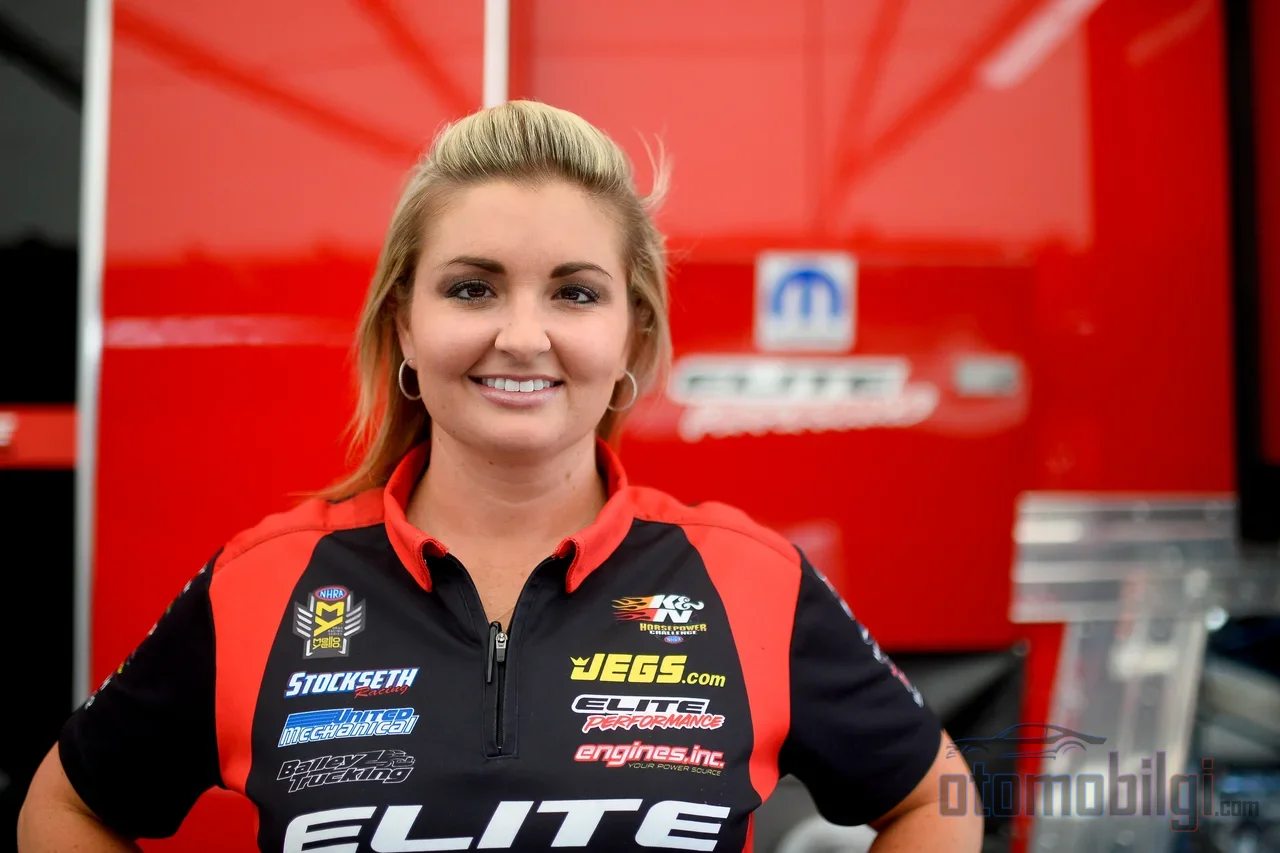
Imagine you're in the race of your life. The championship has come down to a single run, the yellow bulbs of the Christmas Tree are lighting up one by one, and you'll press the throttle with such precision that thousandths of a second will decide your fate. Now here's the craziest part: In the 2014 Pomona final between Erica Enders and Jason Line, both drivers red-lit. Yes, both of them launched early. So how was the winner determined, and how did this run go on to crown the first woman's world championship in Pro Stock history? Buckle up, because we're diving into the story of how drag racing's finest margins shaped careers.
How Was the Double Red-Light Final Technically Possible?
First, let's look at the rules side of things, because everything here is played out in thousandths of a second. In drag racing, the start is set up with two pre-stage and two stage lights, followed by the green light. The driver rolls the car into the stage lights, then the Christmas Tree's bulbs drop, and the moment green comes on, the throttle can be fully pressed. The rule is ruthless: if you move before the green comes on, the red light below it lights up and you're disqualified. There's no debate; your opponent wins.
So what happens if two drivers launch early at the same time? That's exactly what happened in the 2014 Pomona final. Jason Line fouled with a reaction time of -0.011; meaning he moved eleven thousandths of a second before the green light. Enders, on the other hand, made a much smaller error with -0.002. At most tracks and in most race organizations, in a double-red situation the winner is the driver whose reaction time is closest to .000; in some systems this is governed by the "first red out" or TruStart logic. Enders' -0.002 being much closer to the limit values than Line's -0.011 was the detail that delivered the championship. And on a night when, in truth, both of their races had already ended at the starting line.
Highlights
- In the 2014 Pomona final, both drivers red-lit; Enders fouled with -0.002, Line with -0.011
- Erica Enders-Stevens became the first woman to win the NHRA Pro Stock world championship
- Pro Stock engines produce 500 cubic inches (8.2 L), 1,300+ hp, 6.4-second passes and 210+ mph speeds
- Enders today holds six Pro Stock championships and 50 national event wins
The Psychology of Reaction Time: The Weight of a Thousandth of a Second
Now let's put our thinking caps on. What does -0.002 seconds mean? It's a value too small to be measured even by blinking, sitting at the very bottom of the limits of human reaction. It means you released the clutch two thousandths of a second before the green light. Let me put it with an everyday analogy: you reached for your plate before your friend even said "now," but the difference is so tiny that even noticing it is nearly impossible. That's exactly what Pro Stock drivers walk on the edge of in every run.
And the psychological side of things is by no means behind the technical side. The duel in the staging area is like a game of chess: who enters the stage light first, who waits for their opponent, who plays mind games at the last second? Drivers' staging priority preferences are a genuine tactic built on observing your rival or slipping past their gaze. In fact, track rules push back against this patience: a vehicle that fails to stage can be penalized with a red light at the end of the 7-second automatic penalty window. So the game is played at the starting line, but the clock keeps running.
And Thousandths of a Second Still Decide Careers
Don't think this was only the drama of 2014. At the 2026 Seattle weekend, Austin Prock left early in the Funny Car final with a -0.005 and handed the victory to J.R. Todd. The same weekend, Greg Stanfield red-lit with a -0.008 in the Pro Stock final and Greg Anderson took the win. In Pro Stock Motorcycle, even Gaige Herrera fouled out with a -0.007 and left the victory to Richard Gadson. Three examples within a single year; they all teach the same lesson: thousandths of a second decide which shelf the trophy goes to.
The Deep Stage Tactic: The Fine Balance Between Risk and Reward
So why do drivers take such risks? Part of the answer lies in a technique called deep staging. Normally, the driver rolls the vehicle into two prestage and two stage photocell beams; in deep staging, they roll slightly further forward and extinguish the prestage light. What's the goal? To be closer to the starting line and shorten the rollout distance. This small distance between the photocell beam and the starting line determines when the vehicle's first movement is counted; as the rollout shortens, reaction time seemingly improves.
But free cheese only exists in a mousetrap. Deep staging means faster reaction but slower elapsed time (ET); because starting closer to the timing beam can negatively affect the measured run time. Shallow staging does exactly the opposite. The common advice from technical circles is clear: if you frequently red-light, deep staging may not be the right move for you. Reaction times hovering at borderline values, like in the 2014 final, are precisely the product of these aggressive setups and high risk appetite.
It's also said that the driver measures the rollout distance mentally, almost memorizing it with muscle memory; since organizations can change this distance, even this internal calculation can occasionally fall apart. So the starting line is the purest contest for a human being sitting inside a two-ton machine.
Erica Enders' Path from Championship to Championship
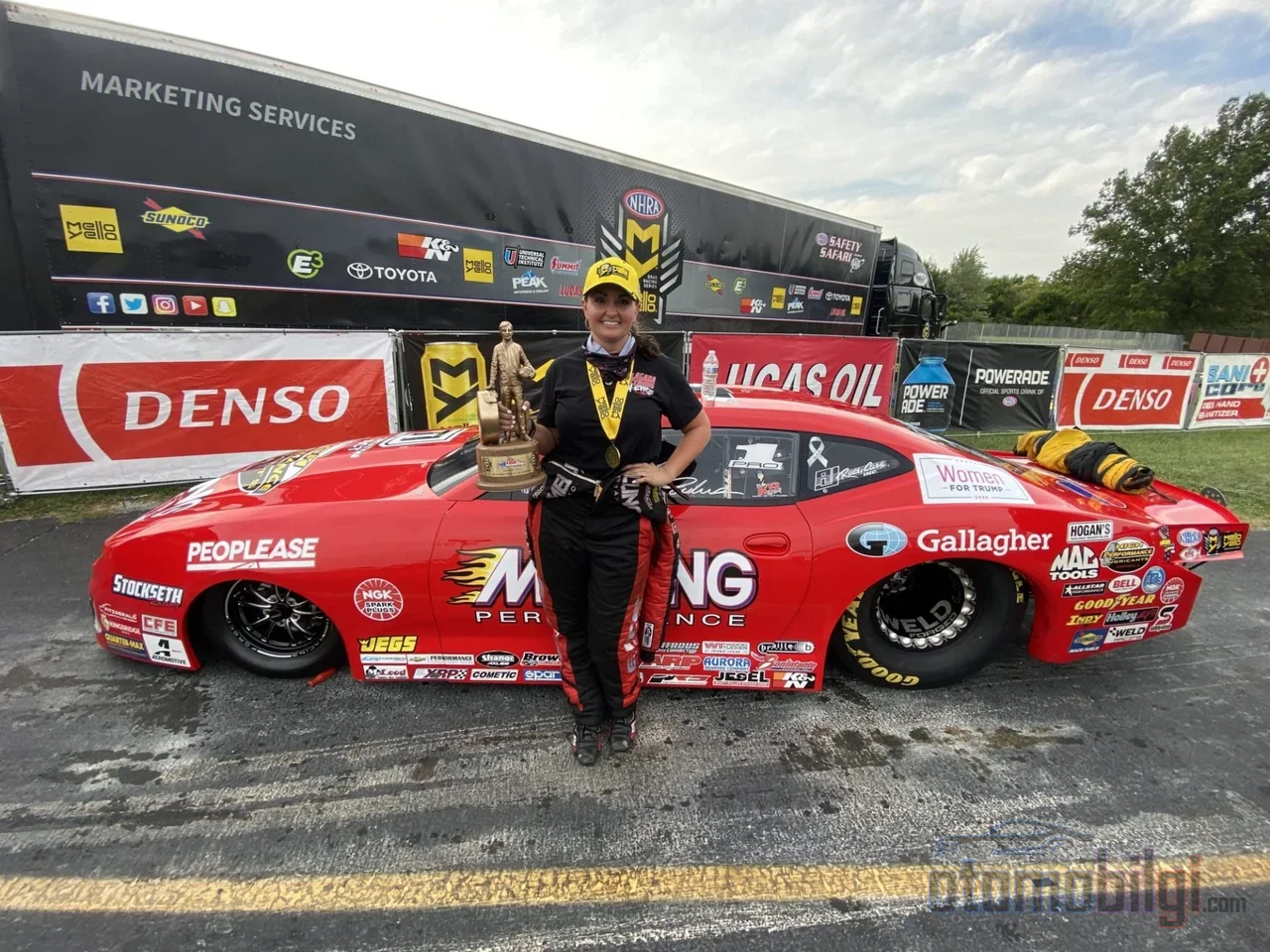
That double-red final in Pomona was, in fact, only the final act of a story spanning years. Enders returned in 2005 as the first woman to race in Pro Stock since 1993 and became the first woman to reach a final round. In 2006 at Topeka she became the first woman to qualify to race from the No. 1 position in Pro Stock, and in 2012 at Chicago she became the first woman to win a Pro Stock event. So records fell one after another, until that night in Pomona came in 2014 to crown them all.
And after? It didn't stop at just one championship. In 2015 she took nine event wins in a single season, breaking the record for the most wins achieved by a woman in a Pro Stock season. In October 2023 at the FallNationals she became the most race-winning female driver in NHRA history, and today, with six Pro Stock world championships and 50 national event wins, she is still racing full-time in the class. The -0.002 gamble of 2014 was the turning point of her career; she was rewarded for her courage six times over.
Championship Car: The Camaro and COPO Context
Now let's open the hood. Enders' 2014 championship car carried a Chevrolet Camaro body, and on the Pro Stock side this body has a special history. The COPO (Central Office Production Order) system in 1969 allowed dealers to order Camaros with engines that GM policy technically did not permit; in other words, it was the official birth certificate of muscle cars that "should never have existed." Today, Chevrolet continues the COPO Camaro program, purchased as a body-in-white from the factory: three LS-based engine options, including a naturally aspirated 427 and two supercharged choices.
On the Pro Stock side, the situation is different: the cars there use dedicated race engines like the 500 cubic inch DRCE, and the engine is mounted in a position shifted 1 inch compared to a production car. These 1,300 hp naturally aspirated V8s are beasts entirely different from the Camaro you see on the road.
| Specification | NHRA Pro Stock Value |
|---|---|
| Engine displacement | Maximum 500 cu in (8.2 L) V8 |
| Power | 1,300+ hp (naturally aspirated) |
| Typical elapsed time | 6.4 seconds (quarter mile) |
| Speed | 210+ mph (over 215 mph) |
| National ET record (2026) | 6.434 sec / 213.50 mph (Dallas Glenn) |
| 2014 champion | Erica Enders-Stevens (Camaro) |
How Is a Winner Determined in a Final with Two Red Lights?
The clear answer, as I promised: in a race with double red lights, the winner is determined according to the rule system in use; the common practice is that the driver whose reaction time is closest to .000 wins, while some tracks reach the same result in a different way with the TruStart or "first red light" logic. In the 2014 Pomona final, according to this principle, Erica Enders-Stevens (-0.002) made a smaller error than Jason Line (-0.011), winning both the final and the first female Pro Stock world championship. In a race where both lost, the one who lost the least won.
Closing: The Legacy of Two Thousandths of a Second
Just think: years of championship battles, million-dollar budgets, 1,300 hp machines, and it all comes down to two thousandths of a second at the starting line. The 2014 Pomona final reminds us of the essence of drag racing: here it is not only speed but absolute precision in timing that wins. Enders' bold start was risky, yes; but it was precisely that risk that was the first step on the path that made her the most successful female driver in Pro Stock history. And the three separate red light cases at Seattle 2026 show the lesson remains relevant: in this sport it is not braking but sometimes a moment's impatience that determines everything.
Sources
- Kalitta, Todd double up in Seattle; Anderson wins and takes over Pro Stock lead
- Pro Stock King Greg Anderson Red Lights - and Wins
- Just How Rare Are Double Perfect Lights In An NHRA Pro Class?
- Dallas Glenn Sets NHRA Pro Stock ET Record 6.434 at Texas
- Dallas Glenn Wins 2026 NHRA U.S. Nationals Pro Stock Final
- Top 5 red lights in NHRA History
- A double-scoop weekend for Richard Gadson in Pro Stock Motorcycle