Dial-In and Handicap System: Racing Against Yourself in Amateur Drag
Share This Page
The dial-in and handicap system is a racing format in drag racing where each car declares its own estimated pass time (dial-in) before the race, and the slower car gets a head start equal to the difference between the two times. In other words, the duel starts not on the track but in mathematics: the fast car doesn't always win; the driver who best sticks to their number wins.
Highlights
- Dial-in: the driver declares before the race how many seconds it will take their car to complete the track, and it is announced with a written display on the window
- races in the Super Comp 8.90, Super Gas 9.90, and Super Street 10.90 indexes
- A more serious violation than a breakout is the red light: anyone who red-lights is eliminated even if their opponent breaks out
- Bracket racing was born in the western United States and Hawaii in the late 1960s, and the NHRA established it on the championship calendar in 1977
- Test-and-tune events can be run for roughly 20-50 dollars
Now let's be honest: Watching Top Fuel cars climb over 300 mph in 3 seconds with 11,000 horsepower is spectacular, but we don't have such a machine in our garage, and we never will. So why do millions of people still flock to drag strips on weekends? The answer is one word: bracket racing. A game where you race against yourself, and it's your driving skill, not your car's size, that wins. Doesn't that sound appealing to you too? No?
What Exactly Is Dial-in and How Does It Work?
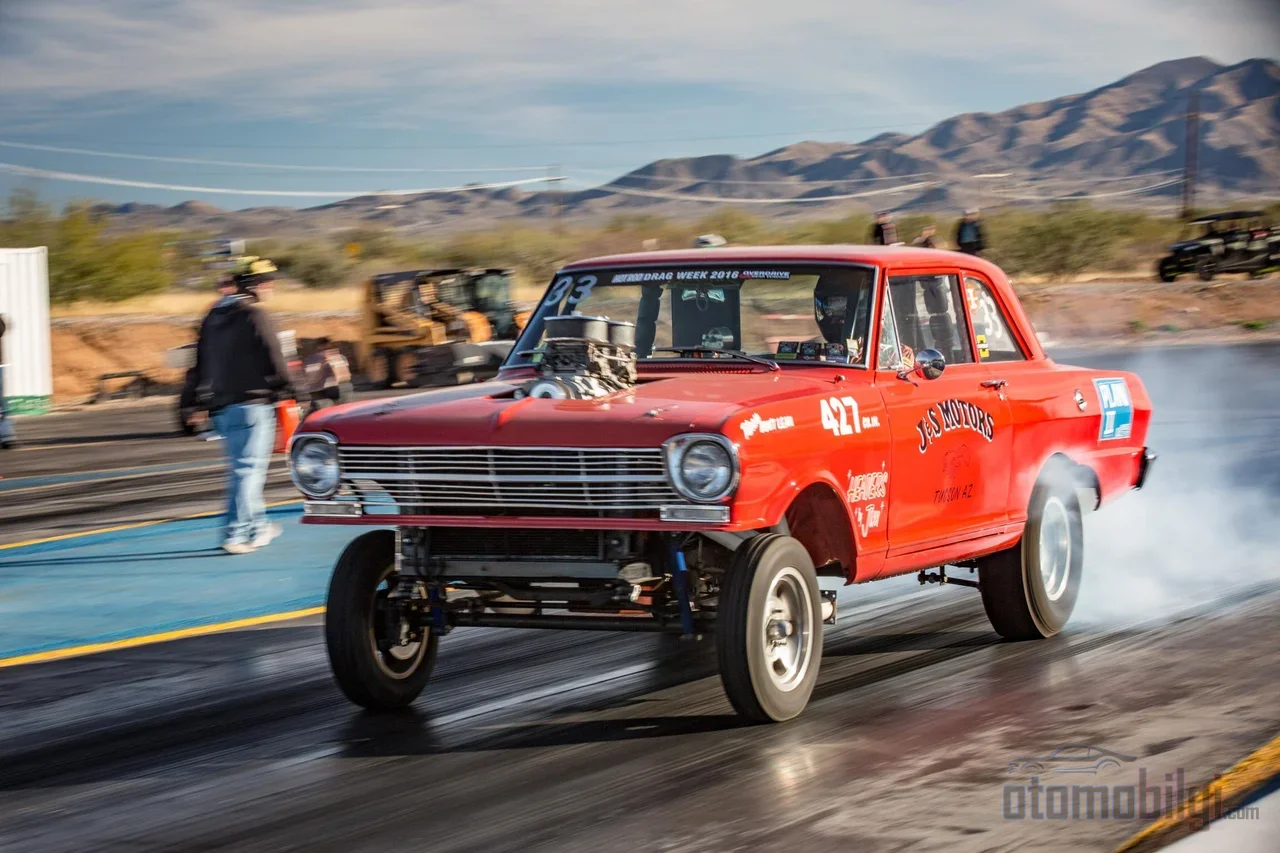
Dial-in is the estimated time a driver declares before the race for how many seconds it will take their car to complete the track. It is usually determined based on practice runs made during the day and is written on the car's window. In other words, you get to know your car in the morning test runs, and by saying "I'll run a 12.45" at the evening race, you've made your case to the court.
This is where the handicap part comes into play: Let's say your car runs a 12.45 and your opponent's runs an 11.20. As the slower car, you start with an advantage equal to the difference between the two times - even if your opponent sees the green light at the same moment as you, they are effectively considered to have started nearly a second and a half earlier. While everyone launches at the same time in "heads-up" racing, where professionals compete, in handicap racing the clock works to balance the start. Think of it like a head start in a footrace: your faster friend starts a few meters behind, just to make it a game.
So what does it take to win? This is where things get fun. If you cross the line faster than the number you declared, you have broken out and are disqualified. In other words, going too fast is a penalty, and not going too fast in order to finish ahead of your opponent is victory. If both cars break out, the one closest to its dial-in wins. Every race is a guessing game, and a bit of the art of gentle throttle.
Red Light, Breakout, and the Violation Hierarchy: Wherever You Go Wrong, You Can Be Eliminated There
The handicap system has its own rulebook, and knowing the hierarchy is essential. The violations, from lightest to heaviest, are ranked as follows:
- Breakout: Running faster than your dial-in means disqualification.
- Red light: Moving before the green light comes on. This is a heavier violation than a breakout - even if the opponent breaks out, whoever gets the red light loses.
- Lane boundary violation: Crossing onto the edge of the track or over the lane line.
- Moving before the tree activates: If you leave before the light system even signals, that's a whole different disaster.
- Tech inspection failure and the heaviest of all, an absolute breakout: Instant disqualification plus the loss of all event points.
If you've noticed, the big lesson here is this: on the drag strip, the most dangerous enemy isn't your opponent - it's impatience. Getting a red light is like setting your entire weekend on fire with a second's haste. You ask who could even imagine such a thing? I know everyone who got three reds in morning testing.
NHRA Sportsman Classes: From Super Stock to Super Comp
In America, the official umbrella of amateur racing is a hierarchy called the sportsman classes. Some of these work on a handicap basis, some on an index basis, and knowing the difference between them is enough to understand the scene.
| Class | Index / System | Brief Note |
|---|---|---|
| Super Comp | 8.90 index | 4- and 6-cylinder cars minimum 1,000 pounds, others 1,350 pounds |
| Super Gas | 9.90 index | Heads-up format, equal start |
| Super Street | 10.90 index | Heads-up format, one of the most "street-close" categories |
| Super Stock | National index, dial-under possible below it | Allows more engine modifications than Stock |
| Stock | National index, dial-under possible | A class that stays close to factory specs, with very strict rules |
Super Comp, Super Gas, and Super Street are all "heads-up" races built around their indexes: everyone targets the same number; reaction time and consistency create the difference. Stock and Super Stock are run with modified versions of factory cars; the difference between them is roughly this - Stock stays as faithful as possible to factory specs, while Super Stock is more lenient on the engine side. All of these classes feed into the Lucas Oil National Championship points system; drivers carry points from regional races into the championship. So we're talking about amateur racing, but the stakes are serious.
Reaction Time: The One Waiting for Green Loses
Here's the most surprising truth about the drag strip for you: if you hit the gas when the green light comes on, you're already too late. An average person's reaction time is about 0.230 seconds; experienced racers instead react to the third amber and gain roughly half a second compared to waiting for the green. The system also changed about 15 years ago: under the old standard, .500 counted as a perfect reaction, but now .000 is perfect, and negative values mean you left before the green - in other words, a red light.
Let's clarify a critical distinction right away, because this is the classic beginner's mistake: reaction time and 60-foot launch time are not the same thing. Reaction time is yours (the driver's), while the 60-foot time is the vehicle's performance. You may have launched, but if the car stumbles, the 60-foot will be poor; if the car launches perfectly but you wait for the green, your reaction time goes in the trash. Two different runs, one whistle.
The "Package" Concept and the Adding-It-Up-Like-a-Turtle-Crawling-Out-of-an-Egg Math
In bracket racing, the real score is the package, your total performance: your reaction time plus your deviation from your dial-in. Let's make it concrete with a small example. Driver A runs 9.653 with a 0.025 reaction (dial 9.64), for a package of 0.038. Driver B runs 10.684 with a 0.005 reaction (dial 10.66), for a package of 0.029. B wins - because he stayed truer to his dial. The 0.009-second difference at the finish equals a distance of roughly 22 inches at 140 mph; in other words, a few car widths.
There's tactics at the end of the track, too: some racers deliberately set a slow dial and lift off or brake near the end, forcing the faster opponent to overshoot their own dial, i.e., break out. They call this "pushed him out." Creative? Yes. Undisputed? Absolutely not - quite a few critics call it a "butcher's dial." There's also a subtle detail that affects your reaction time: rollout, the distance from the moment the tire blocks the start beam until the moment it leaves it. Even tire diameter and beam height can change your reaction time. Crazy, right?
Why Is Bracket Racing a Budget-Friendly Gateway?
The best part of bracket racing is hidden in this motto: "You can't beat me with money, you have to beat me with driving." Because this format rewards consistency over raw speed, what it takes to win a race is not a trillion-dollar engine, but a driver who knows their car. And the "run-what-ya-brung" philosophy comes on top of that: any vehicle that passes the basic tech and safety inspection can race; some people drive to the track, race, and then drive back home.
The cost of entry isn't scary either: test-and-tune events can be run for around $20-50, and some even offer discounts to high school students. The sportsman scene offers competition for every budget, from weekend hobby to semi-professional level. Since measurement precision is 0.00001 of a second, ties are nearly impossible - one way or another, a winner emerges. The international face of this scene is also broad: Santa Pod in England, with a program ranging from beginner-friendly classes to professional categories and junior/bike classes, is proof of how much amateur drag racing has grown. Even though the NHRA presents bracket racing as a stepping stone to the faster classes, it also maintains that many racers choose to stay in exactly this format. Stepping stone or destination? Everyone's answer is different, and I think that's why it's beautiful.
TruSTART: The New Referee at the Starting Line
A solution has also arrived against cheating at the starting line: the TruSTART system, introduced at an event in Las Vegas in 2016 and rolled out nationally that summer. In the classic system, the driver who fouled was shown a red light; with TruSTART, the first driver to foul gets a green light, and when the second vehicle launches, only the lane with the worse negative reaction time sees red. In other words, the "worst red" loses. Many tracks now use this system, including NHRA national events, and it has significantly reduced inconsistencies on the starting line.
The Amateur Drag Scene in Türkiye: Kepez and the 2026 Season
So what is the situation in Türkiye? Two federations are active in the field here: The Motorcycle Federation runs the Moto Drag Championship side; Car races are run under the name Otodrag with a local rule set. The Kepez Drag Strip in Antalya plays a central role in both federations' calendars. On the motorcycle side, the 2026 calendar includes three rounds centered on Kepez: Round 1 May 9-10, round 2 June 6-7, and round 3 in the fall. foot June 6-7, round 3. foot, on the other hand, comes in the fall. On the Otodrag side, the 2026 local rules have also been published and races are being held in rounds at Kepez - the round 2 announcement is available for June 13-14. round announcement is available for June 13-14.
Now let's be honest, because I don't want to make things up: We have no clear information that the NHRA-style dial-in/bracket system is used directly at events in Türkiye; you need to check the federation's current rules file for details. But we can say this: this system is the main backbone of amateur drag racing worldwide, and a curious Turkish racer understanding this logic makes a huge difference both in watching international events and grasping the spirit of the game on their own turf. If you go to Kepez next time and find yourself sitting in the stands wondering "how many seconds is the dial difference between these two cars?", the blame is on me.
Frequently Asked Questions: How Does a Slower Car Win?
How does a car win despite being slower? With a three-part combination: the handicap advantage, a better reaction time, and loyalty to its dial. The slow car starts early and sticks to its number; the fast car either pushes too hard and breaks out or loses at the start. The clock wipes out inequality on the track from the outset.
The question "Is index racing the same thing as bracket racing?" is also one of the scene's constantly debated topics - for some, index is a strict target and bracket a more flexible handicap game; there is no definitive common definition accepted by everyone. And finally, the classic: "Should I leave on the green?" No! React to the third amber, don't wait for the green. I suggest you print this item out and stick it to your steering wheel.
Let me close with a question: if you could enjoy the game of estimating and hitting your own speed with your ordinary car on a track day for 20-50 dollars, what would your first dial-in be? In the next drag article, we'll be at the track.
Sources
- Handicap or Index Racing - NHRA
- Bracket racing - Wikipedia
- E.T Bracket Racing Explained - Drag It Anywhere
- Drag Racing Classes - NHRA
- Super Comp - Wikipedia
- Lucas Oil National Championship Points - NHRA
- In defense of bracket racers - NHRA
- Drag Racing Classes - Santa Pod
- Cheap Thrills! How to Go Racing Without Going Broke - HOT ROD
- Compulink Confirms TruSTART Set To Go Nationwide - Competition Plus
- Drag Racing - Turkish Motorcycle Federation
- Local Otodrag Rules 2026 - TOSFED
- Kepez's drag strip is set to make its mark on the 2026 season - Kepez Municipality