Climbing to the Top from the NHRA Class Ladder
Share This Page
The NHRA class ladder is an official career path stretching from the amateur street driver at the starting light to an 11,000-horsepower Top Fuel dragster: a tiered system that begins with unlicensed E.T. bracket classes, climbs into Sportsman categories like Super Stock, Comp and Top Sportsman, from there to Top Alcohol, and finally to the professional national classes. Each rung comes with its own vehicle rules, licensing requirements, and a gateway to move up to the next class; in other words, drag racing is not just the sport of elite teams, but a sport for every budget.
Highlights
- at NHRA national events in 15 categories more than 200 vehicle classes are featured.
- Top Fuel: 11,000+ hp, runs under 3.7 seconds, speeds over 330 mph.
- All-time speed record: 343.16 mph, Brittany Force, Sonoma July 25, 2025.
- The Super Comp, Super Gas and Super Street classes 8.90 / 9.90 / 10.90 race with indexes.
- The Jr. Drag Racing League ages 5-17 is the first rung that opens the track to young drivers.
How to Read the Ladder: Categories and Sub-Classes
Let's first correct a common misconception: it is assumed there are "200 classes" in the NHRA, but in reality that's not how it works. There are roughly a dozen main categories; categories like Stock, Super Stock and Comp contain dozens of sub-classes within them, which is why the total count reaches into the hundreds. In other words, the ladder is not one long ladder, but rather resembles several large floors, each with its own logic.
The criteria for entry into a class are also clear: vehicle type, engine displacement, weight, permitted modifications, and aerodynamics. The classes at the top, such as Top Fuel, Funny Car, Pro Stock, Pro Stock Motorcycle and Pro Mod, form a single category and race "heads-up"; that is, whoever finishes first wins. By contrast, Comp, Super Stock and Stock work with a handicap start system: vehicles of different potential get a head start based on their own reference times, which brings the competition into balance. Ever wondered how a 200-horsepower car races against a 1,000-horsepower rival? Well, here's the answer.
The Big Names at the Top: Top Fuel, Funny Car and Pro Stock
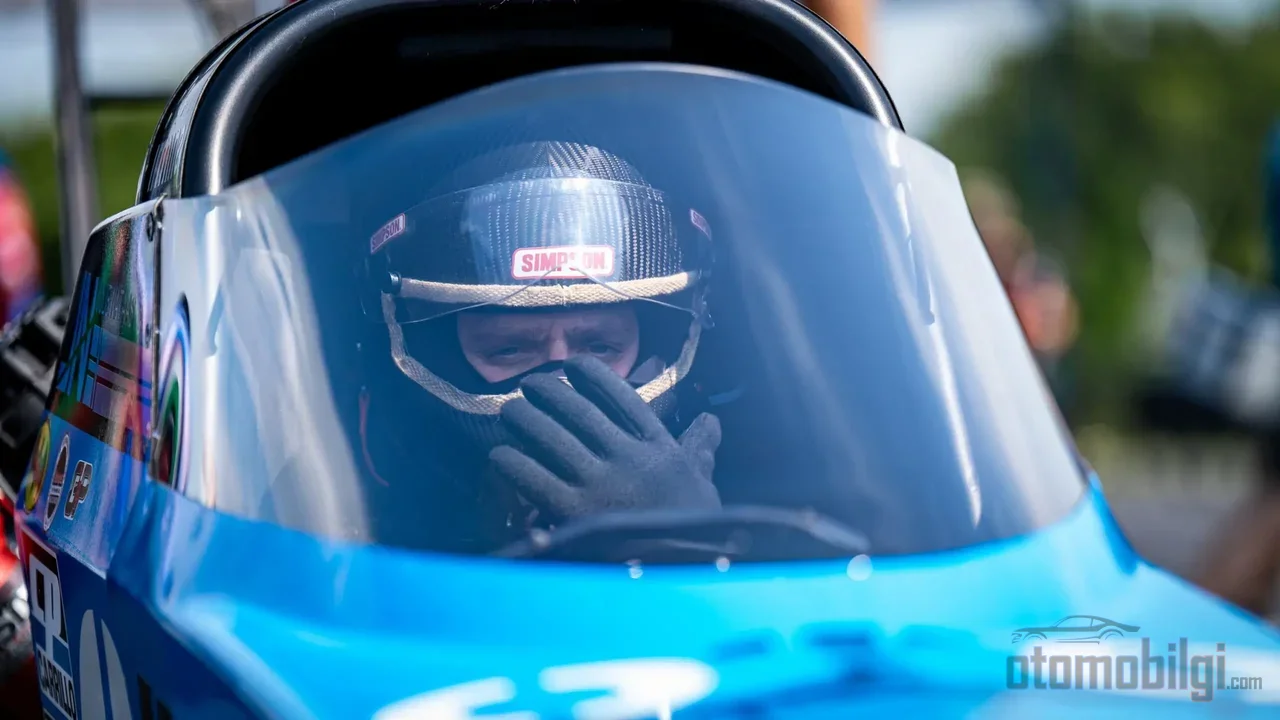
At the very top rung of the ladder stand the kings of the sport. Top Fuel dragsters feed a supercharged Chrysler Hemi-based V8 of 500 cubic inches with nitromethane; a single run can consume up to 15 gallons of fuel. The car is approximately 25 feet long and weighs 2,330 pounds; runs drop below 3.7 seconds and speeds exceed 330 mph. From 0 to 60 mph in under 0.5 seconds, and at launch the driver feels more than 4-5 G of force. The technical details are just as wild: two spark plugs per cylinder, dual magnetos, 42 fuel nozzles, and a 14-71 Roots supercharger producing pressure above 70 psi. Even spinning the blower consumes roughly 1,000 hp - think about it: you're spending the entire output of a mid-size car just on the supercharger.
Since 2008, these classes have been running 1,000 feet instead of the quarter mile; this is a change that came after Scott Kalitta's fatal crash and is considered the most significant safety regulation in the class's history. Funny Car uses the same 500-inch engines, running in the 3.8-second range at speeds of 330+ mph; it has no transmission, and power is delivered through a multi-stage clutch. Pro Stock is known by the nickname "factory hot rod": electronic injection, spec fuel, a maximum of 500 cubic inches, 1,300+ hp, a minimum weight of 2,350 pounds, and runs of 6.5 seconds at over 210 mph. There is also a notable development on the horizon: a hood scoop rule change is on the agenda for 2027 for Pro Stock cars, which have raced without hood scoops for a decade; this change is thought to be able to balance the competition.
Top Alcohol and Sportsman Rungs: One Step Below the Elite Level
The final corridor to the professional classes is the Top Alcohol category. Top Alcohol Dragster uses supercharged methanol or injected nitromethane; runs of around 5.1 seconds and speeds of 285+ mph are seen. Top Alcohol Funny Car, on the other hand, runs only on methanol and with a three-speed transmission: 5.3 seconds, 270+ mph. The format is already the same, only the fuel and power differ - how sensible does that sound, right?
One step below is the Comp category; the most diverse example of its kind. It contains exactly 75 classes and classification is done with a formula based on total weight divided by cubic inches; races are handicap runs based on the index system. In Super Stock, classification is determined by the factory shipping weight divided by an regulator-set hp figure; the correct engine block, cylinder heads, and carburetor must be preserved. Stock is even stricter: unmodified body, full factory interior trim, and a maximum 9-inch rear slick.
Top Sportsman and Top Dragster are the stars of this tier: runs over 200 mph and in 6 seconds are now common in these classes. Elimination fields of 32, 48, or 64 cars are set up; the driver chooses their own dial, but this time cannot be slower than 7.99 seconds (in zones 6-7 the limit is 8.19). A three-amber full Christmas Tree is used and the breakout rule applies: if you go under your own reference time, a penalty results. There is also an update for 2027 - in Top Sportsman, only full-body side-steer type vehicles will now be able to compete.
Index Warriors: Super Comp, Super Gas, and Super Street
The heart of the ladder is here - the tier that will be most useful to the reader. Super Comp races with an 8.90 index, Super Gas with 9.90, and Super Street with 10.90; Super Gas cars have a minimum weight requirement of 2,100 pounds, and Super Street a minimum of 2,800 pounds. The goal is simple: finish your run as close to the index as possible, but never go under it. In these classes, electronic aids such as delay boxes and throttle stops are used - consistency here is worth more than outright speed.
And the nice part: entering most of these layers doesn't even require a license file. For classes like Super Stock, Stock, Super Street, E.T. Bike and E.T., an unlicensed driver form is enough. Licensing runs are only required in certain SS/STK classes and SST runs above 135 mph; there are additional requirements above 125 mph. So the first rungs of the ladder are literally open to everyone.
Climbing Rung by Rung: Licenses and the Career Path
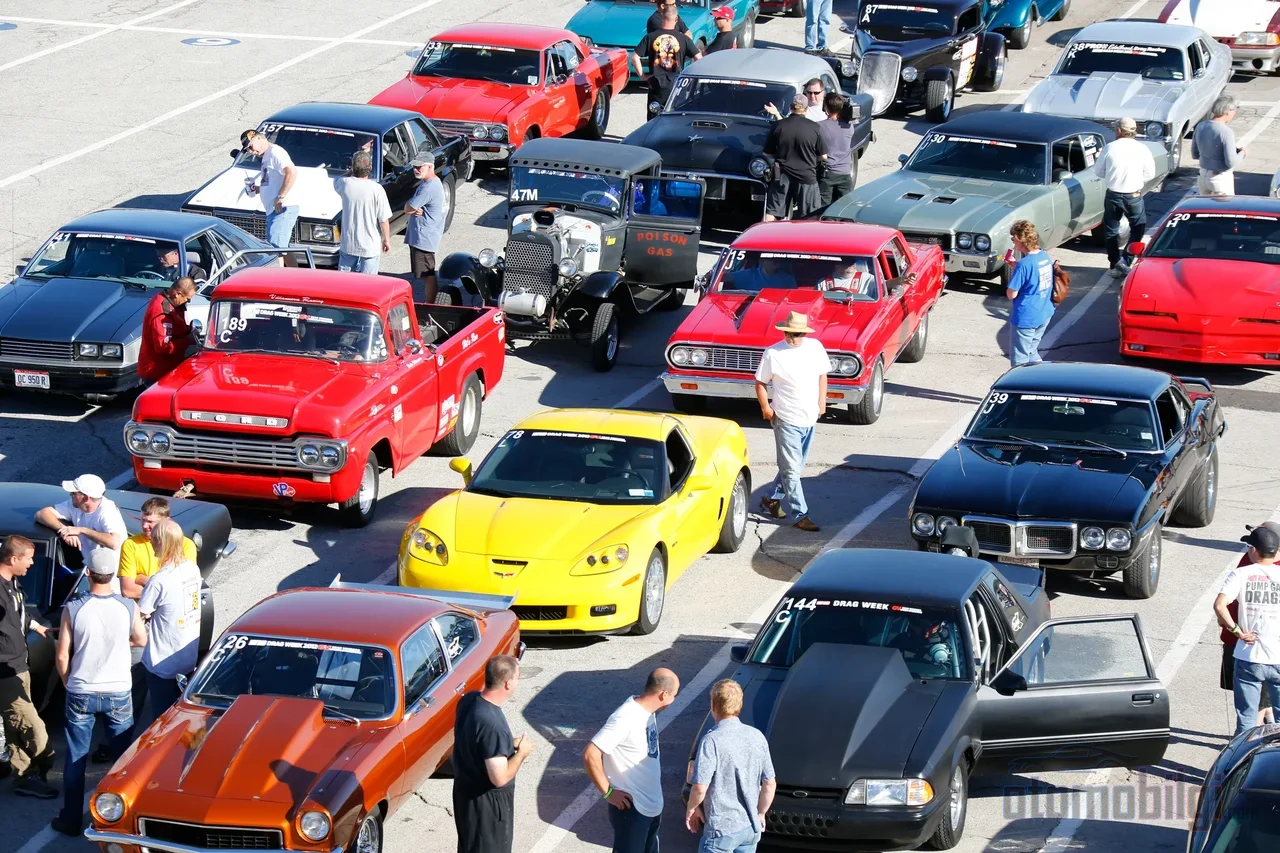
The famous route for moving between classes works like this: first the Jr. Drag Racing League - open to young people aged 5-17, held at most NHRA member tracks. From there to the E.T. bracket classes, then to Super classes like Super Comp / Super Gas / Super Street, then Super Stock and Comp, then Top Sportsman and Top Dragster. After that come Top Alcohol and the professional classes. For those who want to move up to the top classes, Frank Hawley's Drag Racing School offers licensing programs; alcohol Funny Car and dragster programs are available on demand in Gainesville, Florida.
The art on the track is a separate topic in itself. On the Christmas Tree, the pre-stage and stage lights, the amber countdown and the green light work in sequence; the clock doesn't start until the vehicle launches. A high-rev launch shortens reaction time, and electronic aids like the delay box make running close to the index easier. My advice for first-timers on the track: establish a consistent tire pressure routine, make a preparation checklist, enter the pre-stage light with a starter's signal, and steer right at the exit.
| Class | Power / Format | Performance |
|---|---|---|
| Top Fuel | 11,000+ hp, nitromethane | Under 3.7 s, 330+ mph |
| Funny Car | 500 inch, supercharged | Around 3.8 s, 330+ mph |
| Pro Stock | 1,300+ hp, EFI, spec gasoline | 6.5 s, 210+ mph |
| Top Alcohol Dragster | Methanol / nitro | 5.1 s, 285+ mph |
| Super Comp | 8.90 index, with electronics | Running close to the index |
| Super Street | 10.90 index, min. 2,800 lb | Running close to the index |
So Does Türkiye Have This Ladder?
Yes, and it's expanding every passing year. In the Turkish Automobile Sports Federation's Otodrag program, a three-class structure has been established at Kepez: Class 1 (Street), Class 2 (Super Street) and Class 3 (Pro). Although it isn't named NHRA, this is the local version of the same ladder logic: start with a street car, move up through classes, and progress along with your car and equipment. In addition, an Otodrag race will be held at the renovated Konya Drag Strip on October 5, 2026; the Turkish Motorcycle Federation has also published its 2026 drag championship calendar, with Musatti and Kepez (Antalya) rounds on the schedule.
The road is open in Europe too: the FIA European Drag Racing Championship in 2026 runs between May and September in four countries including England, Sweden and Finland, with the Top Fuel, Top Methanol Dragster and Funny Car, Pro Modified and Pro Stock Car categories; the season finale is the FIA/FIM Euro Finals at Santa Pod on September 10-13. So even after moving up a class in Türkiye, there are still rungs ahead of you - and that's precisely what I love most about this sport.
Which Rung Would You Like to Stand On?
The magic of the ladder is this: each rung holds a real championship, real Christmas Tree excitement, and a real next goal. If your budget is enough for a street car, the Street class awaits you; if a little more, the Super classes are waiting; and even if it's the nitromethane storm at the top, the road goes through the same lights. The important question is: which rung of this ladder would you start from? Let's meet in the comments and start choosing your dial.
Sources
- Drag Racing Classes
- Top Fuel: The Ultimate Guide to Drag Racing's Fastest Class
- License Information
- NHRA Releases 2027 Policy Amendment for Top Dragster and Top Sportsman
- 2024 NHRA Rulebook
- Earn Your NHRA License - Frank Hawley
- NHRA Pro Stock Rules Change Could Level the Playing Field
- Reaction Time Tips
- Drag Racing Basics
- Drag Racing - Türkiye Motorcycle Federation
- Otodrag - TOSFED
- European Drag Racing Championship - FIA
- FIA/FIM Euro Finals - Santa Pod Raceway