SMP RDRC and Russia's Rising Drag Racing Scene
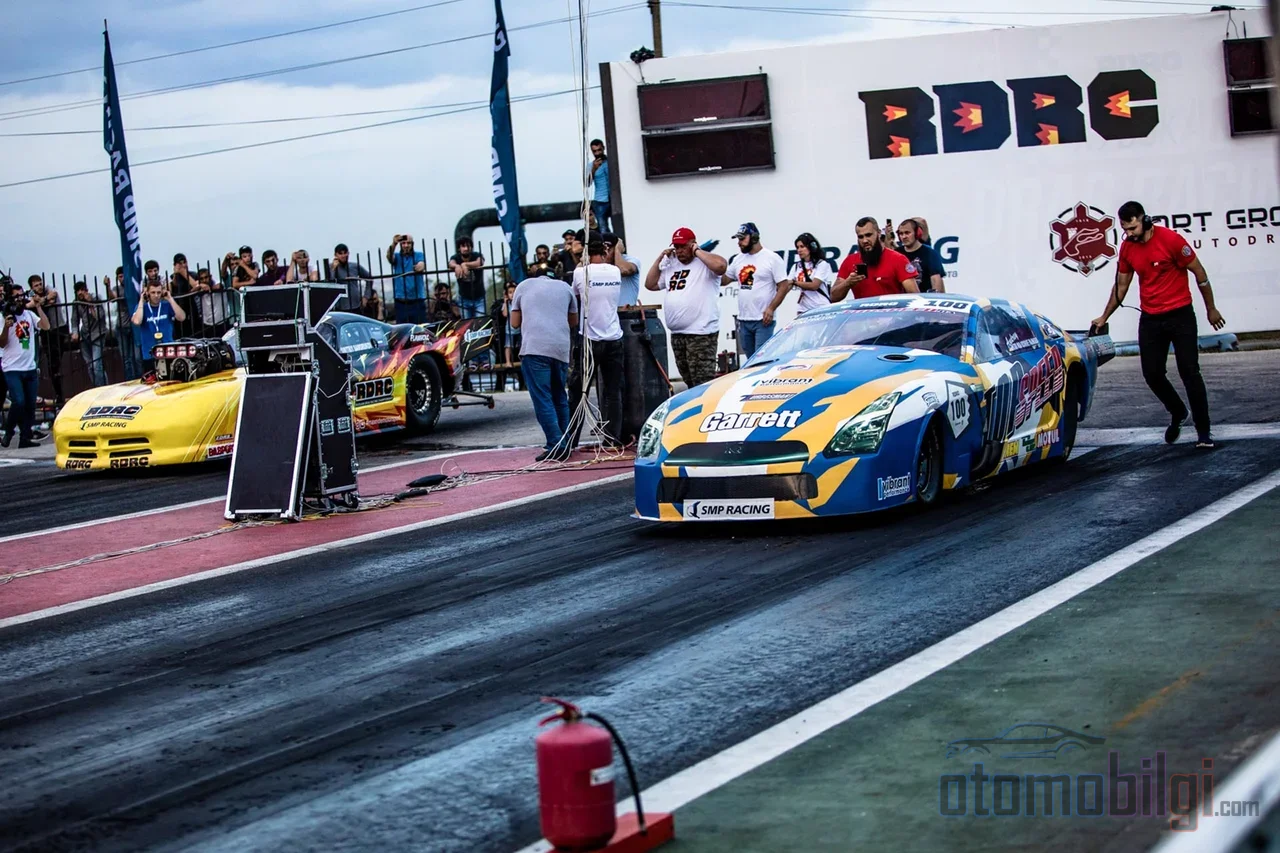
Say you're going to map out the world's drag scene. America, England, Sweden, Australia... you'd mark them all easily. But what about Russia? Most people wouldn't even think of it, right? Yet 40 km east of Moscow, built on the site of a former airport, stands the most advanced drag strip in the former USSR territory. With its four national classes, a championship with its own video production, and a national record of 6.325 seconds, the Russian drag scene is a story that's rarely talked about but growing fast.
On this page, we tell that story from start to finish: the path from illegal street racing to a professional championship, the RDRC Racepark in Bykovo, the class structure, and the records. If you're ready, let's floor it.
How Did Drag Racing Start in Russia?
Everything exploded in 2001: That famous Hollywood film that carried fast cars and night racing culture all over the world reached Russia too. After the film, drag racing quickly became popular among young people, but there was a problem: Until 2004, these races were illegal. They were held in a completely gray area, unsupervised, between the circuits.
The turning point came in 2004. The Russian Automotive Federation (RAF) recognized drag racing as an official motorsport discipline, and things started to change. Between 2005 and 2008, the DRAG BITVA (Drag Battle) event held in Krasnoyarsk, Siberia, became the scene's favorite gathering. However, due to financial problems, it was canceled in 2009 and never came back. From 2009 to 2014, there was a difficult period of silence, kept alive by regional enthusiasts.
Then in 2014, the second turning point: The Dragtimes company partnered with SMP Racing and became the promoter of the Russian Drag Racing Championship (SMP RDRC). With the championship held under RAF supervision, the Russian drag scene became professional. While only street cars could race before 2014, the doors were now opened to promods and dragsters as well. Moreover, SMP RDRC became the first racing series with its own video production, and it still holds that distinction. In other words, they had built a structure that took content production seriously and captured its audience on screen too.
Highlights
- Drag racing in Russia was legalized with RAF approval in 2004; before that, it was completely illegal.
- The first professional track, RDRC Racepark, opened in 2019 in Bykovo, 40 km from Moscow.
- The breakout limits of the four national classes: 9.6 / 8.6 / 7.6 / 6.8 seconds.
- National record: Dmitry Samorukov, 6.325 sec @ 328.76 km/h (Dodge Viper Doorslammer).
- AWD street car European record: Dmitry Kapustin, 7.182 sec @ 312.77 km/h (Nissan Skyline GT-R R32).
RDRC Racepark: The Track Born from an Airport in Bykovo
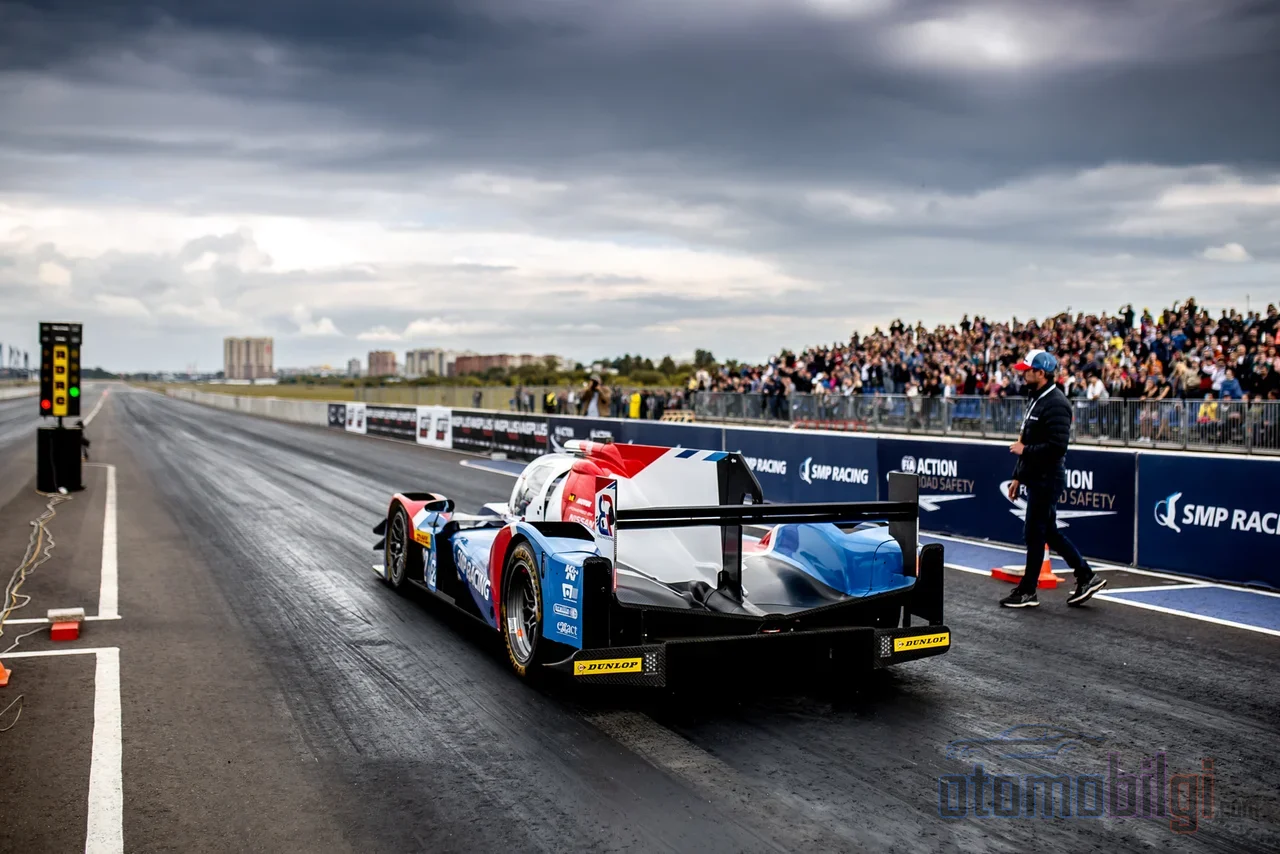
Now we come to my favorite part. Thanks to the efforts of the SMP RDRC promoters, in 2019 Russia's first professional drag strip, RDRC Racepark, was built. It was built 40 km from central Moscow, on the site of the former airport in Bykovo. Dmitry and his team have built a complex with the most advanced drag strip in the former USSR region, capable of hosting European-level events.
To understand why this is such a big deal, we need to look back at what came before. Until the strip opened, races were held on the straight sections of circuit tracks, and the entire straight could not be prepared: only a bit more than 1/8 mile of the 1/4 mile, roughly 201 meters, could be prepared. What's more, these tracks could only be used outside of local or national event weekends. In other words, a true "make do with whatever you have" era. The 2019 season opener was held at Bykovo on June 29-30, and for the first time in a full decade, a championship race was held in Russia.
Things at the strip are serious: special glue and used tire rubber are applied to the starting area. Think of it like polishing a wooden floor; the car tires practically lock onto this sticky surface, and grip, and therefore results, improve noticeably.
SMP RDRC Classes and Breakout Limits
So who races in this championship, in which cars, and under what rules? SMP RDRC is quarter-mile (402.33 meters) parallel acceleration racing. Cars can cover the 403 meters in under 7 seconds at speeds above 300 km/h. The championship has four national classes, and each one has a breakout limit. Let me remind you of the breakout rule: a racer who runs faster than their class's limit loses. So it's not "the faster, the better"; the art of "run consistently within the time you predicted" applies. What makes you angry in everyday traffic for being late, here it means points.
| Class | Vehicle Type | Breakout Limit |
|---|---|---|
| Pro ET | Mostly street cars, allowed without a roll cage | 9.6 sec |
| Street | Full-body street cars, roll cage mandatory | 8.6 sec |
| Pro Street | Full-body street cars and 3/4 chassis vehicles | 7.6 sec |
| SuperPro Street | Door slammers, promods, dragsters, 3/4 chassis | 6.8 sec |
Each Class Has Its Own Character
Pro ET is like the championship's entry gate. Most participants come with the street cars we know, such as the BMW M5, Audi RS6, Porsche 911, Nissan GT-R or Lamborghini Huracan, and they are allowed to race without a roll cage. In other words, a class where you can come on the weekend and race with your supercar. In the Street class, the safety side gets serious: a roll cage and all FIA/SFI safety equipment are mandatory. But the character is the same: cars of every persuasion, like the Toyota Supra, Audi TT RS, Honda Civic and even the VAZ 2110, compete in this class.
In Pro Street, 3/4 chassis vehicles are added alongside full-body vehicles. At the very top, SuperPro Street is where the heavyweights of the scene are: door slammers, promods and dragsters run here, and the only restriction is the 6.8-second breakout limit. Additionally, there is also a Regional Series divided into four classes by ET in the regions: Stock (11.9 sec), Super Stock (10.9 sec), Super Gas (9.9 sec) and Super Comp (8.9 sec).
Let me add a note: the official championship broadcast shows three final classes by drivetrain type (front, rear, and AWD vehicles); the ET-based four-class structure forms the championship's main national classes. The two rulebooks reflect different eras and paradigms, and both are real layers of the scene.
Records: The Samorukov and Kapustin Signature
The most famous name of the Russian drag scene is without a doubt Dmitry Samorukov. A four-time national champion, Samorukov set the national record in 2016 during a special record attempt at the Fort Grozny track in Grozny, Chechnya, with a Dodge Viper Doorslammer: 6.325 seconds, 328.76 km/h. The official championship records show a 6.305-second run in June 2018 with the Dodge Viper DT Pro-mod, also a Viper, and his overtaking of Dutch driver David Vekter in the final. The two runs belong to different cars and different years; both prove Samorukov's place in this scene.
Samorukov's story does not stay within Russia's borders. In 2019, with his newly built Chevrolet Camaro, he became the first Russian competitor to race in Promod, the most competitive class of the FIA European Championship, finishing 10th out of 38 racers in the overall standings after six rounds. place. He is also known as a regular competitor in the NHRA Pro Mod Drag Racing Series.
The second big name is Dmitry Kapustin: He holds the AWD street car European record with a Nissan Skyline GT-R R32. The record was broken in 2018 during a qualifying round at Fort Grozny: 7.182 seconds, 312.77 km/h. Here is a small scale to help you picture it: A small scale to help you picture it: We are talking about a car that crosses the finish line at over 300 km/h, but ends up off the road with a slide.
Samorukov also holds a 1/2 mile national record: With the Nissan GT-R R35: 13.305 seconds, 346.48 km/h. It was broken during a test day at RDRC Racepark in 2020. at this track, regarded as one of Russia's best drag strips, many time and speed records are traditionally broken; the number of participants doubled in the SMP RDRC's Grozny round. The 1/2 Mile Culture and the Unlim 500+ Festival
1/2 Mile Culture and the Unlim 500+ Festival
In Russia, the drag scene isn't just about the quarter mile; 1/2 mile races are also quite popular. to enter, the car must produce at least 500 hp. to enter, the car must produce at least 500 hp. This festival, where high-powered supercars such as the Nissan GT-R, McLaren 720S, Lamborghini Aventador, Porsche 911 and Ferrari 488 come together, is also hosted at RDRC Racepark.
Two worlds also collide: In August 2019, joint races of SMP RDRC and Unlim 500+ Belarus were held in Minsk. In the same year, Aleksandr Zazygin won the AWD class in the Stage 2 race held in Bykovo. The race weekend format is also clear: qualifying runs on Saturday and Sunday mornings, finals on Sunday afternoon.
Where Does the Russian Drag Scene Race?
In short, my answer would be: The Russian drag scene, legalized in 2004, gaining a professional championship in 2014, and winning its first professional track, RDRC Racepark, in 2019, is a rapidly rising scene with four national classes (Pro ET, Street, Pro Street, SuperPro Street), breakout limits ranging from 9.6 down to 6.8 seconds, whose records by Samorukov and Kapustin have written its name onto the map of Europe. A decade ago, half the strips couldn't be prepared; today, events at the European level are being hosted.
If you ask me, the most beautiful thing about these stories is this: drag racing speaks the same passion everywhere. The language is different, the strip is different, the car is different, but the tension at that starting line is universal. Russia does it perhaps in the least talked-about corner of the world, but at the fastest-growing pace. At the next race weekend at Bykovo, who knows what records will fall?
Sources
- Russian Drag Racing Championship - SMP Racing
- Drag racing - Wikipedia
- A new season of the Russian Drag Racing Championship SMP RDRC - SMP Racing
- Russian Drag Racing Championship SMP RDRC in Grozny - SMP Racing
- Results from Russian Championship - Stage 2 - European Drag Racing Database
- Russian Drag Racing Championship - RacePortal.ru