How Japan's Only Quarter-Mile Drag Strip Became a Solar Panel Farm
One day it's there, the next day it's a solar panel. Sounds absurd, doesn't it? But that's exactly what happened to Japan's drag world: a track in the heart of the country where legends ran the quarter mile in under 7 seconds is now a solar energy farm. The closure of Sendai Hi-Lands, the retirement of the HKS drag car, and the scenes falling silent one by one... How did Japan's drag scene end up like this? And is it still breathing? The answer isn't as sad as you might think, but first we need to go back to the beginning of the story.
What Was Sendai Hi-Lands and Why Was It Important?
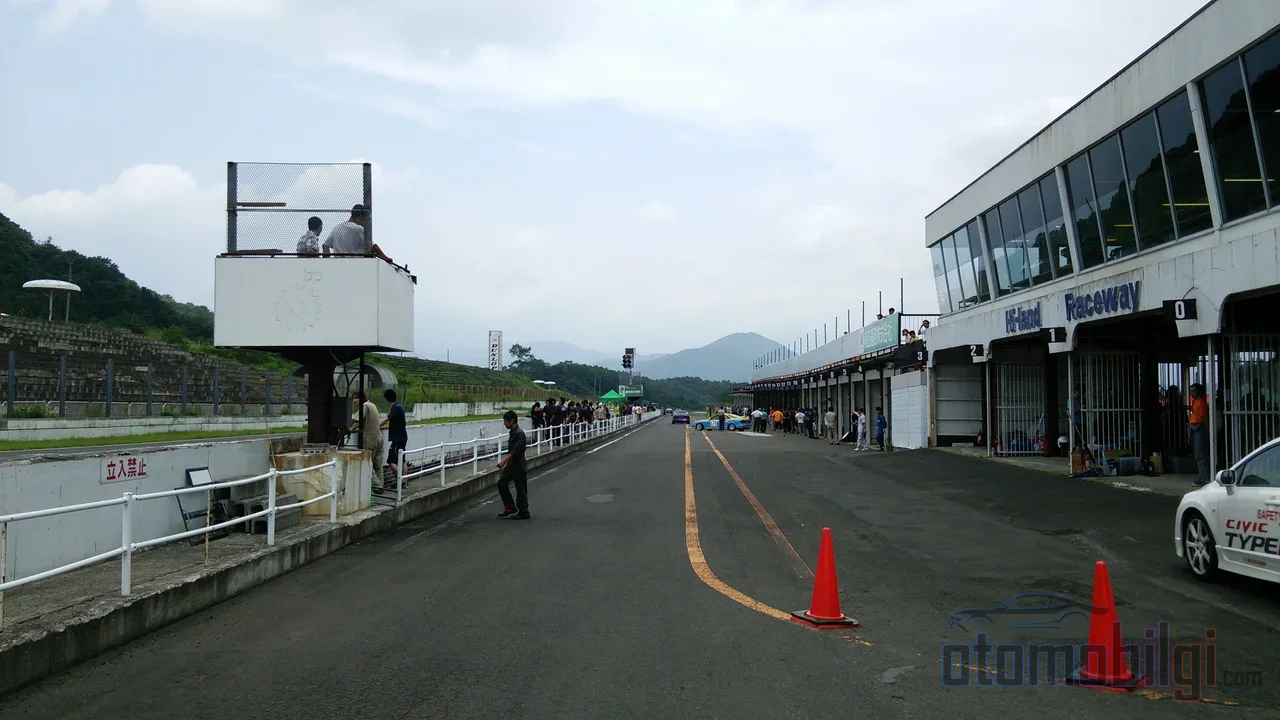
Sendai Hi-Land Raceway was a 4.030 km long motor racing circuit that opened its doors on September 21, 1986, in the Aoba-ku district of Sendai city in Miyagi Prefecture. This 18-turn circuit hosted major championships such as JTCC, JGTC, Japanese F3 and Super Taikyu; the 1:38.080 lap completed by Hiroaki Ishiura in a Dallara F307 in 2007 was the track's crown jewel. But what was really interesting was that the track was located within an entertainment complex: surrounded by amusement parks, golf courses and water sports areas, it was essentially a racing circuit built in the middle of a theme park. It had another unusual concept for Japan, and that's the one that really concerns us.
In the 1990s the track was modified to make it faster, and with that modification an extraordinary investment was made for Japan: a quarter mile drag strip was added. Known as the country's only true quarter mile drag strip, this stretch became the heart of pure speed racing in Japan. It was also heavily used as a test track in the development of the new-generation Nissan GT-R; in other words, some of those legendary GT-Rs we see on the roads matured here. Let's also add that the car racing scene of the 1995 film Thunderbolt was shot here, so it even has a Hollywood touch.
Key Highlights
- Sendai Hi-Land Raceway operated from 1986-2014 and housed Japan's only true quarter mile drag strip.
- The track was damaged in the 2011 earthquake; it was permanently closed in September 2014.
- The land was completely cleared by 2018 and converted into a solar energy park.
- The HKS R33 Drag GT-R, with a time of 7.671 seconds, was the world's fastest four-wheel-drive drag car for about five years.
- Central Circuit is the only place where a full quarter mile can be run, and it hosts a drag festival only 4 times a year.
The Real Story of the Closure: Earthquake or Decision?
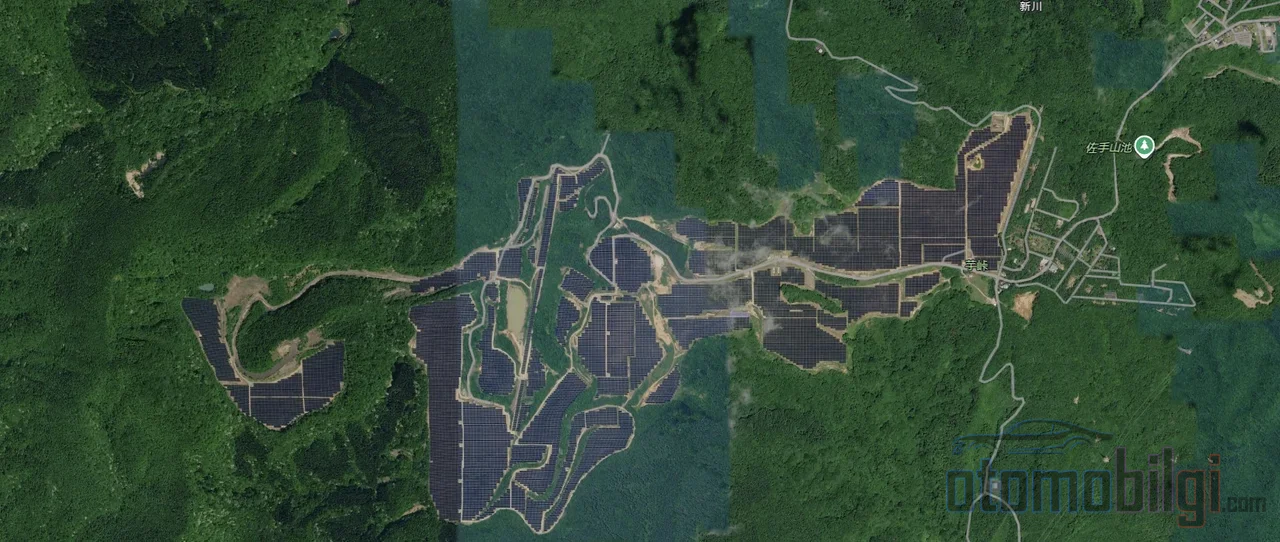
The short answer is not what everyone thinks. There's a narrative circulating that directly ties the closure to the earthquake, but the actual timeline is a bit more layered. The Tohoku earthquake in March 2011 damaged the track, particularly the control tower and timing loops; this severely limited its capacity to host major events. So the earthquake darkened the stage, but it wasn't what brought the curtain down.
The curtain fell in September 2014: the facility's owner announced that the track would be permanently closed and the land would be converted into a solar energy park. By 2018, everything had been cleared; the track, along with the theme park and golf courses beside it, is gone with the wind today, and rooftops have given way to solar panels. Imagine this: photovoltaic cells now greet the sun on the very asphalt that once bore the tire marks of GT-Rs and drag cars. For a car enthusiast, I can't think of a more ironic picture than this.
HKS's Legend and Its Retirement
You can't talk about Japan's drag scene without mentioning HKS. The HKS R33 Drag GT-R was one of the brand's most recognizable symbols, and with a time of 7.671 seconds it held the title of the world's fastest all-wheel-drive (AWD) drag car for roughly five years. Racing the quarter mile for about a decade, the car made the decision to retire for an unfortunate reason as well: routine inspections revealed that critical parts were no longer available. The end of the legend was brought about by spare parts that could no longer be made; there was no final victorious run like in Hollywood movies.
Sendai's drag legacy was also written into the international record books. The Japanese record of 7.277 set at the track was later beaten by a Toyota Supra at Englishtown's Old Bridge Township Raceway Park with an ET of 6.893 and 310.81 km/h. In other words, the speed that emerged from Sendai's ground was valuable enough to remain a benchmark even across the ocean.
There is a point where I need to be honest here: We do not have an official and current withdrawal statement from HKS's factory drag team stepping away from the scene. The information we have is limited to the R33's retirement in 2007 and the shrinking of the scenes. So the team's withdrawal cannot be independently verified based on the information at hand; therefore, let's continue telling the story ONLY around the car's retirement.
Why Did Japan's Drag Scene Shrink?
Everything I've described so far is a result, so what are the causes? In Japan, drag racing, much like in America's early days, initially sprouted under the influence of American military personnel and US movies. So its foundation was solid. But as the scene grew, several things went wrong at once.
First, the physical infrastructure: the country's only true quarter-mile drag strip closed down. Second, cultural invisibility: Japan's tuning and street racing culture was born in the 1960s as youth rebellion and turned into a global movement, but its visible face on the international stage was almost always drift. When someone looking at the world asked "What comes to mind when you think of Japan?", the answer was drift; yet on those same lands, turbocharged JDM legends had been challenging the quarter mile for decades. Third was the decline of the magazines covering the quarter mile (zero-yon): as the publishing ecosystem that kept the scene alive shrank, the channels through which the new generation encountered drag racing also narrowed. When all of these combined, Japan's drag scene is today honestly described as a niche scene.
What Is No-Prep and How Is the Japan Drag Festival Reviving the Scene?
Now let's move on to the hopeful part of the story, because there is a story of resistance here. First, let's explain the term: no-prep means the racing surface is not pre-treated with traction-enhancing chemicals beforehand, unlike classic drag formats. In other words, it's the vulnerable version of the question "does the asphalt trust you?" With less grip, the car slides more, and driver skill matters far more. In America, no-prep has also become widespread as a budget-friendly alternative compared to prepped racing; the rules are divided into two: safety regulations set by the track or organization and racing format rules.
Japan Drag Festival operates in exactly this format: it holds no-prep events at Central Circuit and Twin Ring Motegi. Central Circuit is the only place where a full quarter mile can still be run, and its drag festival opens its doors only four times a year. Four times! Seeing how scarce it is, you realize once again how valuable this scene is. The events are sometimes called "the last surviving drag race in Japan," and the toughest JDM legends race each other on unprepared surfaces; 8-second R33 GT-Rs, monster wheelies, 4-rotor monsters... On the Twin Ring Motegi side, drag meetups organized by TRUST covering all classes have played host to car battles like GT-R vs Corvette.
There is someone who deserves to be named behind this revival: Yuji Nagao. Nagao, the founder of Target-R and the organizer of the Drag Festival, is a name who has devoted years to Japanese drag racing. The goal is to reunite Japan's drag scene with a global audience; making the scene visible through video content reaching the world via social media. To achieve this, he first needs to show how much the world has been missing.
Japan's Place in the Drag Culture Scene on the World Stage
So what do we see if we compare Japan with other countries? In America, drag racing is a massive industry: At NHRA events you can see more than 200 vehicle classes under 15 categories; professional classes like Top Fuel, Funny Car, and Pro Stock carry an ecosystem reaching millions of spectators. The same wind is blowing in Latin America: American influence, stretching from NHRA to Street Outlaws, is the fundamental source feeding the region's drag scene. Japan, meanwhile, represents a third model in this picture: its origins are American-sourced, but its development has been entirely distilled with local JDM culture - meaning the cars are domestic, the format is global.
The uniqueness of the Japanese scene lies here: it joined the world's drag map with icons like the GT-R and Supra, all-wheel-drive drag technology, and rotary-engine madness. The title of "the world's fastest all-wheel-drive drag car," which the HKS R33 Drag GT-R held for five years, is the clearest proof of this. But the same scene stands on a fragile balance compared to America's permanent track infrastructure and Latin America's rapidly growing audience base. The country that exports drag culture to the world the most is America; Japan, meanwhile, is one of the actors with the highest potential but the least visibility.
So What Will Japan's Drag Future Be?
Short and clear answer: Japan's drag scene has shrunk but it's not dead; no-prep events at Central Circuit and Twin Ring Motegi are keeping the scene alive. Even if only four times a year, even on a single track, this scene still keeps the true rhythm of the quarter mile alive. The asphalt at Sendai Hi-Lands, mixed in with the solar panels, is proof of what was lost; the Drag Festival, meanwhile, is proof of what could be saved.
If you ask me, the lesson to be drawn here is this: what keeps a scene alive is neither a single legendary car nor a single track; it's the people who watch it, share it, and pass it on to the next generation. In Japan, that job has been taken on by Yuji Nagao and the community that believes in him. Next time, don't say "Japan means drifting"; behind it there's a drag heart that's been beating for years where 7-second GT-Rs ran, and it still beats, even if it's small. For those who want to hear the sound of this heart, the door opens four times a year.