Santa Pod Raceway: Europe's First Permanent Drag Strip
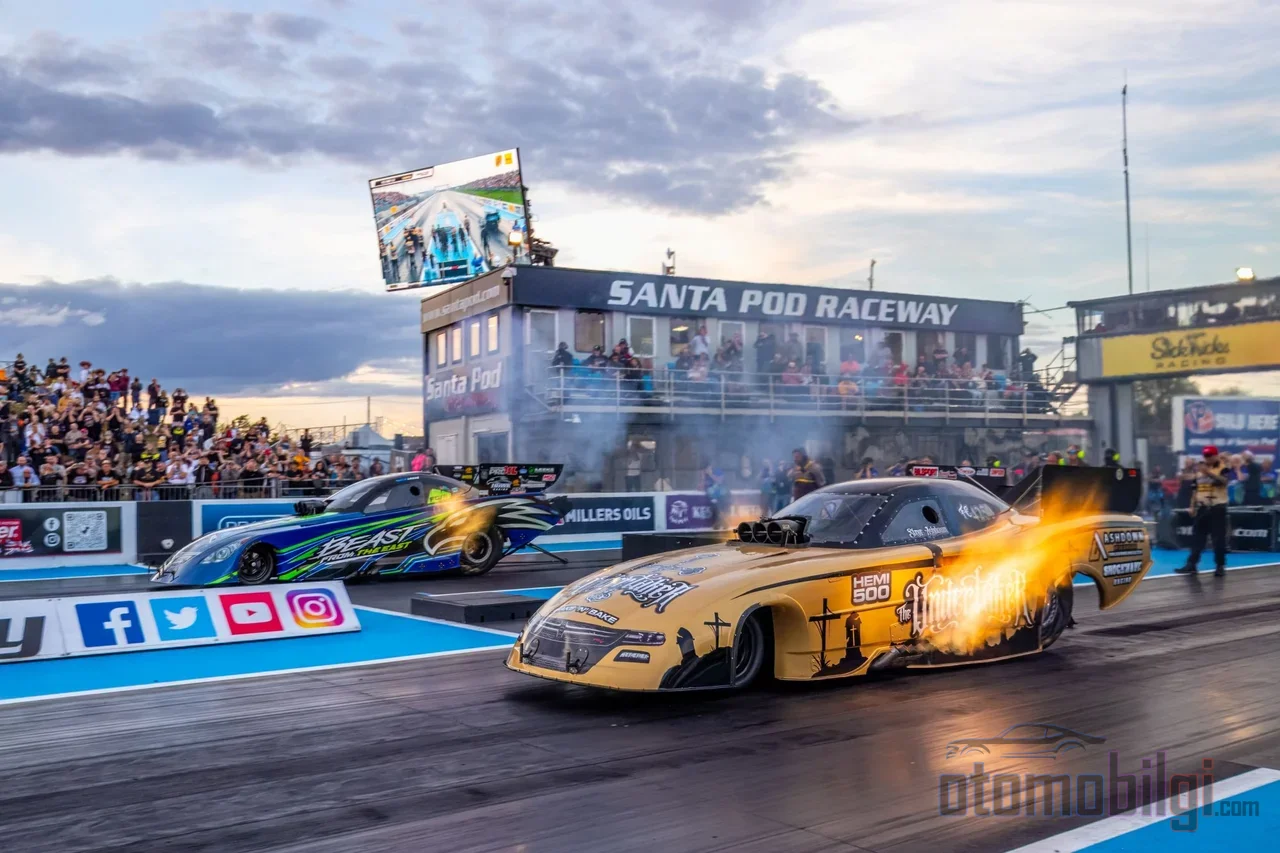
On an Easter Monday morning in 1966, in the countryside of Northamptonshire, England, a group of enthusiasts were doing something no one in Europe had ever seen before, on the runway of an old warplane airfield that was of use to no one: they were opening a permanent drag strip. What we today call Santa Pod Raceway was, on that day, nothing more than an airfield sunk into post-war silence. So how did America's quarter-mile madness cross the Atlantic and become a continental scene stretching from an English village to Germany and eventually to the FIA European Drag Racing Championship? The story is far bigger than a strip: it is the birth certificate of European drag racing.
How Did a Wartime Runway Become a Drag Strip?
First, let's get to know the place. Podington Aerodrome opened in 1942, during the harshest years of World War II, and throughout the war it served primarily the US Air Forces, in particular the 92nd Bombardment Group. After the war ended, the base was decommissioned in 1947 and remained largely idle until the mid-1960s. When the war ended, the base was decommissioned in 1947 and remained largely idle until the mid-1960s. Imagine: But to a group of drag enthusiasts, that expanse was exactly what they were looking for.
But that stretch of open ground was, in the eyes of a group of drag racing enthusiasts, exactly what they had been looking for. What is the indispensable element of drag racing? A long, straight, smooth surface. Podington's 3/4-mile (approximately 1.2 km) main strip was tailor-made for the job. A group of independent businesspeople chose the site as a permanent drag strip, and Europe's first permanent drag strip was established there.
what does Santa Pod mean? The name itself tells a story of its own.
The "Santa" part is a reference to the spirit of Southern California, the birthplace of drag racing, and the legendary Santa Ana Drags strip. As for "Pod," it's right there in the middle: Podington. Podington. So the full name is the sentence "American drag culture met English soil" compressed into two words. It opened on Easter Monday, 11 April 1966; in the first two seasons the starting line was where today's finish line is located, and the area behind it was used as the pit. The track was taken over by the Phelps family in 1969, and Santa Pod became a family business.
Highlights
- Santa Pod opened in 1966 as Europe's first permanent drag strip on a former wartime airfield.
- Its name comes from the combination of Santa Ana Drags with Podington.
- A drag club started in Germany in HARA 1968, and races at the Hockenheimring began in 1986.
- The FIA European Drag Racing Championship has been running since 1996; Santa Pod is the first and last round of the season.
- Santa Pod celebrates its 60th in 2026. So how did this idea reach England?
How Did Drag Culture Cross the Atlantic?
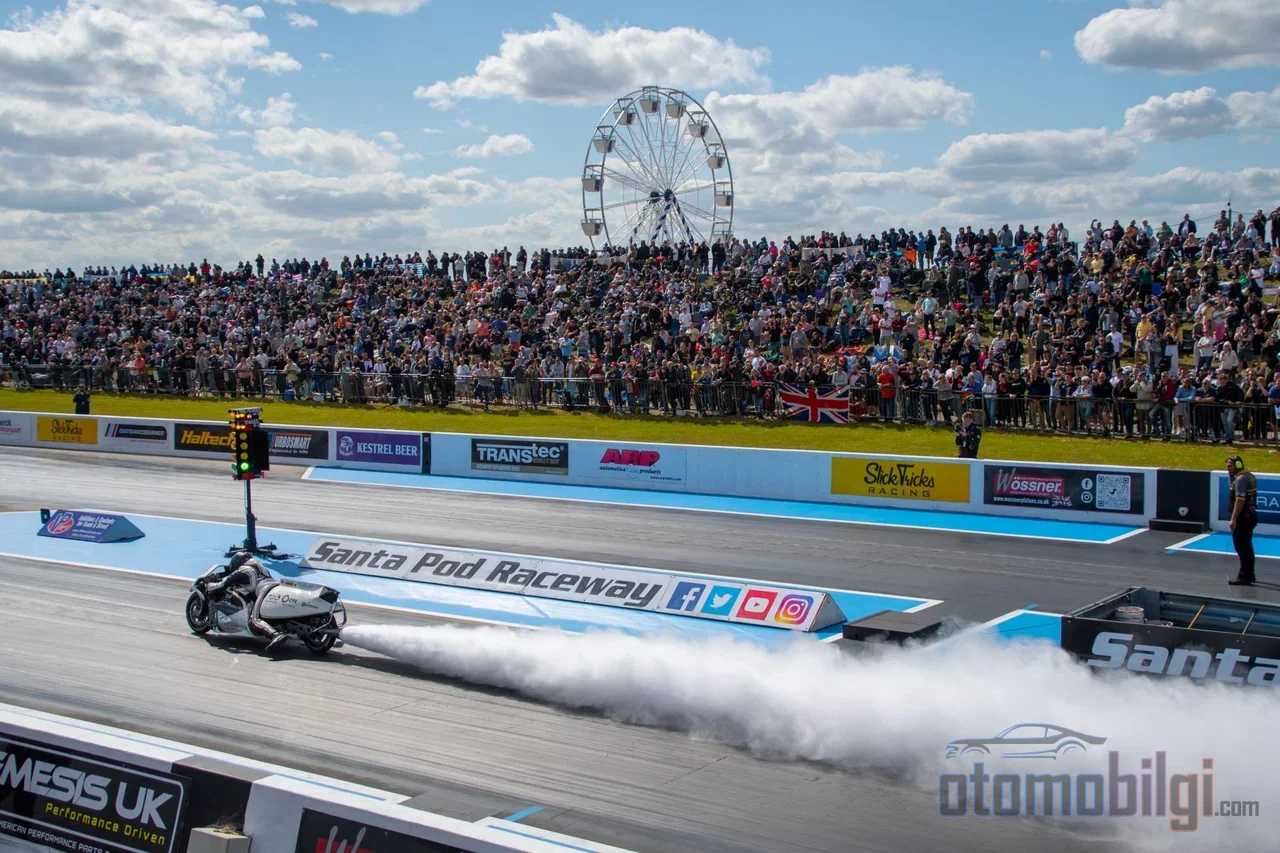
In the early 1960s, the air bases connected with the American military presence in post-war Britain were among the channels through which motor culture began to seep into the continent. This is where the most interesting part of the story begins. In the early 1960s, the air bases linked to the American military presence in post-war Britain were among the channels through which car culture began to seep onto the continent. In 1964-65, leading American drag racers performed at airfield venues in England, including several sites such as the former US base at nearby Chelveston. British spectators watching these shows, where big V8s growled in the wings and under the hoods, felt a spark ignite: this sport needed a home in Europe as well.
Considering this indirect route - that the American military presence spreading across the continent during the Cold War carried a passion for engines along with Yankee culture - Santa Pod's founding looks less like a coincidence and more like a logical outcome. The cradle of drag racing was Southern California; but the connection that carried it to Europe was that American presence established on British soil in the post-war years and the racing shows staged at the bases. When businessmen and racers who saw these shows chose Podington, the course of history changed.
Santa Pod's Milestones
After Santa Pod opened, it grew rapidly and became the continent's drag racing hub. In the 1970s, the European Internationals event began drawing entries from Sweden; Arnold Sundqvist brought Europe's first jet dragster here. The 1973 Petersen Publishing Internationals hosted major American stars, and Don Schumacher and Paula Murphy introduced the first fully equipped American Funny Cars to the European audience.
In 1975, the public Run What Ya Brung track days began; meaning ordinary drivers could take their own cars down the track and run the quarter mile. At the Internationals in September 1980, the only 16-car nitro field ever assembled in Europe raced; US stars such as Don "The Snake" Prudhomme, Gene Snow, Tom Hoover and Harlan Thompson were on the track.
The year 1984 was special in two respects: The Doorslammers event was run for the first time, and Sammy Miller, in the rocket-powered Funny Car called Vanishing Point, set the world drag record of 3.58 seconds and 621.63 km/h that still stands today. In 1987, Bug Jam, the temple of VW enthusiasts, began and has been held every year since. In 1991, the Spring Bank Holiday race became The Main Event under its current name; in 1996 the track passed to a consortium led by Keith Bartlett, and the same year the FIA European Drag Championship began.
What followed was filled with speed and technology records: In 1998, Barry Sheavills made the UK's first 4-second Top Fuel pass (4.97 seconds / 297.19 mph). In 2005, Martin Hill's Fireforce 3 jet car broke the world's fastest jet car record with a terminal speed of 540.90 km/h. In 2012, the FIA Top Fuel race distance was shortened to 1,000 feet for safety reasons, and nitro Funny Cars followed the same path in 2014. In 2018, the entire track was ripped up and excavated, including the original wartime runway beneath it, and rebuilt as a fully concrete track; because concrete delivers more consistent times than asphalt. In 2022, Eric Teboul crowned his career with the fastest two-wheeled quarter-mile pass on record, running 4.976 seconds and 290.51 mph on his rocket-powered motorcycle.
Germany Line: From HARA to Hockenheimring
The story doesn't end with England. In the years when drag racing began spreading to the continent, there was similar activity in Germany as well. In 1968, the Hanau Auto Racing Association (HARA) was founded; the leading name of this club was Jerry W. Lackey, and the club played a key role in organizing German drag racing. Sprouting around US military bases, this club laid the foundation for another European drag fortress in the same spirit as Santa Pod.
The long-awaited big stage arrived in 1986: Dragster racing began at Hockenheimring. In the early years, between 1986 and 1988, races were run on the track's start-finish straight over a distance of 1/8 mile; that is, a giant Formula 1 circuit was temporarily hosting quarter-mile madness. This small beginning kept growing, and today it is considered continental Europe's biggest drag event under the name NitrOlympX.
Why is NitrOlympX so big?
NitrOlympX has grown steadily since 1986, and in 2026 it will run for the 33rd time at Hockenheimring. What best conveys the scale of the event are the numbers behind the scenes: consider a total of approximately 20,000 horsepower running on the track at the same time; it would be impossible for the Motodrom's grandstands not to tremble. NitrOlympX is also one of the brightest showcase points on the FIA European Drag Racing Championship calendar every year. This championship, the pinnacle of four-wheeled drag racing series, is run by Speedgroup, and Santa Pod hosts both the opening and the final round every season.
How Did Today's European Drag Scene Take Shape?
Let's take a step back and look at the whole picture. What was born from a single quarter mile on an old wartime airstrip in 1966 transformed, over sixty years, into an FIA championship with six events across four categories, a network of tracks stretching from Sweden to Germany, and tens of thousands of spectators filling Hockenheim every August. This growth was not always smooth: In 2016, team manager Keith Bartlett stated that the championship could not grow at the desired pace due to a lack of sponsorship, and that only the Santa Pod and Hockenheim rounds could be broadcast and promoted worldwide. In other words, behind its glossy image today, the continent's drag scene also wrestled with commercial difficulties for years.
By 2026, the picture looks solid: Santa Pod is celebrating its 60th anniversary, and the track's future seems guaranteed; even the 2027 calendar has been announced. The Springspeed Nationals will open the season on March 28, 2027, and more than 20 events will run throughout the year, including The Main Event, Doorslammers, Bug Jam and The Euro Finals. On the German side, tickets for the 2027 NitrOlympX have already gone on sale.
Short Answer: How Did Drag Racing in Europe Start?
In summary: European drag racing seeped onto the continent in the early 1960s through demonstrations held at air bases tied to the American military community in post-war Britain; inspired by that spark, a group of businessmen opened Santa Pod Raceway on 11 April 1966 at Podington, a former wartime airfield, as Europe's first permanent drag strip. In Germany, HARA laid its club foundations in 1968, racing at the Hockenheimring began in 1986, and that event has grown into NitrOlympX, the continent's biggest drag racing event; since 1996 they have all been united under the FIA European Drag Racing Championship umbrella.
The next time you watch a Top Fuel dragster launch, think about this: that two-second explosion is the continuation of a story that began on a deserted English airfield sixty years ago. And the story, in 2026 60th anniversary in 2026.
Sources
- The Santa Pod Story
- Santa Pod Raceway - Wikipedia
- Santa Pod Raceway - British Drag Racing Hall of Fame
- History - nitrolympx.de
- NitrOlympX - Hockenheimring
- European Drag Racing Championship - Wikipedia
- FIA European Drag Racing Championship heads to Hockenheim for NitrOlympX - FIA
- Santa Pod Raceway Golden Anniversary in 2016
- Drag Racing At Santa Pod Raceway UK