Why Was the Quarter Mile Shortened to 1,000 Feet in Drag Racing?
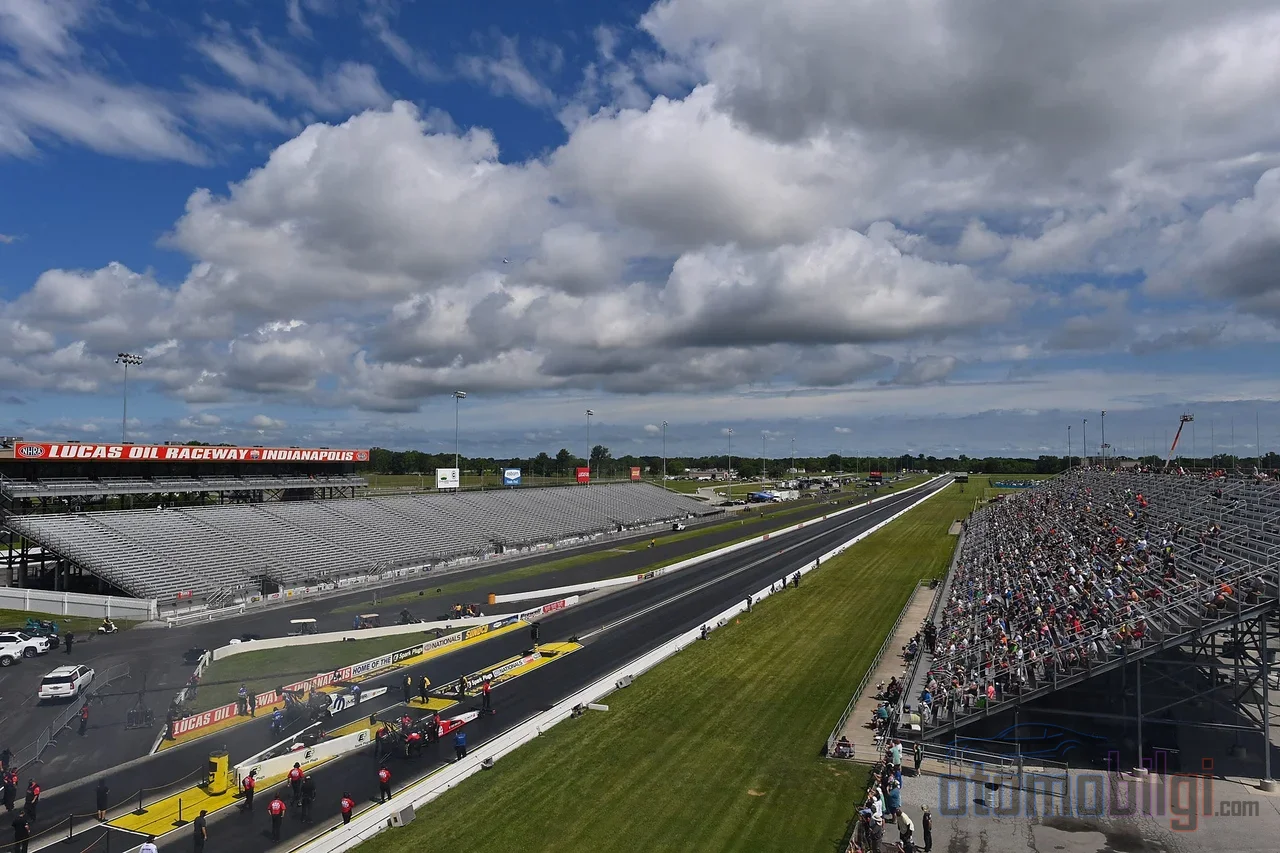
Have you ever heard of a race ending in the first half of the finish line? The heart of drag racing is the quarter mile, that is 1,320 feet, exactly 402 meters. But today, the fastest vehicles in the world, Top Fuel dragsters and Funny Cars, race only on the 1,000-foot (305-meter) section of the track. That means a cut of exactly 320 feet from the quarter mile. So why? The answer goes down to a single word: safety. And behind that word lies a tragedy that happened in June 2008, in which a driver lost his life. Let me tell you the story of this rule, chronologically and without skipping any detail.
Highlights
- NHRA shortened Top Fuel and Funny Car races to 1,000 feet on July 2, 2008
- The reason for the decision was the death of Scott Kalitta, who lost his life in Englishtown on June 21, 2008
- Nitromethane was banned for safety reasons in 1957 and allowed again in 1963
- Even today, speeds over 343 mph (552 km/h) are recorded at 1,000 feet
- The FIA European Drag Racing Championship also uses the same 1,000-foot standard
How Did the Quarter Mile Become a Standard, and Why Did It Change?
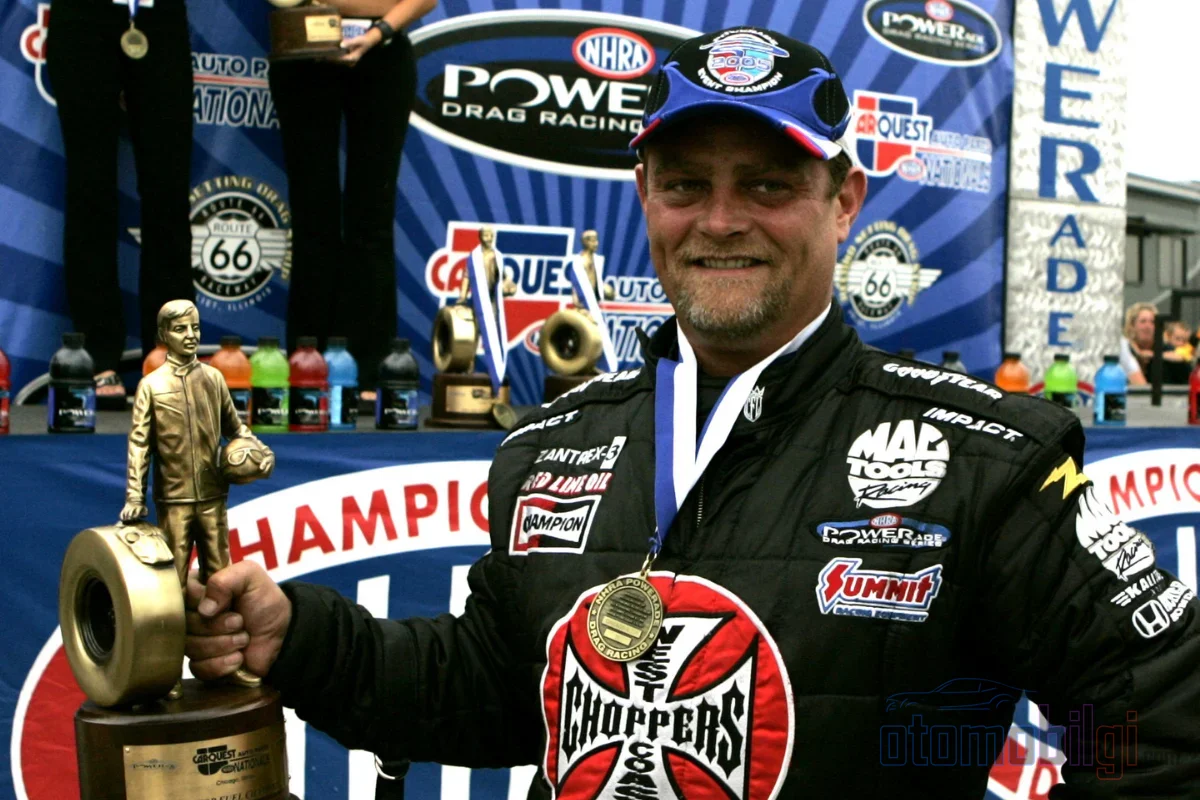
The classic track length of drag racing, from which the sport takes its name, is the quarter mile: 1,320 feet, or 402.3 meters. This distance was the universal standard of the sport for decades. The acceleration battle ended here, the parachutes deployed here, and the trap speed was measured here. But when speeds approached the 300 mph limit, there was no longer enough space at the end of the track to stop the car. In fact, similar adjustments had been made in the past: In 1989, due to speeds approaching 300 mph, the speed-trap zone was shortened to end at the finish line.
So the change that came in 2008 was not the sport's first shortening; but it was the most shocking one. Because this time it was made at the cost of a human life.
June 21, 2008: The Fatal Crash in Englishtown
Scott Kalitta was an experienced name, a two-time Top Fuel champion (1994 and 1995), with 17 wins in Top Fuel and 1 in Funny Car. Drag racing was his family business: his father was Connie Kalitta and his cousin was Doug Kalitta. On June 21, 2008, at Old Bridge Township Raceway Park in New Jersey, during the final qualifying rounds of the Lucas Oil NHRA SuperNationals, he was on the track, aged 46.
While his Funny Car was traveling at about 300 mph (480 km/h), the engine exploded near the finish line. The parachutes were damaged and could not slow the car down. According to the official findings of the New Jersey police, Kalitta maintained steering control and applied mechanical brakes; but the clutch system was locked and the engine kept delivering power to the rear wheels. The car entered the sand trap at about 125 mph (201 km/h), went over the concrete wall and hit heavy equipment. The measured impacts exceeded 100 g, with some approaching 200 g. Kalitta lost his life to blunt traumatic injuries.
After the crash, some drivers stated that the track did not offer a long enough shutdown area. Here is exactly where the seeds of the 1,000-foot decision were sown: if you move the finish line forward, more room remains for the car to stop. Simple math, but an expensive lesson.
July 2, 2008: The NHRA's Decision and Its Entry into Force
Eleven days after Kalitta's death, on July 2, 2008, the NHRA announced that it was shortening Top Fuel and Funny Car races to 1,000 feet while the investigation was still ongoing. This meant that for the first time in NHRA history, the two fastest classes would not run the full quarter mile. The rule took effect at the Mopar Mile High Nationals in Denver on July 11-13.
The logic behind the decision was clear: to provide more slowing-down room after the finish line. The NHRA stated that this was done in collaboration with the teams, and emphasized that fans would still be able to see speeds of around 300 mph and most of the race. But this was not a calm period; the shortening from the quarter mile was received as jarring among fans and was unpopular. The last race in which the nitromethane classes ran the full 1,320 feet had already taken place in Norwalk on June 29, 2008.
The decision was presented as an "interim evaluation step"; Kenny Bernstein, head of the Professional Racers Owners Organization, also said it could be a temporary change, not a total solution. Among the issues the NHRA examined were reducing engine failures, parachute mounting techniques and materials, increasing braking efficiency while downforce drops with body loss, and new ways of stopping runaway vehicles at the end of the track. As an additional safety measure, the polymer nets with concrete posts at the end of the sand traps were replaced with padded concrete walls.
And here is the interesting part: this supposedly "temporary" rule is still the standard today. The 1,000-foot rule still stands in the FIA's 2026 European Drag Racing Championship sporting regulations. The quick fix became a permanent solution.
Technology Didn't Give Up Hope Either: The Backfire Sensor
As a direct result of Kalitta's death, a sensor was developed that automatically shuts off the fuel pump and deploys the parachutes in the event of an engine backfire. This development was carried out under the leadership of Dave Lahey, with the support of John Force, Kenny Bernstein, and Tony Schumacher, and became a mandatory safety requirement in 2009. Some drivers initially objected to the sensor; but they accepted that it would reduce or eliminate the conditions that led to Kalitta's death. So the 1,000 feet was not a solution on its own; technology also became part of the chain.
The Nitromethane Story: Banned in 1957, Freed in 1963
The safety history of drag racing goes back much further than 2008. Nitromethane, that legendary chemical used as fuel by Top Fuel and Funny Cars, was banned by the NHRA in 1957 on the grounds that it was unsafe. The initiative for the ban came from a group of drag strip operators in California, and the ban took effect on March 1, 1957. For roughly six years, the fastest vehicles at NHRA events were not allowed to use nitro.
Most sources point to 1963 as the year the ban was lifted. But there is a small uncertainty: One of NHRA's historical accounts describes the August 1963 mandate for fireproof racing suits (pants, jacket, face mask) for drivers in the fuel classes as being done "in anticipation of the nitro ban ending in 1964." So the year the ban ended is either 1963 or 1964, depending on the source. What is certain is this: the suit mandate was the herald of nitro's return, and the sport once again put safety ahead of speed.
2004: Darrell Russell and Another Turning Point
The sport had been shaken before 2008 as well. Top Fuel driver Darrell Russell was fatally injured on June 27, 2004, during the qualifying rounds of the NHRA national event at Gateway (near St. Louis), he was fatally injured during the qualifying rounds of the NHRA national event. He was wearing an approved racing helmet, but he could not survive the severe head injuries. He was the first racer to die during the qualifying rounds of an NHRA national event. Looking at his career, you can see how great the loss was: his fastest quarter-mile speed was 329.91 mph (May 2004, Joliet), and his quickest e.t. was 4.511 seconds.
I should note as an aside: online, a claim sometimes circulates about Russell's death that "the nitro percentage was temporarily reduced to 85 percent." There is no source directly confirming this information, so I am not presenting it as a fact on this page; I am mentioning it to show how detailed the safety rules are and that it is still a debated area.
FIA and the Spread of 1,000 Feet Around the World
1,000 feet did not remain just an American decision. According to the FIA's recognition procedures, the typical race distance is still the quarter mile (402.336 meters), but the Top Fuel and Funny Car categories race over a maximum distance of 1,000 feet (304.8 meters). In the FIA European Drag Racing Championship, the race distance for Top Fuel dragsters has been set at 1,000 feet (304.78 m); in Europe, Hockenheimring and Santa Pod remained at 1,320 feet until the end of the 2011 season, and the shortening process progressed gradually. 2012 stands out as the year of revolution in Europe: the FIA's 2013 European Championship regulations were published on October 1, 2012, and these regulations included the 1,000-foot standard. So the same distance standard also became established on the European side during this period.
The spread did not stop there: Adelaide International Raceway became Australia's first 1,000-foot drag strip. IHRA, for its part, switched to 1,000 feet for Top Fuel vehicles starting in 2017 (beginning with the 2017-18 ACDelco Thunder Nationals). Today, 1,000 feet is the standard for all "AA Fuel," that is, nitromethane categories: Top Fuel car, Top Fuel motorcycle, and AA Fuel Funny Car. Even though fans still say they do not entirely like it, the rule has settled in.
Records and Racing Strategy: Did 1,000 Feet Change Everything?
Now let's move on to the most curious question: did the shorter track stand in the way of speed? The answer is no. Top Fuel dragsters are still the fastest-accelerating race vehicles in the world and the fastest certified category of drag racing. According to Guinness World Records, the highest speed recorded at 1,000 feet in an NHRA Top Fuel race is 343.16 mph (552.26 km/h) - the record belongs to Brittany Force, set at Sonoma. Shawn Langdon, meanwhile, holds the all-time NHRA speed record at 346.96 mph. So the distance is short, but the speed is still breathtaking.
Of course, the strategy has changed. When the finish line comes 320 feet earlier, drivers have to manage the engine and the car over a shorter period; the speed trap measurement and the slowdown plan are entirely designed around the end of the track. Also, the fact that the car is still traveling at high speed where the track ends made the slowdown area after the finish critical - that was, after all, the reason behind the decision. Reaction times, clutch settings, and fuel strategy were readjusted to the rhythm of 1,000 feet.
In short: Why Was the Quarter Mile Shortened to 1,000 Feet?
Here is the clear answer: Following Scott Kalitta's death at Englishtown on June 21, 2008, the NHRA shortened its two fastest classes, Top Fuel and Funny Car, to 1,000 feet (305 meters) on July 2, 2008. The goal was to provide more slowdown area after the finish line and to reduce the cars' high speed at the finish point. The decision was announced as an "interim step," but today it is established as the standard for all nitromethane categories, even in FIA regulations. The other classes still race on the classic quarter mile, that is, 402 meters. In my view, the real lesson of this story is this: sometimes even the sport's oldest tradition has to change, and learning that change the hard way is better than never learning it at all. Do you think 1,000 feet is a permanent solution, or will we one day return to the quarter mile? I find the former more realistic.
Sources
- NHRA cuts race distance to 1000 feet: Move made to enhance safety after Kalitta's death (Autoweek)
- Scott Kalitta - Wikipedia
- When did we start doing that? Tracking some of the biggest changes in our sport (NHRA)
- Race distance shortened to 1,000 feet for Top Fuel, Funny Car and other NHRA classes (SEMA)
- 2026 FIA European Drag Racing Championship Sporting Regulations (FIA)
- Procedures for the Recognition of FIA International Drag Strips (FIA)
- Top Fuel driver Darrell Russell fatally injured (Drag Race Central)
- Drag Racing Facts & NHRA Records (BTE Racing)
- Fastest speed in an NHRA Top Fuel race, 1000 ft (Guinness World Records)
- 346.96 MPH: Top Fuel dragster breaks all-time NHRA speed record (The Drive)