Pro Modified Rules: The Battle of Displacement, Weight, and Parity
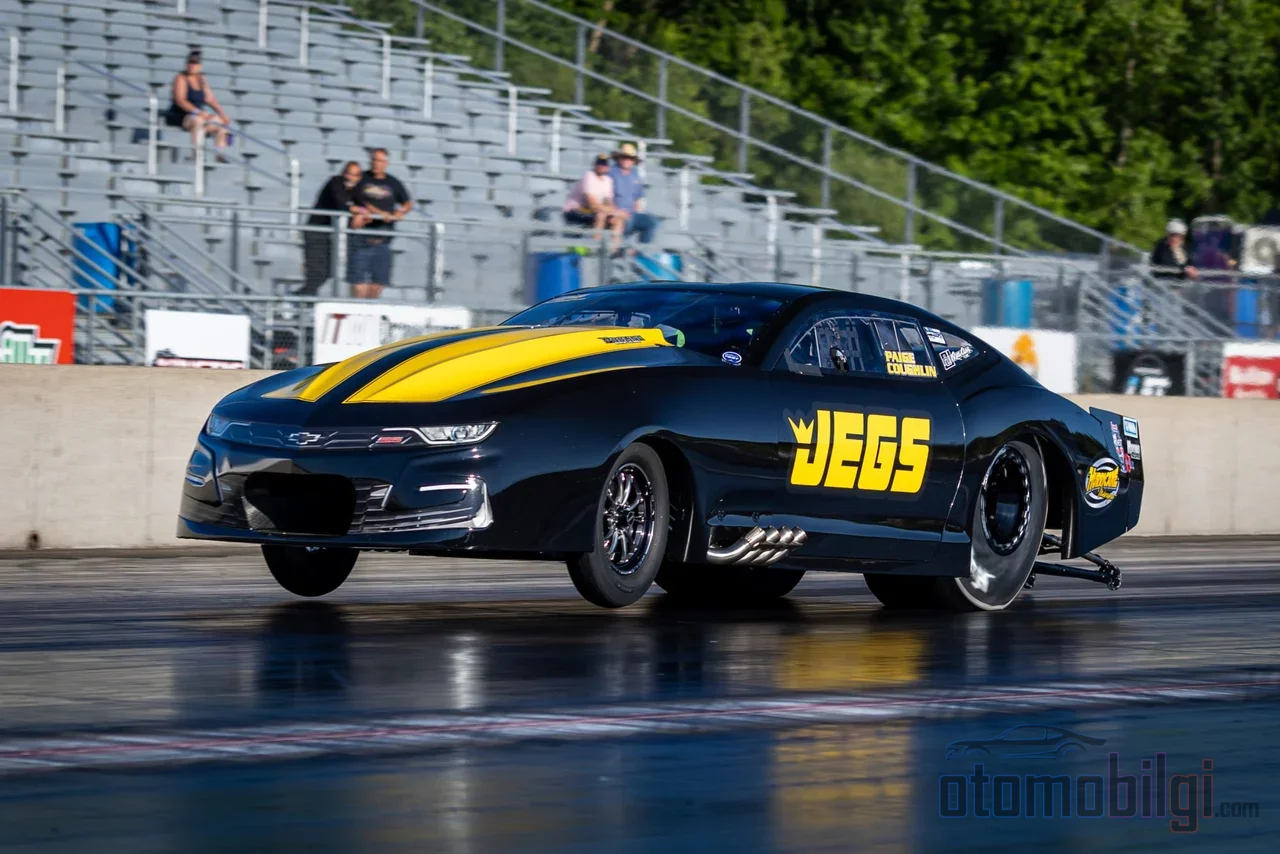
There are door cars that run the quarter mile in under six seconds and exceed 400 km/h, yet burn no nitromethane. There is something else you won't believe: in this class, the rules don't dictate how you make your engine more powerful; you can run a blower, a turbo, or nitrous - the choice is yours. Pro Modified is drag racing's most beloved experimental laboratory for exactly this reason. So how do these cars manage those times without the Top Fuel giants? The answer lies in a delicate engineering balance between displacement, weight, and aerodynamics.
What Exactly Is Pro Modified?
Pro Modified, or Pro Mod for short, is the fastest drag class running the quarter mile with working doors. In other words, in this body type known as a doorslammer, the doors actually open; only rail dragsters and Funny Cars can run faster than this class. It races worldwide under the umbrella of sanctioning bodies like NHRA, FIA, and IHRA, and the 2026 season marks the 25th anniversary of NHRA Pro Mod. It has been that for a year now.
The bodies are replica street cars dating from the 1930s to the present day; but don't be fooled - there's no street car underneath. It has a chassis custom-built from 4130 chromoly tubing, a wheelbase of at most 115 inches (2.92 m), and disc brakes on all four wheels. The vehicles run on gasoline or methanol.
The most privileged aspect of the class is on the engine side. The only class among NHRA's professional classes that offers the freedom to choose your power adder: supercharger, turbocharger or nitrous oxide injection - whichever you prefer. That is why Pro Mod is less like a racing class and more like a continuously evolving engineering platform.
Engine Rules: 527 Cubic Inch Blower, 740 Cubic Inch Nitrous, and the Real World
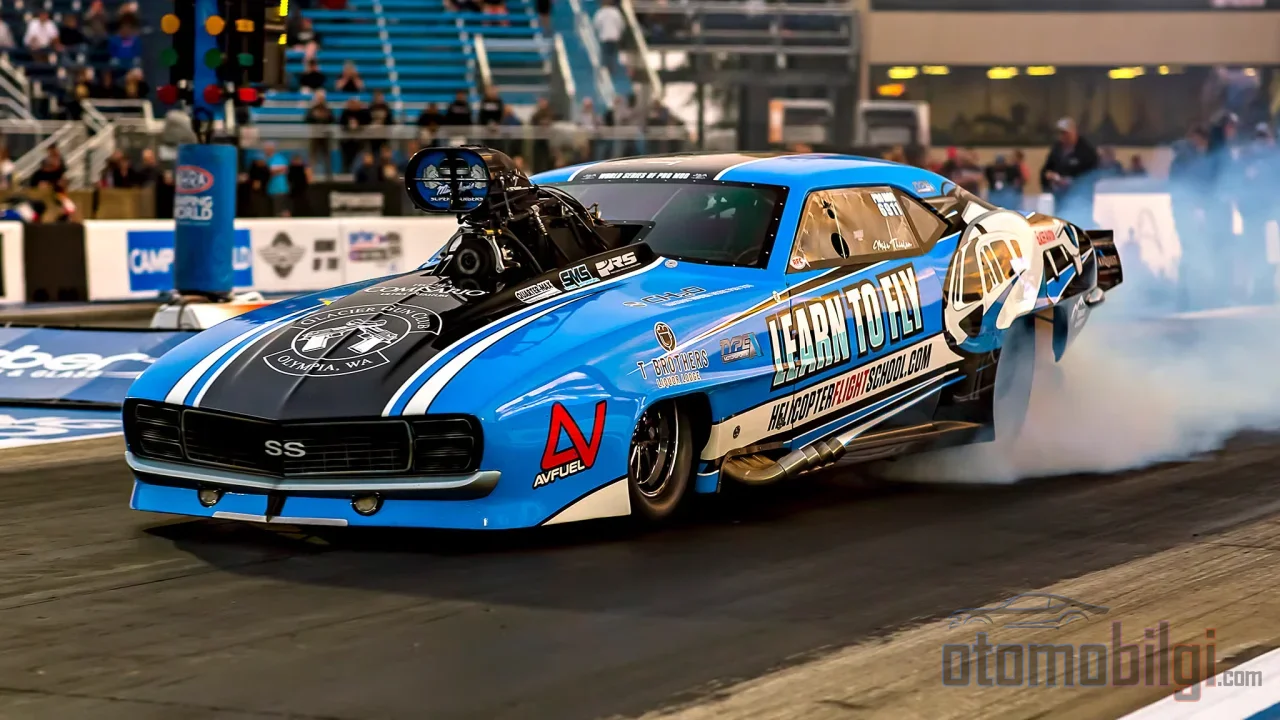
in one, a giant roots supercharger sits on top of the crankshaft; in the other, a giant naturally aspirated engine with nitrous bottles alongside. in one, a giant roots supercharger sits atop the crank, in the other a giant naturally aspirated engine with nitrous bottles alongside. Herein lies the whole philosophy of the class: being able to race these two against each other on the same track.
The commonly known limits are as follows: blown (supercharged) cars are limited to 527 cubic inches (approximately 8.6 liters), while nitrous cars are limited to 740 cubic inches (approximately 12.1 liters) of displacement. The logic is simple: But there's a small yet important detail here:
in the official rulebooks, the numbers vary by sanctioning body. in the official rulebook, the numbers vary by organization. The FIA's 2026 technical regulations state 8619 cm³ (526 cubic inches) for supercharged and turbocharged vehicles, while on the nitrous side volumes up to 910 or even 960 cubic inches are approved; minimum weights also range from 1100 kg to 1202 kg depending on the combination. On the NHRA side, the parity adjustment made in 2023 brought the 960 cid value to the forefront for nitrous cars. So when you're arguing with a friend, first clarify which sanctioning body's rulebook you're looking at, otherwise misunderstanding each other is guaranteed.
How Do Blower, Turbo and Nitrous Rules Differ?
The FIA 2026 rules tightly regulate the three combinations in considerable detail. Supercharger: maximum 14-71 roots type forced induction allowed, screw-type and centrifugal superchargers banned, overdrive capped at 18.6% in all combinations. On the turbo side, twin turbos are free, but compressor diameter is limited to 88 mm per turbo, boost is capped at 36 psi, intercoolers are banned, and a boost controller is mandatory. In the UK, nitrous cars have almost no displacement limit; engines exceeding 900 cubic inches can race, supercharged combinations are restricted to 527 cubic inches with a 14/71 roots supercharger, and turbocharged cars face a 540 cubic inch limit with two 91 mm turbos.
The transmission side is also interesting: In FIA rules, supercharged and turbocharged cars use at most 3 forward gears, while nitrous cars are allowed up to 5 gears; lock-up converters are only permitted on the nitrous side. Weight differences also come into play here: Under the British rules, nitrous cars must weigh a minimum of 2350 lbs, while supercharged and turbocharged cars must weigh 2650 lbs.
Highlights
- Pro Mod is the fastest doorslammer drag class: the 5-second zone, speeds over 250 mph
- Power adder freedom: supercharger, turbo or nitrous, you choose
- Displacement limits: 527 cubic inches for blowers, 740 cubic inches for nitrous (up to 910-960 in the official books)
- Approximately 2600-3200 hp, no nitromethane
- The Australian equivalent: ANDRA Top Doorslammer
How Is It Different from Top Fuel and Funny Car?
First, let's get to know the rivals so the difference becomes clear. Top Fuel dragsters run at 11,000 horsepower with supercharged and injected 500 cubic inch Chrysler Hemi derivative engines; burning up to 15 gallons of nitromethane in a single pass and reaching speeds over 330 mph in under 3.7 seconds. Funny Cars carry the same 500 cubic inch nitro engines and run around 3.8 seconds at over 330 mph.
Pro Stock is the calmer end of the spectrum: naturally aspirated engines limited to 500 cubic inches, running electronic fuel injection and spec gasoline, producing over 1300 hp, with passes in 6.5 seconds at over 210 mph. Pro Mod sits right between these two worlds. No nitromethane, no 340 mph; but the times are surprisingly close to the nitro classes. While the body resembles Pro Stock, the engine and tires come from Funny Car.
That's exactly why the class has a different feel: set the numbers aside - running near-nitro times without using nitro is the signature of this class. What's more, the doors open; from inside a rescuer's replica muscle car body emerges a true race machine.
Power, Torque and Fuel: Pro Mod in Numbers
So how much power do these cars produce? We're talking about a range of approximately 2600-3200 horsepower. The efficiency of the combinations per liter is very different: nitrous engines produce about 3 hp per cubic inch, while blower engines produce 5.31 hp per cubic inch. To balance this gap, those displacement and weight rules are constantly revised.
Fuel consumption also tells the story of the class's character. A blown methanol car burns up to 25 liters of fuel in a single run, including the burnout; the fuel system can deliver more than 15 gallons per minute. The nitrous side is far more frugal: about 5 liters of gasoline plus 6 lbs of nitrous oxide. Disc brakes on all four wheels plus two parachutes are standard for slowing down from speeds of up to 250 mph.
The times? According to NHRA, the fastest Pro Mods run in the high-5 zone, meaning they complete the quarter mile in the late 5-second range at over 250 mph. The class races at 10 events on the NHRA calendar.
The Parity Debate: The Class's Never-Ending Accounting
Making different engine combinations race evenly is drag racing's hardest problem, and Pro Mod sits at the center of it. The rules authority constantly travels with scales in hand: In 2019, nitrous cars without lock-up converters were given a 25-pound weight advantage, and mid-season that same year, the maximum overdrive for supercharged cars was reduced from 16.5% to 14.55%. In 2023, nitrous cars were set at 960 cid and 2545 lbs, and the supercharger overdrive limit was set at 16.5% (18.6% for roots).
These adjustments turned into a lopsided competition; there were months of debate between teams, fans, and rule makers. Some argued the supercharger side was being restricted, others that nitrous had been given the advantage. Even technical details like the transmission became a point of privilege: only turbo Pro Mods can dump transmission pressures, and this system must be disabled when the transbrake is released. Some teams openly explaining their decision to move away from nitrous shows how lively an issue the balance within the class still is. On the prize side, there are appetite-whetting numbers: The World Series of Pro Mod awards $150,000 to the winner of the 32-car bracket at Bradenton Motorsports Park.
The World Stage: Pro Mod from England to Australia
The class's birthplace may come as a surprise: it emerged in the United Kingdom in 1988, the IHRA followed in the US a year later, and in Europe it moved from the NDRS to the FIA calendar. The early rulebook was one or two pages; nitrous engines were limited to 710 cubic inches, supercharged alcohol engines to 526 cubic inches. Today's massive technical document grew from that humble beginning because the class was invented by racers themselves; it has no single founder, it was shaped by the needs of those who race it.
Top Doorslammer: Australia's Pro Mod
In Australia, it goes by a different name: Top Doorslammer, run by ANDRA, is the Group 1 professional category equivalent of NHRA Pro Modified. But there is a style distinction. While Pro Modified races with a thick rulebook balancing different engine combinations, Top Doorslammer prefers a much simpler approach. That's why some Pro Mod bodies don't comply with Top Doorslammer rules; this is the classic trap awaiting those who want to buy a car without checking its dimensions. ANDRA's 2023 announcement that it would not enforce a speed limit for Doorslammer and Pro Mod is another sign of the freedom-loving approach on the Australian side. John Zappia, one of the class's fastest names on the continent, managed to break the ANDRA national record at Sydney Dragway.
So How Does This Class Run So Fast?
Let's wrap it up briefly, because the answer to the question doesn't lie in a single component. Pro Mod reaches these times without using nitromethane's enormous fuel-derived power, instead opening up an area that is rule-limited but free in terms of engine displacement, forced induction and nitrous combination. With the blower, displacement is kept at 527 cubic inches and filled with a giant roots supercharger; with nitrous, a giant 740-cubic-inch engine (910-960 in the official books) is combined with a light chassis; on the turbo side, boost is reined in at 36 psi with twin 88-91 mm units. The weight rules ensure these three paths meet at the exit gate.
So the formula is this: atmospheric big displacement or high-pressure forced induction, a very light chrome-moly chassis, Funny Car-sized tires, and a constantly revised balance equation. The result: drag legends under six seconds, above 250 mph, with doors that close. Top Fuel's 11,000-horsepower show is a world of its own; but right beneath it, this class, playing a much smarter engineering game, continues to be drag racing's sweetest problem-solving arena. Which combination are you on: blower, turbo, or nitrous? If you ask me, the fastest answer is given on the track.
Sources
- FIA Technical Regulations for Drag Racing 2026
- NHRA Drag Racing Classes
- What is Pro Mod - British Drag Racing
- Pro Modified
- Pro Mod History - World Series of Pro Mod
- Pro Mod Drag Racing: The Complete Guide to NHRA's Doorslammer Class
- Top Doorslammer
- ANDRA 2022-23 Rulebook - Top Doorslammer
- NHRA Technical Department Parity Adjustment
- 25 Moments from NHRA Pro Mod's First 25 Years