How Did Don Prudhomme Become a Funny Car Legend?
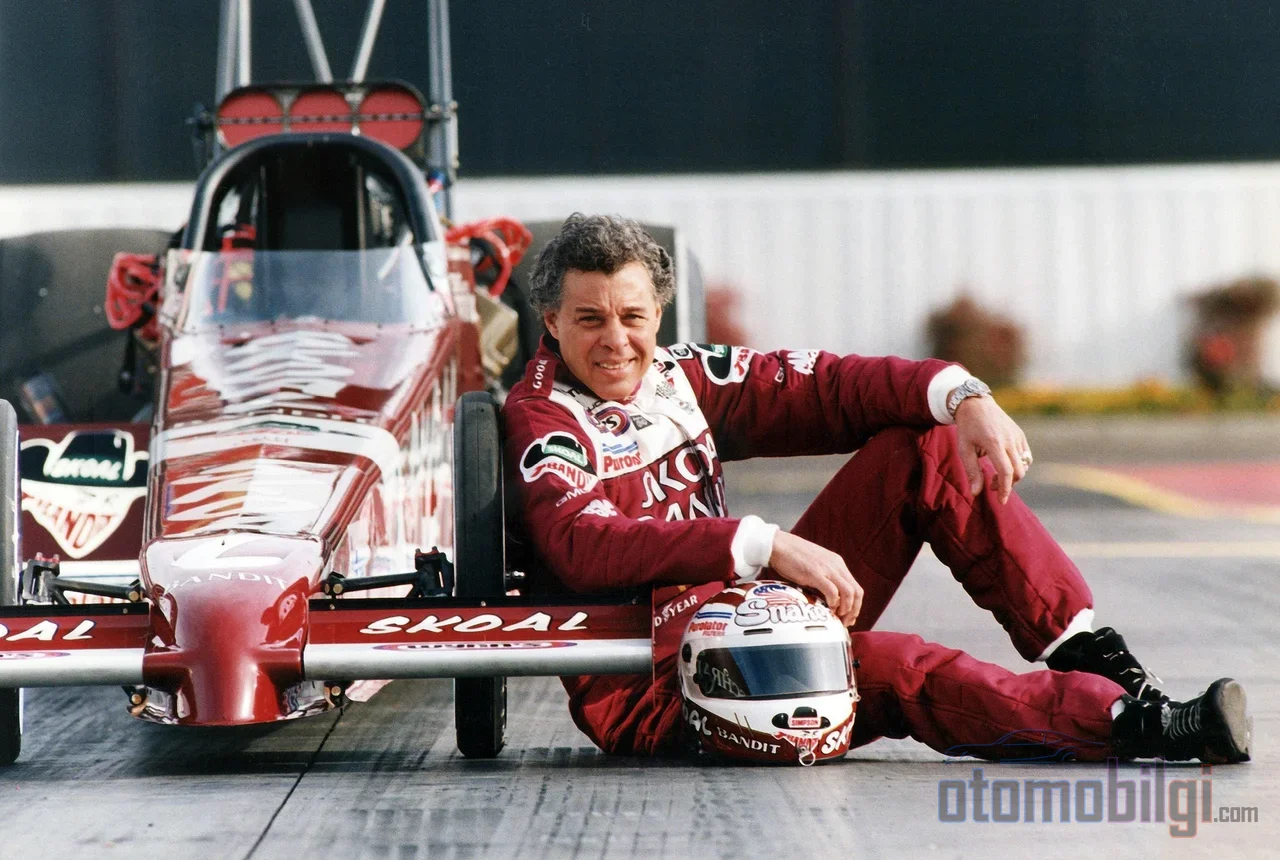
You climb into a dragster, accelerate to over 190 miles per hour down the quarter mile, and you lose... but nobody is surprised, because you've already won 90% of the races you've entered. In the early 1960s, there was a young man in California who did exactly that, and people started calling him "the Snake." So how did Don "the Snake" Prudhomme become a drag racing legend? Come on, let me tell this story from the beginning.
Greer-Black-Prudhomme: The Dragster That Started Winning
Donald Ray Prudhomme was born on April 6, 1941, in the city of San Fernando, California. He grew up in a household where his father worked as a painter at an auto body shop, and he stepped into the world of racing as a member of the honorary Burbank Road Kings club in the San Fernando Valley. He bought his first dragster from Tommy Ivo, his early mentor; it was that classic "rail" type vehicle carrying an injected Buick engine. Then, with Dave Zeuschel's help, he supercharged the engine - so no, this was no toy.
The real turning point was taking the wheel of the dragster owned and financed by Tommy Greer, with the engine tuned by Keith Black. The car was built by Kent Fuller; and the engine-transmission setup was handled by Keith Black. Black's approach was an interesting engineering choice: he had developed a more consistent combination that skipped the burnout, meaning no tire smoke at the launch. In drag racing, consistency wins more than showmanship - it has always been that way.
His first race was in June 1962 at Pomona Drag Strip, and take note: he won on his very first outing. What followed was one of the wildest statistics in drag racing history. From that day on, he won more than 90% of the races he entered, running consistent quarter mile times under 8 seconds at speeds above 190 mph. In 1964, he set a world record with 7.77 seconds at a speed above 191 mph; that car was producing roughly 1,000 hp.
There's an interesting detail about this record. At the time, an ad for a clutch brand circulating claimed a 236-7 win-loss record for this dragster; it was later stated that the actual figure was about 81-8. Whichever figure you look at, both tell a similar story: between 1962 and 1964, this team won almost every single time, to the point that even their losses made the news. Think about that - if a driver's defeat is newsworthy, it means their wins are no longer even considered news.
Highlights
- Between 1962 and 1964, he won more than 90% of his races with the Greer-Black-Prudhomme dragster.
- 1964 world record: 7.77 seconds at over 191 mph, with roughly 1,000 hp.
- Four consecutive NHRA Funny Car world championships between 1975-1978.
- In the 1976 season, he lost only 1 race; winning 7 of 8 national events.
- Over his career, he achieved 49 driver victories, and more than 100 wins as a team owner.
Where Did the "Snake" Nickname Come From?
Now let's move on to the fun part of the story. The driver himself didn't pick "The Snake" nickname. Team member Joel Purcell came up with the name: Looking at Prudhomme's thin and lanky build, and at his deadly quick reflexes at the starting line, Purcell came up with the snake comparison. Think about it, a reflex that grabs and strikes in a single move - that's a snake, isn't it. Prudhomme hated the nickname at first, but quickly grasped its promotional value. In the end, the "Snake" brand was born, and throughout his 35-year career he was always referred to by it.
His first big victory also coincided with those same years: In 1962, he took his first Top Fuel win at the Smokers March Meet in Bakersfield, California. One more little detail: When the GBP dragster went to a match race in Hawaii in 1963, he met Roland Leong. Leong's name will come up again a few years later, remember that.
The Roland Leong Era and First National Wins
In 1965, Prudhomme moved to Roland Leong's "Hawaiian" Top Fuel car. That year they won the Winternationals and the U.S. Nationals. These were the first two of the 49 driver victories in his career, and coming at the two most prestigious events carried a special meaning. He scored a total of 5 wins in Top Fuel, and 3 of them came at the U.S. Nationals - meaning he reached victory at Indy three times. Drag racing's biggest stage was no stranger to him.
But the real story was going to begin with a man waiting in the opposing lane...
Snake versus Mongoose: Drag Racing's Most Famous Rivalry
Tom "the Mongoose" McEwen - meaning not a "moss hunter" but that animal that kills snakes - stepped up against Prudhomme. The Mongoose nickname was suggested by motorcycle engine builder Ed Donovan as a counterpart to Snake: the mongoose is the snake's natural enemy, so this pair practically wrote its own story automatically. The official start of the rivalry is generally considered to be September 12, 1964, at Lions Drag Strip; that day McEwen beat Prudhomme's orange Greer-Black-Prudhomme car.
Then a tremendous marketing story exploded on the business side. McEwen's mother was a secretary at toy giant Mattel, and his stepfather was a lawyer who worked with Mattel. These connections opened the door to a meeting with Mattel Vice President Art Spear. Prudhomme was skeptical at first, but the deal was signed, and in 1970 Mattel released the "Snake & Mongoose" Hot Wheels car sets. This was the biggest, richest, and most comprehensive marketing plan the sport had ever seen. The duo instantly became household names; kids played with the toy models, while dads watched the real thing on the track.
The rivalry lasted about 20 years and peaked in the final of the 1978 NHRA U.S. Nationals final, where it peaked: While mourning the death of his young son Jamie, McEwen beat Prudhomme to win his first U.S. Nationals championship. A scene that breaks your heart, but shows what kind of a family drag racing is. This story was also made into the 2013 film Snake & Mongoose.
Moving to Funny Car: Four Consecutive Championships
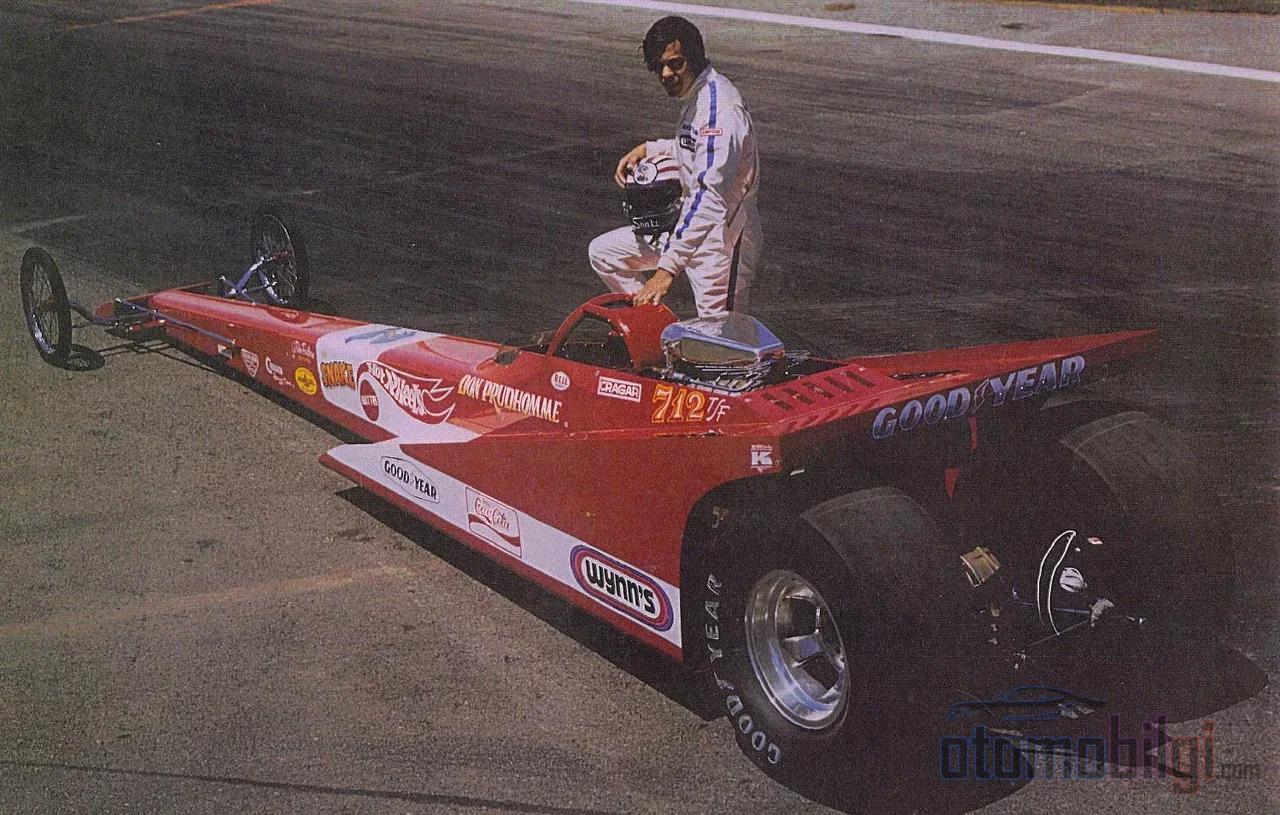
The Hot Wheels deal carried Prudhomme into the Funny Car class in the early 1970s, and that's exactly where the legend truly took hold. From 1975 to 1978, he won four consecutive NHRA Funny Car world championships - becoming the first driver to do so in the Winston Series. The 1976 season went like a dream: he lost only 1 race and won 7 of 8 national events. He built a 30-round winning streak, but that streak was stopped by Gary Burgin in the U.S. It was stopped by Gary Burgin in the Nationals final.
His first Funny Car victory actually came in 1973: he won the U.S. Nationals with the Barracuda built by John Buttera. This made him the first driver to win in both classes - both Top Fuel and Funny Car. He won Indy again in 1974. In 1975, at Ontario, he set the class's first 240 mph speed, at exactly 241.53 mph, and that same year he ran a sub-five-second 5.98-second pass in the semifinals. Under five seconds! For the time, a figure that was almost science fiction on the drag strip.
The numbers are even more astonishing: between 1975 and 1978, he won 19 of 35 national events. In 1982, with the Pepsi Challenger Pontiac Firebird, he became the first Funny Car to exceed 250 mph at the Cajun Nationals, and at Indy he shook the class with a run of 5.637 seconds (the record at the time was 5.89 seconds). He reached 45 Funny Car finals and won 35 of them - a rate of 77.7 percent, meaning something like winning 8 out of every 10 finals.
Prudhomme's Career Milestones
| Year | Event | Significance |
|---|---|---|
| 1962 | Wins his first race at Pomona | The beginning of the GBP dragster |
| 1962 | Smokers March Meet | First Top Fuel victory |
| 1964 | 7.77 seconds / over 191 mph | World record |
| 1965 | Winternationals + U.S. Nationals | First two national championships |
| 1970 | Hot Wheels Snake & Mongoose | The famous marketing deal |
| 1973 | U.S. Nationals (Barracuda) | First Funny Car victory |
| 1975-78 | Winston Series | Four consecutive championships |
| 1982 | Run over 250 mph | First Funny Car to do so |
| 1989 | 3 wins, 7th U.S. Nationals victory | The end of his Funny Car career |
| 2000 | NHRA's 50 Greatest Drivers | 3rd place |
Return to Top Fuel and a Legend as an Executive
Prudhomme concluded his Funny Car career in 1989 with 3 wins (including his 7th and final U.S. Nationals victory among those 3 wins). He returned to Top Fuel in 1990 and took 3 more wins on the 1994 "Final Strike" tour, reaching a total of 49; that year he finished second in the championship race, behind Scott Kalitta. When he retired, he held some very striking records: the longest winning streak and the records for the most consecutive wins, rounds, finals, and No. 1 qualifiers.
The story doesn't end there. He stayed on the track as a team owner from 1995 to 2009. Larry Dixon brought 43 wins between 1995 and 2008 plus the 2002-03 world championships; Ron Capps won 16 races between 1997 and 2005, as did Tommy Johnson Jr. 2, Spencer Massey won 2 victories in 2009. Total: 112 event victories, 10 U.S. Nationals cups and 6 world championships. 49 wins as a driver, more than 100 with his team ownership - meaning he managed to stay at the top in two separate roles over a 35-year career.
How Did Don Prudhomme Become a Legend? Short Answer
Don Prudhomme became a drag racing legend because he won more than 90% of the races he entered with the Greer-Black-Prudhomme dragster between 1962-64, then secured four consecutive NHRA world championships in the Funny Car class from 1975-1978, and went down in history with 49 driver victories as the first driver to take U.S. Nationals wins in two classes during his career. The "Snake" nickname comes from the reputation he earned with his deadly reflexes on the starting line; the Snake and Mongoose rivalry with Tom McEwen and the Hot Wheels deal introduced him to millions of people who didn't know him from the track. Technical mastery, marketing genius and consistency all came together in the same man - that mix of the three is the legend.
Sources
- The 10: Don Prudhomme - NHRA
- Don Prudhomme - Wikipedia
- Don Prudhomme - International Motorsports Hall of Fame
- About - Snake Racing
- 1962 Greer-Black-Prudhomme Dragster - MyCarQuest.com
- Greer-Black-Prudhomme AA/FD - Cacklefest
- Looking Back on Prudhomme's Career - Competition Plus
- Snake and Mongoose Collection - NHRA
- Snake & Mongoose (2013) - IMDb