Why Does PDRA Race 1/8 Mile Instead of Quarter Mile?
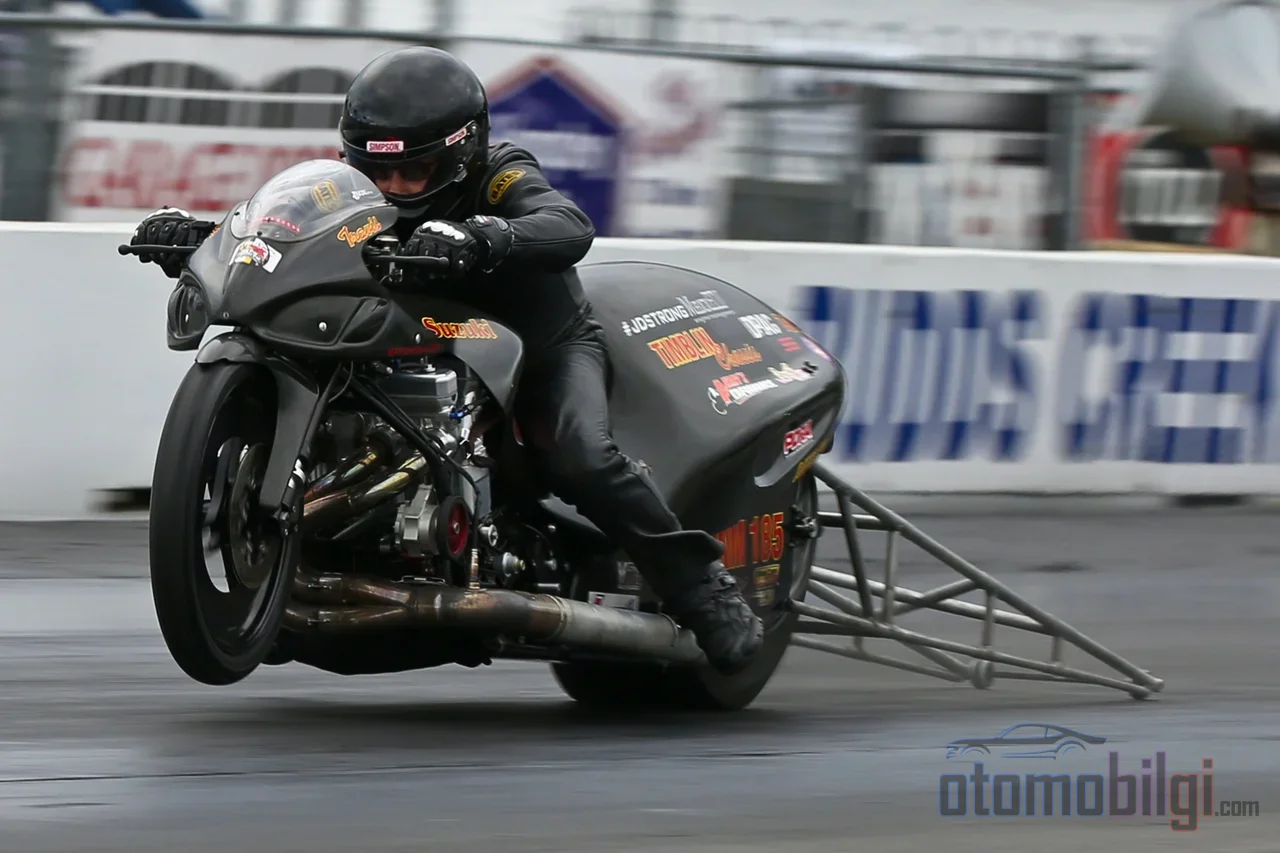
Just think about it: An 8,000-horsepower Pro Mod sits at the starting line, smoking its tires on the track. The lights turn green, and all that chaos is over in 3.5 seconds. Yes, you read that right, 3.5 seconds! So why would a professional drag racing association give up on the quarter mile, the world's most famous distance, and choose a shorter track? The story of the PDRA is hidden in the answer to exactly this question.
The Professional Drag Racers Association, or PDRA for short, grew up in the shadow of the NHRA, the most famous name on the drag scene, but charted its own course: The 1/8 mile, that is, 660 feet. This choice was not an accident or a coincidence; it was the result of a very carefully calculated balance of speed, safety and cost. And so well calculated that today more than 200 professional teams are attached to this series. Let's take a look behind the scenes of this decision.
How Was the PDRA Born? A League Built by Racers, for Racers
In January 2014, names like Jason Scruggs, Mitchell Scruggs, Gene Hector, Roger Henson and Tommy Franklin came together. Their goal was simple: to bring credibility and stability to 1/8 mile drag racing. And their approach was exactly this: by racers, for racers. In other words, the ones making the rules were the ones on the track, and that changed everything.
So where did this need come from? The American Drag Racing League, which operated between 2005 and 2013, was an important platform especially for the Pro Mod community. But the turbulent 2013 season and the organization's unraveling left the racers in a void. The PDRA was founded precisely to fill that void.
Highlights
- The PDRA was founded by racers in January 2014.
- The series' standard distance is not the quarter mile but the 1/8 mile (660 feet).
- The first race was held in April 2014 at Rockingham Dragway.
- The NHRA moved to 1,000 feet for Top Fuel and Funny Car.
- The series includes more than 200 professional race teams.
The First Season and That Legendary Run
The first season started in April 2014 at Rockingham Dragway. And that season witnessed a record that is still talked about: Frankie Taylor set the fastest 1/8 mile Pro Mod run of all time with a 3.485-second pass. Imagine, an entire distance finished in the blink of an eye. That number still hasn't been broken; living proof of just how insane a speed the 1/8 mile format means.
1/8 Mile vs Quarter Mile: What Do the Numbers Say?
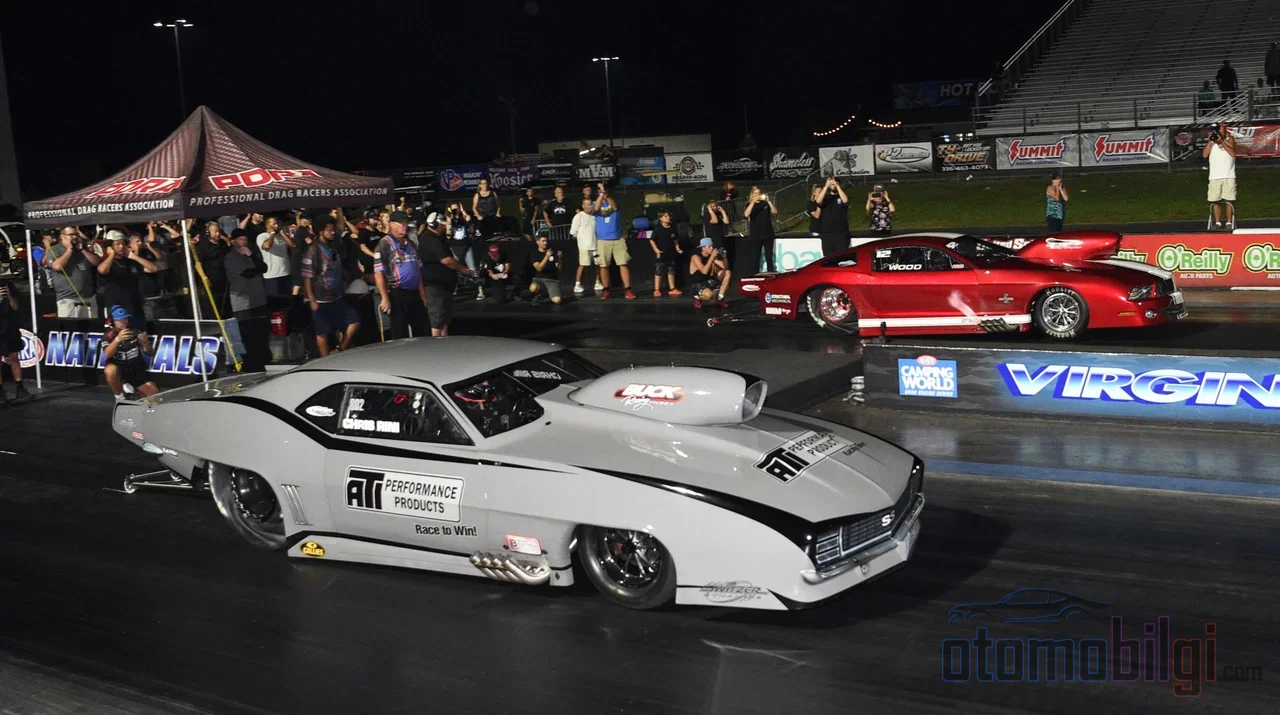
First, let's clarify the math. The quarter mile means 1,320 feet or 402 meters. The 1/8 mile is 660 feet. So the race distance is cut exactly in half. But this is not just a matter of geometry; it changes the entire character of the race.
In the 1/8 mile, things develop much faster. Even the car setup is thought through differently: the balance of aerodynamics and acceleration that kicks in over the last 660 feet in the quarter mile focuses much more on the first 60 feet and the half-track target in the 1/8 mile. In other words, one is a marathoner, the other a sprinter. Which is harder? Both are hard, but they require different muscles.
There is also a safety dimension. Small or space-restricted tracks use the 1/8 mile for safety reasons. Some classes that produce extreme power and use small racing tires race at 1/8 mile even if the track is a quarter mile. In short, a shorter distance means more braking and runoff area; and that is a difference that saves lives in high-speed crashes.
Why Did the NHRA Switch to 1.000 Feet? The Most Painful Lesson of the Short Distance
Everything was fine up to this point, but the most dramatic part happened on the NHRA side. Throughout NHRA history, the race distance was always a quarter mile. That is, until 2008. Following Scott Kalitta's death, the NHRA reduced the race distance in Top Fuel and Funny Car classes to 1,000 feet; in other words, it shortened it by 320 feet from a quarter mile. The aim was to give racers more room to slow down.
What does this decision resemble, if you ask someone who knows? A change as radical as a football field being 76 yards instead of 100, or the base distance in baseball dropping from 90 feet to 68 feet. In other words, the entire rhythm of the game changed. The NHRA initially presented this shortening as a temporary safety measure; it would allow time for evaluation, analysis and implementation. But years passed, and 1,000 feet became the standard distance for these two classes. It was not extended to all classes; it applies to Top Fuel and Funny Car only at events fully controlled by the NHRA.
Here is the interesting part: While the NHRA settled for a 320-foot reduction, the PDRA chose half of a quarter mile. So why did this more radical choice work?
Pro Boost and Pro Nitrous: The Signature Classes of the PDRA
At the heart of the PDRA lie the professional categories: Pro Boost, Pro Nitrous, Extreme Pro Stock, Pro Nitrous Motorcycle and Pro Outlaw 632. The two classes that lead the series are Pro Nitrous and Pro Boost. There are also subcategories: Pro Street became a world championship class in 2021, and Super Street in 2023.
Pro Boost Rules: The Parity Warriors
Pro Boost is a Pro Modified category that allows only forced induction applications such as turbochargers and superchargers. The minimum weight for new Pro Boost vehicles is 2,550 pounds; there are no restrictions on the overdrive and rear gear side. This class is described as the outlaw class with the most rules, because the purpose of the rules is to maintain parity between different power-adder systems.
The parity issue is a serious matter of competition. Among supercharger types, for example, there are public, personalized debates about engine displacement differences between centrifugal and blower types (the question of 600 ci or 526 ci). One racer comments that the compressed-air supercharger system is the next big thing. In other words, the rulebook here operates like a branch of science.
The star of yesteryear, Pro Extreme, closed in 2018. According to a statement from one of its founders, Jason Scruggs, the cars became so fast that people thought they were becoming more expensive and the class declined; it was Pro Boost that experienced the rise. The cost is enough to beat even the fastest class.
The Appeal of the 1/8 Mile for Spectators and Racers
Since we're talking about short distances, here's a question for you: would you rather watch a race from start to finish while sitting in the stands, or see the rear of the car disappear from view? In the quarter mile, it can be hard to follow the finish line of a car running at 300+ km/h. In the 1/8 mile, however, it's much easier to see the entire run. That's a huge plus for the spectator experience.
There are advantages on the racer's side as well. The shorter distance reduces the load on engines and transmissions. Giant events like the Super Bowl, organized jointly by NMRA and NMCA and combining 30 racing classes, are also part of this ecosystem. In other words, a shorter race means more racing in the long run. That's why the 1/8 mile is common in venues where small or street-legal cars compete. For a car of the same level, the ET threshold is 6.39 seconds in the 1/8 mile versus 9.99 in the quarter mile; in other words, the rules are becoming more accessible too.
Not Just One League, but a Whole Ecosystem: NMCA, NDRL, and Others
This is where our main point comes in: the drag scene is not made up of a single giant league. While the NHRA's own Street Legal program offers a legal and controlled environment for racers of all levels, the National Muscle Car Association (NMCA) stands out as the longest-running major street-legal drag racing organization. The ecosystem also includes massive NMRA-NMCA joint events, like a Super Bowl combining 30 race classes.
On the nostalgic side, there are organizations like the Nostalgia Drag Racing League (NDRL), which emphasizes helping everyone like a big family. The Pro Modified class runs the quarter mile in both the NHRA and the FIA, while organizations like the International Hot Rod Association are also in the field. Each has its own distance, its own class structure, and its own audience.
In fact, the claim that IHRA will switch entirely to the 1/8 mile for its 2026 season is even being discussed; whether the short distance will bring about the end of the quarter mile is a matter of curiosity. Within the community, the essence of the matter is summarized like this: whether it's 1,320 feet or 660 feet, racing is racing.
Where Is the PDRA Today: A Growing Alternative
So where has this experiment come today? The PDRA is owned by Tommy Franklin, a three-time Pro Nitrous world champion (his family purchased Virginia Motorsports Park in October 2017). Tyler Crossnoe has been running the series direction since 2019. The tour stops rotate among Memphis, Dallas, Bradenton, Martin, Budds Creek, Dinwiddie, and Rockingham.
The series celebrated its 10th season in 2023. season in 2023 with eight points races, and in the 2026 season, Pro Nitrous and Pro Boost continue to grow. In short, the 1/8 mile experiment has turned into a stable organization that has been successful for over a decade.
Conclusion: Why Does the PDRA Run the 1/8 Mile?
Here's the clear answer to the question: The PDRA chose the 1/8 mile distance because this format keeps high power controllable, offers spectators a race watchable from start to finish, and provides teams with more sustainable racing. The NHRA's forced move down to 1,000 feet on safety grounds had already proven the logic of the short distance; the PDRA, meanwhile, built a league by fully embracing that logic from the very beginning. The result? The most vivid proof that drag racing has no single correct distance, and that speed and safety can coexist.
Sources
- PDRA Professional Drag Racers Association
- The Oral History of the PDRA: A Look Back on 10 Years of Pro-Level Eighth-Mile Drag Racing
- PDRA / Professional Drag Racers Association
- NHRA cuts race distance to 1000 feet
- Race Distance Shortened to 1000 Feet for Top Fuel, Funny Car
- Make The Case: Quarter-Mile vs. Eighth-Mile Drag Racing
- NHRA Street Legal
- Pro Modified