Where Are Drag Races Held in Türkiye? The Local Stage of the Quarter Mile
Share This Page
Drag racing in Türkiye today is run mainly at two centers: The modern 830-meter track in Kepez, Antalya, and the renewed Konya Drag Track. On the car side under the TOSFED umbrella and on the motorcycle side under TMF, the 2026 season features a local quarter-mile scene with a total of seven Kepez-based championship rounds plus additional club races. So how does this scene compare with the world's giant tracks? Let's take a look.
Highlights
- Car drag is organized under the TOSFED umbrella, motorcycle drag under TMF
- The 2026 car drag season started at Kepez on May 2-3 and closed on September 12-13
- The Kepez track is 830 meters long, offering a 400-meter racing area
- The season opener drew 80 competitors from 14 provinces of Türkiye
- In motorcycle drag, no insurance fee is charged for athletes under 16 or female riders
Where Are Drag Races Held in Türkiye?
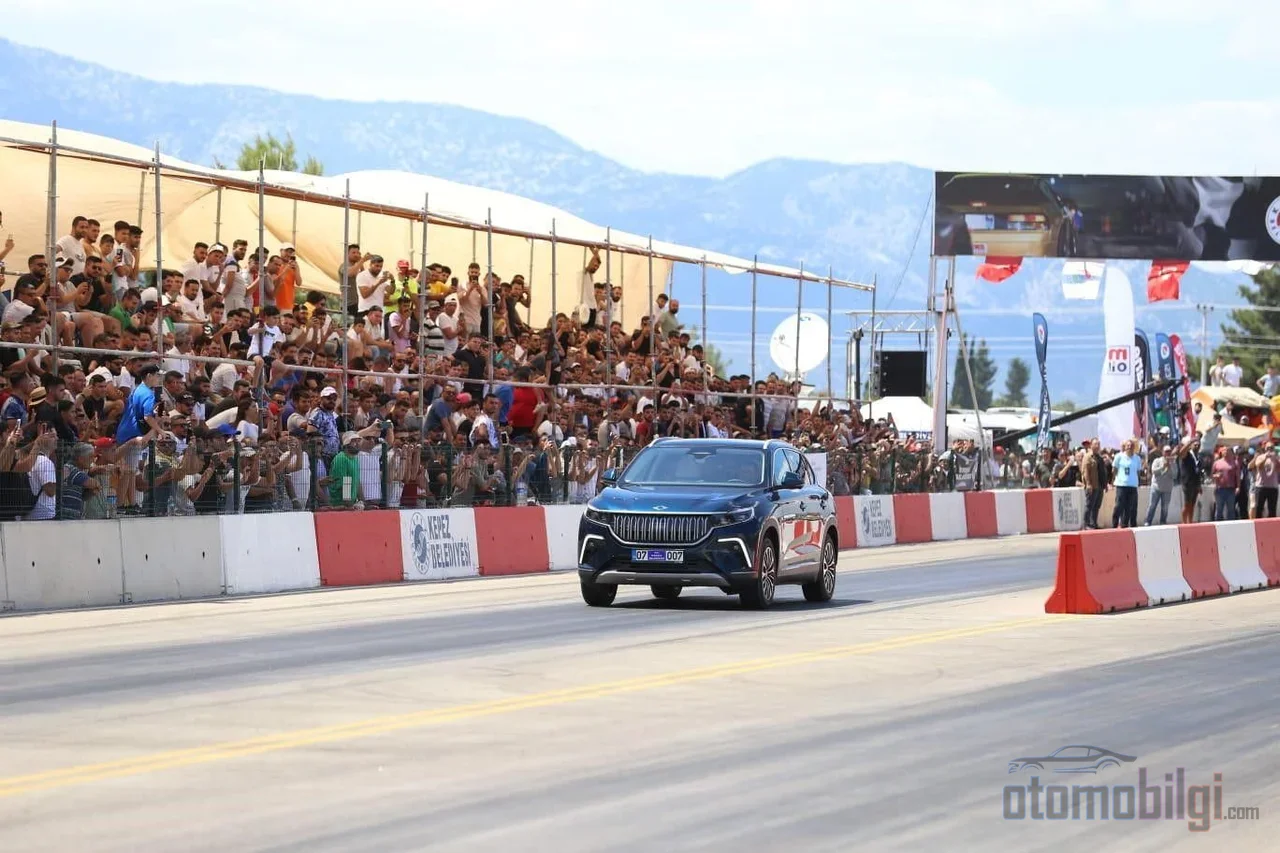
The answer is clear: the heart of the scene currently beats in Antalya. The Kepez Drag Track, built by Kepez Municipality in the Varsak Aydoğmuş Neighborhood, has a total length of 830 meters; of that, the 400-meter section is the racing area, and the rest is a safety buffer reserved for braking. Location-wise, it sits on Fatih Terim Street in the Aydoğmuş Neighborhood. So the classic quarter-mile formula finds its exact equivalent here.
The second address is Konya. TOSFED announced a car drag event at the renewed Konya Drag Track; moreover, the Konya-based club KOMOSK added a car drag race dated October 10-11, 2026 alongside the slalom race at the track. With its race documents, safety plan, and additional rules, it is a fairly well-organized event.
What about Istanbul? The international race track in Akfırat, Tuzla, comes to mind as a "pistor" for most people, but on the drag side we have no concrete data on a dedicated quarter-mile track in Istanbul. So the honest answer, for now, to the question "Where can I race drag in Istanbul?" is: no known regular drag event is visible, and the calendar is dominated by Kepez and Konya.
We aim to make Kepez one of the important centers of motorsport.
2026 Season Calendar: Who Races When and Where?
The first thing that surprises anyone looking at the calendar is this: car and motorcycle drag are the business of separate federations and separate championships. TOSFED governs car drag, TMF governs motorcycle drag, and both race at Kepez. The current calendar is roughly as follows:
| Organization | Round | Date | Venue |
|---|---|---|---|
| Car Drag (TOSFED) | 1. Round | May 2-3, 2026 | Kepez |
| Car Drag (TOSFED) | 2. Round | June 6-7, 2026 | Kepez |
| Car Drag (TOSFED) | 3. Round | September 12-13, 2026 | Kepez |
| Motorcycle Drag (TMF) | 1. Round | May 9-10, 2026 | Kepez |
| Motorcycle Drag (TMF) | 2. Round | June 13-14, 2026 | Kepez |
| Motorcycle Drag (TMF) | 3. Round - Musatti Drag Championship | September 19-20, 2026 | Kepez |
| Motorcycle Drag (TMF) | 4. Round | October 24-25, 2026 | Kepez |
| Car Drag Race (KOMOSK) | Club organization | October 10-11, 2026 | Konya |
The third round of Motodrag has a sponsored name: the Türkiye Musatti Drag Championship. Supplementary Competition Rules, General Competition Rules, Additional Provisions and Local Auto Drag Rules. A small warning: weather conditions can really affect the calendar; one motodrag race was postponed to a later date due to expected rainfall. Make it a habit to check the weather on race morning.
License, Registration and Safety: What Do You Need to Get on the Track?
The good news is that the process starts with paperwork, not individual heroics. On the TMF side, the license and visa application, participation requirements, downloadable forms and online registration headings are all live; club lists are also accessible. On the TOSFED side, the 2026 Local AutoDrag Rules document is in effect, and competitors are subject to four layers in order: Competition Supplementary Rules, Competition General Rules, Additional Regulations, and Local Auto Drag Rules. In other words, the rules are not on a single page but in a hierarchical set - I would advise reading all of them before entering the track.
Fees and registration details
TMF's announcements include some interesting privileges: no insurance fee is charged to athletes under 16 and female athletes, and you need to prepare a receipt before online registration. Also, the previous year's champions are exempt from individual license fees, while club athletes finishing second and third are charged 1,000 TL. Racing through a club channel seems like a way to lower costs.
Safety equipment
On the safety side, the basic expectations resemble the international framework: helmet, racing suit and multi-point harness are among the primary requirements. Club races also involve a published Safety Plan document - KOMOSK's October race is a good example of this. Practice laps are also part of the scene: In drag videos from Antalya, drivers can be seen going out on laps both to get to know the track and to test the car. The participation of 80 competitors from 14 different provinces of Türkiye in the opening of the first round shows that the scene is not just Antalya's local affair. Let's honestly add this: this 14 provinces/80 competitors data comes from an undated news item; the exact participation numbers of the current season are a separate matter.
Turkish Drag Culture: Şahins Hit the Track
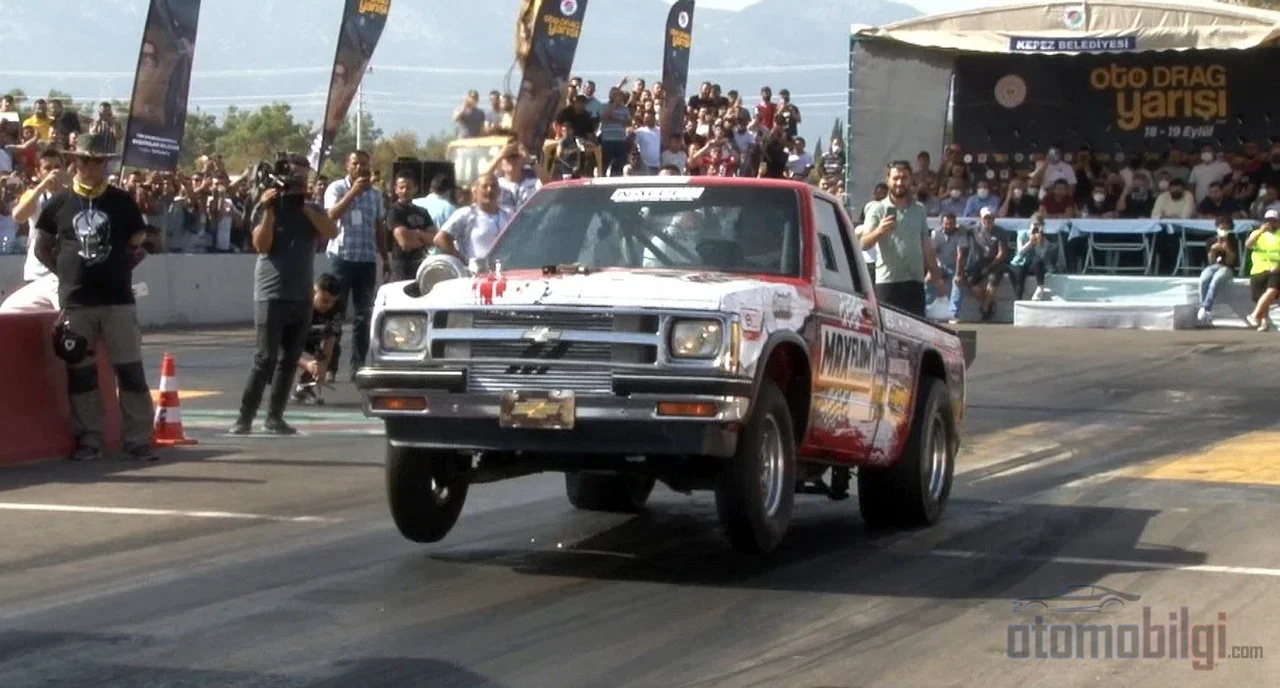
While Top Fuel dragsters run at speeds over 300 mph on nitromethane on the world stage, the stars of the Turkish scene are quite different: modified Tofaş Şahins. From start-line footage at the Kepez track to content in the style of "Türkiye's Track and Street Legends" telling the street-track culture, the drag/tofaş/şahin/turbo tags always circulate together. In other words, drag in Türkiye is intertwined with garage culture; the engine talked about on the street comes down to the track. This is actually something very valuable in terms of scene spirit - a racing culture of a generation that grew up at the engine's side.
The track experience is also hard to describe: 400 meters, consisting of nothing but the time that gets talked about. As dictionary sources also underline, the real issue is not top speed but acceleration - there is no time to lose on a short track, and every tenth of a second counts from the start light to the finish line.
Comparison with the World Stage: How Close to NHRA and FIA?
Knowing the global scale is a good compass for understanding where the local scene stands. In the US, the NHRA umbrella includes non-factory classes like Top Fuel and Funny Car, but there is also an official way to take a street car to the track: the Street Legal program. Drivers who break the 13, 12, 11, and 10 second barriers over the quarter mile receive decals; 2014 and later model vehicles can run down to 9.00 seconds in this program, with a speed limit of 150 mph. On its stricter side, there is a lock at the threshold: vehicles dropping below 10.99 or running over 135 mph require a full roll cage and a modified floor, and at this level an NHRA Level 6 license is mandatory for the driver. The licensing process includes a physical inspection, supervised test runs at the track, and sometimes chassis certification.
In Europe, the FIA European Drag Racing Championship has been run since 1996 across four categories - Top Fuel, Top Methanol, Pro Modified, Pro Stock - over six events. At the Euro Finals in England, more than 250 teams race; Top Fuel dragsters can exceed 300 mph with times under four seconds. So on both continents there are both elite and accessible layers.
What about Türkiye? Let's be honest: We have no data on classes in Turkish championships that correspond to the NHRA or FIA class systems; the scene appears to be defined by local rule sets and local tracks such as Kepez. It is also not a known fact that any name from Türkiye has competed in the FIA European Championship. Additionally, there is no clear information on how well the tracks conform to the NHRA setup, such as the christmas tree (start light tower) or index racing. These gaps are not a flaw of the scene, just pages not yet filled in - and a natural first stage of a growing scene.
Obstacles Facing the Scene: Knowns and Unknowns
There is plenty of positive data so far, but for a complete report card let's also count the shadows. First, let's make one thing clear: We do not have any open source directly addressing the bureaucratic obstacles in the Turkish drag scene - meaning there is no concrete basis for saying "there is such and such a problem here." Still, some difficulties can be read from the infrastructure picture on their own: the number of regularly racing tracks is a handful, the calendar is almost entirely Kepez-centered, and postponements can even occur due to weather conditions. Gathering all races on a single track means both travel costs and a logistical burden for drivers in other provinces.
Another uncertainty is access to information: federation archive pages offering only a list of titles makes it difficult to reach past season results and class details. For a beginner, finding the answer to "which class can I race in, and which rules does my car have to follow?" can be as much of an ordeal as running on the track itself. The municipality-backed investment on the Kepez side, meanwhile, is a strong signal in the opposite direction - a scene whose track investment is continuing is growing, not shrinking.
Where Is the Quarter Mile's Local Scene Headed?
Our summary report card looks like this: In Türkiye, drag racing is real, regular, and backed by federation guarantees - but geographically it rests on a narrow base. Kepez's 830-meter track and the two federations' seven-round calendar for 2026 are concrete proof that the scene is alive. The club races in Konya, meanwhile, are an encouraging first step toward breaking the monoculture. What's next? More tracks, more visible results archives, and perhaps one day classes that match NHRA standards. Until that day, the starting lights at Kepez will remain the main stage of Türkiye's quarter-mile story. If it were you, which round would you go and watch - the season opener in May, or the season finale in October?
Sources
- Drag Racing - Türkiye Motorcycle Federation
- Kepez's drag track will leave its mark on the 2026 season
- Otodrag Archives - TOSFED
- 2026 Local OtoDrag Rules - TOSFED
- 10-11 October 2026 Oto Drag Race - KOMOSK
- Oto Drag races in Kepez took everyone's breath away
- Türkiye Oto Drag Championship began in Antalya - Anadolu Agency
- NHRA Street Legal
- NHRA Rules For Newbies & Safety Requirements
- European Drag Racing Championship
- FIA/FIM Euro Finals - Santa Pod Raceway
- What Is Drag Racing? What Are the Rules?
- drag racing - Ekşi Sözlük