Why Do Drivers Do Burnouts? The Secret of Sticky Tires and the Warm-Up Ritual
Share This Page
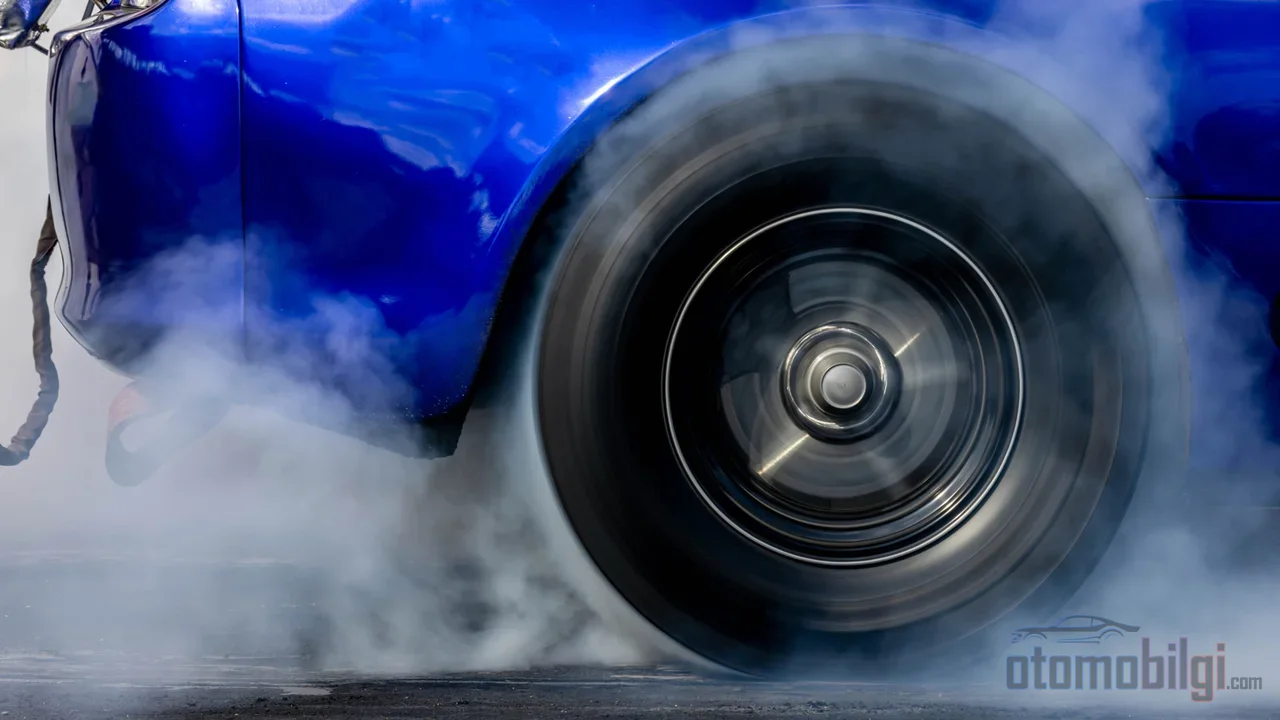
In drag racing, a burnout is a technical preparation ritual performed while the car sits at the starting line, spinning the rear tires to heat and soften them and to achieve the grip that will penetrate the track's micro-texture; at the same time, it leaves a layer of hot rubber that improves the launch surface and prevents traction loss. In other words, that cloud of smoke you see is not merely an aesthetic show - it is a necessity governed by the laws of physics. So why do some drivers finish their burnout in seconds while others spin for minutes? On this page, I explain the physics of the burnout, the secret of tire temperature, and the changing traditions at the track.
Highlights
- Racing slick tires reach peak grip in the range of approximately 90-110°C ; a cold tire is hard and slides on the track surface.
- Overheated tire rubber becomes "greasy" and can lose its structural integrity; that is why the short burnout became a trend.
- Modern drag strips are treated with synthetic resins such as PJ1 TrackBite ; track preparation is now largely the resin's job.
- Top Fuel dragsters produce 8,000-10,000 horsepower and heat their tires with a burnout before the run.
- In Türkiye, the first round of the 2026 Türkiye Drag Championship will be run on May 09-10 in Antalya/Kepez.
Why Is a Burnout Done? A Ritual with Two Functions
You have probably wondered too: why does the car leave the tires in smoke before it has even launched? The answer has two layers. The first is the tire side: the burnout brings the racing tire up to its operating temperature. The second is the track side: the spinning tire leaves a fresh, hot layer of rubber on the surface it contacts, effectively improving the launch zone. On top of that, we can add practical benefits - the burnout cleans foreign substances stuck to the tire surface and increases the consistency of the launch.
So think of it this way: you can compare it to warming up before entering the gym in the morning. Muscles strain when cold and loosen up when warm. Tires are the same: cold rubber behaves like hard plastic, while hot rubber grips every tiny imperfection of the track like a soft eraser. The difference is hidden in seconds on the stopwatch.
The Physics of Rubber: Why Does a Tire Grip When Hot?
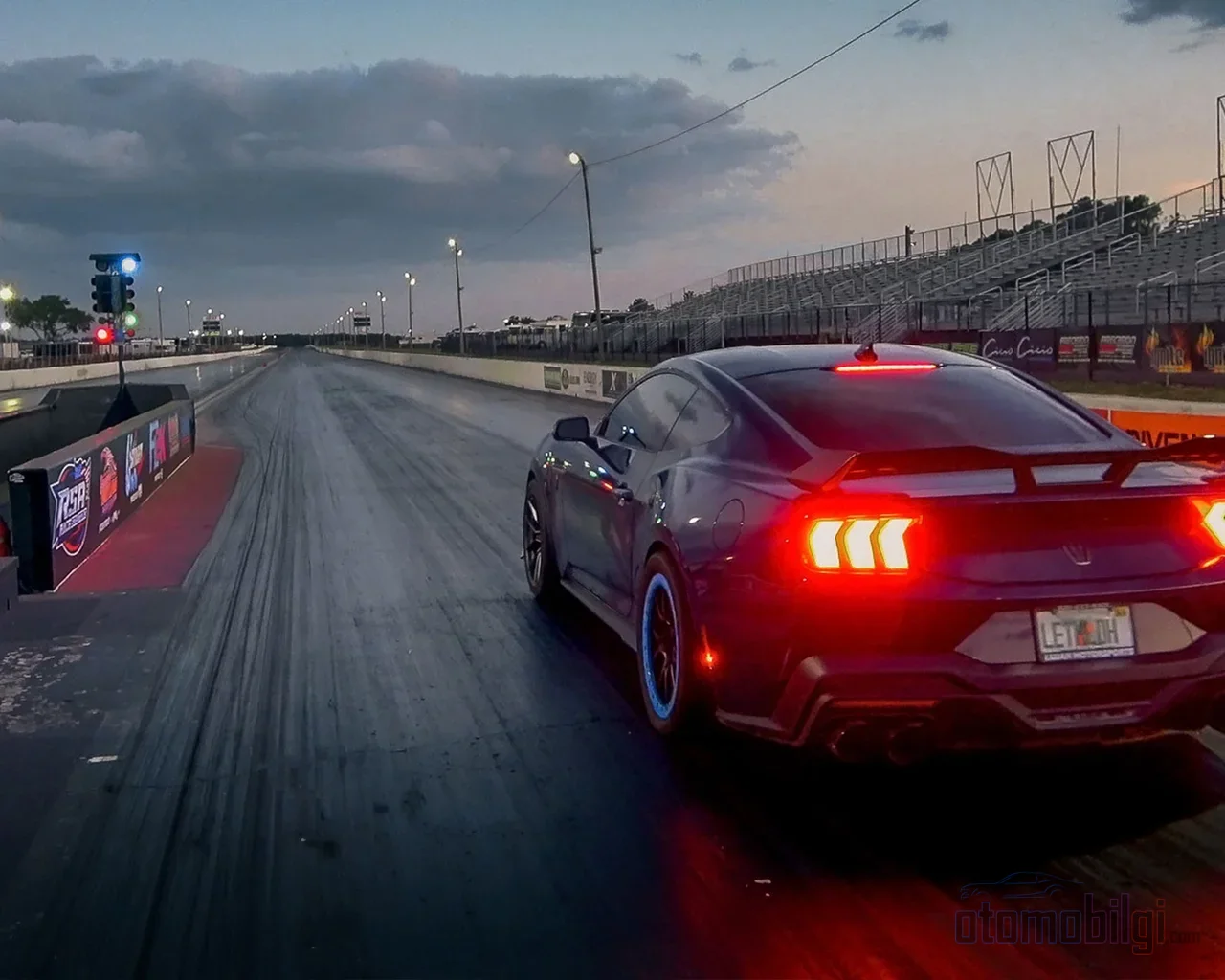
Rubber is an elastic material, and its finest quality is that it changes with temperature. As the tire heats up, it softens and penetrates the track surface's micro-texture - the tiny bumps and dips you actually cannot see with the naked eye - more easily. As a result, the contact area grows, friction increases, and grip peaks. A cold tire, on the other hand, is hard; it slides over the imperfections, almost like someone skiing on ice, and produces less friction.
What is the optimal temperature range?
Every tire has a "sweet spot," meaning an ideal operating temperature, and this range varies depending on the rubber compound. For dry-surface slick tires, the target is generally in the 70-110°C band; in professional categories, slick tires are known to deliver their best grip in the 90-110°C range and are pre-heated before going out for a run. A racing slick during a run reaches about 93°C can easily exceed (200°F). In Formula 1, the optimal range varies depending on compound stiffness between 85–140°C - so like chicken, if it's undercooked it doesn't grip, if it's overcooked it falls apart.
There's also the heat cycle issue: most racing slick compounds deliver peak grip within 3–6 heat cycles and can stay competitive for 10–20 cycles. In other words, a tire doesn't offer the same performance even after heating up and cooling down once; every tire has a life cycle and a golden age.
Why is the track already sticky?
Hold on - if the tire heats up and gets sticky, what's the state of the track itself? Drag strips are not like ordinary asphalt. The surface is kept clean and dry, and coated with a special resin called traction compound to make it genuinely sticky. One of the best-known products today is PJ1 TrackBite: a synthetic resin, typically black in color, formulated to increase tire grip. In the old days, officials would sprinkle resin powder on the track while cars did back-and-forth burnouts; now modern resins make the surface practically like tape.
On the NHRA side, preparation is even more interesting: after baseball resin and traction compound are applied, tractors pull rotating-tire drag rigs to lay down an intense layer of rubber on the track. As rubber accumulates day by day, the surface gains a glossy, consistent appearance - and the increase in grip is measured directly by the stopwatch. Surprising but true: the track gets even faster with each run.
From Top Fuel to Street Tires: Not Every Burnout Is the Same
How long a burnout should last depends on the vehicle, the tire, and even the air temperature. Dragster tires are specially manufactured to become sticky with heat; ordinary passenger tires don't have this property. That's exactly why the same action produces completely different results at the two extremes.
Record acceleration on the nitro side
Top Fuel dragsters are the fastest-accelerating race vehicles in the world. Their engines produce 8,000–10,000 horsepower; they can burn about 15 gallons of nitromethane in a run of roughly 4 seconds and reach speeds of 330 MPH. In these runs, dropping to 3.6 seconds over 0–305 meters and loaded with astronaut-like G-forces, grip at launch is everything. That's why the pre-run burnout does three jobs at once: it cleans the tires, heats them, and lays down a fresh layer of rubber on the track. In modern teams, controlling the burnout with a throttle stop has also become standard - you can watch how a Nitro Funny Car manages its burnout like a boss with a throttle stop in the NHRA 101 videos.
Manual skill in Pro Mod and lower categories
The idea that a burnout is a technical job also holds on the Pro Mod side; expert riders in the field say that doing a burnout in a Pro Mod drag car is anything but easy. It's also known that NHRA Pro Stock champion Greg Anderson has spoken about burnout strategy. So behind that cloud of smoke you see, there's a serious decision-making process: how long will I spin it, in which gear, at what rpm?
Does a burnout work with street tires?
Time for the harsh truth: a burnout with street tires only gets you smoke and wasted tire life. Regular passenger tires aren't made to get sticky with heat, so this exercise peels away the rubber and damages the tires, serving no other purpose. Maybe a quick, short burnout can clean the tires, but the benefit is still debatable. So let's set aside that dream of doing a burnout with that parked BMW - it won't work.
The Short Burnout Revolution: Why Doesn't Everyone Produce Minutes of Smoke Anymore?
Here's where the most interesting transformation of the scene happens. In old videos, burnouts could last for minutes, with smoke covering the sky. But today we see short, concise, and clean burnouts in the major categories. Why? Because the strategy has changed: the key now is to keep the tires cool and at optimal temperature - especially on hot days. Excess heat makes the tires "oily," meaning the rubber softens too much and traction drops. Overheating the engine, on the other hand, produces power but can be dangerous.
I get asked about this constantly... Burnouts used to be long: to heat up huge tires and create a fresh rubber patch for launch. Thanks to track prep now, short burnouts are enough; what matters is keeping the tires cool and at optimal temperature.
So the assumption that "longer burnout = better grip" no longer holds. Thanks to modern resins, the burnout's track-prepping function has become symbolic; its primary function is now tire preheating. Getting the dose right is critical: an underheated tire may not stick, while an overheated tire can get damaged, even losing its structural integrity and partially melting. This balance is the fine line separating a good driver from a great one.
The Turkish Drag Scene: Tire Heating Traditions from Kepez to Konya
When you think of burnouts, only the US may come to mind, but the scene is very alive in Türkiye. According to the Turkish Motorsports Federation's drag racing calendar, the first round of the 2026 Türkiye Drag Championship runs on May 9-10, 2026 in Antalya/Kepez, and the Kepez Drag Strip has also hosted later rounds of the championship. On the Konya side too, race days and practice sessions recorded from trackside show how seriously the scene is taken.
There's another concrete frame: at a drag event in Antalya, a BMW E30 Turbo that came from Ankara performed the classic tire-heating burnout before its run. So the burnout ritual works with exactly the same physics in our country too - tires heat up, drivers prepare for launch, smoke rises. In-depth Turkish technical content on burnout technique is still limited; that's why there's a lot you can learn by watching the local scene. If you go to the next championship, take a good look at the starting line: inside that smoke, a physics lesson will be in progress.
What Happens When the Weather Heats Up? The Hot Day Strategy
Air temperature directly affects the burnout strategy. On a hot day, the tires are already naturally softer and the track heats up faster; that's why drivers shorten the burnout, trying to keep the tires within the optimal range. Excessive heat strikes in two ways: the rubber becomes "oily," reducing grip, and the risk to structural integrity increases. On a cold day, the picture reverses - the tire needs to be heated for longer because the air cools it back down quickly. Every driver on the starting line is essentially making a warm-up plan based on that day's air temperature, just like athletes in the morning adjusting their warm-up time according to the weather. Drag racing is not just flooring it in a straight line as is commonly thought; every detail, down to the stopwatch, is built on the balance of heat and grip.
The Science Behind the Smoke
Burnout is a game of physics and experience from start to finish: the launch moment is won when the rubber that softens at the right temperature, the resin-prepped sticky track, the dosage in the driver's hands, and that day's air combine. Long, flashy clouds of smoke are a thing of the past; now the game is smarter, shorter, and more precise. Next time you watch a drag race, take a slightly longer look at that burnout lasting mere seconds - there's an entire science inside it that determines tenths of a second.
Sources
- Why Do Dragsters Do Burnouts? Here's Why They're Useful
- Ron Capps - short burnout explanation
- How a Nitro Funny Car uses a throttle stop to control the burnout
- Top Fuel - Wikipedia
- How a Top Fuel Dragster Works
- RF Motorsport - FIA Top Fuel facts
- Prepping the Track: The Art of Drag Racing Track Prep
- PJ1 TrackBite - Wikipedia
- ICON: A Little Jab - Porsche Christophorus
- Technology Behind Racing Tires: Grip, Heat, Pressure
- How Many Heat Cycles Can a Slick Tire Handle?
- Did You Know that Burnouts Actually Serve a Purpose
- Drag Racing - Turkish Motorsports Federation
- Kepez Drag Strip - Türkiye Drag Championship
- BMW E30 Turbo Burnout - Antalya drag event