Lithium-Air Battery: Is a 1,000 km Range Possible?
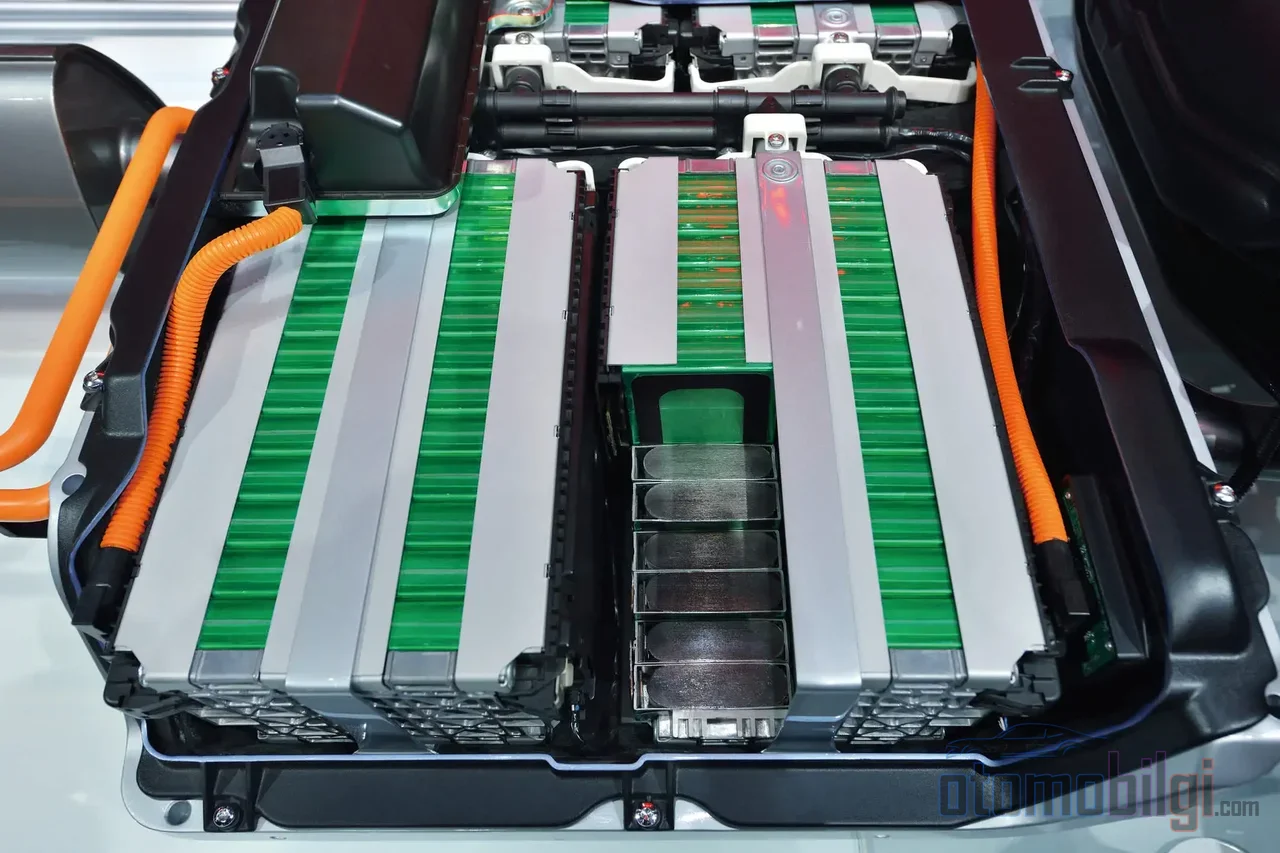
Suppose we think about a battery, and most of the weight carried in the tank - and I'm aware of every gram I carry in my bag when walking back from the gym before dinner - isn't carried at all. The idea of the lithium-air battery is exactly this: to borrow oxygen from the air, not from the tank. But can this idea really compete with gasoline, or is it a dream that gets thrown off at the first corner once it leaves the warmth of the lab bench? As of 2026, the answer is both exciting and frustratingly complex. If you're ready, let's lay the promise and the reality on the table.
What Is a Lithium-Air Battery and Why Is It Getting So Much Attention?
Let me explain the logic briefly, because once you grasp it, everything becomes clearer. A lithium-air (Li-air) battery is a metal-air cell in which lithium is oxidized at the anode side, while oxygen taken from the surroundings is reduced at the cathode side. In a normal battery, you carry all the material inside the box; here, the atmosphere provides half of the cathode - the oxygen. Just imagine: a picnic basket that arrives half empty, but collects the meal from the surroundings.
That's why the numbers are dazzling. The theoretical specific energy calculated excluding the oxygen mass is approximately 40.1 MJ/kg, or roughly 11,140 Wh/kg - nearly equal to gasoline's theoretical value (~46.8 MJ/kg). K. M. Abraham, considered the inventor of the lithium-air concept, M. Abraham, regarded as the inventor of the lithium-air concept, also mentions ~11,000 Wh/kg excluding oxygen; when lithium and oxygen are calculated together, this value drops to ~5,000 Wh/kg. So on paper, this is the only battery chemistry that can hold its own against gasoline's ~13 kWh/kg of chemical energy.
But is this concept new? No, it was first proposed for electric vehicles in the 1970s. In the late 2000s, interest was revived with advances in materials science, and from 2006 onward, the number of publications and patents truly took off. Now the most critical question is this: When will that magnificent number on paper make it into a real car?
Highlights
- Theoretical specific energy of ~11,140 Wh/kg (excluding oxygen) - similar to gasoline's level
- Practical cells can deliver 20-50% of the theoretical value; even in the 20% scenario, ~1,000 Wh/kg is possible
- In 2025, a laboratory prototype announced 1,200 Wh/kg and 1,000 cycles
- In 2026, CATL declared lithium-air a future R&D focus
- In the same cells, the charge/discharge voltage difference is 1.3-1.8 V; round-trip efficiency is very low
How Real Are the Promised Numbers?
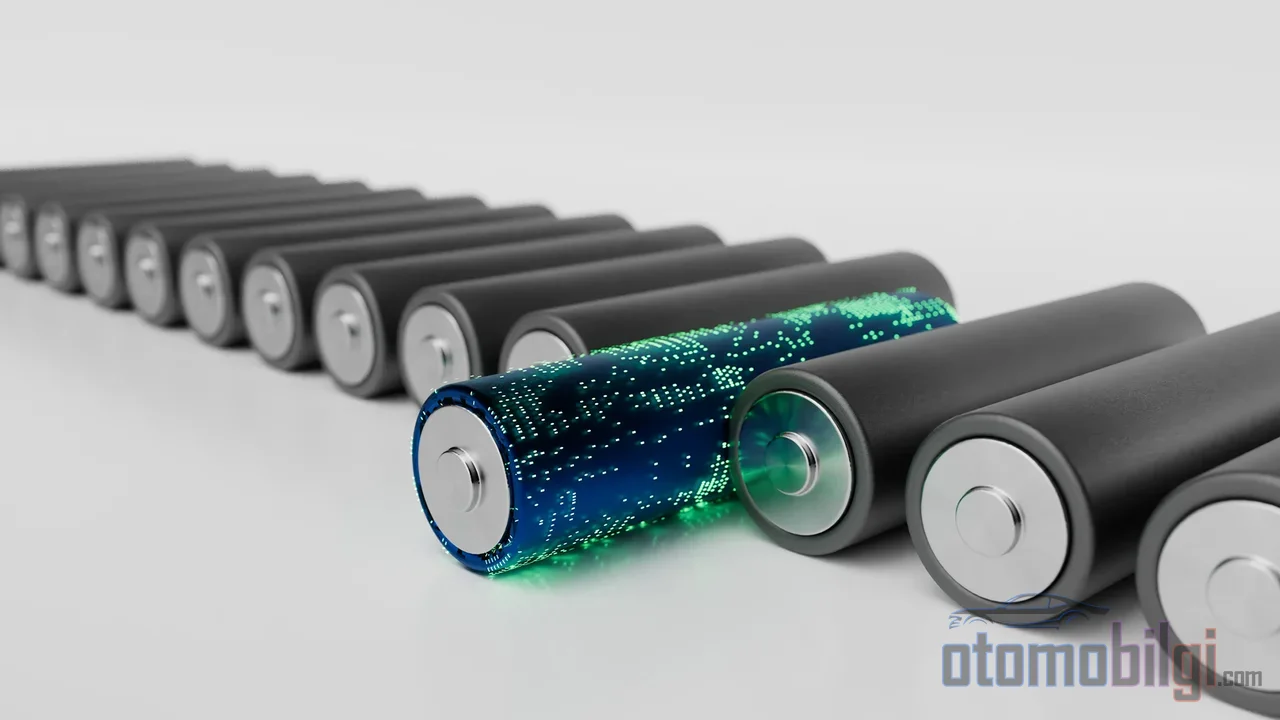
There is a huge gap between theory and the road
This is where we need to stop and take a deep breath, because the golden rule of the battery world is this: A real cell never delivers the full theoretical value. In lithium-air, practical cells reach 20-50% of the theoretical value - and even in the worst-case scenario of 20%, the resulting ~1,000 Wh/kg is roughly 5 times that of today's lithium-ion. According to Abraham's calculation, 60 kg of lithium can drive a 2,000 kg electric vehicle about 500 km. Demonstrations of ~6.12 MJ/kg at the cell level have already been achieved.
But beware: when packaging, air channels and other auxiliary components are factored in, the overall cell-level theoretical maximum drops to 1,400 Wh/kg and 1,680 Wh/L. So the "battery competing with gasoline" claim is based on the 11,140 figure in the headline; but when we get down to the chassis of a real car, much more modest figures appear before us. Let's not forget that gasoline, after its losses, delivers roughly 1.7 kWh/kg to the wheels - the comparison isn't as one-sided as we might think.
The figures in a table
| Measurement | Value |
|---|---|
| Theoretical specific energy (excluding oxygen) | ~11,140 Wh/kg |
| Lithium + oxygen together | ~5,000 Wh/kg |
| Cell-level theoretical maximum | 1,400 Wh/kg |
| Nominal cell voltage | 2.91 V |
| Lithium anode specific capacity | 3,840 mAh/g |
So What Are the Engineering Obstacles Pushing Back This Battery?
Now let's turn to the dark side of the story - which, in my opinion, is the real story. The biggest enemy of lithium-air is the cell's own chemistry. Let me list the problems one by one, then look at how much each has been solved.
- Electrolyte degradation: Carbonate solvents evaporate and oxidize during charging due to high overvoltage; the carbon cathode forms Li₂CO₃ above 3.5 V, causing irreversible capacity loss. NASA's assessment is also that electrolytes are the limiting factor in terms of energy density, rechargeability and safety.
- Pore clogging: The discharge product Li₂O₂ is insoluble and gradually clogs the porous air cathode - like a tap whose pipes are almost coated in limescale.
- Low round-trip efficiency: The charge/discharge voltage gap is 1.3-1.8 V even at low currents (open-circuit voltage ~4.2 V). For comparison: lithium-ion batteries operate at 85-95% efficiency. So a significant portion of the energy in lithium-air evaporates as heat.
- Dendrite growth: The lithium metal anode tends to react with the electrolyte and grow needle-like dendrites; the risk of short circuits is real.
- The air problem: When the cell is exposed to air, moisture (lithium cannot tolerate moisture), CO₂ and nitrogen seep in; selective membranes and filtration are essential.
Add to these low power density, insufficient cycle life and heating requirements, and the picture becomes clear: The giant on paper isn't yet as agile in the field as we'd expect. So who solved these problems, and to what extent?
IBM and Toyota: Why Did the Big Names Withdraw from the Stage?
This is, in my opinion, the most instructive part of the story. IBM's "Battery 500" project aimed at an "air-breathing" battery that uses oxygen from the air while a car runs, and ambitious commitments were made for a working prototype at one point. Then what happened? Lithium-air research at IBM and a US-backed research center was scaled down or abandoned entirely. It also became openly debatable in the scientific community whether progress had stalled in recent years.
Toyota, meanwhile, chose a more pragmatic path: to focus on solid-state lithium-ion in the medium term until lithium-air's problems are solved. What's more, a solid-state battery launch with ~745 miles (about 1,200 km) of range is planned for 2027. So even when giant manufacturers look at the queue, solid-state is expected in premium applications in 2027-2028 and in mass production around 2030, while lithium-air stands further back in that line.
2025-2026: Breakthrough Year, or Just a Wish of Spring?
Just as everyone was putting lithium-air on the shelf, things heated up again in 2025. Illinois Institute of Technology and Argonne National Laboratory announced a prototype with a solid-state ceramic-polymer electrolyte that forms and breaks down lithium oxide directly via a four-electron reaction, instead of lithium peroxide or superoxide: 1,200 Wh/kg and 1,000 cycles. In 2026, cells running stably for more than 550 cycles under fast charge-discharge with the same approach, and designs completing 700+ cycles in an air-like atmosphere, were reported. In July 2026 came news of a lithium-air battery moving toward pilot-scale production for electric aircraft. The U.S. Department of Energy also announced that a new rechargeable lithium-air design offers potentially 4 times the energy density of lithium-ion.
And from the edge of the stage stepped a giant name: CATL, the world's largest battery manufacturer, declared lithium-air its future development focus in June 2026 and announced that its prototype had reached an energy density of 1,200 Wh/kg. The company's prioritization order paints this picture: LFP/NMC and sodium-ion scaling between 2024-2026, solid-state between 2027-2030, then lithium-air. On the market side, the global lithium-air market is projected to reach 395.55 billion dollars by 2034, with a compound annual growth of 20.56% - of course, this is a forecast, not a guarantee.
Where Will We See It First: In Cars, or Somewhere Else?
Abraham's prediction sounds reasonable to me: Lithium-air will first find life in long-range dedicated platforms and systems where the environment can be controlled. We won't see a lithium-air hatchback in every showroom tomorrow morning; the technology will reshape the market gradually, not all at once. Electric aviation - a field where lightness matters above all - clearly looks like the most sensible first address; the news in 2026 points exactly in that direction.
So What's the Answer: Will Lithium-Air Find Its Real Chance on the Road?
Briefly and honestly: There is a real but not guaranteed chance for the production lines of the 2030s. The promise of competing with gasoline, with a theoretical ~11,140 Wh/kg, turned into concrete evidence stepping outside the laboratory for the first time with the 1,200 Wh/kg prototypes of 2025-2026; results of 550-1,000 cycles and its announcement as an R&D focus by a giant like CATL mark a serious advance over the period when IBM withdrew. On the other hand, electrolyte stability, low round-trip efficiency, and resilience to real atmospheric conditions are still not fully solved; experts see mass production as at least 5-10 years away. The real indicator is not the theoretical numbers in the headlines; large-format cells, repeatable production, and safety approvals.
My read is this: Lithium-air is a technology that will first be tried in aircraft and niche platforms in the 2030s, and will begin being tested in cars toward the end of the 2030s. Solid-state will win the battery race of the next decade; lithium-air is the wild card of the decade after that. Stay tuned - because this notebook has only just been opened.
Sources
- Lithium–air battery
- Lithium Air Batteries: The EV Upgrade That Could Beat Gasoline
- Innovative Lithium-Air Battery Design Poised to Increase Energy Storage
- Perspectives and challenges of rechargeable lithium–air batteries
- Lithium-Air Cell Development
- Lithium-Air Battery: Working Principle, Benefits, and Future Potential
- Lithium Air Battery Market Size, Industry Share