The SupeRally Rule in WRC: Crash, Repair, Return

Say your favorite pilot flew into a pile of gravel on a Saturday afternoon special stage. The car turned into scrap metal, the day was over, and you throw the remote and say "no way, the weekend is over." But wait: on Sunday morning the same car is standing at the start line, reborn overnight. Is it magic? No. This is one of WRC's most talked-about yet least understood rules: SupeRally. So how does this system actually work, how many minutes of penalty does a pilot take, and why is sometimes staying in the rally after a crash more important than anything for the championship? Let's break this down from scratch, step by step.
What Is SupeRally and How Does It Work?
SupeRally, a rule that later took the official name Rally 2, allows a pilot to restart the rally the next day after retiring due to a mechanical failure or a crash. The logic of the rule is simple: a rally is a three-day marathon, and the end of the first day is not the end of everything. If the car is in a condition to continue safely on the road, it can return to the rally with the next morning's stage.
So how is the physical side solved? If it's a minor problem on the road, mechanics work within the rule with a 3-hour repair window to get the damaged car back on its feet. If the problem is bigger, the car returns to the service park; in the 45-minute service session at the end of the day, teams prepare the car for the next day. For the restart, the car first goes before the chief technical scrutineer and its suitability for the rally is approved; then the rally director assigns a new start time to the crew. So behind the "overnight rebirth" story there is serious bureaucracy and a mechanical team sweating away.
How Is the Time Penalty Calculated?

Of course, this second chance does not come free. The pilot takes a penalty for every special stage they could not run, and this penalty is added directly to the total time. In the system's early years, a flat 5-minute penalty was applied for every special stage that could not be completed; later this was raised to 10 minutes, and the fastest stage time in the same priority group was also added to the total time. Since the penalty amount changed from period to period, you need to pay attention to which year's rule is being described; the primary source for current details is the FIA's 2026 sporting instructions and Article 54.1, which governs the restart.
Let's bring an analogy to your mind: in normal life, if you miss an exam, that section gets a zero, but in SupeRally, instead of saying "I was late," the system tells you "okay, you left this question blank, and on top of that you lost time." The pilot drops down the overall standings but stays within the rally, actually running the stages.
Highlights
- SupeRally was applied for the first time at the 2004 Acropolis Rally; it later took the name Rally 2.
- A penalty of 5 minutes, later 10 minutes, was applied for each special stage that could not be run.
- Mechanics are given 3 hours of repair time to get the car back on its feet.
- The end-of-day service lasts 45 minutes, and the midday service lasts 30 minutes.
- The maximum points available in a single rally in 2026 is 35.
Where Did the Rule Come From? 2004 Acropolis and Before
Was there ever a world without this system that seems so normal to us today? There was, and how. Before 2004, retiring from a single day (leg) meant retiring from the entire rally. One single slide, one single broken suspension arm, and the driver's weekend was over. The name that changed this harsh order, stepping onto the stage on the rocky cliffs of Greece, was: The 2004 Acropolis Rally became the first rally in WRC history to apply SupeRally rules.
The names who used the system immediately in that first weekend also went down in history. Markko Märtin crashed on the third special stage but returned for the next two days via SupeRally. After Armin Schwarz suffered suspension damage, he returned on the next two legs, practically giving his team a rolling test car. Dani Solà and Toni Gardemeister were also among the drivers who took advantage of this new opportunity that same weekend. So on its very first try, the rule tested exactly the scenario it was created for: crash, repair, return.
Points Hunting: Why Did SupeRally Turn Into a Strategy?
Championship Mathematics
Everything sounds logical so far, right? This is where the really tricky part begins: the points system. In the 2026 format, the top 10 positions score points on a 25-17-15-12-10-8-6-4-2-1 scale. But if a crew retires from the rally, they receive no points from the event at all; neither from the overall classification nor from the bonuses. And that is exactly why, for a driver who has lost hope in the overall standings, SupeRally becomes a lifebuoy that saves the weekend from ending in zero.
Bonus Points: Super Sunday and the Power Stage
The system's real trick lies in the bonus layer. The five fastest crews on Sunday's closing stages earn 5-4-3-2-1 under Super Sunday, and the five fastest crews on the final stage earn bonus points on the same scale in the Power Stage. So the theoretical ceiling in a single rally is 25+5+5, for a total of 35 points. A driver returning from a crash cannot play for the overall standings, but can shake up the Power Stage and pocket five points. And this strategy is not theoretical at all.
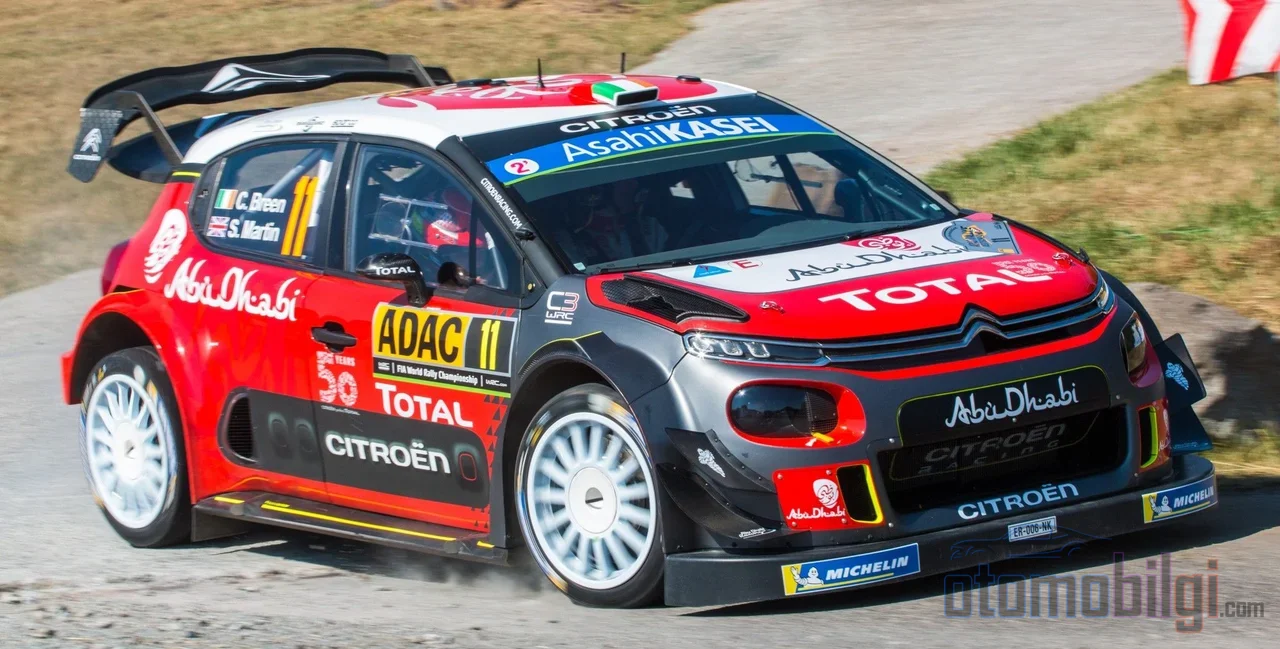
A concrete example? In the 2022 season, Craig Breen stayed in the race under SupeRally conditions after a crash, won the Power Stage, and closed the weekend with a full 15 points; the Power Stage points he collected under SupeRally conditions in that year alone reached 13. So while the rule may look like a consolation prize on paper, in the field it can turn into a real points-scoring weapon.
The Rule's Stormy History: Removed, Brought Back, Rewritten
The interesting thing about SupeRally is that it has never been a settled rule. When the system was first introduced, drivers returning via SupeRally were not classified in the official results; this only changed in 2006. That same year, Sébastien Loeb returned to the race after his day-one crash in Monte Carlo and finished second; the fact that he achieved this result without completing the full stage mileage went down in history as the rule's highest-profile example and ignited the debates.
The discussion wasn't just in the stands. The World Rally Commission requested a rethink of the system in 2006; restructuring the penalty on a seconds-per-kilometer basis instead of flat minutes per stage came onto the agenda. In the same period, at a world council meeting, a model was proposed to abolish the system and replace it with one in which restarters could not compete for points. In 2010, the FIA announced that only those completing every stage of the rally would appear in the final classification; in 2012, the rule ceased to be standard for all events and was left to the organizers' discretion. Today the system lives on under the name Rally 2, in Article 54 of the 2026 sporting instructions, under the heading "restart after retirement."
Who Objected, and Why?
At the center of the criticism was the question of fairness. Legendary Lancia Stratos champion Sandro Munari questioned how a driver could return to the race the next day after retiring, penalized by minutes. From the FIA's side, there were also concerns that the system's perception could be confusing. On the other hand, the series' promotion side pointed to a different reality: television and the spectators at the stages needed more cars. A driver retiring and then returning might surprise viewers, but seeing no cars on screen at all was far worse. The core argument of those who still defend the system within rally culture today is the same: as the number of cars on the stages increases, both the spectators and the broadcast benefit.
The 2026 regulations also bear the traces of this tension. A minimum rest period of 10 hours was introduced for rally weekends; an engine change made after the competition element has begun is penalized with a 60-minute time penalty, and the competitor who changes the engine is barred from scoring points. At the WRC Commission meeting in November 2026, it was decided that, from 2027 onward, Super Sunday bonus points would be awarded only to eligible competitors in the Rally1 category. In other words, the ecosystem around the rule is still evolving in a tangible way.
Short Answer: How Does the SupeRally Rule Work?
Let's summarize, because this question deserves a clear answer: In the WRC, SupeRally (Rally 2) is the rule that allows a crew that has retired from the rally to have its car repaired at service and restart the rally on the next day's stage with technical inspection and an assigned start time. A time penalty is added to the total time for every stage it cannot run; the driver pays a heavy price in the overall standings but gets a chance to salvage the weekend by chasing bonus points.
If you ask me, this rule is one of the compromises best suited to the spirit of rallying. Yes, it does taste a bit odd: someone who retires and returns can collect points. But isn't rallying already the sporting form of the "keep going" discipline? A driver who spends one day buried in gravel and restarts the next morning reminds us why this sport is so beloved. Do you think it is fair for a driver who has come back from a crash to earn Power Stage points, or should the system be tightened even further? I'm curious about your thoughts.