Homologation Thresholds from Group B to Rally1
Stop for a minute and think about this: that fiery red rally monster you saw on the race track was actually supposed to be a copy of a showroom car. Have you ever wondered why manufacturers produced hundreds, even thousands, of cars just for a piece of paper? The name of that paper is homologation, and this very concept is the invisible hand that has shaped the last forty years of the World Rally Championship. In this story, stretching from Group B's 200-unit threshold to today's Rally1 cars, we will see how a single rule clause wrote automotive history.
What Is Homologation, and Why Is the FIA So Obsessed With It?
The word homologation means "official approval" in Turkish; in motorsport, it is the process by which a vehicle, its parts, or its equipment is examined and documented according to technical specifications defined by the FIA. Before coming to a race, you have to prove that your car is legal on paper as well. Let me give you an analogy from everyday life: on a school trip, you cannot board the bus without a parental consent form. Homologation is exactly that; only the authority filling out the form is not the school principal, but the FIA.
The real purpose of this system is to force manufacturers to play fair. The principle that "a race car must be derived from a production car sold to the public" was the fundamental basis of the WRC for decades. A manufacturer would produce and sell a certain number of real cars incorporating the technology it developed for racing, and the FIA would inspect and approve this. Sounds simple, doesn't it? Now let's move on to the crazy part: how much exactly was that "certain number", and how did these figures change car design?
Group B: The 200-Unit Door and the Golden Age of Rallying
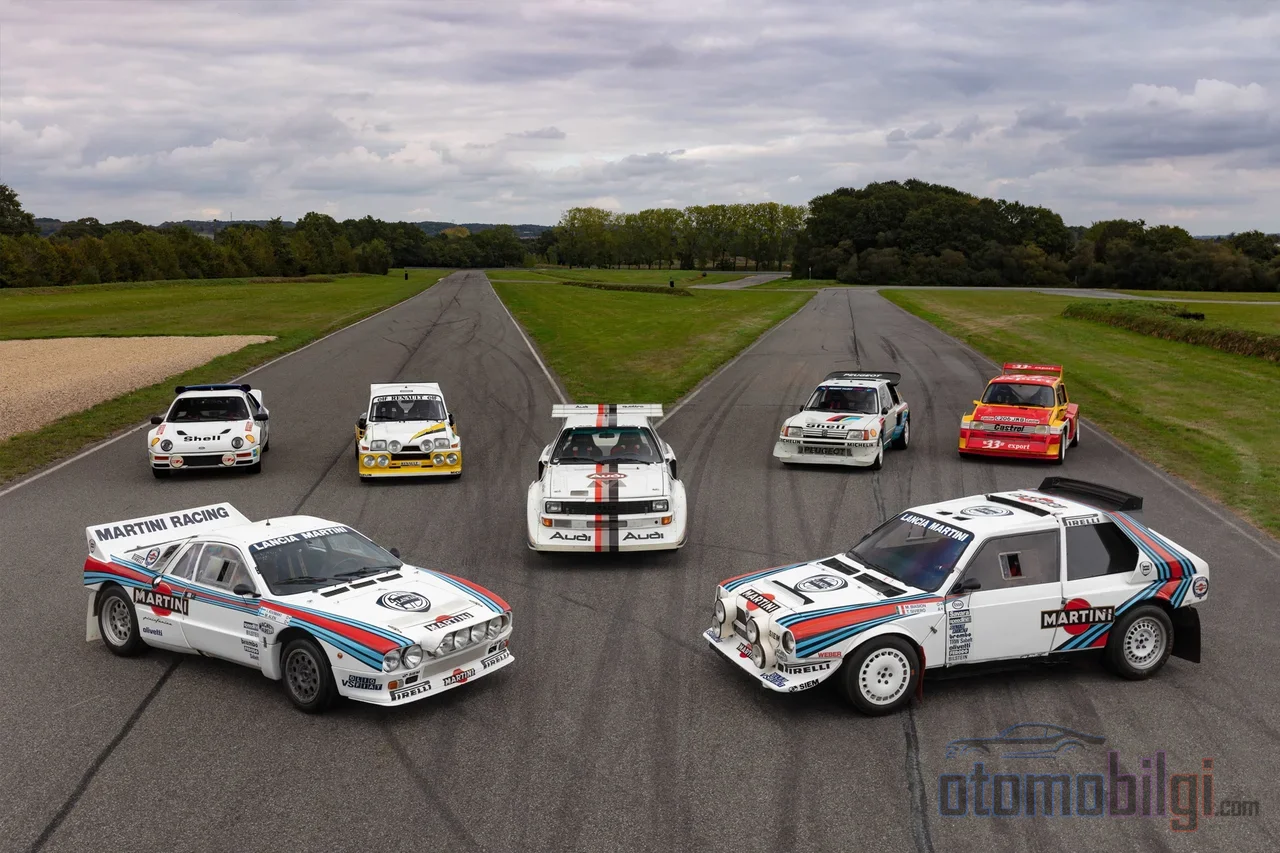
In 1982, FISA divided the production car category of the sporting rules into three new groups: Group N for unmodified cars, Group A for modified production cars, and Group B for GT cars. And here a number emerged that changed the course of history: the homologation threshold for Group B was only 200 units. That meant half of Group 4's 400-unit requirement, and just four percent of the 5,000-unit requirement for Group A and N.
Highlights
- For Group B homologation, producing only 200 units was sufficient; for Group A, that number was 5,000 (reduced to 2,500 in 1993)
- For Evolution versions, homologation could be extended each year by producing only 10% of the car count
- In Group B's power race, the 250 hp cars of 1981 gave way to monsters exceeding 500 hp
- From 1987 onward, Group A became the top class; with an engine limit of 2,000 cc and 300 hp
- In 2027, Rally1 is giving way to new spaceframe cars with a price base of €345,000
What did this low threshold make possible? Manufacturers were able to design race-focused space frame structures instead of sticking to the series' typical monocoque (unibody) chassis. Brands could develop special rear-wheel-drive or all-wheel-drive homologation cars without taking on a heavy financial burden. Moreover, even sports cars without four seats or that were not produced in sufficient numbers (such as the Ferrari 308, Porsche 911) could be homologated through this route.
The system also allowed "evolution" versions: there was no need to build a new 200 units for improved models included in the original homologation; 20 "evolved" cars were enough. It was also easy to extend the homologation each year; the process continued by producing 10 percent of the requirement (20 units in Group B, 500 in A and N).
The Power Race and Class Structure
Group B's technical regulations tied engine capacity, weight, and tire width together in a table. In engines using forced induction such as turbochargers or superchargers, the capacity was multiplied by a factor of 1.4, but there was no restriction whatsoever on boost. This loophole quickly turned into an uncontrolled power race. While the winning cars in 1981 produced roughly 250 hp, by 1986 at least two cars had exceeded 500 hp. The Sport Quattro S1 passed 600 hp in 1986. Peugeot used an anti-lag system of Formula 1 origin, while Lancia's Delta S4 came with a twincharged solution running the turbo and supercharger together.
The standout classes were as follows: Cars such as the Audi Quattro, Lancia 037, MG Metro 6R4, and Ford RS200 competed in the 3,000 cc class (2,142.8 cc for turbo), at 960 kg. The Peugeot 205 T16 and Lancia Delta S4 were the representatives of the 2,500 cc class (1,785 cc), at 890 kg. Legends such as the Ferrari 288 GTO and Porsche 959 were also registered in the 4,000 cc class; the Porsche 959 never entered a WRC race but won the 1986 Paris-Dakar.
Homologation Specials: Cars Born Just for the Paperwork
Here is the strangest fruit of the system: the extremely rare "homologation special" cars, built solely to meet the homologation quota. Some of these could not even survive after being presented to FIA officials. In other words, those magnificent road cars were not produced to be great; the racing regulations required it. In Group B there were almost no restrictions on technology, design, or materials; the Ford RS200 carried a fiberglass body.
So how did this paradise end? The year 1986 was shadowed by two tragedies. In March, at the Portugal Rally, Joaquim Santos' RS200 skidded while swerving to avoid spectators; three people lost their lives and 31 were injured. In May, at the Tour de Corse, Henri Toivonen and his co-driver Sergio Cresto lost their lives in a Delta S4 crash. Thereupon, the FIA banned Group B from the WRC from the 1987 season onward and declared Group A, with its 2,000 cc and 300 hp engine limits, the top class. The planned Group S (which envisioned 10 homologation units and a 300 hp limit) was also canceled; at least four prototypes had been built when it was canceled.
This decision is still debated today. Audi withdrew from rallying entirely after Corsica, while the FIA argued that its decision contained no measures to improve spectator safety - meaning the problem lay not in the cars but in spectator control. Many rally circles also reacted to the cancellation, believing Group S would have been both safer than Group B and more exciting than Group A.
The Group A Era: How Does a Homologation Road Car Become a Legend?
From 1987 onward, things turned around. Group A's production requirements brought manufacturers back to real showroom models, and this gave birth to one of the most beautiful by-products in automotive history. The Lancia Delta HF 4WD and later the HF Integrale were marketed as road versions of rally cars and elevated to the peak of the hot hatch concept. The Delta S4 Stradale, on the other hand, was a homologation car left over from Group B, suited for road use; 200 units were officially required, but there is no definitive figure proving that a production run close to this actually took place, and skepticism on this matter is widespread among classic car circles.
The most striking example is undoubtedly Subaru. The Impreza WRX's name is an abbreviation of "World Rally eXperimental"; in other words, the car was developed directly for the WRC. The Impreza 555 made its debut at the 1993 1000 Lakes Rally and defined the WRC era of the mid-90s with three consecutive manufacturers' championships between 1995-1997. The WRX STI is described as the road-going homologation model designed to meet WRC standards. The design of the legendary 22B version belongs to Peter Stevens, the designer of the McLaren F1. Yes, you read that right: rally rules gave birth to a Subaru from the hand of the man who drew the McLaren F1.
World Rally Car and Rally1: How Did the Production Link Loosen?
In 1997, the FIA introduced the World Rally Car specification, which would run from 1997 to 2021. This was, in fact, a softened return of the Group S concept: cars were limited to 380 hp and a 2,500-unit production requirement existed, but unlike Group S, they had to share some parts with the production model. A fact that stayed in the shadows but is important: in the modern WRC class, the production number can be kept below 50 units; far below even Group B's 200 units. The purpose of the specification was clearly evident: to make the development of new cars easier and to attract new manufacturers to the championship.
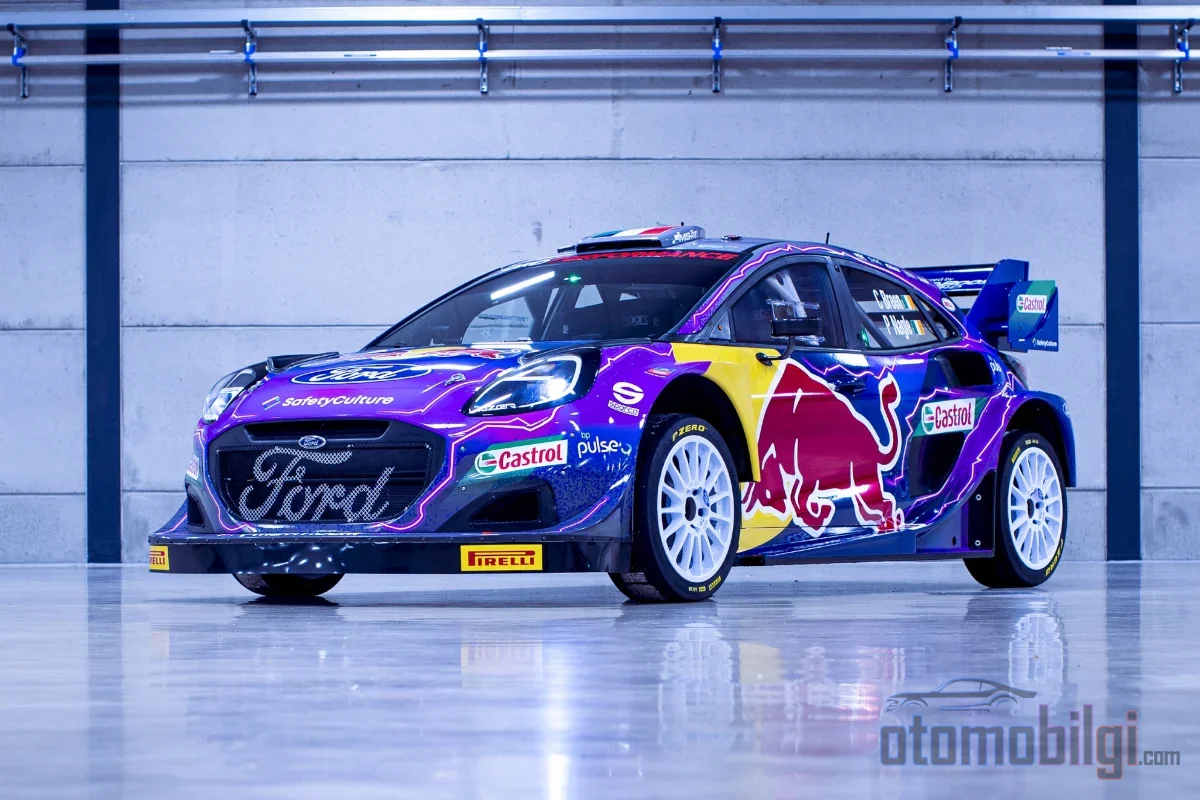
In 2022, the stage was handed over to Rally1. This class uses hybrid powertrains with a 100 kW motor and battery. The Toyota GR Yaris Rally1 HYBRID was the championship-winning car, completely redesigned for 2022. In 2025, the rules changed significantly: the minimum weight dropped from 1,260 kg to 1,180 kg, the air restrictor size was reduced to below 36 mm, and plug-in hybrid technology was halted. The FIA also allowed a maximum of three new hybrid units per season for point-scoring cars. By 2026, the picture is clear: Rally1 regulations remain in effect until the end of the season, hybrid power is retained, and despite the uncertainty at Hyundai, the FIA is not planning changes to the rules. In addition, in 2026 teams were given two bonus homologation "jokers" above the standard allocation; a final dance for chassis development.
How Did the Rules Bring Manufacturers In and Out?
Homologation and class rules shaped not only car design but also brands' relationship with the championship. We know the 1997 WRC specification was explicitly designed to attract new brands. On the other hand, cost and crises pushed teams out many times in history. Following the 2008 crisis, Subaru announced its withdrawal one day after Suzuki. In 2016, Volkswagen decided to leave the WRC due to the financial losses caused by the emissions scandal. The cheating scandal at the 1995 Rally Catalunya, in turn, resulted in Toyota being banned from the championship.
In short, homologation rules are a magnet; when set correctly they attract brands, when set incorrectly (or when costs spiral out of control) they repel them. That is why the 2027 plan is so critical.
2027: A New Round of the Homologation Cycle
So where is this story heading? The answer has become clear: In 2027, Rally1 is going away. It will be replaced by spaceframe cars using Rally2-level engine, gearbox and brakes, and the price of the ready-to-race asphalt-spec car is capped at 345,000 €; a cost more than 50 percent lower than the current Rally1. The envisioned structure includes a minimum production run of 10 units and 10-year homologation stability. This means the homologation threshold drops tenfold even below Group B's 200 units. A Rally2-WRC-Kit option that can be fitted to current Rally2 cars is also on the table for cars homologated before December 31, 2026. Toyota, for its part, has already unveiled an updated prototype of its 2027 test car.
Now let me give a clear answer to the question at the beginning: homologation is the process of documenting a vehicle's compliance with FIA technical specifications, and the required minimum production figures, along a line stretching from Group B's 200 to Group A's 5,000, from World Rally Car's 2,500 to today's below 50, and 2027's 10, have directly governed car design, class structure, and brands' decisions to stay in or leave the WRC. As the threshold fell, cars became closer to race machines; as it rose, showroom legends (Delta Integrale, Impreza WRX STI) were born. The cheap and stable rules of 2027 are exactly the new link in this cycle.
The next time you see an old Impreza WRX or Delta Integrale on the road, remember that behind it lies not just an engine but an FIA dossier and four-figure production quotas. Rally history, in fact, was written on paper.