From Group A to Rally1: The WRC Technology Evolution
Share This Page
There was a period when a rally car could do 0-96 km/h on gravel in 2.3 seconds; a few years later, those cars were banned. How did the story that began with the madness of Group B evolve into today's Rally1, running on hybrid power and sustainable fuel? Are you ready to trace the forty-year journey of WRC technology on a single line?
Most people know rally history from its two extremes: either the legendary Group B or today's Rally1 cars. But the most interesting part is the generations in between these two extremes - because each new set of rules was born to solve the problems created by the previous one. Safety, cost, participation, and most recently, the environment... Each of them also left its mark on the technologies carried by the car in your garage. Let's embark on a journey that is chronological but thematic.
The Fall of Group B: Too Fast, Too Dangerous
First, let's set the stage briefly. The WRC's first season opened in 1973 with Alpine-Renault's manufacturers' championship; the first purpose-built rally car, the Lancia Stratos HF, dominated from 1974 to 76. But what really shook the scene was Group B: Between 1982 and 1986, engineers were given almost unlimited freedom, with only a 200 production units requirement.
The result? Composite body on a steel tube-frame chassis, mid-engine, all-wheel drive. Monsters like the Peugeot 205 T16 and the Lancia Delta S4 were born. The Delta S4 is reported to have done 0-96 km/h on gravel in 2.3 seconds - a figure that would still make super sports cars envious today. Moreover, all-wheel drive had been legalized in 1979, and with the Audi Quattro's success, all manufacturers had turned to this path.
But no limits also meant no safety. At the 1986 Portugal Rally, three spectators lost their lives in a Ford RS200 crash, and more than 30 people were injured. That same year, at the Tour de Corse, Henri Toivonen and co-driver Sergio Cresto died in a crash. Hours after the accidents, the governing body froze Group B's development and banned it from 1987; the planned Group S was also cancelled. The official reasoning was clear: the cars were too fast and could not race safely. After this trauma, rally turned to a completely opposite philosophy - slower, more accessible, and based more on production cars.
Highlights
- Group B required only 200 production units; in Group A, which replaced it, this requirement rose to 2,500.
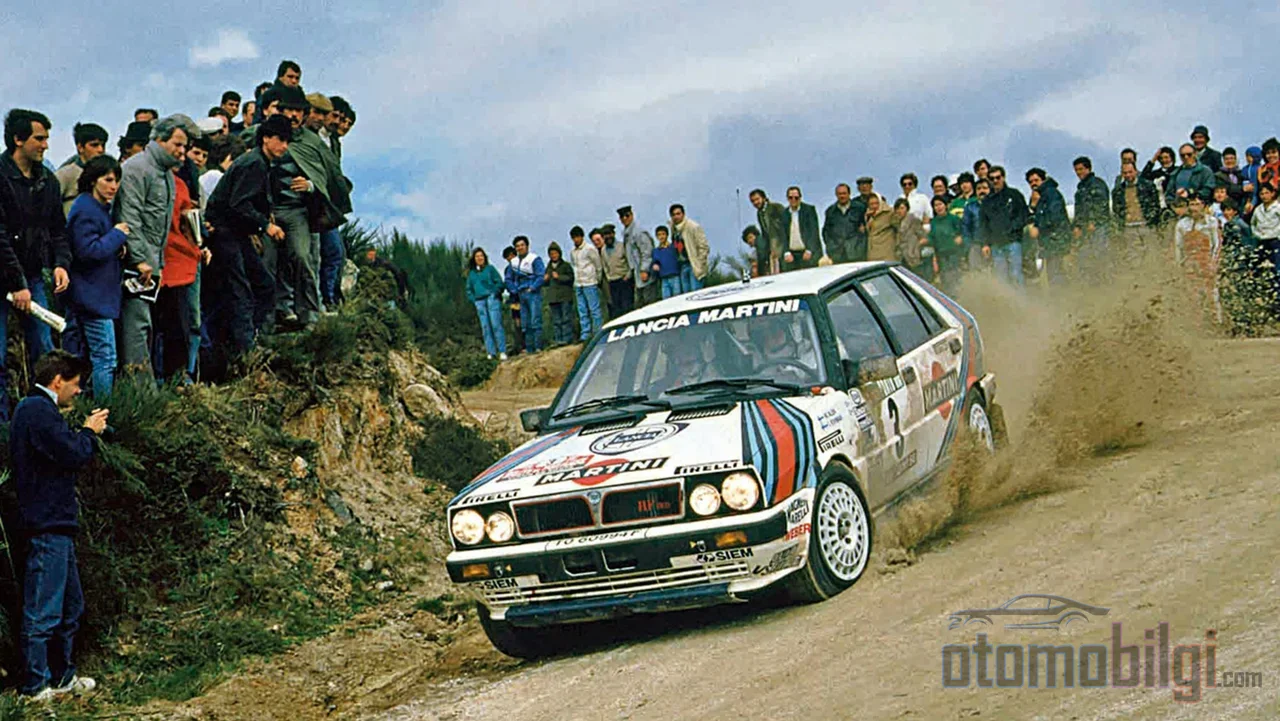
- The Lancia Delta HF won the manufacturers' championship 6 times in a row between 1987 and 1992.
- With the 2017 rule change, power rose from 300 to 380 horsepower despite the smaller engine displacement.
- The Rally1 hybrid system added 84 kg to the cars' gross weight; in 2026, power was capped at 330 horsepower.
- In 2027, the all-new WRC27 regulations are coming; sustainable fuel will be supplied to all classes.
The Group A Era: Real Cars, Real Champions
With Group B's ban, Group A came into effect in 1987, reconnecting rally cars to road cars: for a manufacturer to enter rallying, it had to sell 2,500 production units within 12 months. In other words, the car running in the field was a relative of the car actually sitting in dealerships. This was the most natural path for carrying technology to the road.
The undisputed queen of the first-generation Group A was without a doubt the Lancia Delta HF: manufacturers' champion six years in a row from 1987 onward. Kankkunen and Biasion each won two drivers' championships with the Delta, and Lancia remains today the most successful marque in WRC history. But in the 1990s the stage turned to Japan: Carlos Sainz became champion in 1990 and 1992 with the Toyota Celica GT-Four; Kankkunen took his record-setting fourth championship with Toyota in 1993; Colin McRae reached the top with Subaru in 1995; and Tommi Mäkinen won four championships in a row from 1996 to 1999 with the Mitsubishi Lancer Evolution.
An important first on the technology front also belongs to this era: the Ford Escort RS Cosworth was the first production car to generate downforce at both the front and the rear. Aerodynamics, the art of folding the air behind you, had now entered rallying's vocabulary. But within Group A itself, a problem was ripening: building 2,500 cars was expensive and was reducing the number of participants. The hero of the next chapter would be born precisely from this problem.
World Rally Car: The Age of Freedom Where the Rules Were Bent
Introduced in 1997, the World Rally Car concept was simple but revolutionary: you no longer had to build a special model for homologation. You could turn any model of yours producing more than 2,500 units into a rally car with engine, all-wheel drive, and suspension modifications. In 1997 the minimum weight rose from 1,200 kg to 1,230 kg, and the rules offered more aerodynamics, more power, and more gearbox freedom.
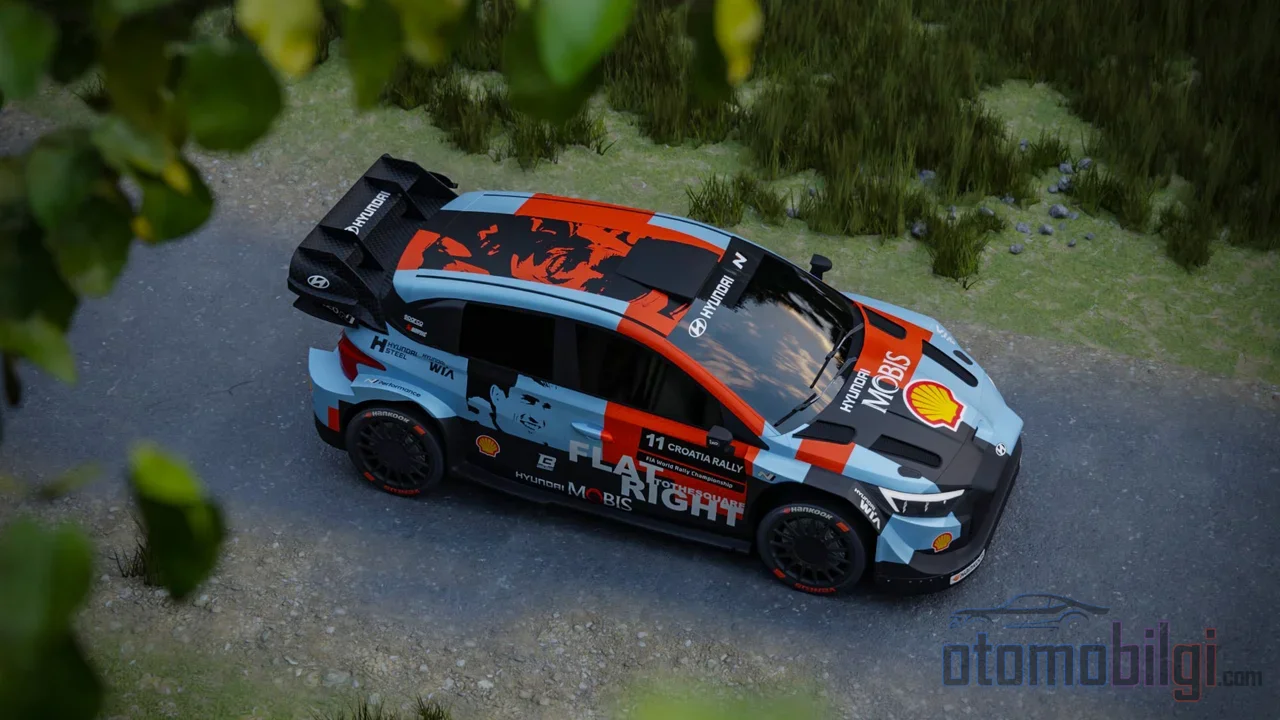
This freedom practically refilled the stage: Peugeot, Citroën, Skoda, Volkswagen, Seat, Mini, and Hyundai came through the door. Hyundai raced in the 2000s with the Accent WRC powered by a 2.0-liter turbo developed in England. The air restrictor limited power to 300 horsepower, but manufacturers exercised their creativity elsewhere: active differentials, electronically controlled dampers, electronic clutch, GPS-based ground clearance control... The cars had started talking to each other, like engineers on the phone.
And the competitive legends of this era were the cherry on top: Sébastien Loeb, with the Xsara WRC, surpassed Mäkinen's four-championship record and reached his ninth in 2012 consecutive championship; then Sébastien Ogier won six consecutive championships with Volkswagen.
The 2011 Squeeze and the 2017 Comeback
When costs spiraled out of control, the rules tightened in 2011: differentials were made mechanical, expensive materials like titanium, carbon fiber, and magnesium were restricted, and the 1.6-liter turbo became the standard. Power was still 350+ horsepower and there was all-wheel drive, but the cars were less exotic. Then 2017 came, and the pendulum swung back: engine displacement dropped from 2.0 to 1.6, but by enlarging the intake restrictor diameter, power was raised from 300 to 380 horsepower. The center active differential, banned in 2011, returned; width, rear wing, and fender-diffuser rules were loosened, pushing aerodynamic freedom to its peak.
Many say this generation revived the Group B nostalgia - this time safely. Hyundai had returned in 2014 with the i20 WRC; the i20 Coupe WRC, meanwhile, achieved 17 wins and 62 podiums in 2019-2020.
Generations Side by Side: A Brief Comparison
| Era | Production Requirement | Signature Feature | Representative Car |
|---|---|---|---|
| Group B (1982-86) | 200 units | Mid-engine, nearly unlimited freedom | Lancia Delta S4 |
| Group A (1987-96) | 2,500 units | Requirement based on road cars | Lancia Delta HF |
| World Rally Car (1997-2021) | No homologation model required | Aero and power war up to 380 HP | Hyundai i20 Coupe WRC |
| Rally1 (2022-) | Advanced safety chassis | Hybrid electrification | Toyota GR Yaris Rally1 |
The Rally1 and Hybrid Era: Electricity Enters Rallying
The Rally1 regulations of 2022 were truly revolutionary. Toyota GR Yaris Rally1 HYBRID became the symbol of the new generation developed under these rules. The hybrid system was standard for all teams in the first three seasons (2022-2024) and added 84 kg to the gross weight of the cars. The entry of electrification into rallying was presented by many as the beginning of a new era.
But in reality, the story did not progress so linearly. In 2025, the use of plug-in hybrids was paused, and this decision sparked debate: on one side, those who saw the end of an overly expensive hybrid era; on the other, those who believed in electrification's future in rallying. The management confirmed that hybrid Rally1 cars would continue until the end of the 2026 season and granted teams additional development freedom for the final season. In 2026 cars, power was limited to 330 horsepower and is controlled by a reference torque curve; the cars are also subject to a €400,000 cost cap. This is a detail showing that engineering can compete not only with speed but also with discipline.
2027 and Beyond: What Will WRC27 Bring?
The Rally1 regulations end at the close of the 2026 season. From 2027 onward, entirely new WRC27 regulations will apply, and they will accommodate various drivetrain technologies, from internal combustion engines running on sustainable fuels to hybrid systems. The new concept has two main themes: a safety-focused foundation and flexible car design. In addition, sustainable fuel - meaning synthetic or biofuel - will be supplied to all classes. Ford's announcement of returning to the WRC in 2028 and targeting rally-derived road cars are signs that the stage will come alive again. Meanwhile, in the 2026 season Hankook serves as the tire supplier, and Elfyn Evans won the drivers' championship, Scott Martin the co-drivers', and Toyota the manufacturers'.
How WRC Technology Affected Your Car
The best part of this story is right here: ideas emerging from the rally laboratory have trickled all the way down to the car you drive in traffic. WRC cars run with far more aggressive turbo pressures than road cars; the way all-wheel drive and differential technologies translate to the road are the most tangible examples. The Escort RS Cosworth producing downforce at both ends can be considered the ancestor of the wing and diffuser trend we see in today's hot hatches.
But to be honest, not everything flows down to the road car. For instance, Rally1's carbon space-frame chassis genuinely weakens the road connection; the fluids, on the other hand, stay much more road-friendly. In other words, rally technology passes through a filter on its way to the road: tire compounds, suspension philosophy and all-wheel drive controls flow down easily; exotic materials and space frames largely stay on the stage. Still, the bigger picture is clear: thanks to advances in tires and suspension on the final stages, modern cars are acknowledged to perform noticeably better than Group B cars over the same stages. This is not a series of iron, but one with a rising brain.
A One-Sentence Summary of Forty Years of Evolution
The line stretching from Group B to Rally1 is actually a search for a single balance: a compromise between speed, safety, cost and accessibility, rebuilt by every generation. Group B removed the limits, Group A tied it to real cars, the World Rally Car saved participation, 2017 brought back the show, and Rally1 electrified it and then took a step back. The evolution of WRC technology is not rally's fastest car, but its smartest compromise. As a new page opens with WRC27 in 2027, I am eagerly awaiting the next chapter of this forty-year story - which generation's cars do you like the most?
Sources
- WRC History
- 50 Years of WRC: The Evolution of Rally Cars | Journal
- World Rally Championship
- World Rally Car
- Rally1
- Group B
- 1997 | World Rally Championship | MOTOR SPORTS
- New regulations coming for the 2017 World Rally Car
- WRC – Rally1 spectacle maintained following technical changes
- FIA unveils WRC27 Rally1 concept
- CAR DETAILS 2022 | Toyota Gazoo Racing
- CAR DETAILS 2026 | Toyota Gazoo Racing
- Electromobility in rallying - DEVINN
- Hybrid ditched as part of major WRC regulation change
- WRC to retain hybrid-powered Rally1 cars until 2026
- FIA grants WRC teams extra development freedom for Rally1 swansong
- 20 years ago, the World Rally Car saved the WRC
- WRC A-Z
- The Incredible Tech Behind the New WRC Rally1 Hybrid Cars
- How the WRC is more road-relevant than you think
- Ford Returns to FIA World Rally Championship
- Group B Rally: The Wildest Chapter in Motorsport History
- WRC hybrid: a new era begins!