The Anatomy of Rally1 Cars and the WRC Format
Share This Page
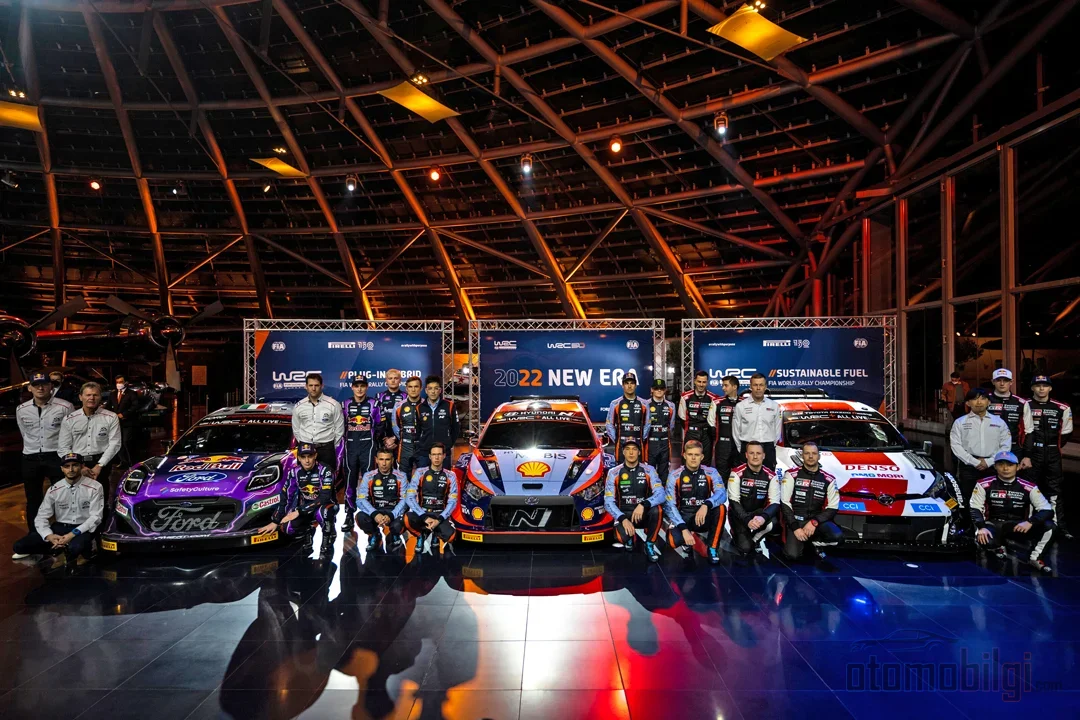
Rally1 is the top rally class, competing in the WRC since 2022, adding a hybrid electric power unit alongside its production-based body. These cars add a 100 kW electric motor to the power of the 1.6-liter turbo engine, becoming the face of both the fastest and most sustainable era of rallying. So what exactly does this hybrid system do, and how does a rally weekend work? Let's break it down!
Highlights
- Rally1 cars were introduced in 2022; the hybrid era began with Monte-Carlo in the WRC's 50th anniversary year.
- Hybrid unit: 3.9 kWh battery + 100 kW (~135 hp) electric motor, 180 Nm of torque.
- Three official cars: Toyota GR Yaris Rally1, Hyundai i20 N Rally1 and Ford Puma Hybrid Rally1.
- A rally typically runs 15-25 special stages ; the Power Stage awards extra points to the top 5.
- The FIA has paused the use of plug-in hybrid in Rally1 cars for 2025.
How Does the Rally1 Hybrid Powertrain Work?
Imagine this: you have a 1.6-liter turbocharged, four-cylinder, direct-injection engine. Now add a friend pushing you from behind as you pedal uphill on a skateboard - that's roughly Rally1's hybrid philosophy. At the rear of the car, next to the rear axle, sits a 3.9 kWh battery and an MGU (Motor Generator Unit) producing 100 kW (approximately 134-136 hp) of power and 180 Nm of torque in an ultra-durable carbon housing. This unit kicks in for extra power during stages, and on the road sections between stages it moves the car along in silent, zero-emission mode. So on one hand it's a monster getting covered in mud and launching off rock bottoms, and on the other it can glide through the city like an electric car. I'm proud like it's my own brother - are you proud too?
Total power is ~375 kW or so - a serious leap compared to the previous-generation Yaris WRC's 284 kW. Even more interesting is the fairness system: the carbon-housed hybrid unit was given equally to all teams, and development costs were shared between the manufacturers and the FIA. The priorities were safety, cost management and sustainability. The cars run on synthetic and biofuels, and charging stations were set up in service parks. Rallying now answers to its environment too, yes.
What Do the Lights Next to It Mean?
A small but life-saving detail: the hybrid system operates at high voltage. That's why spectators don't approach a crashed Rally1 car until the green light comes on. If the light is red or off, there is a risk of electrocution. Knowing this light when watching a rally isn't just technical knowledge - it's safety knowledge.
The Production Car Connection: A Modified Version of the Road Car or a Faulty Cousin?
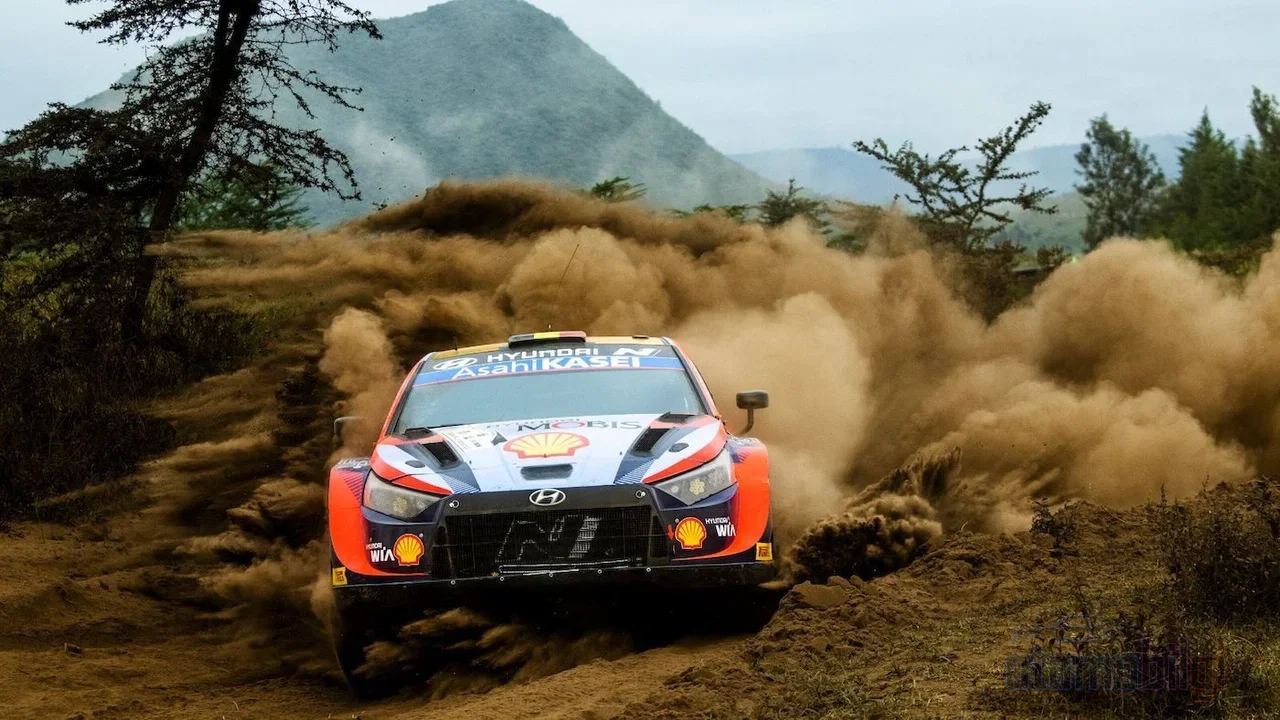
What I love most about Rally1 cars is this: they're not really showroom monsters, they're modified versions of the cars sold on the road. Their engine blocks are technically identical to the blocks in the road car versions. The Toyota GR Yaris, Ford Puma and Hyundai i20 N - all have road versions and rally versions. Let's recall the Hyundai i20 N road car: 1.6 T-GDI, 204 HP, 304 Nm, 6-speed manual, front-wheel drive, and 0-100 km/h in 6.2 seconds. Now imagine the Rally1 version of this: 1600 cc turbo I4, ~360 hp, ~450 Nm and four-wheel drive. Same family, a completely different training program.
One more detail: the i20 N Rally1's platform is produced at Hyundai Motor Türkiye's facility - yes, a platform coming out of Türkiye competes at the very summit of world rallying. In Türkiye, a total of 13 different models have been produced to date across different periods. The 2022 regulations also raised safety to a new level: the new space-frame chassis provides more protection, the aerodynamic package was downsized, and the switch was made to an AWD system without an active center differential. So less wing, less electronic trickery, more driver skill - totally our style.
| Specification | Hyundai i20 N (road car) | Hyundai i20 N Rally1 |
|---|---|---|
| Engine | 1.6 T-GDI turbo | 1600 cc turbo I4 |
| Power | 204 HP | ~360 hp |
| Torque | 304 Nm | ~450 Nm |
| Drivetrain | Front-wheel drive | Four-wheel drive |
| 0-100 km/h | 6.2 s | Not measured under rally conditions |
How a Rally Weekend Works: Stages and Format
This is where everyone always asks about its difference from circuit racing: "Does everyone race at the same time?" No! In a rally, drivers race on closed roads one by one . Each rally typically includes 15-25 timed special stages (SS). A special stage is the closed road section where you speed; times are recorded, and the one with the best total time wins. On the connecting road sections in between, you drive on normal roads obeying traffic rules - there is no racing there, just rest and technical service.
So what is a super special stage (SSS)? These are stages that deviate from the rally's character, usually short ones. Mostly on the first day, after the ceremonial start on Thursday evening, they are run inside the host city, close to the spectators. For example, at Safari Rally Kenya 2022, Stage 1 was a super special stage that ran two drivers side by side. Short, loud, crowded - let's call it the rally's opening music.
Power Stage: The Final Word of the Weekend
The last stage of the final day is the Power Stage; it is practically the final scene of the rally. In this stage, extra championship points are awarded to the top 5. So even while the lead seems secure, everything can turn upside down in the final stage - or the leader can also land the final blow. There is also a "Super Sunday" classification for Sunday: a separate classification is created based on the cumulative times of the Sunday stages, and points are awarded; the overall rally time is not reset. So the one who does best on Sunday is rewarded, as is the one who completes the weekend best. Five necklaces overnight... sorry, five points in a day.
WRC Points System: 25-17-15 and Changing Rules
Now we move on to the math part, I promise it won't scare you. The top 10 in the overall classification receive points as follows: 25-17-15-12-10-8-6-4-2-1. It resembles Formula 1's classic system, but the winner already gets 25 points instead of 25; the difference lies in the 17 points for second place. This asymmetric structure says that second place is not as valuable as first.
On top of that, Power Stage bonus points and the Sunday classification are added. The latest change here is significant: while Sunday points used to be distributed to the top 7, now they go only to the top 5 are being awarded. Sunday points are calculated based on cumulative stage times; the total rally time is not reset. These revisions sparked debate about the new points system - some say "make it like F1," while others say don't break rally's own DNA. Which side are you on? In my opinion, it's fair for the driver who dominates the weekend from start to finish to get the most points; but let's admit it, we also love the Sunday drama.
Loeb, Ogier and Rovanperä: Legends Driving the Technology
No matter how far the machines advance, there is a human behind the wheel - and in the WRC, those humans are legends. Sébastien Loeb, in a full-time program spanning 10 years within 9 championships, 80 rally wins and 939 stage wins amassed. Let the magnitude of that number sink in: 939 stage wins! Sébastien Ogier, meanwhile, reached 9 championships in 17 years ; 6 of his championships came back to back, between 2013 and 2018. With the championship he won at Rally Saudi Arabia in 2025, he equaled Loeb's record. So the answer to the question "Loeb or Ogier?" is now truly 9-9. Vincent Landais has sat in Ogier's co-driver seat since 2021; Loeb, on the other hand, returned part-time in 2022 with the Ford Puma Rally1 and got a taste of the hybrid era.
The new generation is even bolder: Kalle Rovanperä and his co-driver Jonne Halttunen twice became world champions, and won their first title at a much younger age than Loeb and Ogier. While Loeb and Ogier lifted their first trophies at around 29-30 years old, Rovanperä made history in his early... pardon me, early twenties. The co-driver issue is also critical: This is not a solo sport. The man in the left seat reads pages of notes, while the driver pushes to maximum speed as if flying blind. The Rovanperä-Halttunen and Ogier-Landais pairings are proof that human synergy, as much as technology, brings championships.
Rally Technology's Reflection on the Roads
If you're asking "what's a rally car to me?", I have news for you: That car's legacy lives in your car. Rally1's engine blocks come from the same foundation as road cars - the family bond between the i20 N road car's 1.6 T-GDI and Rally1's 1600 cc turbo unit is the most concrete example of this. The same story plays out on the hybrid side: power boost on the stage, quiet electric driving on the liaison road - the rally version of how hybrid cars on the road work. 100% sustainable fuels and charging stations in service parks mean tomorrow's toys are being tested today. Even though Rally1 is at a new crossroads with the pausing of plug-in hybrid in 2025, the story this class tells to road cars - speed, efficiency and durability - doesn't stop. Considering that motorsport learned to be cautious about power after Group B's 500-horsepower monsters, Rally1's measured hybrid approach is actually proof that the lessons have been absorbed.
Final Word: A Line Stretching from Mud to Hybrid
Rally1 tried to give it an electric heart while preserving the soul of rallying - closed roads, one stage at a time, co-driver notes, mud and rock. The points system is constantly debated, the hybrid's future is still taking shape, and the legends are busy sharing records. But it is precisely this mess that makes the sport so alive. Next rally weekend, when you watch the stages, you will know what is what: the Super Special Stage is the opening party, the Power Stage is the final scene, and the green light in the back is the safety key. Look at what the top 5 did on the Power Stage - it is the fastest way to understand rallying. Find me and let's discuss the results!
Sources
- WRC hybrid: a new era begins!
- CAR DETAILS | 2026 | WRC – Toyota Gazoo Racing
- POINT RANKING | 2026 | WRC – Toyota Gazoo Racing
- WRC – Hyundai Motorsport
- WRC World Rally Championship – Hyundai Motor Türkiye
- All About The WRC Rally 1 Cars – Hyundai Motor Group
- The Incredible Tech Behind the New WRC Rally1 Hybrid Cars
- Toyota's Yaris Rally1 Hybrid Wins WRC Title – Racecar Engineering
- Toyota GR Yaris goes hybrid
- Rally1 – Wikipedia
- Special stage (rallying) – Wikipedia
- ABOUT WRC – wrc.com
- Legs and Stages: The Bits and Parts of a Rally – Škoda Motorsport
- Rule changes summary – juwra.com
- WRC 2026 Points System Explained – Grixme
- Sébastien Ogier – Wikipedia
- Ogier equals Loeb's record of nine WRC titles – DirtFish
- Rally Saudi Arabia: Day 4 – Toyota Newsroom
- Kalle Rovanperä career portrait – Red Bull
- WRC – Rally1 spectacle maintained following technical changes (FIA)
- How much slower will Rally1 cars be without hybrid? – DirtFish
- 2026 World Rally Championship – Wikipedia
- WRC explained: Your ultimate guide to the 2026 season – Red Bull