From Left-Foot Braking to the Scandinavian Flick: Rally Driving Techniques
Share This Page
Rally drivers manage to enter corners at far higher speeds than in normal cars because they use the brake, the throttle and the car's weight like an instrument: With the Scandinavian flick they deliberately throw out the rear, balance the car with left-foot braking without lifting off the throttle, and rotate through hairpin corners with the handbrake. In the Rally1 era, these techniques gained new dynamics with the coming and going of hybrid power, and what makes WRC drivers fast is precisely this muscle memory combined with knowledge of physics.
Highlights
- The Scandinavian flick has been the signature technique of Scandinavian drivers since the 1960s and relies on weight transfer
- Left-foot braking eliminates the throttle-to-brake transition time
- The hybrid unit was removed from Rally1 cars in 2025; the minimum weight dropped to 1180 kg
- According to a thesis study, the Scandinavian flick is the most time-optimal solution in a sufficiently tight hairpin corner
- Gravel is a deforming, dynamic surface; drifting here is not for show but a necessity
How Is the Scandinavian Flick Done? The Pendulum Turn, Step by Step
Imagine riding a bicycle on an icy road. A corner suddenly appears to the right ahead - what do you do? First you steer slightly left to unsettle your balance, then suddenly turn right. That is exactly the four-wheeled version of this feeling: the Scandinavian flick. Even the name tells the story: you "flick" the steering wheel in the direction opposite the corner. The logic of the technique is a simple set of physics rules: loading the weight to one side and then suddenly unloading it to push the car's nose into the corner.
The technique was popularized by Nordic rally drivers starting in the 1960s. For anyone wanting to apply it, the steps roughly proceed as follows:
- Position the car toward the outside of the road at the corner entry.
- Just before the normal turn-in point, turn the steering wheel in the direction opposite the corner.
- At the exact turn-in point, abruptly lift off the throttle; brake if necessary. The weight transfer rotates the car's nose into the corner.
- The rear end begins to slide outward.
- To avoid spinning, go to opposite lock and gradually return to the throttle.
- Past the apex, progressively straighten the steering and manage the throttle with gentle touches.
- At the exit, go full throttle and prepare for the next corner.
This technique is meaningful on surfaces with limited grip such as gravel, snow, ice and mud. Managing this slide on high-grip asphalt is far more difficult; on low grip, since the car is already prone to sliding, the driver turns the slide into a tool of control. An interesting detail: the moose test performed on public roads measures exactly this movement. Successive opposite-direction turns and lifting off the throttle - yes, the physics a safety test measures and rally's showcase moment are the same thing.
There is also a modern-era reality: most road cars produced since the 1990s are front-wheel drive, and front-wheel drive tends toward understeer, meaning the nose opens toward the outside of the corner. That is why contemporary rally drivers achieve directional control in corners in front-wheel-drive cars more through left-foot braking than the Scandinavian flick. From the 2010s onward, some electric vehicles switching to rear-wheel drive could change racing techniques once again - let's watch that too.
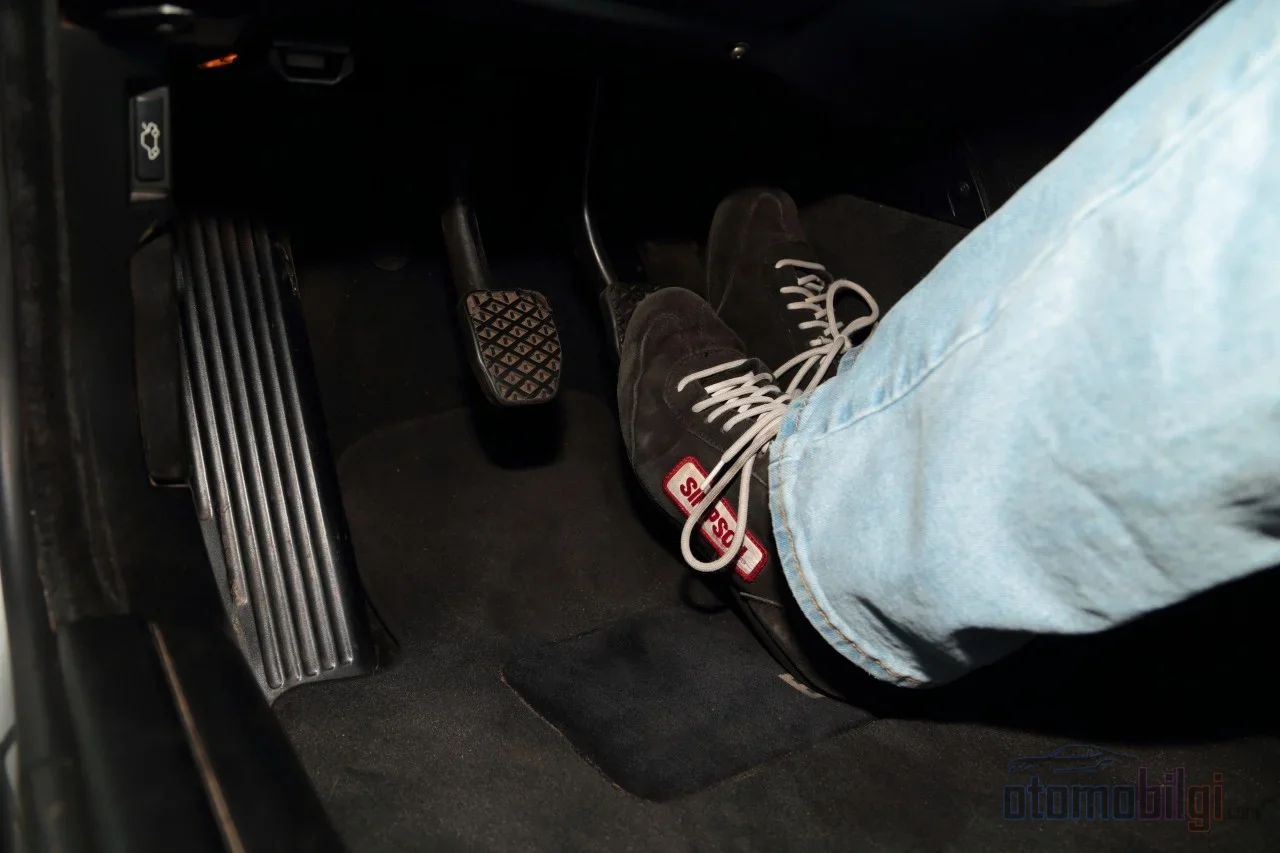
Why Is Left-Foot Braking Used? Slowing Down Without Lifting Off the Throttle
To someone driving on the street, it may seem strange: one foot on the gas, the other on the brake? But in rallying, there are two perfectly logical reasons for it. The first is pure math: it takes time for the right foot to move from the gas to the brake, and left-foot braking eliminates that transition entirely. In racing, every tenth of a second lost adds up. The second is the weight game: braking pushes down the front of the car and, in a front-wheel-drive vehicle, increases the grip of the front tires. So in some situations, left-foot braking is used not to slow down, but to balance the car and keep up the speed.
The technique is thought to have started in rally history with the front-wheel-drive Minis of the 1960s; in those cars, lifting off the gas upset the car's balance, so drivers transferred braking to the left foot. When a gear change is needed, the left foot makes a quick switch: touch the clutch, shift the gear, and return to the brake pedal. I know how complicated this sounds, but for a good driver, left-foot sensitivity can reach the same level of precision as the right foot - and that's where the difference between an ordinary driver and a fast driver begins.
Three Solutions for Handbrake Turns and Hairpin Corners
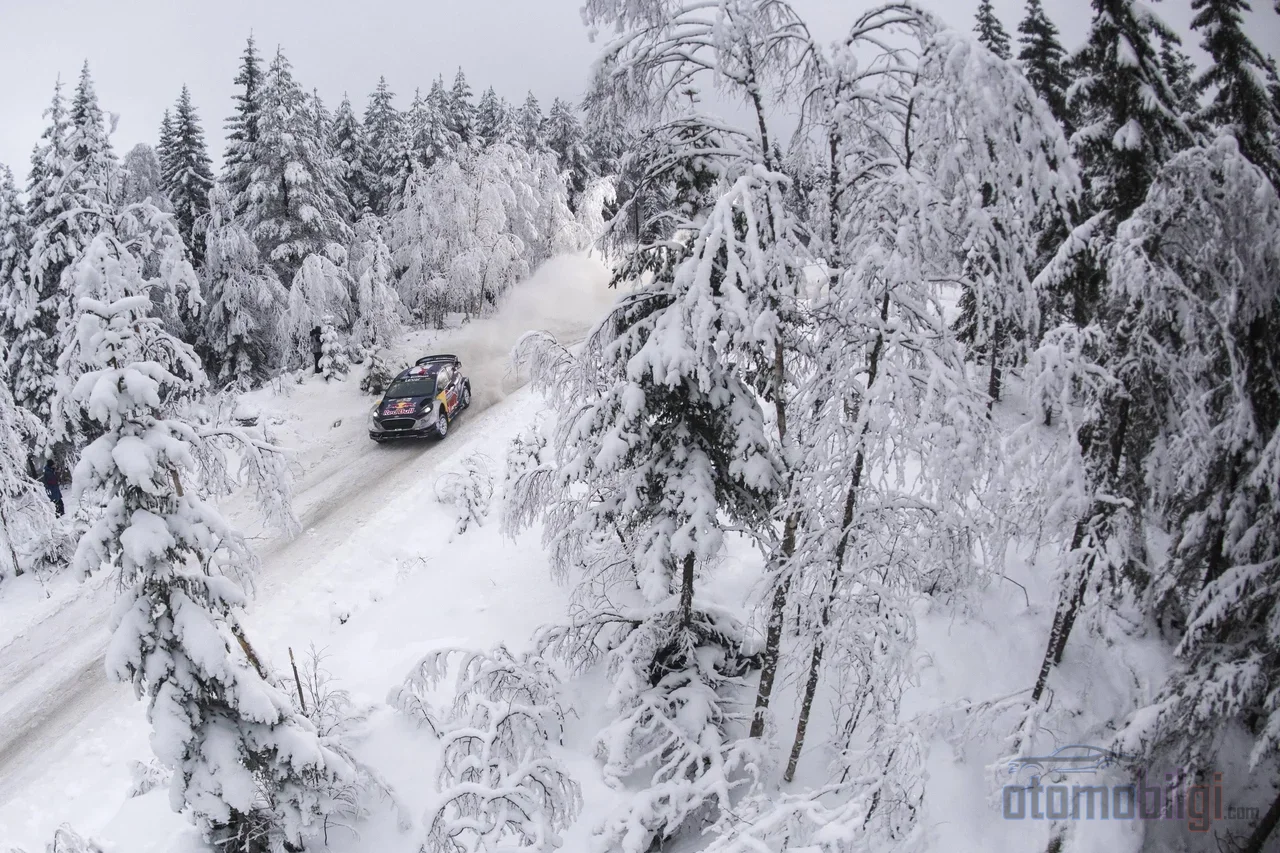
Now we come to that intimidating corner taken at tight exits: the hairpin. You can't brake into it and turn like on normal roads, because the corner practically curls under the car. That's why the handbrake turn is the classic weapon of rally drivers: locking the rear wheels and fixing the rear axle to rotate the car through the corner. Since the handbrake is actually connected only to the rear brakes, the front tires keep pulling without braking, and the car turns. It sounds absurd, but it works.
rotating the car completely within the corner to adjust exit speed
- Handbrake pull: the simplest and most common way
- 360 spin: rotating the car fully within the corner to adjust the exit speed
- Scandinavian flick: going through by sliding using only weight transfer, without ever touching the handbrake
Which one is chosen depends on the width of the corner, the grip of the surface, and the character of the road at the exit. There's actually a nice debate among drivers about this too: what's the difference between sliding and the Scandinavian flick? The short answer is this: sliding is a general state of car control, while the Scandinavian flick is a planned and deliberate maneuver. It's a bit like the difference between dribbling the ball in football and making a deliberate pass.
How Did the Departure of Rally1 Hybrid Change These Techniques?
The Rally1 class, the top level of the WRC, was introduced in 2022 with hybrid powertrains and advanced aerodynamics. Hybrid was a technology expected to offer power and efficiency together, and it had even been confirmed that the FIA would keep it until 2026. Then the decision changed: Starting from 2025, the hybrid unit was removed and Rally1 cars began running with a 1.6-liter turbo engine, purely as four-wheel drive. According to current information, 2026 will be the final WRC season for non-hybrid Rally1 cars.
Serious technical adjustments were made to balance the power during this transition: the central differential was removed, leaving only two axle differentials; minimum weight was lowered from 1260 kg to 1180 kg; the air restrictor was also changed. Toyota's GR Yaris Rally1 evolved with this new setup into a more agile driving performance. So what does this have to do with driving techniques? A great deal. Without a central differential, the power of the four-wheel drive is distributed across two axles with different characters, and since the car is lighter, the slides are sharper. Left-foot braking, handbrake, and drift techniques are being recalibrated with these new dynamics. In other words, the physics behind the slides you watch on screen are rewritten from scratch every decade.
Gravel or Asphalt? How Does the Surface Determine Technique?
Asphalt is what you know: stable, predictable, consistent as long as it's dry. Gravel, however, is a completely different living thing - a surface that is constantly shifting and deforming on top, whose grip changes every meter depending on how much loose stone has accumulated between the tire and the road at that moment. On gravel, the tires bite into the surface to gain traction; that's why a distinct tread pattern is needed, and drifting here is not a show, it is the driving itself. So the driving style has to change completely on gravel.
Trail braking, the technique of entering corners while braking, also works differently depending on the surface: since grip on gravel is far lower than on asphalt, it's impossible to carry the same brake pressure. As a practical consequence, in mixed-surface rallies - in conditions where a stage in one day passes over both rough dirt roads and closed asphalt roads - drivers must write the same corner in two different languages. Flicking it on gravel, locked down on asphalt. So if you see two cars taking the same corner in two different ways on TV one day, don't be surprised: the surface is speaking, the driver is translating.
Drivers' Signature Styles: Clean Driving or Sliding?
Here is my favorite thing about rallying: people using the same laws of physics end up with completely different signatures. Sébastien Loeb is credited as the name who changed the way WRC cars are driven; instead of the classic Scandinavian flick and opposite-lock steering, he adopted a clean, waste-free style, and this approach was one of the foundations behind his championships. So speed doesn't always mean smoke - sometimes the fastest line is the quietest one.
Sébastien Ogier, like Loeb, is a nine-time FIA World Rally Champion, and his career began with France's young talent program; he currently races for Toyota Gazoo Racing. Kalle Rovanperä, meanwhile, became champion in both 2022 and 2023 back to back; the fact that he got his driver's license at 17 is a story in itself, because in rallying the real driving experience comes not from the roads but from training on snow and ice tracks. Their names even became the subject of Toyota's GR Yaris special editions. Even on the academic side, these techniques have been calculated: according to a 2024 thesis, if a hairpin corner is sufficiently tighter than a straight line, the Scandinavian flick becomes the most time-optimal solution. So the answer to the question of whether this technique is about show or speed is clear: in the right corner, physics chooses the flick.
And there's also the popular culture side, which you can't skip. The Scandinavian flick appears in the 2006 film Cars as the "turn left to turn right" technique that Doc Hudson teaches Lightning McQueen; a similar scene in the Initial D anime turned into an internet meme, and an episode of The Grand Tour carries this technique's name entirely. A driving maneuver becoming this embedded in culture is, in my opinion, proof of how intuitive and cinematic a sport rallying is.
Which Technique on Which Surface? Quick Comparison
If you want to see all of this at a glance, here's the breakdown of basic rally techniques by surface and purpose:
| Technique | Basic logic | Preferred surface |
|---|---|---|
| Scandinavian flick | Creating rear slide through weight transfer | Gravel, snow, ice, mud |
| Left-foot braking | Balancing without lifting off the throttle and zeroing transition time | All surfaces, especially front-wheel drive |
| Handbrake turn | Locking and rotating the rear wheels | Very tight hairpin corners |
| Trail braking | Entering the corner braking and gradually releasing grip | Firm on asphalt, much softer on gravel |
Next time you watch a rally, keep this table in your head: pay attention to a car whose nose is pushed into the corner - flick. A car slowing down without lifting off the throttle - left-foot braking. A car rotating nose-in at a hairpin - handbrake. Once your eyes start distinguishing these, watching rally is no longer the same show, but a readable physics lesson. Which one would you try first? I'd say start on a game console; real gravel is a bit more insistent.
Sources
- Scandinavian flick
- Left-foot braking
- Rally1
- How to Have Fun Driving in Snow: The Scandinavian Flick Explained - Car and Driver
- Scandinavian Flick: The Rally Cornering Technique - drivingfast.net
- How to Do a Handbrake Turn - drivingfast.net
- CAR DETAILS 2026 WRC - Toyota Gazoo Racing
- A WRC Season Preview: What Changes in 2026 - Hyundai Motor Group
- WRC drivers deliver mixed verdict on hybrid decision - DirtFish
- The Incredible Tech Behind the New WRC Rally1 Hybrid Cars - Sports Car Digest
- Ogier / Rovanperä Edition GR Yaris - Toyota Gazoo Racing
- Sébastien Ogier - wrc.com
- Can the Scandinavian Flick be time-optimal? - DiVA (L. Jonsson, 2024)
- Rally through a driver's eyes: how to race on gravel - Škoda Motorsport
- How to drive on gravel vs asphalt - DirtFish
- Master Trail Braking for Rally Racing - Caneva Rally
- How, And Why, Rally Drivers Use Left-Foot Braking - Road & Track
- Left Foot Braking Explained - Team O'Neil