Why Is Tire Selection So Important in Rallying?
Share This Page
What locks in the rally result at WRC before the stage even starts is tire choice: teams decide among hard, medium, soft, and mud-snow compounds based on air temperature, surface type, and stage profile, because a race tire only delivers its true grip within a specific temperature range. A driver who picks the right tire for the wrong weather has lost the rally at the first corner. So how exactly is this decision made? Let me explain, because the topic is far more exciting than you think.
Highlights
- Rally1 drivers can use a maximum of 28 tires in a rally, including shakedown.
- A maximum of 7 tire changes is allowed during a rally.
- The regulations allow tires to be stored below 35°C in an artificially heated environment.
- The 5 fastest crews in the Power Stage are rewarded with a 5-4-3-2-1 points distribution.
- The rally winner with 25 points takes a giant step toward dominating the championship.
Why Don't Circuit Racing Color Codes Work in the WRC?
If you've watched F1, you've probably got the compound logic sorted in your head: red soft, yellow medium, white hard. But here's the fun part: in F1, these colors are assigned relatively based on that week's circuit. So the red label doesn't mean the same tire at every Grand Prix. In the WRC, however, the signs read the rules of an entirely different game.
What matters in rallying is not the hardness order of the compound but the surface type. Gravel, asphalt, mud, snow, ice, and rock... WRC tires often have to grapple with multiple conditions within a single rally. That's why teams first answer the question of 'which world does this rally take place in,' and then make their choice from the spectrum ranging from soft to hard. In Formula 1, the idea of tires pre-heated and prepared with tire blankets and rallying's 'head out, warm yourself up' philosophy are like two nearly opposite universes. Which do you think is harder?
The Temperature Window: The Tire's Happy Range
Every race tire operates within a temperature window. If you're below the window, the rubber hardens like stone and grip plummets; if you push it above the window, overheating, blistering, and surface degradation begin. Hitting this window is hard enough in circuit racing; in rallying it's even tougher because stages can start in morning frost and end in midday sun.
For comparison, the optimum window for F1 tires is typically around 100°C. What about road tires? The common consensus for everyday use is that summer tires retain their flexibility above 7°C, and winter tires below 7°C. A rally tire dances between these two worlds: it demands a compound that can withstand both the cold of daily life and the heat of racing.
And this is exactly where the real issue begins: getting the tire into the window isn't enough; it needs to be kept in the window longer than your rival . Keeping the tire alive through the stage without cooling or wearing out is a completely hidden strategic game.
Hard, Medium, Soft, Mud-Snow: Compounds and Tread Patterns
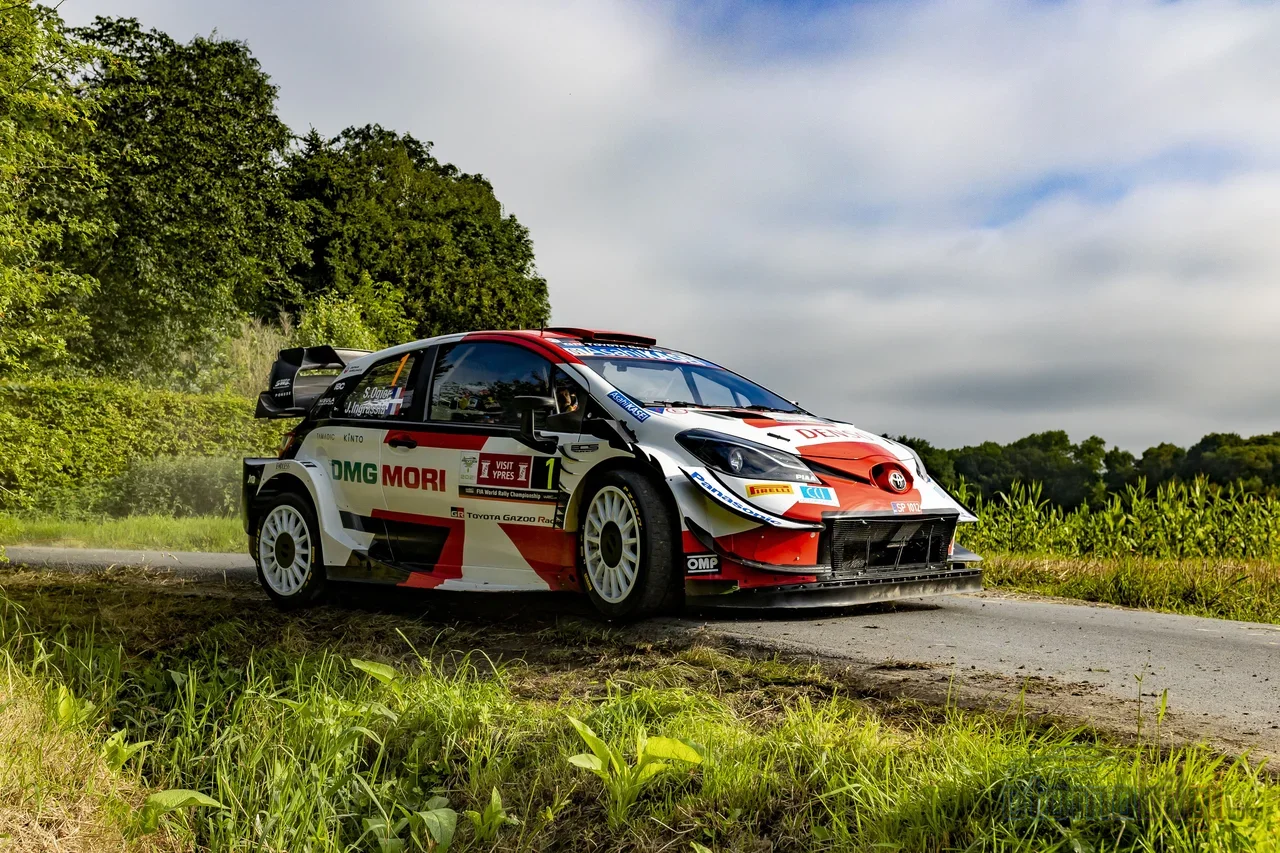
WRC teams have a wide range in front of them: super soft, soft, medium and hard compounds. The choice is made once the surface and weather conditions become clear. So which one, when? Let's think simply:
- Hard compound: For hot and abrasive surfaces. It warms up slowly but holds its form for a long time once warm.
- Soft compound: The savior of cool or wet conditions. It warms up quickly, delivers grip early, but wears out early too.
- Medium compound: The insurance for indecisive weather that makes you say 'I can't decide which one to pick'.
- Mud-snow: With its wide pattern blocks, it throws mud and snow out of the tire to salvage grip.
Tread patterns are just as important as the compound. On gravel tires, large pattern blocks 'shovel' loose surfaces away; very stiff sidewalls act as a shield against rock impacts. These tires are reinforced to withstand cuts and blowouts, and are also extremely distinctive in appearance.
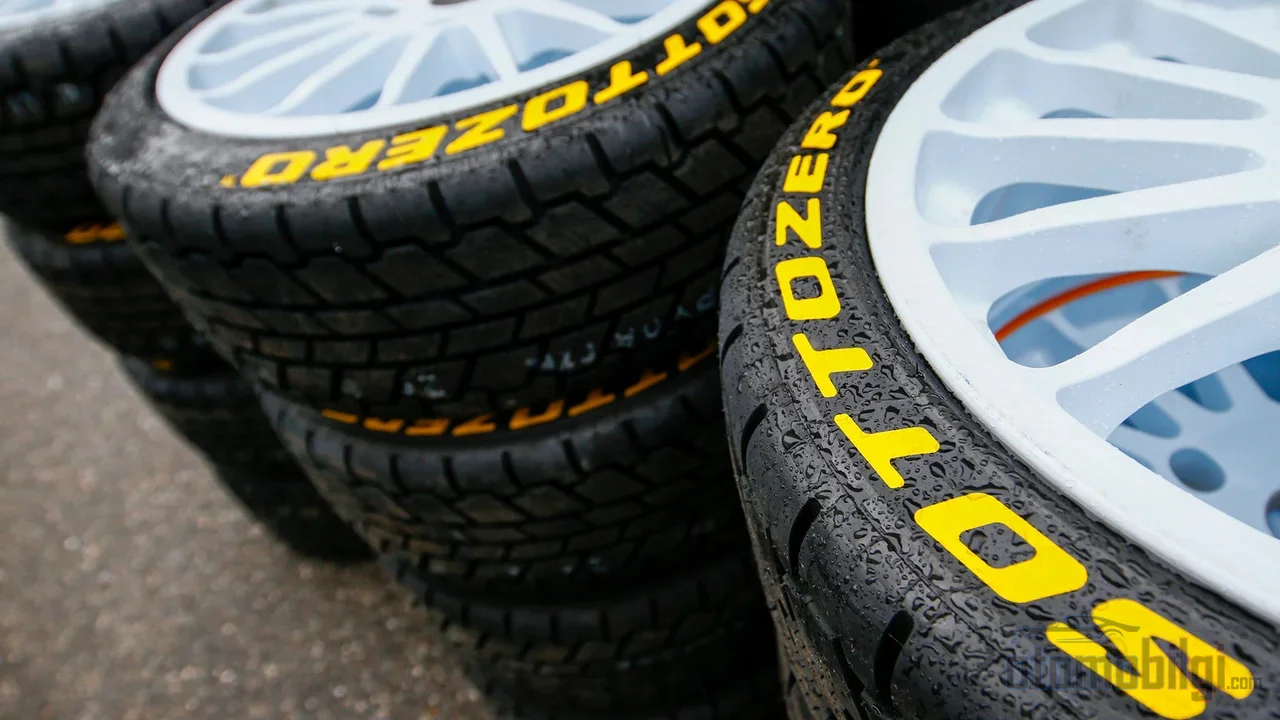
The Sottozero Patrol on Snowy Roads
Snow and ice rallies require a different kind of expertise. Pirelli entrusted the snow-ice side of its return tire range for the WRC to the Sottozero family: 'Sottozero Snow' was designed for snowy roads, 'Sottozero Ice' for icy stages. For Monte Carlo's famous asphalt-transition-to-snow-ice mess, two versions in the 235/40R18 size were offered, studded and studless. The asphalt range was also split in two: hard for dry surfaces, soft compound for wet and low-grip conditions.
There is also a critical warning: gravel tires are not designed for snow. In the cold, the compound hardens like a rock and provides no grip. If the snow disappears at Rally Sweden and frozen gravel or mud remains, switching to winter tires becomes the only sensible path. So the phrase 'gravel rally but snow tires' is not a contradiction; sometimes it is exactly the right answer.
Tire Change Rules at Service Stops: Limited Cards, Big Game
The tire pool in rallying is not endless. Rally1 drivers can use a maximum of 28 tires in a rally, including shakedown. This number varies from rally to rally; even if you bring a truckload of tires, you are limited to a certain number. So you need to plan in advance how much stock to keep of each compound, just like a card game played with a limited hand.
So when are tire changes made? At the service park. Teams have technicians change the tires at predetermined times, and according to FIA sporting regulations, a maximum of 7 tire changes is allowed during a rally. Service times are also strict: 15 minutes in the morning, 30 minutes at noon, 45 minutes in the evening. Refueling is also forbidden during these periods. Emergency repairs like changing a punctured tire on the road are the job of the driver and co-driver; serious work is left to the service.
The Tire Warming Battle: Blankets, Vests and the 35°C Rule
In service tire changes, the teams' real battle is sending the new tires out warmed up for the next stage. WRC regulations strike a fine balance here: with or without rims, the tires are allowed to be stored in an artificially heated environment below 35°C, and each tire must carry specific markings. In other words, teams try to keep the tires 'hot and ready' with heat blankets and heated storage environments, but they cannot exceed the limits set by the rules. This is an invisible yet highly visible part of tire strategy.
There is another practice on gravel rallies: heating the tires on the stage. According to Pirelli's guide, drivers bring the tires up to temperature using combinations of acceleration and braking; while doing so, the pressure is worked with an increase of at least 0.5 bar. In other words, the first kilometers of a stage are actually a warm-up lap, just an invisible one.
The Supplier Battle: From Michelin to Pirelli, and From There to Hankook
WRC tire history is like a trophy the giant brands have been passing around to one another. When Michelin and Pirelli appeared in the championship in the 2000s, it was debated within the community that Michelin tires were considered superior. Pirelli later returned to the WRC in 2021 as the sole supplier, winning the tender to supply tires to all WRC categories for the 2021-2024 period. The Sottozero family for snow-ice was also the signature of this era. Afterwards, Pirelli announced its decision to leave and turned its course to the ERC and more than 40 national championships.
Today the picture is different: Hankook equips all WRC cars, including WRC2, WRC3 and Junior WRC, with its tires. It is stated that Hankook has developed a new compound for grip on hard asphalt and for wet surfaces. At the 2025 Sweden rally, it was reported to show grip without wear in low temperatures and challenging gravel conditions. In other words, even though the supplier has changed, the key to the game is the same: grip in the cold, durability on hard surfaces.
The Role of Tire Decisions in the Power Stage and Championship Strategy
The WRC points system places tire strategy right in the middle of the stage. The rally winner takes 25 points; then come 17, 15, 12 and 10 points. The Power Stage, meanwhile, is a separate points hunt at the finale of the rally: points are distributed 5-4-3-2-1 to only the fastest 5 teams. There is even a separate scoring called Super Sunday. This means the final stage is not merely a celebration lap.
Now for the critical question: in a championship battle, is it a safe medium compound, or a risky but fast soft for Power Stage points? The answer depends on the driver's position in the points table. With two stages remaining to the finish in Chile, Elfyn Evans was running second and on course for an almost guaranteed championship; according to Toyota GAZOO Racing's statement, the championship lead grew to 25 points after the Power Stage, and Takamoto Katsuta ran sixth on Friday's road order in the second position. In other words, the final stage tyre can rewrite not just that stage, but the season's standings. Also, with a change made to the 2026 sporting regulations, the aim is for crews to continue in the rally in case of a major mechanical failure; this adds even more color to strategy calculations.
Tyre Choice Is a Puzzle, Racing Is the Answer
In the WRC, tyre choice is a puzzle where the weather forecast, terrain map, points table and temperature window intersect. Hard, soft, or winter tyre? Within the 28-tyre limit, how many will you allocate to each compound, and when will you burn your 7 changes? The answers to these questions come back as seconds on stage times. Next time you watch a rally, take a look at the thermal blankets covering the tyres in the service park; what's happening there usually determines the winner before the stage even starts.
Sources
- ABOUT WRC
- World Rally Championship (WRC) - TreadTorque Tyre Advice
- Pirelli returns to the WRC with a renewed tire range
- WRC Tires Explained
- WRC Tires - Hankook Tire Motorsports
- From design to the stages: Hankook lifts the lid on WRC tyre development
- What's changing in WRC this year
- What Happens at Service Park | Beginner's Guide to Rally
- WRC Dictionary
- WRC Rally tyres
- Pirelli's Rally Tire Range: The Key to Modern Rallying Success
- A Practical Guide for Track Days and Club Racing
- The beginner's guide to F1 tyres
- Formula 1 Tire Compounds: A Guide to C1, C2, C3, and Beyond
- 2026 Bonus Guide #3 Points Scoring
- The data analysis behind the WRC 2026 title fight
- WRC 2026 Rd.9 Day 3 - Toyota GAZOO Racing
- Updates to 2026 FIA WRC Sporting Regulations
- Pirelli explains decision to leave WRC as tyre supplier
- WRC explained: Your ultimate guide to the 2026 season