The Origin Story of the World Rally Championship
Share This Page
The World Rally Championship, or WRC, is the series founded by the FIA in 1973 that turned international rallying into an official world championship; the first season, which began with the Monte Carlo Rally, was held for manufacturers only, and the drivers' championship was added in 1979. So behind our favorite rallies lies more than fifty years of history and a rather adventurous story of evolution. Let's take a closer look at this story!
Highlights
- The WRC was founded in 1973; the first season began with the Monte Carlo Rally on January 19, 1973.
- The first season calendar featured 13 rallies; 10 of them were run in Europe.
- The first manufacturers' champion was Alpine-Renault; the first official drivers' champion was declared in 1979 as Björn Waldegård.
- The series evolved from Group B to Group A, then to World Rally Car regulations, and in 2022 to the hybrid Rally1 era.
- Lancia, with 10 manufacturers' titles between 1974 and 1992, is the most successful brand in the series.
When and how was the WRC founded?
In the early 1970s, the rally world was already bubbling. The famous international rallies stretching from Monte Carlo to the Safari were prestigious events well established on the calendars; but there was no official world championship bringing them all under one roof. To fill this gap, the FIA established a new championship in 1973 as the successor to the International Championship for Manufacturers, or IMC, held between 1970 and 1972. Thus the WRC became the third oldest of the FIA's world championships, after Formula 1 and the Karting World Championship.
The first season began on January 19, 1973, with the traditional opening event, the Monte Carlo Rally. The calendar featured 13 rallies: 10 of them were run in Europe, 2 in Africa, and 1 on another continent. It's an exciting detail even when you think about it today: the cars competing when the series was born were not overnight stars; this was a championship built on rallying's own deep-rooted traditions.
Why did only manufacturers compete at first?
Here is the most interesting birth detail of the championship: in the first season, not even a single title was awarded for everything. The WRC was founded in 1973 solely as a Manufacturers' Championship. The logic was actually simple; rallying was considered the most natural way to test brands' durability and engineering in brutal conditions. The first championship was won by Alpine-Renault with the Alpine A110. Right after that, from 1974 to 1976, Lancia stayed on top for three consecutive seasons with the Lancia Stratos HF, powered by a Ferrari-derived V6 engine. The Stratos also had another first: it was the first car designed and built specifically for rallying. In other words, the pioneer of the "homologation models" trend emerged exactly in this period.
Why was the drivers' championship delayed until 1979?
Today, when we think of the WRC, drivers come to mind first, right? But in its early years, the championship did not recognize a drivers' title and ranked competitors only through the brands. The first step for drivers was the interim FIA Cup for Drivers held in 1977 and 1978; that cup was won respectively by Italian Sandro Munari and Finn Markku Alén. The official world drivers' championship only began being awarded in 1979.
The first official drivers' champion was Sweden's Björn Waldegård; he beat Finn Hannu Mikkola by an incredible margin of just 1 point. Imagine this: carrying the world championship's first drivers' crown by a single point. That detail alone is enough to tell how fiercely competitive that era was.
Format eras: From the early years to the hybrid era
The history of the WRC is not a single story; it is the story of several distinct eras stacked one on top of another. Each era has its own car regulations, its own stars, and its own dramas. According to the official periodization, the chronology goes like this:
- Early Years (1973-1981): A manufacturer-focused starting era dominated by rear-wheel-drive cars, especially Group 2 and Group 4 machines.
- Group B (1982-1986): The revolution that began when FISA legalized four-wheel drive in 1979 reached its peak; the shock instantly created by the Audi Quattro pushed other manufacturers to build four-wheel-drive monsters.
- Group A (1987-1996): A more controlled era focused on safety and homologation.
- World Rally Car (1997-2021): A long quarter-century era in which the dedicated homologation model requirement was abolished.
- Hybrid Rally1 (2022-...): The modern era, in which the switch to hybrid electric systems was made with the goal of lowering costs and getting closer to road cars.
Why was 1997 such a major turning point?
Group A seemed like a perfect idea at the very beginning: in order to build the car they would race, brands had to also sell its road-going version. But over time, this rule slammed the door on new manufacturers; the cost of building a rally car became astronomical. The World Rally Car regulations introduced in 1997 eliminated this dedicated homologation model requirement and paved the way for more brands to compete in the series. In a way, it was a rule change that reopened the door. The World Rally Car era finally came to an end at the close of 2021, after a full 25 years.
How did Rally1 and the hybrid system come about?
In 2022, the series switched to the Rally1 specification and a hybrid electric system, with the goals of lowering costs and bringing the cars closer to modern road cars. But repairing the hybrid system during a rally was both difficult and expensive; so the system was dropped for the 2025 season. In the Rally1 era, the grid is racing with only three manufacturers, namely Ford, Hyundai, and Toyota; Toyota established a serious dominance by taking the first four manufacturers' championships in a row. 2026 is the final full season of the current regulations and Rally1; in 2027, new technical regulations arrive, based on a 10-year cycle, aiming to lower costs and offer manufacturers a stable investment platform.
How does today's WRC format work?
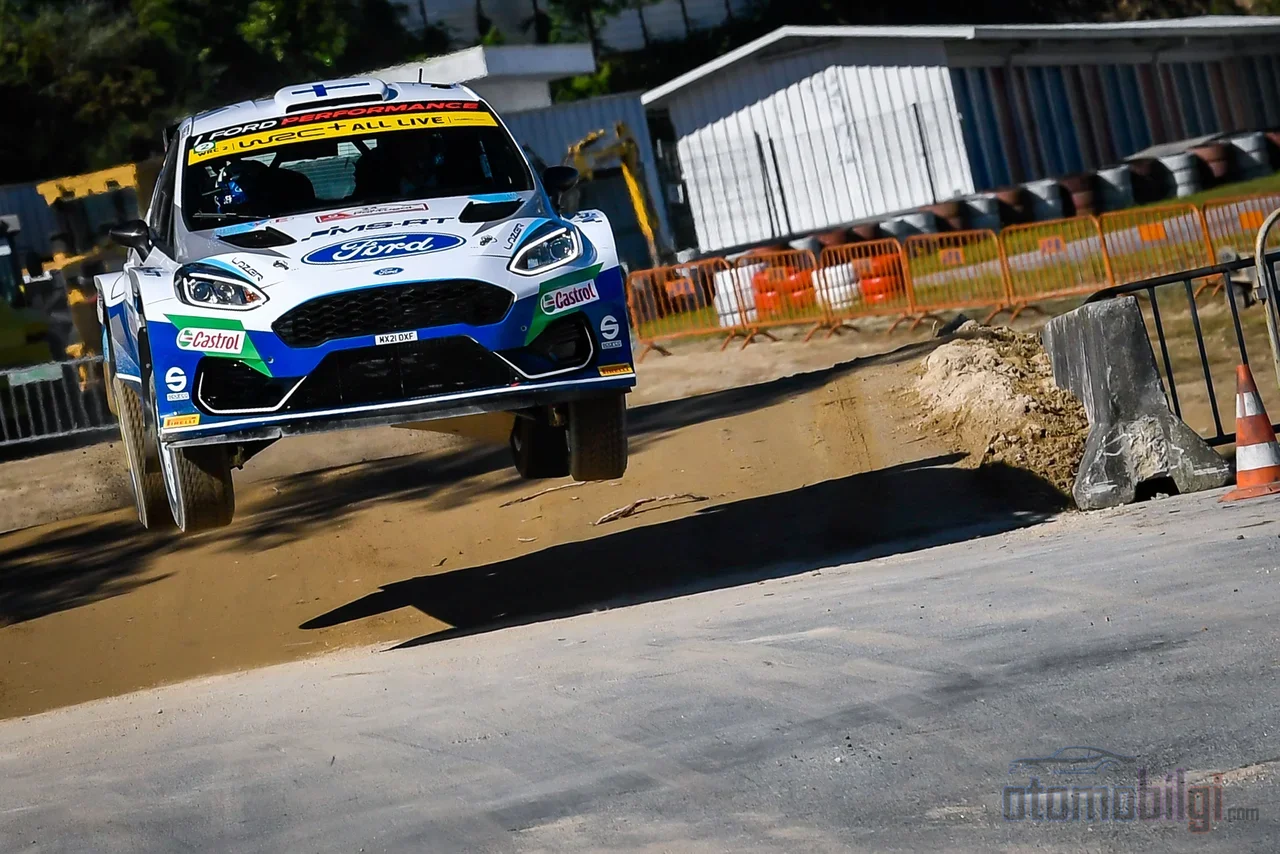
A season calendar runs throughout the year and typically consists of 13 rallies of 3-4 days each. These rallies are run on gravel, asphalt, and snow/ice surfaces; each rally includes between 15 and 25 special stages and up to 350 kilometers of closed roads in total. Since 2021, rallies must consist of only a single surface type, apart from short super special stages. Three separate titles are awarded in the series: drivers, co-drivers, and manufacturers. Manufacturers must take part in every rally of the season with Rally1 cars.
The star of the points system is the Power Stage, introduced in 2011: extra points are awarded to the 5 fastest drivers in this section, which is the final stage of the rally. Normal stages are timed to a tenth of a second, while the Power Stage is timed, incredibly, to a thousandth of a second; it sounds like an exaggeration when put into words, but it really is! The structure on the support series side is also clear: WRC2 and WRC3, plus the 5-stage Junior WRC, run with Ford Fiesta Rally3 cars provided by M-Sport. In the 2024 season, a new points system covering the Power Stage results was also introduced.
Records: Who is remembered for how many championships?
The history of the championship is like a showcase full of records. On the manufacturers' side, the picture is clear: Lancia, with the 10 manufacturers' titles it collected between 1974 and 1992, is the series' most successful brand. Moreover, in the Group A era between 1987 and 1992, it won the championship six years in a row with the Delta HF; the sight of a single brand ruling for so long with one car gives off a special sense of pride just to hear about.
On the drivers' side, there has been a throne change spread across the years. The 1990s saw the rise of Toyota, Subaru, and Mitsubishi: Carlos Sainz reached the top in 1990 and 1992, Colin McRae in 1995; and Tommi Mäkinen won 4 championships in a row between 1996 and 1999. When it came time to equal and surpass that record, a French legend appeared: Sébastien Loeb reached his ninth consecutive championship in 2012, surpassing Mäkinen's record. Sébastien Ogier also won the championship 6 times in a row with Volkswagen. As of 2026, Elfyn Evans was crowned drivers' champion, Scott Martin co-drivers' champion, and Toyota manufacturers' champion; the 2026 season began in January with Monte Carlo and was planned to end in November with Rally Saudi Arabia.
| Era | Years | Notable feature |
|---|---|---|
| Early Years | 1973-1981 | Manufacturers' title only, rear-wheel-drive cars |
| Group B | 1982-1986 | The legalization of four-wheel drive, almost unlimited power |
| Group A | 1987-1996 | Homologation model requirement |
| World Rally Car | 1997-2021 | Removal of the homologation requirement |
| Rally1 | 2022-... | Hybrid electric system (removed in 2025) |
How did the support series around the championship develop?
The WRC is not just a show featuring the top 20-30 drivers; the ladder beneath it has also been constantly reshaped over the years. The PWRC started in 1987 as the Group N Cup and turned into WRC3 in 2013. Between 1993 and 1999, the 2-Litre World Rally Cup was run; The S-WRC, which began in 2010, was also renamed WRC2 in 2013. There were shorter-lived attempts too: The WRC Trophy in 2017, and in 2019 the WRC 2 Pro, which managed to survive only a single season. So today's WRC2–WRC3–Junior WRC structure is the product of decades of trial and error. In my view, seeing how simple, even crude, a structure the championship had when it was "born" makes today's refined system all the more valuable.
A summary lesson from half a century
Going from a 1973 calendar of just 13 rallies where only manufacturers competed for the title, to today's system with three separate titles, support series, and Power Stages measured to thousandths of a second, was no accident. Each era was born from the lessons of the previous one: safety concerns ended Group B and brought Group A, cost pressure removed the homologation requirement, and economic realism made the hybrid experiment short-lived as well. Next up are the new technical regulations for 2027, built on a 10-year cycle. Now it's your turn to tell us: which era of this evolution would you most like to explore - the crazy days of Group B, or the future of Rally1?
Sources
- World Rally Championship - Wikipedia
- WRC History - wrc.com
- WRC History & Categories - Rally Saudi Arabia
- 50 Years of WRC: The Evolution of Rally Cars - Hyundai Motor Group
- WRC – Rally1 spectacle maintained following technical changes - FIA
- 2027 Regulations Provide Clear Roadmap for Future Development of the WRC - wrc.com
- World Rally Championship: most legendary WRC records - Red Bull
- 2026 World Rally Championship - Wikipedia