Group B: The Monsters That Shook Rallying Before the Ban
Share This Page
Group B is a vehicle class introduced by FIA for rallying in 1982 that managed to survive only four seasons; thanks to the technical freedom allowed by the homologation rule, by 1986 race cars producing over 500 horsepower had emerged, and two fatal accidents in the same year led to the class being banned entirely in 1987. In short: the fastest, craziest, and shortest-lived era in rally history.
Highlights
- Group B competed as the top class of the WRC only 1982-1986 between.
- The number of road cars required for homologation was 200 units; for evolution models this number dropped to as few as 20 per year.
- In 1986 the Audi Sport Quattro S1 produced over 600 horsepower.
- After the tragedies in Portugal and Corsica, the class was banned from 1987 onward.
- A safer successor named Group S was cancelled; the idea was revived in 1997 as the World Rally Car specification.
I'll admit it: while watching Group B videos, sometimes I find myself staring at the screen with my mouth open. The scream of a four-cylinder engine, a narrow road cutting through a wall of people in the middle of a forest, and the brave (or crazy?) drivers sitting inside who saw it all as a "track." What kind of era was this, and why did it have to end? Let's take a look step by step.
What Kind of Monster Did the Homologation Rule Create?
First, let's understand the rule, because everything starts here. FIA stipulated that a car to be used in racing must also be purchasable from the manufacturer's normal sales dealers: we call this homologation. The logic is actually simple - we want to see a car that's sold on the street competing in races. In Group B this requirement was set at 200 road cars . It may not sound like much, but let me make a comparison: this figure was only 4% of the requirement in other groups, and half of what was asked in the old Group 4. So manufacturers were given this message: "Build almost whatever car you want, just make sure you can sell 200 of them."
On top of that, for evolution models an annual production of 20 cars was sufficient. You could recreate your car from scratch even in the middle of the race season! While classes were determined by engine displacement, minimum weight, and tire width, the displacement of turbo engines was calculated with a factor of 1.4 - meaning a 2,500 cc turbo engine was treated as 3,500 cc according to the rules. And the most annoying part: there was no boost limit. No matter how much you cranked up the turbocharger, the rules said nothing. Let me give an analogy: previously the rules were a set recipe, but in Group B it was only said "don't go overboard" - and no one ever said where "overboard" began.
Group B Cars: A Comparison of Four Legends
Now let's get to the main topic. Each of the cars that raced in this era had its own distinct character, and that's why rally enthusiasts still argue about "which one was the best?" Here are the stars of the era:
| Car | Class / Weight | Notable Technical Feature |
|---|---|---|
| Audi Quattro / Sport Quattro S1 | 3,000 cc class, 960 kg | Pioneer of four-wheel drive; in 1986 the S1 produced over 600 hp |
| Lancia 037 | 3,000 cc class, 960 kg | Rear-wheel drive; 1983 manufacturers' champion |
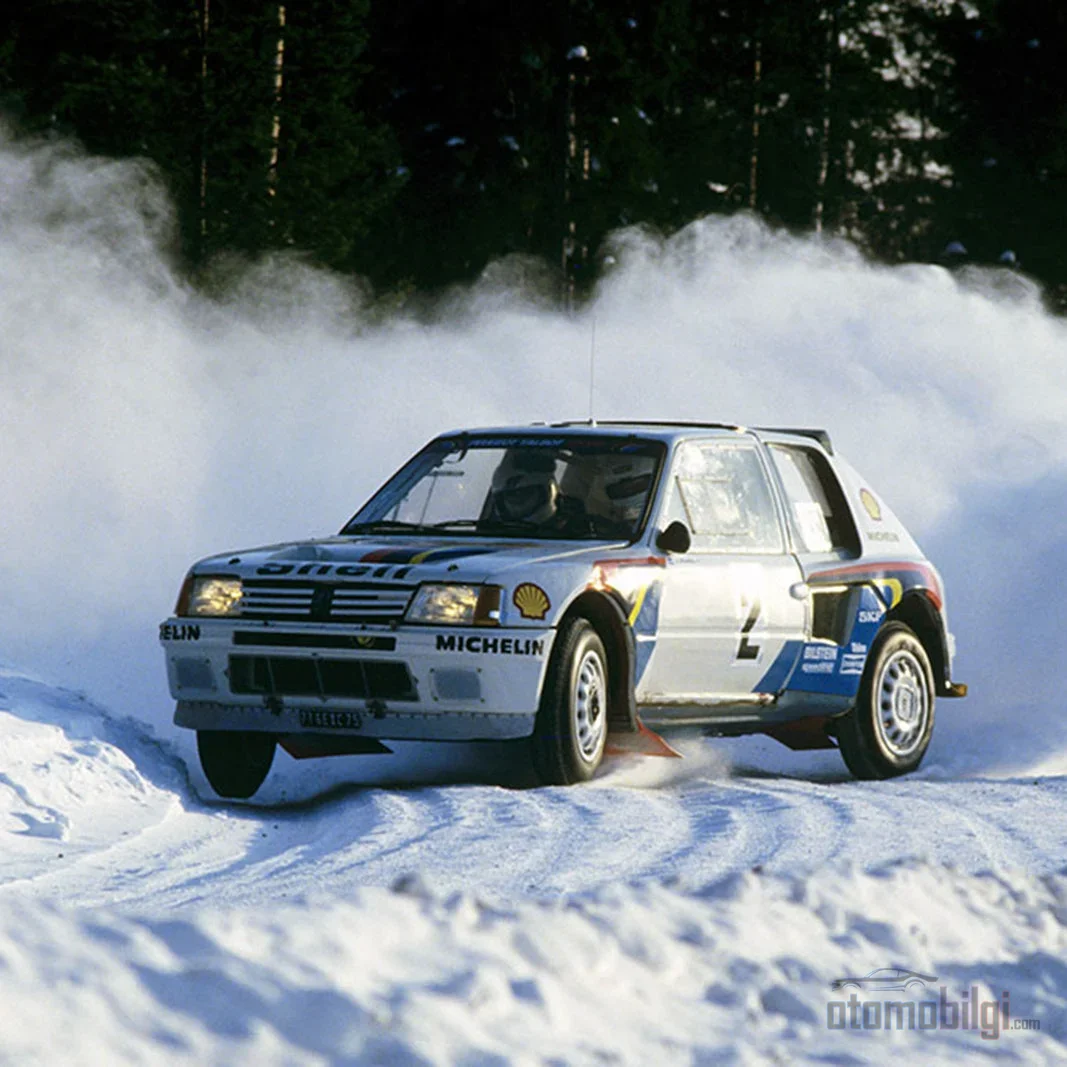
| Peugeot 205 T16 | 2,500 cc class, 890 kg | Mid-engine, compact and light; much smaller than its rivals |
| Lancia Delta S4 | 2,500 cc class, 890 kg | Turbo + supercharger (twincharged); the first compound-charged engine in competition |
| Ford RS200 | 3,000 cc class, 960 kg | Completely bespoke design, fiberglass body, spaceframe chassis |
Let me unpack a few details, because the table is only half the story. The power explosion came at an incredible pace: While the winning cars produced around 250 horsepower in 1981, by 1986 at least two cars were producing over 500 horsepower. In five years, power had doubled! The story of the Peugeot 205 T16 is also a good one: the team led by Jean Todt joined mid-way through the 1984 season with a four-wheel-drive, small and light bombshell, and as the milestones note, it was the only successful car actually based on a real production model. The Lancia Delta S4, for its part, is my engineering favorite: they closed that famous "turbo lag," where the turbo sat idle until the revs rose, with a supercharger that kicked in at low revs. While the turbo waits, the supercharger is active; once the revs climb, the turbo takes over. In other words, the engine never stops breathing. It was the first compound-charged engine used in competition.
The story of the Ford RS200 is different: unlike Audi, Peugeot and Lancia, it had rivals derived from road cars, but Ford built a purpose-built rally car completely from scratch. Fiberglass body, spaceframe chassis, a twin-cam 16-valve engine with Bosch injection, a KKK turbo and an air-to-air intercooler... The road version, however, was sold with only 200 horsepower - practically a guest next to its racing form. There are also some overlooked entries of the era: The Citroën BX 4TC was found heavy and clumsy, while the MG Metro 6R4 took a different path with its large naturally aspirated engine.
The Four-Season Championship Battle
Group B took the stage in 1982, but it was not a conventional debut: in none of the 12 rallies did a Group B car make the podium. In other words, even those monsters took a warm-up lap in their first year. 1983 was the year of Audi and Lancia: Hannu Mikkola won the drivers' championship with the Quattro, while the rear-wheel-drive Lancia 037 - considered more prestigious at the time - took the manufacturers' championship. In 1984 Audi collected both titles with Stig Blomqvist, but the real news was the arrival of the 205 T16 mid-season.
1985 was Peugeot's year: Ari Vatanen was sidelined from the races after a serious accident in Argentina, but Timo Salonen became drivers' champion with 5 wins. By 1986, everyone on stage had drawn their sharpest weapon: the Audi Sport Quattro S1 exceeding 600 horsepower, the spaceframe-chassised Peugeot Evolution 2, and the Delta S4 driven by Toivonen and Alén. At the end of the season, the title dispute was unforgettable: after the Peugeots were disqualified in Sanremo but found legal at the RAC, FISA annulled the Sanremo result and the championship passed from Markku Alén to Juha Kankkunen. That is why Alén called himself the "11-day champion." It is hard even to imagine a championship lasting 11 days, isn't it?
Why Was Group B Banned?
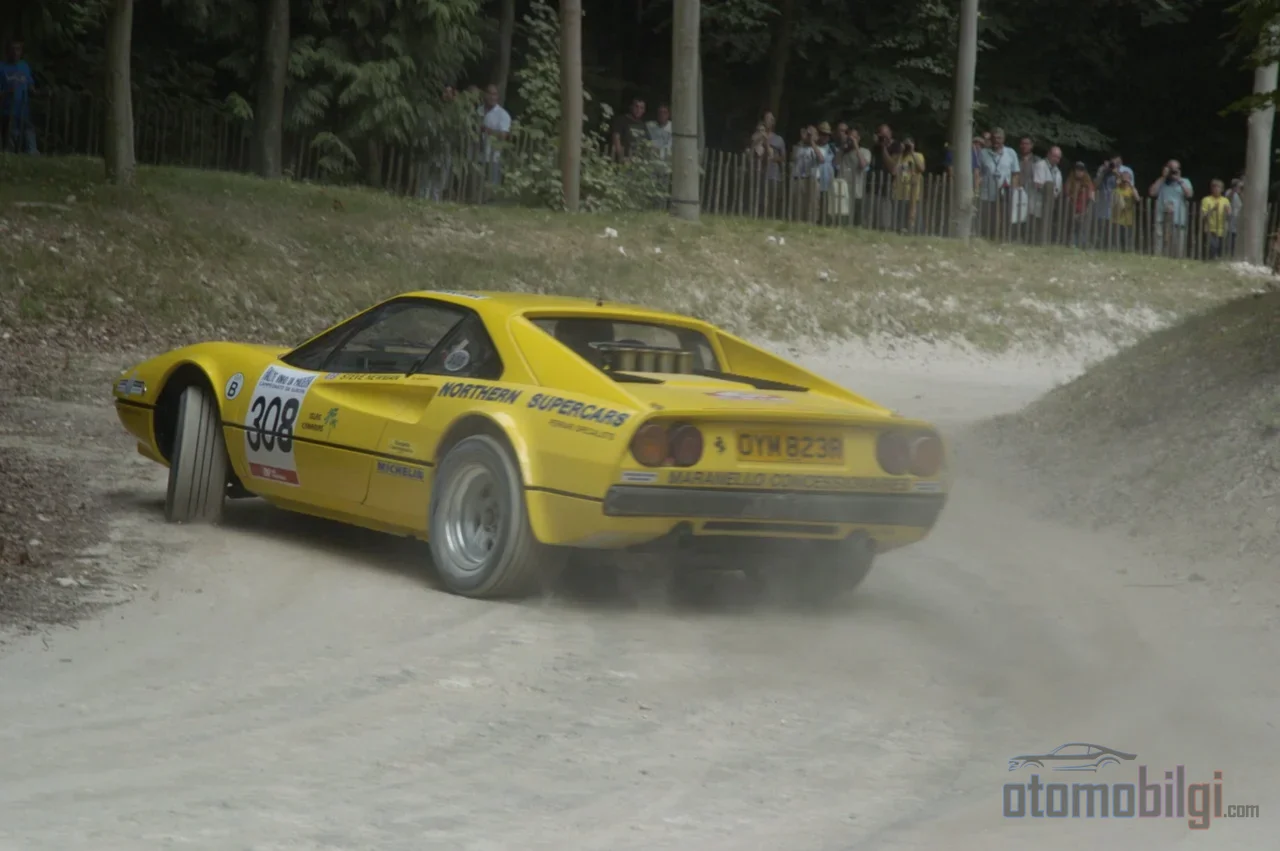
Here is the heart of the problem, and to be honest, the answer is not simply "the cars were too fast." The real issue was the almost complete lack of crowd control. The crowds were so large that the stage road became invisible. Michèle Mouton said she drove by imagining the spectators on the roadside "as trees" ; Ari Vatanen described these human walls as a "human corridor." There were rumors circulating that spectators changed direction signs, got ash and powder confused on the ground, and even lost fingers in the air while trying to touch the passing car. If you are surviving a rally by counting spectators as trees, something is seriously wrong.
I drove by imagining the spectators as trees.
The first tragedy came at the Portugal Rally in March 1986. Joaquim Santos, trying to avoid a group of spectators at the 'Lagoa Azul' stage near Sintra, lost control of his Ford RS200 and the car plowed into the crowd; three people were killed and more than thirty were injured. Ford team manager Ashcroft had raised concerns about crowd control beforehand, and this was the first spectator death in the event's 19-year history. All the top teams withdrew from the rally; drivers including Timo Salonen clearly stated that the accident was caused not by the car's speed but by the obligation to avoid spectators on the road, and that guaranteeing spectator safety had become impossible.
Five weeks later, on May 2, 1986, came the darkest hour of all. At the Tour de Corse, Henri Toivonen flew off the unprotected edge of a tightening left-hand corner at the 7th kilometer of the 18th stage; the Lancia Delta S4 somersaulted, flipped over, and its fuel tanks exploded. The red-hot turbo, Kevlar body, and leaking fuel set the car and the dry vegetation ablaze. Toivonen and co-driver Sergio Cresto died in their seats. Since no one witnessed the crash, the exact cause was never determined. That corner is still referred to today as "the corner that killed Group B" - and that is no exaggeration, because just a year earlier, Lancia driver Attilio Bettega had also died in the same rally in his 037. The FIA did not wait: all Group B cars were banned from 1987 onwards. Group S, which was planned to be milder, was also canceled; Group A was declared the top class, limited to 2,000 cc and 300 hp. Audi announced its complete withdrawal from rallying after Corsica, while the FIA stated that its decision did not include spectator safety measures.
Group S: The Dreamers Who Never Raced
I owe Group S a paragraph of its own, because the most painful part of the story lies here. In this planned class, power was to be limited to 300 hp and for homologation, only 10 cars was enough - meaning manufacturers would build pure rally machines instead of making street car imitations. At the time of cancellation, prototypes like the Lancia ECV, Toyota 222D, Opel Kadett Rallye 4x4 and Lada Samara S-proto had already been built. The most interesting thing about the class is this: according to many names within the industry, Group S would have been both safer than Group B and more exciting than Group A. In other words, the ban killed rally's most beautiful future chapter before it was even born. Thinking about it still breaks my heart.
After the Ban: The Legacy Extending to Dakar, Pikes Peak and Rally1
Group B cars did not die, they simply withdrew from the stage. They continued to live on in regional championships with the 1,600 cc four-wheel-drive limit or with a pre-1984 homologation condition; in rallycross they raced until 1992 and the last homologation extended to 1993. Peugeot adapted the T16 to Dakar and Ari Vatanen won in 1987, 1989 and 1990. Walter Röhrl set the Pikes Peak record with the Quattro S1 in 1987. The Porsche 959, meanwhile, won the 1986 Paris-Dakar without ever entering the WRC. In other words, that crazy engineering leapt from gravel and mud to sand dunes.
Looking at today, the legacy is even clearer. The Group A era that replaced Group B left stage time records behind over the years - times also improved once safety culture and car control found their place. Group S's idea was reborn in 1997 as the 380 hp, 2,500-unit production requirement World Rally Car specification and lived until 2021. And now we are on the threshold of another interesting era: 2026 is the final full year of the current Rally1 era; in 2027, new technical regulations are coming that call for simpler and cheaper cars. Hyundai Motor Group reports that under the current rules the front air splitter and rear diffuser have been removed. The nice part is this: the industry draws a direct parallel between the Group B to Group A transition and the 2027 regulations. History truly repeats itself in the rally world - but hopefully without tragedy this time.
Are Stage Records Broken Today? And the Türkiye Connection
A frequently asked question is: "Have those legendary stage times still not been beaten?" The answer has two layers. Modern post-Group A cars have already surpassed Group B's time records on many stages; the biggest reason for this is forty years of progress in tires, brakes, suspension, and safety. On the other hand, there are also plenty of people who say that Group B's level of performance has still not been surpassed within its own category - so the debate doesn't seem likely to end in the comments section of a few videos. Let me add a note about Türkiye: the WRC was held in Türkiye between 2003-2006, was dropped from the calendar in 2007, and returned to Marmaris in 2018 after a 7-year break. Türkiye's first international rally was on the European Championship calendar in 1972. So there is a page of this story in our lands too. was run in Türkiye between 2003-2006, was dropped from the calendar in 2007, and returned to Marmaris in 2018 after a 7-year break. Türkiye's first international rally was on the European Championship calendar in 1972. So there is a page of this story in our lands too.
Final Word: Why Are the Monsters Still Being Talked About?
Group B is one of the rare periods in automotive history: a period in which engineering pushed its limits and paid the price of those limits with lives. It is called "the golden age of rallying," but the nickname "Killer B's" appears in the same sentence; both names are correct. In my opinion, the reason we still talk about Group B is not the power - power exists today too. The reason is the question it left us because it was able to go mad for such a short time: where should we stand between technical freedom and safety in motorsport? If it were up to you, would you bring back the 200-unit production requirement? Let's meet in the comments.
Sources
- Group B - Wikipedia
- Group B - Turkish Wikipedia
- The corner that killed Group B - Top Gear
- The disaster of Rally Portugal 1986 - DirtFish
- Henri Toivonen - Wikipedia
- Driving the Ford RS200 and Peugeot 205 T16 - Road & Track
- Group B's Greatest: The Drivers - Goodwood
- WRC explained: 2026 season guide - Red Bull
- All About The WRC Rally 1 Cars - Hyundai Motor Group
- World Rally Championship - Turkish Wikipedia