What Have Rally Cars Left to the Roads?
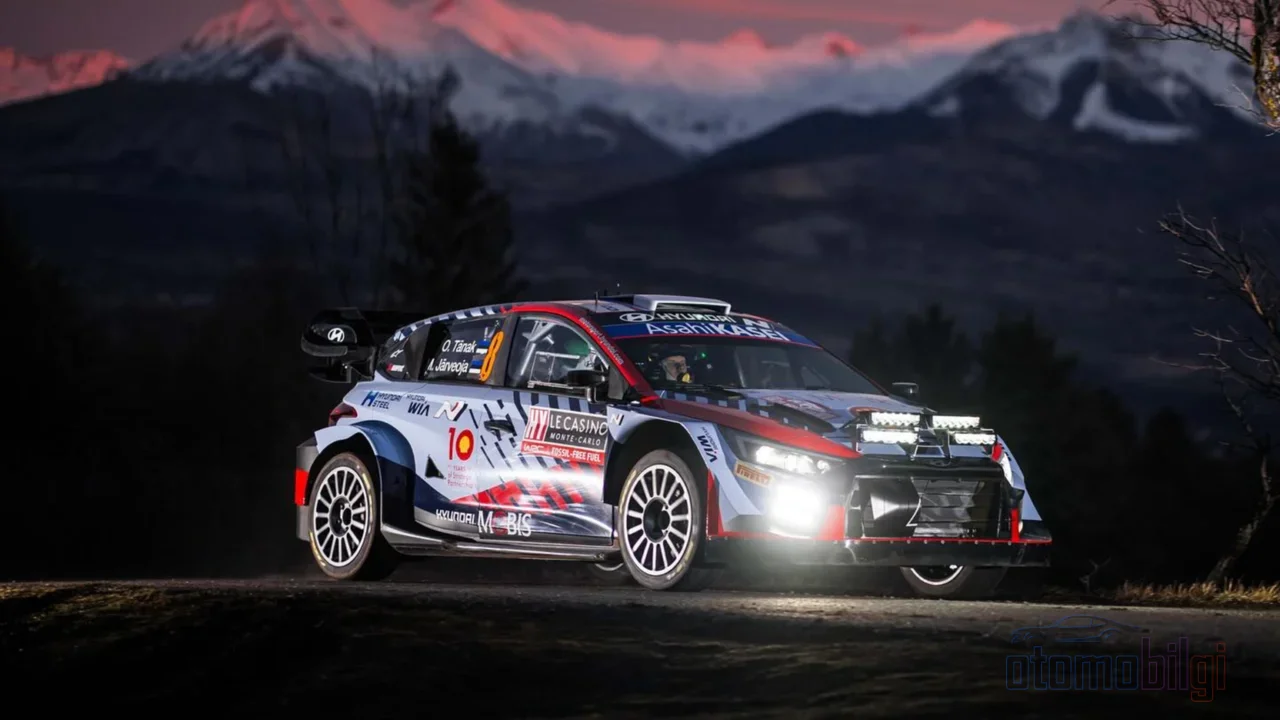
Share This Page
If you ask what the greatest legacy rally cars have left on our roads, I'll give you the answer in one sentence: most of the four-wheel-drive, turbocharged cars with electronic safety systems you see on the street today are the civilianized versions of solutions first tested not on the track but on dirt, mud, and rock. For decades, WRC served as the automotive world's most brutal laboratory; the technologies that matured there later made their way into showrooms.
Highlights
- Group B lasted only 4 years (1982-1986) but made four-wheel drive the standard of rallying.
- For Group B homologation, only 200 production units per year were sufficient; in Group A, this figure rose to 2,500. produced.
- Rally1 cars use a 100 kW electric motor and an 3.9 kWh battery, working together with 100% sustainable bio-ethanol.
- Rally1 engine blocks come from a road car as required by homologation: the same blocks as the Yaris, Puma, and i20N.
- Türkiye hosted the WRC for the first time in 2003, and rallying returned to the calendar in 2018.
Group B Madness: How Did Four-Wheel Drive Become the Standard?
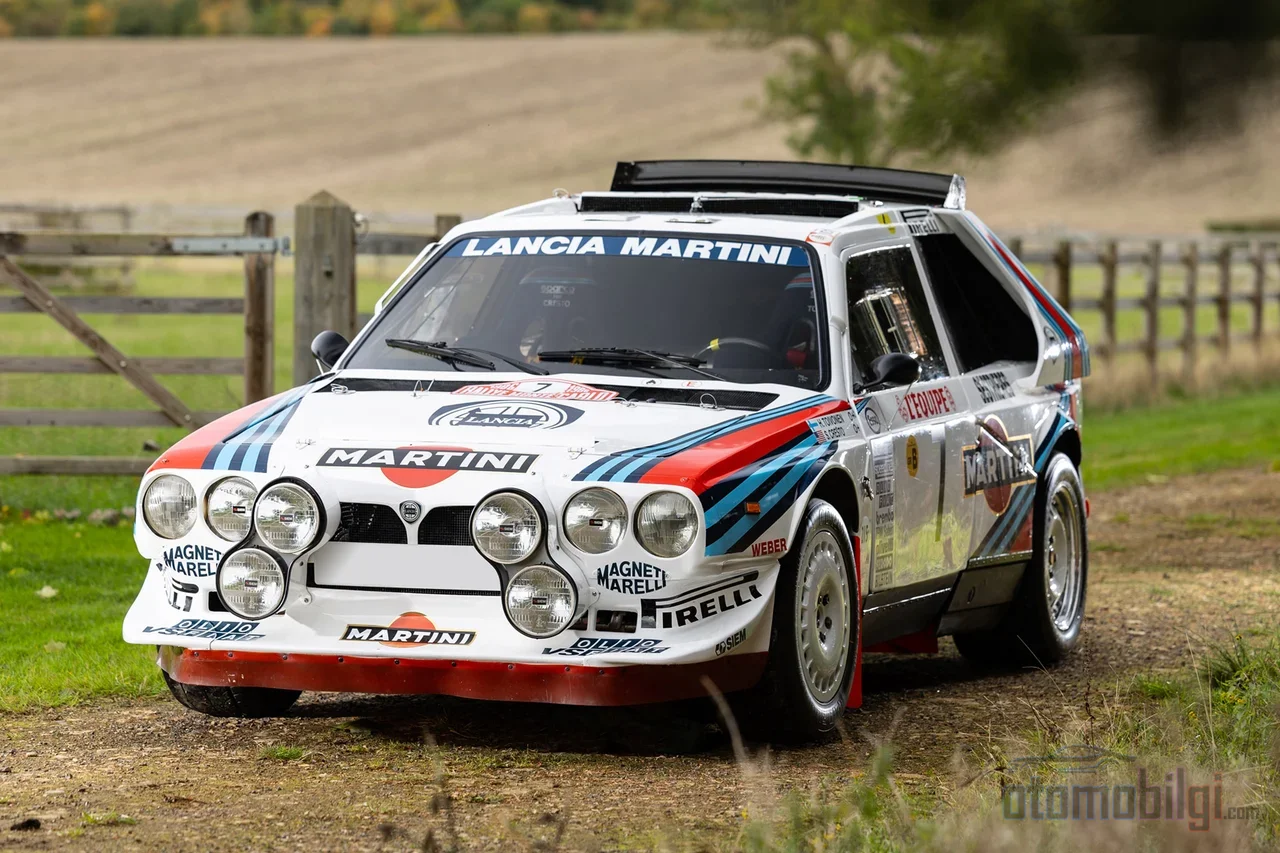
It will make you smile too, knowing that the most tangible legacy rally cars left on road cars came from the wildest page of the rulebook. When Group B began in 1982, it required only 200 production units for homologation. In other words, if a brand wanted to race, it only had to sell 200 road cars. The result? Composite bodies over steel tube chassis, engines in the middle, and in some cases power exceeding 500 hp. The Peugeot 205 T16 and the Lancia Delta S4 were born exactly this way.
The real revolution, however, lay more in configuration than in technology. Audi was the brand that brought four-wheel drive, legalized in 1979, into rallying. Until then, putting power down on muddy forest roads often ended with a single wheel spinning in the air. When four-wheel drive distributed that power across four tires, the game changed completely: one by one, all brands turned to 4WD. The accidents of 1986 brought Group B to an end, but its lasting legacy had already been written - four-wheel drive was now the standard of rallying.
The beauty of it is this: this architecture, proven on the rally stage, spread to civilian cars in the following decades. The stars of the Group A era - the Toyota Celica GT-Four, the Subaru Impreza WRX, and the Mitsubishi Lancer Evolution- directly inspired the performance versions of four-wheel-drive road cars displayed on showroom shelves. Isn't it nice to know that when you see a model with a 4WD badge in a showroom today, this racing history stands behind it?
The Evolution of the Rulebook: The Numbers Speak
The speed at which rally technology transfers to the road is actually directly proportional to how strict the rules are. The more road cars manufacturers are required to produce, the more the race car resembles the civilian car. If you know where to look, the picture tells its own story:
| Era | Annual Production Requirement | Technical Character |
|---|---|---|
| Group 4 | 25 units (500 for special versions) | Alpine A110, Ford Escort RS1600, Lancia Fulvia |
| Group B (1982-1986) | 200 units | Tube frame chassis, composite body, power exceeding 500 hp |
| Group A (after 1987) | 2,500 production units | Celica GT-Four, Impreza WRX, Lancer Evolution |
| World Rally Car (after 1997) | 2,500-unit production-based road car | Active differentials, electronically controlled dampers |
| Rally1 (after 2022) | Engine block from a road car | Space frame chassis, carbon fiber body, hybrid |
As you can see, the transition from Group B to Group A increased the production requirement twelvefold. This numerical tightening thickened the bridge between the race car and the car you can buy - the technology transfer itself also accelerated.
Sequential Gearboxes and Electronic Aids: Rally as a Testing Ground
The World Rally Car regulation introduced in 1997 allowed the engine, AWD and suspension components of a 2,500-unit production road car to be transformed into a rally car. Hyundai Accent WRC was developed by MSD during this period with its 2.0-liter turbo engine and active differential. Solutions such as active differentials, electronically controlled dampers, electronic clutch control and GPS-based ground clearance control were the laboratory products of this era.
The gearbox side is a separate story. In modern WRC cars, the sequential gearbox is standard; in this layout without an H-pattern, gears are shifted sequentially with a single lever movement. The sporting regulation makes this lever mandatory, and the paddle-shift era of older generations is over. The speed, consistency and durability advantages of sequential shifting are also felt today in the sport versions of road cars.
Did ABS and traction control come from rallying?
Let's give an honest answer to this question: it is hard to make a definitive 'rallying invented this' statement. In forums and driver conversations, it is frequently emphasized that electronic systems react faster than a human driver, and this observation is technically plausible. In modern road cars, stability and traction control now work so invisibly that they perform their duty unnoticed with minimal effect on lap times. So it is hard to prove that rallying was the direct birthplace of these systems; but it is quite fair to say that rallying became a testing ground where they were tested under the harshest conditions.
There is also an interesting gap: it is not possible to see a clear provision in the rule texts about the current status of ABS in WRC cars. In other words, the answer to the question 'did rally cars have ABS' changes depending on the era and the rule set. For technical enthusiasts, this is a good indication of how nuanced the subject is.
Why Are Turbo Engines Everywhere Now?
Motorsport - including rallying - has a long history in the class leap of small-displacement turbo engines. From the excessively powerful turbo units of the Group B era, to the air restrictors limited to ~300 hp in the World Rally Car era, and from there to the 1.6-liter turbo and i20 Coupe WRC combination of the Hyundai 380 hp in 2017, the line is clear: smaller displacement, more power.
This philosophy peaked in Rally1 and an interesting detail came into play: due to homologation requirements, the engine block must come from the road car. In other words, the engine blocks of the Yaris, Puma and i20 N are the same as the blocks spinning in the Rally1 cars. Rally1 also uses 100% sustainable bio-ethanol; this fuel, reaching 110 octane octane, produces ~370 hp instead of the ~350 hp of the old WRC1 era. The 2026 Toyota GR Yaris Rally1 power unit is designed with the same logic: a 1.6-liter inline 4-cylinder direct-injection turbo. The synergy of turbo-plus-sustainable-fuel that matured on the race track and in the forest counts today as the ancestral story of even a turbocharged car sitting in your garage.
Rally1's Hybrid Experiment and the 2027 Break
Rally1's hybrid side is the most recent attempt at transferring rally technology to road cars. A 100 kW electric motor and 3.9 kWh battery, connected to the shaft on the rear axle, deliver power to all four wheels. The battery lives in a carbon fiber box embedded in the roll cage base behind the driver and co-driver; it is designed to withstand up to 70 G across six axes and is roughly twice the size of an F1 battery. During a rally day the battery is charged from a socket in the service park, while on road sections between stages a fully electric 'travel mode' is active.
So why hybrid and not fully electric? The answer is practical: stages can reach 50-60 km, and range limitation is a serious problem. Moreover, if the electric system fails, the internal combustion engine offers the assurance of getting the driver back to the service park. Still, the FIA paused plug-in hybrid use in the 2025 season and explained this step as being in line with its direction of work. Toyota also describes 2025, following Rally1's three hybrid seasons, as a transition. While the WRC's shift to Rally2-based cars for 2027 is being discussed, it is no coincidence that this sentiment is compared to the 1980s transition from Group B to Group A - the same 'fear of the future', the same technology debate.
But let us add that what was lost was not just weight and cost: admiration for the show value of Rally1 cars is still through the roof. Built on a space frame chassis clad in carbon fiber panels and mimicking the road car with their bodywork, these machines were among the wildest examples of rally engineering. And yes, since the future Rally2-based cars use a real road car chassis, in terms of technology transfer we may be stepping into an era even closer to road cars.
Türkiye's Rally Heritage and Today
The Türkiye chapter of this story cannot be skipped. The first international rally in Türkiye, included in the European Championship calendar in 1972, started and finished in Istanbul. The beginning of professional rallying also dates to the same year: in 1972, Ali Sipahi went down in history with the 'Günaydın Rallisi'. Türkiye hosted the WRC consecutively from 2003 to 2006, was removed from the calendar in 2007, and was deemed worthy of this role 6 times in total between 2003 and 2010. Following its return in 2018, Rally Türkiye was held in Marmaris in 2019 and 2020.
Today the picture is alive: the 2026 Türkiye Rally Championship opened its season in April with the Aegean Rally in Marmaris, and the calendar includes stops such as the Eskişehir Rally (September 20), the Kocaeli Rally (October 18), and the Istanbul Rally. On the young drivers' side, we can also point to a working pipeline; the mention in sources of a Turkish name competing for the top in the JWRC shows that the rally development pathway is wide open.
So what should you get from the showroom?
Let me mention a current sales example that best fits the spirit of this article: the 2026 Subaru WRX, with 271 hp from its turbo boxer engine and its Symmetrical AWD system, is today's incarnation of the four-wheel drive + turbo formula that came from rallying. In a higher segment, the Toyota GR GT with its 4.0-liter twin-turbo V8 and hybrid combination represents another face of racing technology meeting the road car. In other words, getting into a car with rally DNA from a dealership in Türkiye in 2026 is far easier than you might think.
Conclusion: Forest-to-Road Technology
Rallying is the most honest exam hall of the automotive world. From Group B making four-wheel drive the standard, to Rally1's bio-ethanol and hybrid experiments, from the sequential gearbox to the shared engine block, every step was tested on the competition stage before hitting the road. With next season's transition to Rally2-based cars, this bridge will become even stronger. So if it were up to you, which would be the most valuable invention rally left to the roads - four-wheel drive, the normalization of turbo, or the quiet revolution of electronic aids? Let's discuss in the comments.
Sources
- 50 Years of WRC: The Evolution of Rally Cars | Hyundai Motor Group Journal
- The Incredible Tech Behind the New WRC Rally1 Hybrid Cars - Sports Car Digest
- WRC - Rally1 spectacle maintained following technical changes - FIA
- CAR DETAILS | 2026 | WRC - Toyota Gazoo Racing
- All About The WRC Rally 1 Cars | Hyundai Motor Group Journal
- Rally1 HYBRID car safety - Liepāja (LVRally)
- Rally1 - Wikipedia
- World Rally Car - Wikipedia
- WRC History - wrc.com
- The Group B / Group A comparison with WRC 2027 - Dirtfish
- 2026 Subaru WRX Features & Technology - subaru.com
- GAZOO Racing and Lexus at Goodwood - Toyota Newsroom
- Driver Aids: From Total Bummers to Lap-Time Heroes - Road & Track
- Rally History - Rally Türkiye (official)
- World Rally Championship - tr.wikipedia.org
- Organization History - ETİ Odunpazarı Esok Rally
- WRC Rally Türkiye tickets - Biletix
- Türkiye Rally Championship 2026 Race Calendar - motorsport.com
- 2026 Rally Season Opens in Marmaris with the Aegean Rally - TOSFED