WRC's Three Giants on the Stage: Toyota, Hyundai and M-Sport
Share This Page
WRC has three main players on the stage: Toyota, Hyundai and M-Sport - two are factory teams of giant manufacturers, while one is a private team from England that survives on its own resources. Toyota Gazoo Racing is the most dominant force of recent years, Hyundai is pursuing with its long-term strategy, and M-Sport maintains its place as a small but beloved team that develops drivers. We compare the origins of these three, their engineering philosophies and the competitive balance in the Rally1 era.
Highlights
- Toyota, 2026 in a row its sixth manufacturers' championship
- The cost of a Rally1 car as of 2023 was approximately 1 million Euro's was
- Hyundai returned to the WRC in 2014 with its Germany-based factory team
- Ford, 2028 returns to the WRC with M-Sport as a direct partner in
- Since 2025, Rally1 cars have no hybrid unit; 100% sustainable fuel is used
Rally1: The Class Where Three Teams Race Under the Same Rulebook
First, let's get to know the stage. Rally1 is the WRC's top technical specification and replaced the World Rally Cars in 2022. The first generation of Rally1 cars had hybrid units; with the new regulations introduced in 2025, the hybrids were removed, but 100% sustainable, fossil-free fuel continues. The removal of the hybrid made the cars lighter: the air restrictor went from 36 mm to 35 mm, maximum power was pulled down from 500 PS to 370 PS, and the minimum weight decreased by a full 80 kg to 1,180 kg. Just like everyone solving the same exam paper at school - all three teams race under the same rules, and what makes the difference is the architecture and human resources.
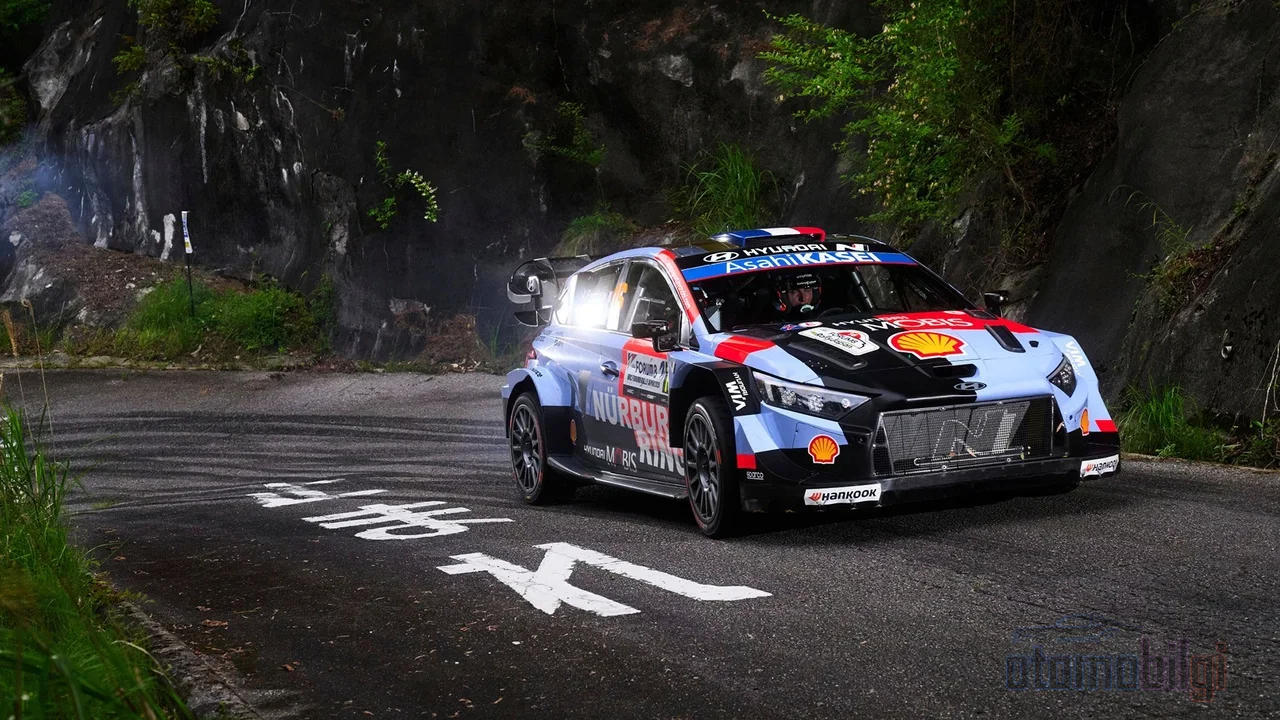
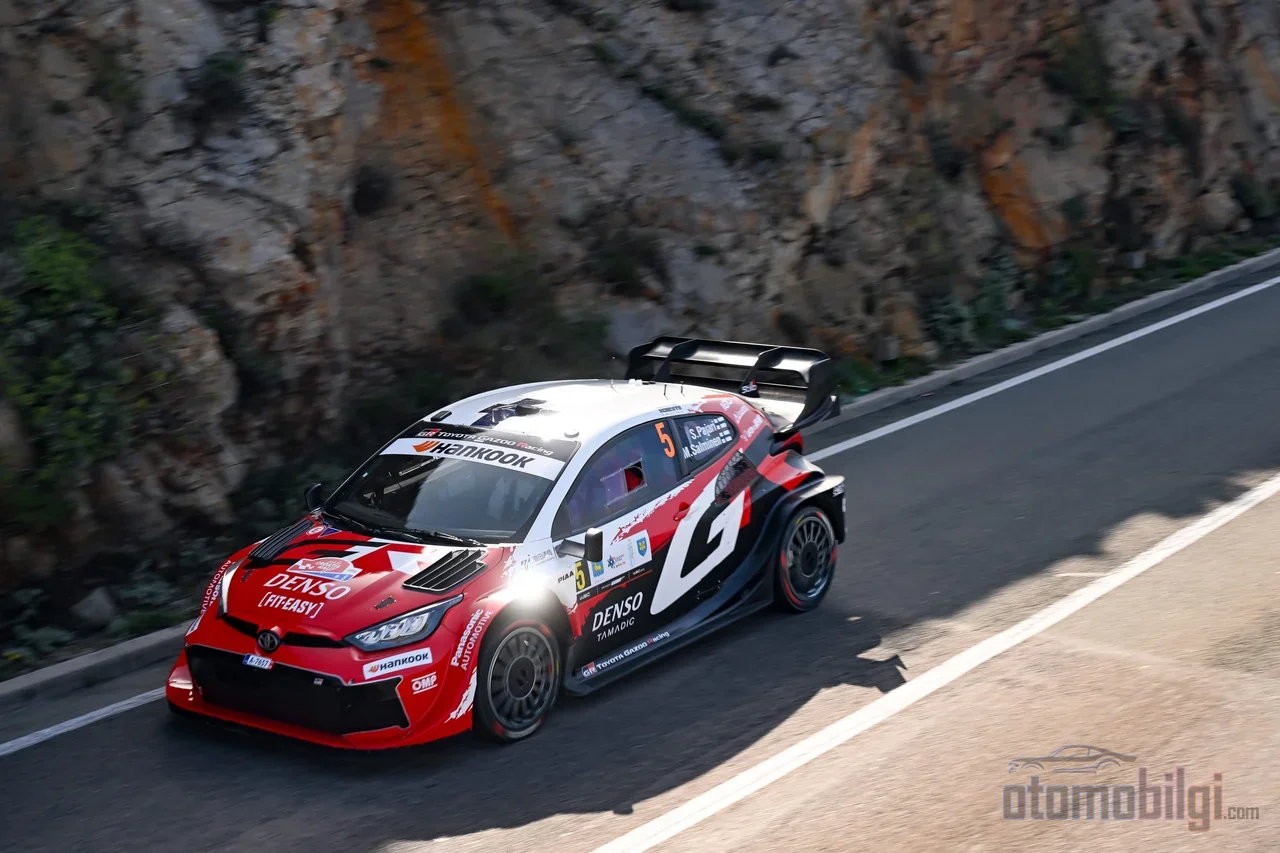
On the technical side, two cars stand out. Toyota's GR Yaris Rally1 has a 1,600 cc inline 4-cylinder turbo engine, over 425 Nm of torque, a 5-speed sequential gearbox and 4-wheel drive with mechanical differentials front and rear; maximum speed is 201 km/h depending on the ratio. Hyundai's i20 N Rally1 produces 360 hp and approximately 450 Nm with its turbocharged direct-injection engine, also with a 5-speed manual gearbox. On the tire front, the Hankook era began as of 2025. Let's also add that none of these cars are cheap: as of 2023, a Rally1 car cost approximately 1 million Euro, while a Rally2 car was approximately 200,000 Euro. That's the first clue as to why budget differences matter so much.
Toyota Gazoo Racing: The Formula of a Factory Giant
Toyota's WRC team is officially based in Finland, but Toyota Racing GmbH in Germany develops and produces the cars' 1.6-liter 4-cylinder engines. So if you think about what kind of industrial network lies behind a manufacturer: the Japanese giant has its team center and engine factory in different countries, all running toward the same goal. The numbers are impressive too: to date the team has taken 691 WRC starts, 116 wins, 317 podiums and 2,575 stage wins in total. These are no coincidence, but the result of long-term investment.
From Yaris to GR Yaris: The Story of the Championship Streak
Toyota returned to the top level in 2017 with the Yaris WRC after a 20-year absence; it took its first manufacturers' championship in 2018, back-to-back drivers' championships followed in 2019-2020, in 2021 it collected all available titles and won 9 of 12 rallies. In the hybrid Rally1 era, the GR Yaris Rally1 delivered three consecutive manufacturers' championships between 2022 and 2024 and two drivers' championships for Kalle Rovanperä. In 2025, in its first hybrid-free year, it took the manufacturers' championship with 12 wins from 14 rallies, and Sébastien Ogier rose to the top among the drivers. The GR Yaris Rally1 today, with 47 wins, has amassed more victories than all other models in any regulation era, making it one of the most successful cars in WRC history. The 2026 season is the final year of the current technical regulations, and the car will bid farewell in Sardinia, its final round. Meanwhile, Toyota has already clinched its sixth consecutive manufacturers' championship in Chile; the drivers' title will be decided in Sardinia, since the championship contenders are Evans, Pajari and Solberg - all three Toyota drivers. In other words, the owner of the trophy is known in advance, the only question is who will take it.
Latvala and the Driver Development Machine
At the head of the team is Jari-Matti Latvala. One of the most experienced drivers in WRC history, he ended his career with 18 rally wins and then took the Team Principal seat, and has been part of the team since Toyota's debut in 2017. A former driver becoming an executive gives the team not only a technical but also an emotional vision - it is no coincidence that someone who manages which tire will change when also knows how a driver's heart breaks. The 2026 roster is also impressive: Elfyn Evans (with the team since 2020, five-time runner-up), Ogier with 9 championships, 2025 WRC2 champion Oliver Solberg, Takamoto Katsuta who took his first WRC wins in Kenya and Croatia and is the first Japanese driver to lead the points standings, and Sami Pajari who exploded onto the scene by winning three rallies in a row. Toyota's WRC Challenge Program also developed names like Katsuta and Yuki Yamamoto; driver development is a serious factory operation.
Hyundai Motorsport: The Long-Term Strategy of a Second Comeback
Hyundai's WRC journey has not been a single piece. The first attempt was between 2000 and 2003; in 2014, it returned with an entirely new team and long-term goals through the Hyundai Motorsport division based in Alzenau, Germany, and has taken the start every year since then. Its official name is the Hyundai Shell Mobis World Rally Team. So it is not a deeply rooted rally history like Toyota's, but a modern construction project: first build the infrastructure, then accelerate. Moreover, this structure, which manages every detail from engine development to testing under its own roof, shows how the Korean giant approaches rallying - with patience and a corporate plan.
The results are in too: Team Hyundai won two consecutive manufacturers' championships in 2019-2020, and in this period collected 17 wins and 62 podiums. In 2023, the i20 N Rally1 Hybrid brought the hybrid back into the spotlight, and apart from a single rally it always made the podium, finishing second in the Manufacturers' standings. But the question to ask is this: why couldn't it catch Toyota in the Rally1 era? The partial answer lies in technical and luck factors; but the other side of the coin is driver development. Hyundai also holds talent in its hands; names such as rally engineer Arturs Ozoliņš, who works on Adrien Fourmaux's car, show that each driver has a dedicated engineering team behind them. Hyundai's official data on technical details like the transmission is clear: 5-speed manual. Such small details may not create a sharp difference between the two giants, but when added up they become the factor that defines the picture.
M-Sport: Small Budget, Big Dream
Now let's move on to the most romantic story on the scene. M-Sport is a private (that is, privately run) WRC team founded by Malcolm Wilson. Compared to the giants backed by manufacturers, it is the team with the smallest budget - even on forums there are fans who argue that the team is making the most of the budget it has, but the exact figures are not public. Despite this, M-Sport's greatest asset is driver development: it has repeatedly been the launch point for young talents' careers. You can think of it as something like a scouting camp for rallying; the big teams poach the names that shine and emerge from here.
The 2026 line-up consists of Josh McErlean and Jon Armstrong, and the ties with Motorsport Ireland have been expanded. The team is also evaluating driver options for 2027 and openly states that it has the budgets to remain here next year. The real bombshell news is the Ford return: Ford Racing announced that it will return to the WRC in 2028, directly involved with M-Sport. This significantly enlarges the small team's ambitions and shows how strong the commitment to Ford is. M-Sport competing with its limited means also keeps the budget inequality debate constantly alive - in our view, this is the WRC's most heartwarming competition story.
Three Teams Side by Side: Who Says What?
To see the comparison at a single glance, let's bring together the basic profiles of the three teams:
| Feature | Toyota Gazoo Racing | Hyundai Motorsport | M-Sport Ford |
|---|---|---|---|
| Character | Factory team, based in Finland | Factory team, Alzenau (Germany) | Private team, founder Malcolm Wilson |
| Era in the WRC | Since 2017 (with the Yaris WRC) | Since its return in 2014 | A private team for many years |
| Notable title | 6th consecutive manufacturers' championship in 2026 | Two consecutive manufacturers' championships in 2019-2020 | Driver development center |
| 2026 drivers | Evans, Ogier, Solberg, Katsuta, Pajari | Modern line-up including Fourmaux | Josh McErlean, Jon Armstrong |
| Driver development | WRC Challenge Program | Long-term grassroots investment | A launchpad as the start of a career |
| Future | The only mainstream manufacturer developing a car for the 2027 regulations | A structure playing for the top in Rally1 | Ford's direct return in 2028 |
A note on the table: Toyota being the only known mainstream manufacturer developing a 2027 WRC car shows that the championship streak is no surprise. The first independent WRC27 car was unveiled, and 750 km were completed in five days of its test program. The new regulation cycle looks like a threshold that will rebalance the scales of the three teams.
2027 Rules and Safety: The Two Main Files of the Upcoming Period
Rally1 and Rally2 regulations were fixed unchanged until the end of 2026, then the 2027 rules arrived and a new regulation cycle began. The removal of the hybrid was presented as part of the major regulatory change package, while the FIA's approach of first fixing the rules and then changing course is being criticized as policy volatility. In other words, in the background it's not just the engines being discussed, but also the management philosophy. Additionally, it was stated that from 2025 onwards the car budget would be capped at 400,000 Euro - budget monitoring is one of the critical issues for the future of the WRC.
On the safety front, Latvala emphasizes that reducing speeds could be beneficial in terms of safety. Such an observation coming from the boss of a team heading into a final round where it is guaranteed that one of three Toyota drivers will win the world championship shows which issues the industry is focusing on. And let's not skip the format: there are 15 minutes in the morning service, 30 minutes midday, 45 minutes at night, and after the night service the cars remain in Parc Fermé. When you consider how the team's engineering crew works within these tight time windows, the importance of the team principals and chief engineers becomes clear once again.
Final Word: Three Different Hearts, One Arena
The beauty of the WRC lies precisely here: a Japanese giant, a Korean giant, and a private team from England are racing on the same gravel and asphalt for the same goal. Toyota stands tall with its corporate depth and driver roster, Hyundai with its patient strategy, and M-Sport with its persistence and ability to cultivate talent. Ford's 2028 return and the 2027 rules seem set to revive the stage once again. Which of these three do you think has the most compelling story? I am still an admirer of small-budget M-Sport's stubbornness - but looking at the championship statistics, Toyota's bar is truly high. So which side are you on?
Sources
- CAR DETAILS | 2026 | WRC | GAZOO Racing
- WRC 2026 Rd.13 Preview | TOYOTA GAZOO Racing
- TEAM & DRIVER | 2026 | WRC | GAZOO Racing
- WRC - Toyota GAZOO Racing
- Company - Toyota Racing GmbH
- Jari-Matti Latvala appointed Team Principal
- WRC - Hyundai Motorsport
- 50 Years of WRC: The Evolution of Rally Cars | Journal
- World Rally Championship (WRC)
- Hyundai World Rally Team
- M-Sport World Rally Team
- What M-Sport is looking for as it assesses its 2027 WRC driver options - wrc.com
- Ford Returns to FIA World Rally Championship
- Jon Armstrong joins Josh McErlean in new M-Sport Ford line-up
- WRC Teams and Drivers 2026: Lineups, Cars, and Key Names
- Rally1 - Wikipedia
- Hybrid ditched as part of major WRC regulation change
- WRC and FIA discuss the transition to budget cap implementation
- WRC's First 2027 Model Car Unveiled