Legendary Stages of Rally History
Share This Page
The legendary stages of rally history are special sections that go beyond ordinary roads, etched into the memory of drivers and spectators alike: Col de Turini illuminated by night flares, Ouninpohja flying across the hills, the Safari stages opening onto Kenya's unforgiving savanna, and the rough-surface sections in Türkiye that hosted unforgettable moments - all are described here one by one through their surface characters, technical challenges, and effects on race strategy.
Highlights
- Col de Turini has been run 106 times since 1973; only two Monte Carlo Rallies have skipped this legend
- Carlos Sainz is the most successful driver of Turini: 9 wins
- Ouninpohja is approximately 33 km long and has been chosen six times as the rally's fastest stage
- Safari Rally Kenya was first held in 1953
- Professional rallying in Türkiye began in 1972 with the Günaydın Rally
What Makes a Stage Legendary?
Some stages are not just roads. A driver who runs them still sees those corners in their dreams years later, and the spectators who lined those corners tell their grandchildren about it. Col de Turini's snow-covered hairpin corners, WRC cars launching off Ouninpohja's blind crests, Kenya's dust clouds... All of these are different faces of the same thing: moments where surface, history, and human story align perfectly. A legendary stage is technically demanding, has character, and becomes culture. Now let's explore these three elements one by one.
Col de Turini: The Midnight Circle of Fire
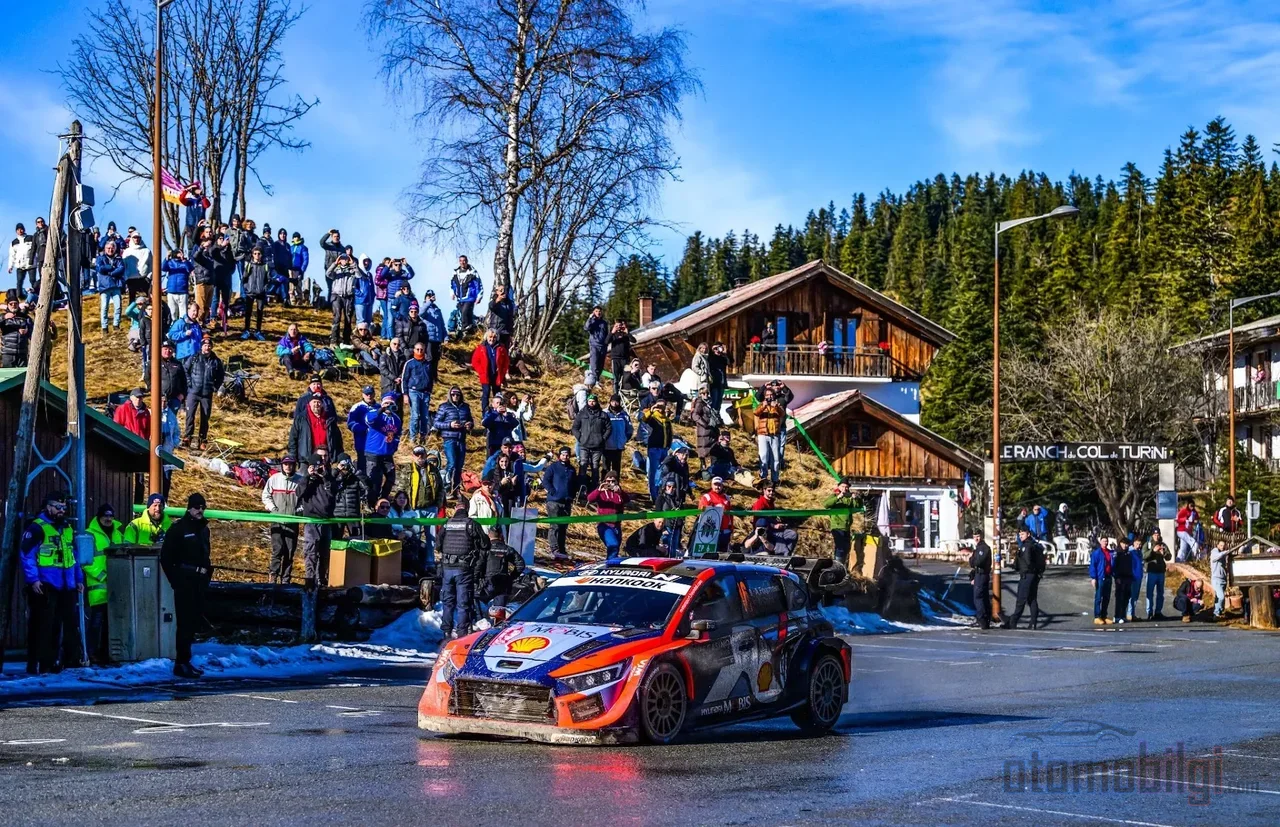
Where does the heart of the Monte Carlo Rally beat? The answer is beyond dispute: At the top of the Alps, at a mountain pass 1,603 meters above sea level. The classic route stretches approximately 31 km from La Bollène-Vésubie to Sospel, with an average gradient of 6.7 percent. The numbers are nice, but what makes Turini legendary is not the numbers - it's the atmosphere.
In the 1970s and 1980s, at least one run of the stage was held at night, and the flares thrown by spectators turned the dark mountain road into daylight. Two unforgettable nicknames emerged: Nuit de Turini, meaning Night of Turini. For the harsher side of the business, the nickname Night of the Long Knives was used. The surface, transforming with snow and ice sections, tests drivers both in tire choice and at the limits of courage. Imagine: one corner on dry asphalt, and two corners later, ice! Let me make an analogy from everyday life; it's as if you're walking on the kitchen floor one moment, and on an ice rink the next.
The Three Faces of Turini
Although the stage looks like a single road, it actually consists of three sections with distinct characters. The part from La Bollène toward the pass is wide and flowing, and after the tunnel, the hairpin corners kick in. The section descending from Turini to Peïra Cava sees little sun, making it the place where snow and ice last longest; the descent is extremely slippery. The Turini-Moulinet-Sospel section is famous for its steep descent and frequent icy corners.
The stage's statistics are also impressive: Since 1973, only two Monte Carlo Rallies have not included Turini, and 51 different drivers have taken stage wins. The most successful name is Carlos Sainz with 9 wins. Bernard Darniche won this stage 8 times, Neuville, Auriol and Ogier 6 times each, and Loeb 5 times. But there is an interesting detail: Names like Grönholm, Kankkunen, Latvala and Burns never managed to win this stage. It shows that even legendary names can lose on a legendary stage, doesn't it?
Among the events remembered until the end of the stage, one happened in 2005: Grönholm and Solberg suffered wheel failures in sections where spectators allegedly piled snow onto the road, and Solberg was eliminated from the race. The 2026 Monte Carlo Power Stage will be the La Bollène-Moulinet version; meaning the legend is still on the program.
Ouninpohja: Finland's Speed-Limit-Free Playground
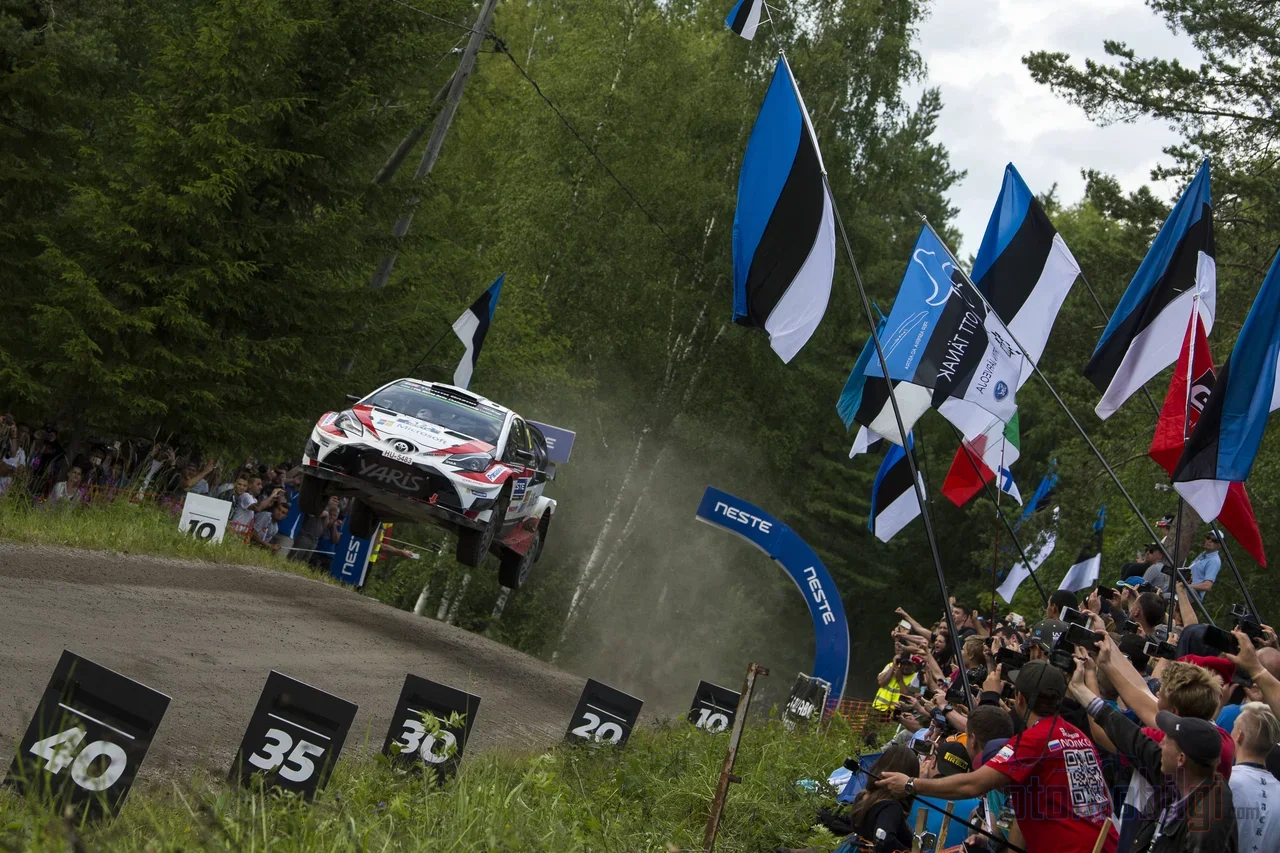
While Col de Turini demands technical mastery, Ouninpohja demands pure courage and precision. Rally Finland is the WRC's fastest event; on wide, smooth gravel roads, blind crests and giant jumps chase one another. Ouninpohja, at approximately 33 km in length, is the lead actor of this game. This section, the fastest stage of the rally on most calendars, held that title six times in a row. Ask your teammate: when you go over the crest on this stage, the car truly glides through the air. The only difference for the driver is that he cannot take his hands off the steering wheel at that moment.
The speed culture of Finnish rallies is undisputed, but there are still debates. The 2026 rally finished as the second fastest event in WRC history with an average speed of 128.2 km/h, and debates over the limits of this speed flared up. Even more striking: Ouninpohja was removed from the 2026 Rally Finland route. Fans compared this to Monte Carlo being left without its Turini in 2007, because both give the same feeling: can there be a legendary rally without its legends? Fortunately, Ruuhimäki, famous for its 7.76 km jumps, is still on the route.
Safari Rally Kenya: The Test of Barren Lands
When it comes to Kenya, the character of the matter changes completely. The Safari Rally was first run in 1953, as part of the coronation celebrations of Queen Elizabeth II, and has been a symbol of endurance ever since. Traditionally held during the rainy Easter period, the race passes through the rugged, barren and unforgiving terrain of the African savanna. Dust, rocks, extremely rough ground and suffocating heat... Here, speed is not an instrument but a vehicle: the real test is the endurance of the machine and the driver.
The 2026 opening stage turned into chaos; some of the favorites crashed out, and the Sleeping Warrior stage was cancelled five minutes before the start due to heavy rains. But the hero of the year also emerged: Takamoto Katsuta and Aaron Johnston won their first WRC victories with a historic triumph. Although the debate over where the difficulty should end continues, the magic of the Safari remains the same: spectacular to watch, but you wouldn't want to be a driver there.
Türkiye's Rally Journey: Hard Ground, High Temperatures
Rallying in Türkiye began professionally in 1972 with Ali Sipahi's Günaydın Rally organization. Short stages, hard ground and high temperatures became the signature of Turkish rallying; The 2003 WRC Türkiye stages are remembered with exactly this description. At the 2005 Rally of Türkiye, 76 cars started, and 53 crews saw the finish over a total stage length of 1,228 km. The 2008 WRC Türkiye was run in the Kemer/Antalya region and left unforgettable moments from the race Sébastien Ogier won with Citroën.
Looking at the local scene, there is a colorful picture as well: Volkan Işık, Serkan Yazıcı and Ercan Kazaz's victories at the Anadolu Rally are among the classics of Turkish rallying. Emre Yerlici became Türkiye Rally Champion in 1988, 1989 and 1990 consecutively. The Türkiye Rally Championship has seen 22 different champion drivers in 53 years; in other words, the throne kept changing, and the competition never faded.
The Cultural Background of Group B and the Legendary Stages
In the legendary status of these stages, not only the geography but also the cars of the era played a big part. Group B was a series of regulations introduced by the FIA in 1982, and despite its short life it created rallying's most tense era. Tens of thousands of spectators flocked to the stages, and at times its popularity surpassed that of Formula 1. The Renault 5 Turbo's victories at the 1981 Monte Carlo and the 1982 Tour de Corse were the heralds of this era; the first Group B season was run in 1983. Then came the Group A (1987-96) and World Rally Cars eras; WRC's 54th season comes in 2026. season in 2026, the Rally1 era is also approaching its end.
If We Put the Legendary Stages Side by Side
Although iconic stages differ greatly from one another, they have things in common. Let's compare briefly:
| Stage | Rally | Surface and Character | Key to Legendary Status |
|---|---|---|---|
| Col de Turini | Rallye Monte-Carlo | Asphalt, snow/ice transitions, hairpin corners | Night runs and spectator flares |
| Ouninpohja | Rally Finland | Gravel, blind crests, big jumps | High speed (~33 km, six times the fastest stage) |
| Safari stages | Safari Rally Kenya | Dust, rock, rugged savanna, heat | Durability and surprises with no limits |
| Kemer/Antalya stages | Rally Türkiye | Hard surface, narrow and fast sections, high temperatures | Unforgettable moments like the 2008 Ogier victory |
The common denominator is clear: every legendary stage demands a trait from the driver, and the surface either rewards it or punishes it. Strategically, this means tire choice saves lives at Monte Carlo, courage and precision win in Finland, patience and mechanical durability are essential in Kenya, and in Türkiye being prepared for the heat makes the difference.
Final Word: Would You Care to Walk These Roads?
The legendary stages remind us that rallying is not just motorsport; it is also history, geography, and human stories. Have Turini's flares gone out for good, will Ouninpohja return if it leaves the route, will Kenya's rains strike down the next favorite once again? Time will tell. But I can say this already: if one day you get the chance, even if you just find these roads on a map and pass by them, you won't be able to hide your admiration in the face of the scale of those corners. Which one do you think is the best? My ranking changes every year, I admit.
Sources
- Col de Turini; a Monte Carlo Legend
- Monte Carlo Rally - Wikipedia
- Ouninpohja: Finland's roller-coaster stage
- These Are Some Of The Most Awesome WRC Stages Of All Time
- Iconic Ouninpohja stage dropped from 2026 WRC Rally Finland route
- Was Rally Finland too fast this year?
- Rally Finland - Wikipedia
- Rally Finland Top 30 stages 1-10 - It Gets Faster Now!
- Safari Rally - Wikipedia
- WRC Safari Rally Kenya 2026
- Safari Rally Spectator Guide
- Tackling The Full Safari Rally Kenya In EA Sports WRC
- Rally History - Rally Türkiye
- Best Moments from Rally Türkiye
- The History of Rally Türkiye
- Organization History - ETİ Odunpazarı Esok Rally
- Türkiye Rallisi - Wikipedia (TR)
- Group B - Wikipedia
- WRC History
- When they ruled the world: our Top 10 Group B Cars
- 2026 World Rally Championship - Wikipedia
- WRC Rallye Monte-Carlo 2026