From Ephesus to Istanbul Park: Türkiye's WRC Journey
Share This Page
Rally Türkiye is Türkiye's world rally adventure: it featured on the FIA World Rally Championship, i.e. the WRC calendar, between 2003-2010 and 2018-2020, starting in Kemer and continuing on Marmaris's brutal gravel stages. Although it is not on the championship calendar today, it remains the biggest door through which Turkish rally culture has opened to the international stage. So how did this journey begin, why was it interrupted, and is there still hope for a return? Let's take a look together.
Highlights
- Türkiye hosted the WRC 6 times between 2003 and 2010.
- The return to the WRC took place in 2018 in Marmaris; 17 special stages, 312.44 km.
- Sébastien Loeb won the 2005 rally with a time of 4:21:48.00.
- Ali Türkkan became the first Turkish rally driver to win in the JWRC.
- Türkiye is not on the 2026 and 2027 WRC calendars.
In which years was Rally Türkiye on the WRC calendar?
Let me summarize briefly: Rally Türkiye appeared on the WRC calendar in two separate periods. The first was between 2003 and 2010 ; the second was between 2018 and 2020 . In other words, over a total of nine seasons, in two separate periods, Türkiye hosted the world's fastest rally drivers. But behind these nine seasons lies a much longer story. Because Türkiye's rally history began long before the WRC. Some even say it goes back to the 1960s. Who wouldn't be curious, really?
Before Efes: the first sparks of Turkish rallying
The first rally competitions held in Türkiye date back to the late 1960s. Initially, participation numbers were very limited and the events were mostly run on a local scale. So clearly, even back then, some people had already tasted the thrill of racing against the clock on public roads. You know how it is: once the rally virus catches you, it never lets go.
The real transformation came in 1972. That year, two major events happened at once: on one hand, the first international event to enter the European Championship calendar, which started and ended in Istanbul; on the other, the event realized by Ali Sipahi under the name "Günaydın Rallisi," which turned rallying into a professional project in Türkiye. Sipahi pitched the idea to the Günaydın newspaper, and the management accepted it. So the 1970s can be considered the decade of birth for Turkish rallying, both nationally and internationally. It is also worth not confusing the 1972 international race with the national championship race known as the "1st Türkiye Rally" in 1974; the two were recorded in different categories.
The WRC family: from Kemer to the Efes stages
So how did Türkiye enter the world championship? The story begins in 1999: the idea of organizing a WRC candidate race first emerged that year. In 2000, the Anadolu Rallisi, held in Izmir, was followed by FIA observers, and Türkiye officially entered the WRC reserve list. Just imagine: the lands of Izmir were convincing the observers there while knocking on the door of the world championship. In other words, those famous stages around Efes were the first rehearsal for Türkiye's WRC showcase.
In 2001, the start and finish point was Kemer, in Antalya's Kemer was designated as its district, and here's the thing: it was realized that this place was tailor-made for the world rally. The stages of the Taurus Mountains descending to the sea, the altitude differences, the rough dirt terrain... In 2002, the first international participants arrived: a young driver in a Citroën Saxo named Sébastien Loeb and Juuso Pykälistö in a Peugeot 206 WRC. Keep that young driver's name in mind, he will appear again later in the story.
And 2003: Türkiye's debut on the WRC stage. The first rally was so brutal that only 27 of the 62 crews could see the finish. The organization also hosted the Junior WRC in its first two years to gain experience. Then the rally secured its place on the calendar in the 2004, 2005, 2006 and 2008 seasons, and in 2010. Kemer was the heart of everything as the race center and service park.
| Period | Center | Notable detail |
|---|---|---|
| 2003-2006 | Kemer | Hosted the JWRC in its first two years; the first PWRC rally in 2005 |
| 2006 | Kemer, Kumluca | Dirt stages partially covered with snow; one stage features a 950 m elevation difference |
| 2008 | Kemer | Hirvonen won ahead of Latvala and Loeb |
| 2010 | Different venue | The rally was removed from the calendar after this season |
| 2018-2020 | Marmaris | Replaced Poland on the calendar in 2018 |
The brutal stages of Kemer
The 2005 Rally of Türkiye also hosted the Production WRC category for the first time. 76 cars took the start, and only 53 crews could complete the stages totaling 1,228 km. And the winner's seat was taken by that young man I mentioned above: Sébastien Loeb, together with his co-driver Daniel Elena, climbed to the top with a time of 4:21:48.00. Loeb, with nine consecutive championships, is a name that left its mark on WRC history; it would be very fitting to say he was one of the most valued guests of Rally Türkiye.
The 2006 rally, on the other hand, is a legendary story of difficulty. It was run on November 13-15 in the Kemer and Kumluca regions, on dirt stages partially covered with snow. Just imagine a single stage, the 20.50 km Kemer section: its highest altitude is 1,124 m and its lowest is 173 m; that is, a 950-meter vertical climb and descent within a single stage. Snow, dirt, and those altitudes all together... Someone watching a rally for the first time would say "these people have lost their minds," while we say "this is what it's all about," right?
In 2008, the rally returned to the WRC calendar and was run on July 12-15. The winner was Mikko Hirvonen , who briefly interrupted Loeb's dominant era; he finished ahead of Loeb along with his young teammate Jari-Matti Latvala. But after the venue change in 2010, the rally was removed from the championship calendar. There is no definitive official statement in the sources about the rally's removal from the calendar; in motorsport, factors such as budget and logistics can often be decisive in calendar decisions. For these, other examples like Estonia point to financial factors, but in Türkiye's specific case we have no clear reason. Thus, the first eight-year era came to a close.
The brutal dirt of Marmaris: the 2018-2020 return
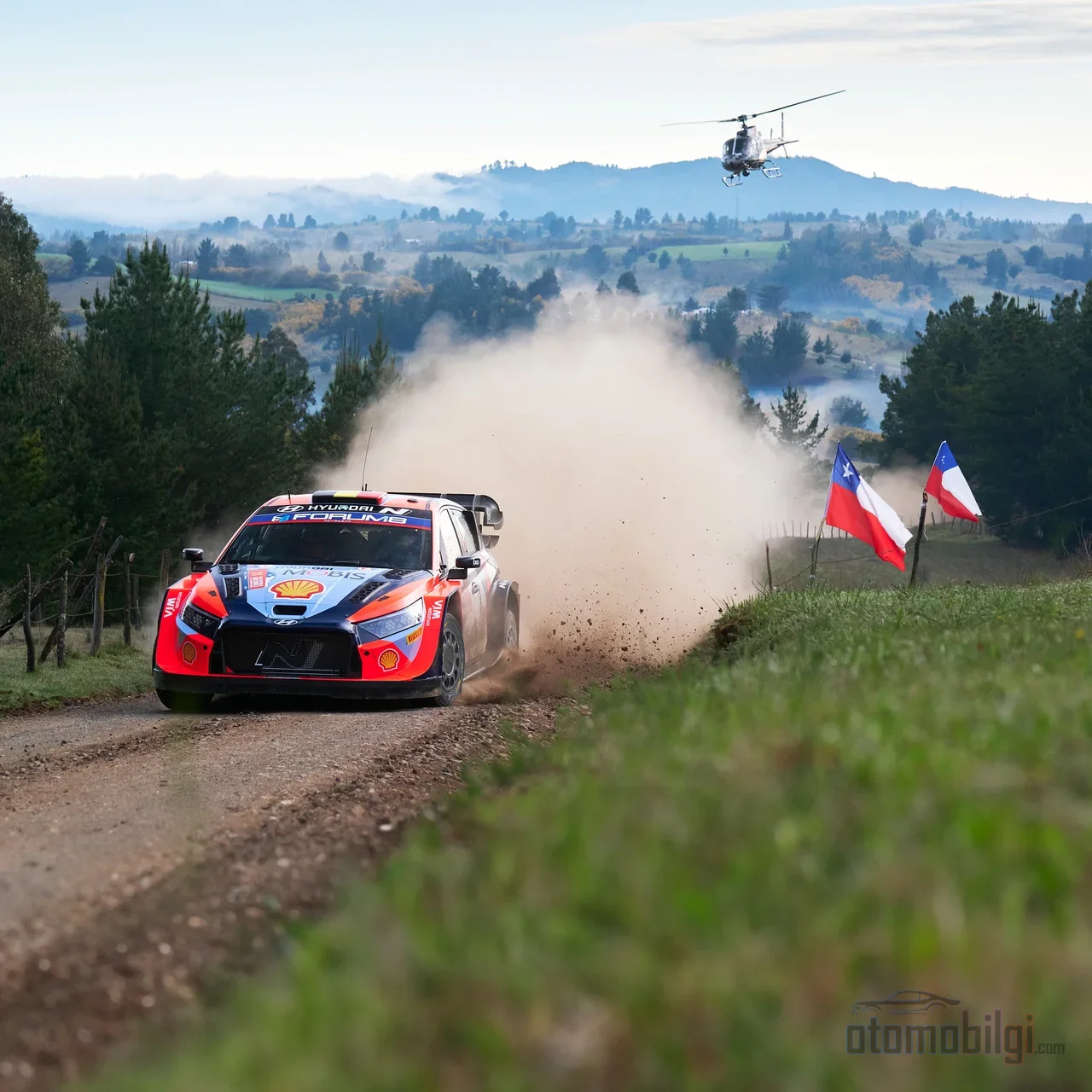
After a long silence, the story heated up again in 2018: the FIA World Motor Sport Council included Türkiye in the 2018 Rally Championship calendar, and the country was set to host the championship's 10th round. Taking the place of Rally Poland on the calendar, the event was held this time in the Marmaris district of Muğla. Why Marmaris? Because the surrounding hills offered terrain that the rally world described as "brutal"; in the aftermath of the rally, that adjective was used almost like an official slogan.
The 2018 rally took place with 17 special stages and a total 312.44 km of competitive distance. In 2019 the format was similar: again in Marmaris, again on 17 gravel stages, between September 12 and 15. Driver Hayden Paddon used the description "incredibly bumpy" for that terrain. The rally started on Thursday with a super special stage, and on Friday more than half of the rally's competitive kilometers - that is, 161 km of it - were run in a single day. Fitting that much harsh gravel into one day... I want to worry on behalf of the wheels, suspensions and drivers, but I am also jealous, I admit.
2020, meanwhile, landed in a strange spot within a season disrupted by the pandemic. The season had restarted in Estonia, newly added to the championship, on September 4-6; the Türkiye rally was run on September 18-20 with 12 stages and 223 km of competitive distance, and all stages were broadcast live. But at that time the World Rally Championship's economy was under strain all over the world; Türkiye did not return to the calendar after 2020. The three-year Marmaris era stands, for now, as the final WRC chapters of this story.
Is the hope of a return still alive?
You are thinking of that question, aren't you: "What if the WRC comes back to Türkiye?" Let's be honest: the current picture is one of waiting. Rally Türkiye is not on the 2026 WRC calendar; the calendar offers a twelve-round program stretching from Monte Carlo to Chile. The 2027 calendar does not include Türkiye either; in that 15-round program, the real headlines were the USA returning to the calendar for the first time since 1988 and the United Kingdom for the first time since 2019. So the door is not being knocked on right now, but it is not broken either.
Moreover, Türkiye is not completely detached from the world motorsport scene. İstanbul Park, whose foundations were laid in 2003, hosts not the WRC but the finals of the World and European Rallycross Championship: the 2024 and 2025 finals, including the final on September 20-21, 2025, were run at TOSFED İstanbul Park. So a world final where dust, mud and wheels spinning in the air took place in İstanbul; in my view, that is proof that the infrastructure still has fire in it.
Turkish drivers and rally infrastructure: a country on the WRC path
A race becomes enduring not just through its stages, but through raising its own drivers. The Türkiye Rally Championship now runs under the TOSFED umbrella, and the calendar is moving along full and rich. For example, the 5th round of the Petrol Ofisi Maxima 2026 Türkiye Rally Championship was announced as the ETİ Odunpazarı Eskişehir Rally. What's more, Turkish teams are no longer staying within their own borders: Castrol Ford Team Türkiye started its 2026 WRC marathon on February 12-15. In other words, the Turkish flag continues to wave in various forms at the world championship.
The brightest development on the drivers' side is generational: Ali Türkkan, went down in history as the first Turkish rally driver to achieve victory in the Junior WRC category at the Acropolis Rally. Let me elaborate a bit: Junior WRC is a rung on the ladder where WRC's young drivers compete worldwide; winning there means beating the fastest young drivers in the world. A Turkish pilot reaching the top of that podium proves the seriousness of Türkiye's rally school to the world. Who knows, maybe one day we'll be talking about a Turkish driver competing in the WRC with an overall victory. If it were you, whom would you support?
Where the dust settled: What did Rally Türkiye leave us?
From the snowy stages of Kemer to the first shakedown kilometers of Ephesus, from the merciless hills of Marmaris to Istanbul Park's world finals, this story alone is enough to tell how deep Türkiye's rally culture runs. Not being on the WRC calendar is not the end of the story; the grassroots are running, the domestic championship is moving along full and rich, and Turkish drivers are making their mark on the world stage. Don't be surprised if one day we see the abbreviation "TUR" on the WRC calendar again. Until that day, we're all fueled up and waiting, aren't we?
Sources
- Rally History - Rally Türkiye | WRC
- 2026 WRC Championship Race Calendar - Race Times
- WRC Returns to America and the United Kingdom in the 2027 Calendar
- The World's Best Rally Drivers at Rally Türkiye
- Event Date - ETI Odunpazarı Esok Rally
- Rallying in Türkiye - Kure Encyclopedia
- World Rally Championship (WRC) to be Held in Türkiye
- WRC Announces Its Calendar! The Date of Rally Türkiye Has Been Announced
- The Merciless Turkish Rally is Coming back
- 2018 Rally Türkiye
- SS 10+12 Kemer stage map - Rally Türkiye 2006
- TOSFED Official Website
- TOSFED Istanbul Park
- The 2025 Season of the World Rallycross Championship in Istanbul
- Castrol Ford Team Türkiye in the 2026 World Rally Championship