The Voice of the Road Book: What Do Rally Co-Drivers Do?
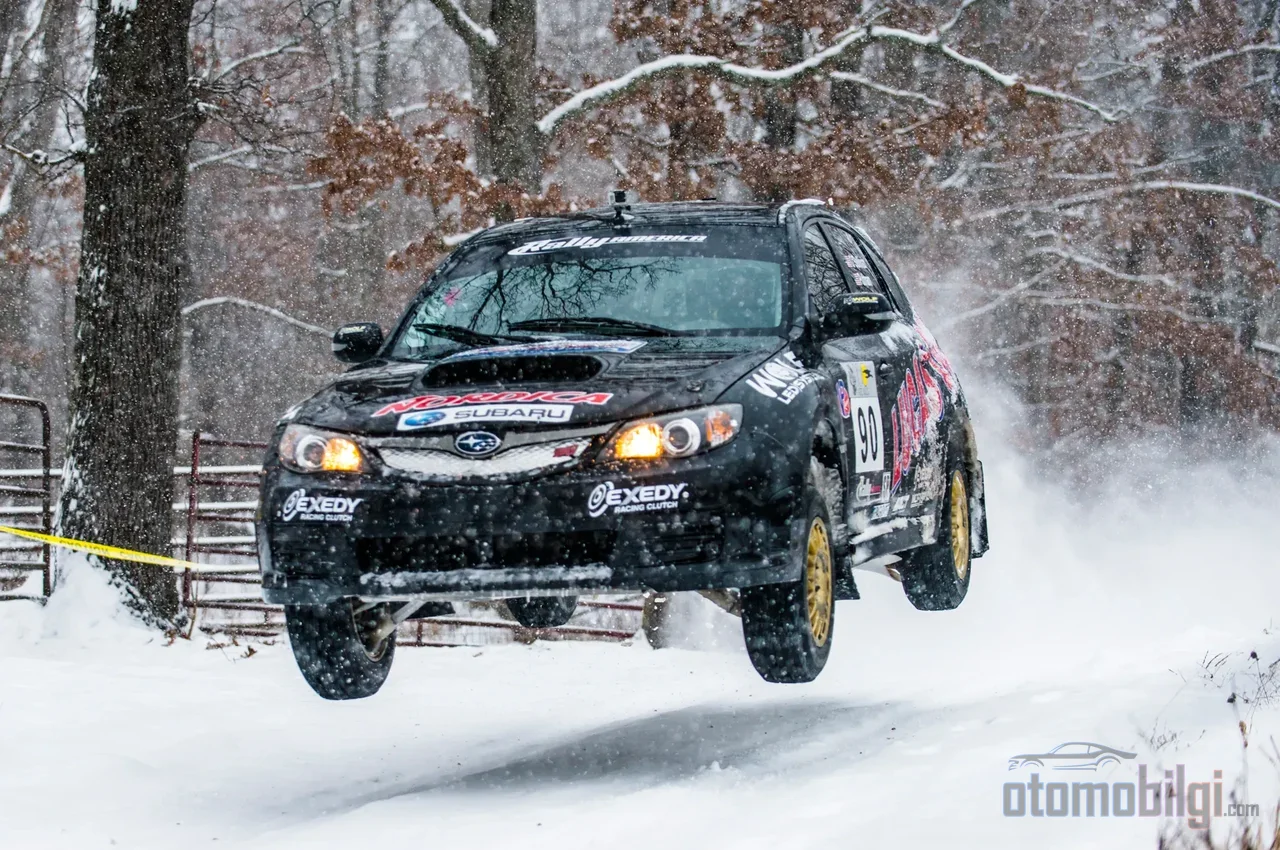
Share This Page
A rally co-driver is the co-pilot who reads pace notes aloud to the driver at high speed, ensuring the driver knows every corner, crest and dip of the road in advance. Since rally is run on hundreds of kilometers of unfamiliar roads, driving at the limit is impossible without this vocal guide; the co-driver is as important a part of the car as its brain.
Hello! Have you ever stopped while watching a rally video and wondered, what is that man sitting on the right side of the seat constantly saying? Something like "right 5 tightens left 3 cut"... That man is rally's least talked about but most critical hero: the co-driver. Just as Formula 1 drivers memorize the track, there is no such luxury in rally. That's why there are two people and one voice inside every rally car. Today we will talk about that voice.
Highlights
- Daniel Elena became WRC co-driver champion 9 times with Sébastien Loeb
- 17 of Colin McRae's 25 world rally victories were won with Nicky Grist
- Pace notes are prepared during the two reconnaissance passes made before the stage with regular cars, without timekeeping
- In the 1-6 system, 1 is a hairpin corner dropping down to first gear; 6 is a wide corner that can be taken at full throttle
- A triple exclamation mark note (!!!) means a risk of an accident that could be fatal
Pacenote, That Is, Pace Notes: Being the Driver's Eyes Ahead
Pacenotes are a guide where the route is described in short, key expressions. During the rally, the co-driver reads these notes to the driver, and the driver steers the car slightly ahead of his own line of sight. In other words, the driver brakes and positions the car before even seeing the corner - this means the notes are not just instructions, but also timing.
Think of it this way: you are driving on a road you have never been on in the dark of night, and the person next to you tells you about every corner before you reach it. They tell you when to slow down and when to accelerate. That is exactly what happens in rally, except at 200 km/h and inside a cloud of dust.
And there is an interesting detail: these directions actually belong to the driver, not the co-driver. During the reconnaissance pass, the driver, who sees the corners, has the co-driver write down the notes, and on race day he has his own notes read back to him. The co-driver serves as a kind of vocal memory - but the magic of the whole thing lies in the accuracy of that memory.
The Reconnaissance Pass (Recce): Notes Are Written Before the Race
So where do these notes come from? From the reconnaissance passes (known as "recce" in rally language) made before race day. Unless stated otherwise, the stages are driven twice, in regular cars and at low speed, without timekeeping. On the first pass, the driver sees the corners and has the co-driver write down the notes or dictates them. On the second pass, the roles are reversed: the co-driver reads the notes back, the driver confirms them, and fine adjustments are made if necessary.
So for every corner, the person who writes the note and ultimately becomes the voice of that note is the co-driver. The golden rule of the whole business is that the corner seen during reconnaissance and the note read during the race must match exactly. If the corner is the same, the note must be the same too - otherwise the driver may perceive a corner as wider or tighter than it is, and the result... won't be pretty.
Road Note Glossary: What Do the Numbers, Letters and Exclamations Mean?
This is the most wondered-about topic. The most common system in rally terminology is the 1-6 system, popularized by the legendary driver Colin McRae. The smaller the number, the tighter the corner: 1 means a hairpin so tight you drop down to first gear; 6 is a wide corner that can be taken flat out. Turkish rally culture follows the same logic: Expressions like "sağ 5 dibi sol 3 kesme" describe corners 1 as the sharpest and slowest, and 5-6 as flowing and fast.
But what about all those letters and numbers left over? Here is a summary of the most frequently used ones:
- L / R: left / right corner. The number next to it, between 1 and 6, indicates the severity of the corner; the +/- signs fine-tune it.
- Opens / tightens: describes whether the corner widens or narrows at its entrance.
- Numbers (40-200): the distance between two instructions. In many systems it is based on yards, in some on meters - so there is this unit difference between systems, and you should not confuse them.
- "And" and "into": "and" means a short gap (less than about 40 yards), while "into" describes an almost zero transition between two actions.
- Cr, Jmp, OC: crest, jump, and off-camber, meaning ground sloped outward where traction is reduced.
- ! / !! / !!!: caution warnings. A triple exclamation mark means a risk of an accident that could be fatal.
- Slippy / Grip, cut / don't cut: slippery or high-traction surface; warnings that you may or may not be able to cut the inside of the corner.
Dozens of more terms are added to these, such as square (90-degree corner), narrow, dip, chicane, puddle, and uphill/downhill. The "tunnel" note, on the other hand, appears almost only in Monte Carlo - we could say every stage has its own glossary.
So which system is the best: The French method or the Spanish method? There is no absolute answer to this question. What matters is not the system but consistency: as long as the corner seen on the recce and the note read out match each other, catching the ideal line is independent of the system.
Communication with the Driver: Voice, Tempo and Speed
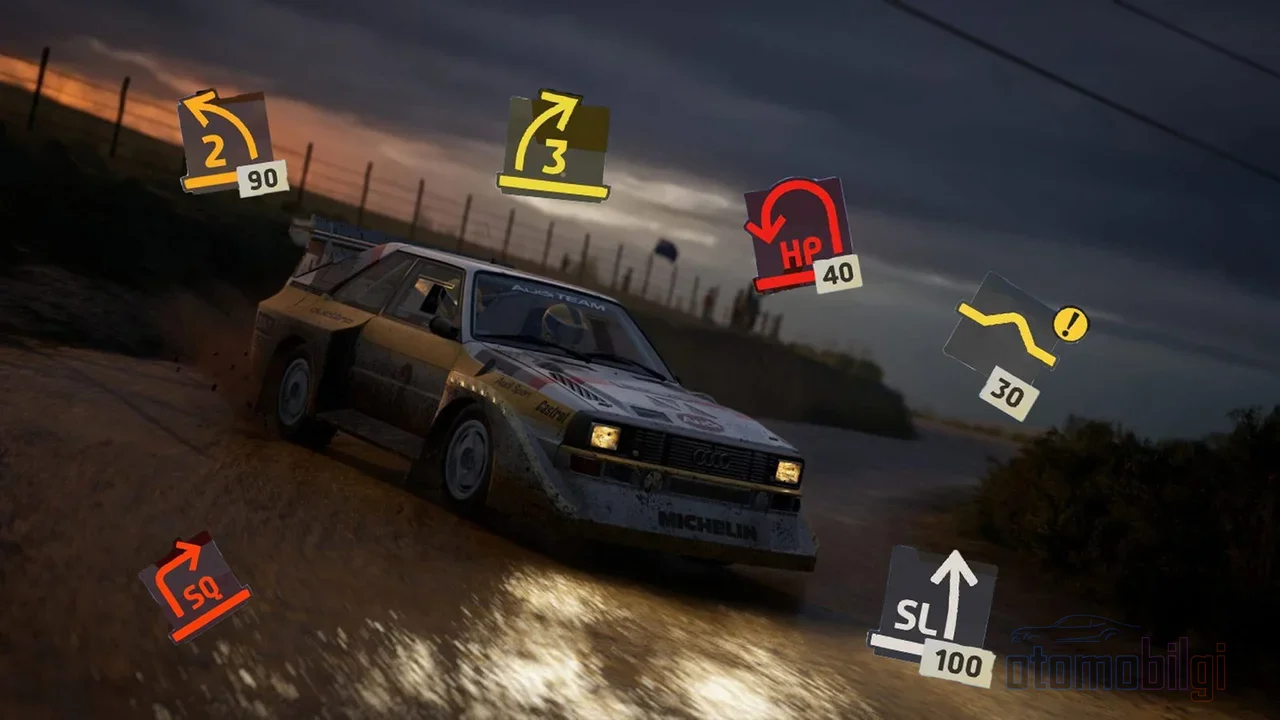
The co-driver's voice is the final link in a communication chain that extends from the recce run to the high-tech intercom system inside the car. The clarity of the intercom is critical: amid the engine drone, gravel and shock impacts, this voice is the driver's only support.
The real art, however, lies in the pace of reading. If you read too slowly, the driver receives the information late and cannot find time to react. If you read too fast, the corners get jumbled in his mind. A good co-driver adjusts his pace according to the car's speed and always stays in the right position in the notes.
Let us give an example of how distance can be a lifesaver: If you say "3 left, 120", after the tight corner the driver has plenty of time to recover and prepare. "6 right, 40", although the corner is faster, leaves almost no preparation time. The same two words, two completely different worlds.
And let us add this: A striking sentence appears in WRC's training content - "Reading pacenotes is the easiest job co-drivers will do throughout a rally." Yes, the easiest job. Because following the route, staying in the right place in the notes, managing timing, and communicating clearly while the car is doing 200... all of that is the work beyond just reading.
Legendary Co-Drivers: Legends of the Right Seat
When you look at WRC history, you see the debate over the most famous co-driver comes down to two names. The first is Daniel Elena: Together with Sébastien Loeb, he became 9-time co-drivers' champion and is the most successful co-driver in WRC history. Among the 20 greatest moments Autosport selected to mark WRC's 50 years, there is even a moment when Elena leaned out of the window and intervened while the car was driving along. It sounds crazy, but that's just what rallying is like.
The other is Nicky Grist: Born in 1961, this Welshman won 17 of Colin McRae's 25 world rally victories with him. He is counted among the legends of Welsh sporting history; there are even BBC programs dedicated specially to him. When communities are asked "the most famous co-driver of all time," Grist and Elena are always mentioned first; Alex Gelsomino, co-driver of Ken Block, who became famous in America through internet videos, is also a frequent guest in these conversations.
Today's scene is just as dynamic: Martin Järveoja sits beside Ott Tänak, while names like Timo Rautiainen are permanent members of the list of legendary companions for rally fans. And remember, behind every champion driver there is always such a shoulder.
Is Co-Driving Changing in the Rally1 Era?
When Rally1 cars arrived with hybrid technology, everything changed; would co-driving change too? Actually, there is a simple answer: pacenote reading and safety duties continue just as before. Toyota states that thanks to the spaceframe design in its 2026 GR Yaris Rally1 chassis, driver and co-driver safety is kept at a very high level - meaning the idea of a two-person team is engraved even into the car's skeleton.
On the regulations side, the recent period was quite dynamic. The FIA initially confirmed that hybrid Rally1 cars would remain in the WRC until the end of 2026; with the subsequent regulation change, the hybrid unit was removed from 2025 onward, and Rally1 cars began competing with a 1.6-liter turbo engine and four-wheel drive. In the first hybrid Rally1 cars, the center differential was removed, leaving only two axle differentials. 2026 is the final season of the Rally1 regulation cycle and stands out as a year when the old and new cars run together; the cars had been made lighter, less complex, and more cost-effective in 2025.
No matter how the technology changes, that right seat does not change. Because whether hybrid or turbo, only the notes can tell you what lies beyond a corner.
Co-Driving in Türkiye: What Is Known and What Is Not
Co-driving has a deep-rooted history in Türkiye's rally culture. Even Rally Türkiye's official glossary devotes a special place to this profession: pace note is defined as the instructions used by the co-pilot to convey the upcoming road conditions to the driver. In the history of the Rally of Türkiye, there have been years when drivers like Volkan Işık, Serkan Yazıcı and Ercan Kazaz took victories; the winners' protocol always sees two names step onto the podium. In fact, the 29th Rally of Türkiye was won by the Toyota Castrol team duo of Henrik Lundgaard and Jens Christian Anker.
And here's some great news: Ali Türkkan became the first Turkish driver to achieve this, winning the Junior WRC World Championship at the Rally Chile in a Rally3 car - of course, with his co-pilot by his side. The Türkiye Rally Championship entry lists are always published in the driver/co-pilot format too; so in this country, a championship is always shared by two people. Oytun Albayrak has already been announced as the 2026 Türkiye Rally Co-Pilot Champion.
Don't you think this profession gets far too little attention? The driver's face is reflected on camera, and it's the driver who lifts the victory trophy, but without a voice whispering every corner at exactly the right second, that trophy would be unimaginable. Next time you open a rally video, lend an ear to the right seat. The moment you decode those numbers, you'll start watching rallying with a whole new set of eyes.
Sources
- A Beginner's Guide to Rally Pace Notes - MotorTrend
- Pace notes: understanding your codriver - Steam Community
- Pace Notes Explained (And Why They Matter More Than I Thought) - Medium
- Pacenotes - Wikipedia
- Glossary - Rally Türkiye
- What are pace notes? #WRC #LearnRally - WRC
- List of World Rally Championship Co-Drivers' champions - Wikipedia
- Nicky Grist - Wikipedia
- 10 times WRC drivers and co-drivers reunited - Dirtfish
- WRC at 50: Ranking the world championship's 20 greatest moments - Autosport
- A WRC Season Preview: What Changes in 2026 - Hyundai Motor Group
- CAR DETAILS | 2026 | WRC - Toyota Gazoo Racing
- The Incredible Tech Behind the New WRC Rally1 Hybrid Cars - SportsCarDigest
- 7 Things you need to have to be a good rally co-driver - Škoda Motorsport
- Pace notes in rallies: how to write them correctly - Caneva Rally
- Choose your rally pacenotes method - Easywrite Rally
- How rally co-drivers guide cars at full speed - Yahoo Sports
- Rally of Türkiye - Wikipedia
- Rally Co-Pilot Terms - Sonetap
- co-pilot guidelines in rally racing - Ekşi Sözlük