From Scratch to Rally: The Road from Amateur to the Driver's Seat
Share This Page
To start rallying from scratch, you first get a competition license, enter club-level events with a cheap, entry-class car, and as you gain experience you climb up the FIA's vehicle pyramid ranging from Rally5 to Rally1. If you don't want to get behind the wheel, co-driving is a real career path that offers the same passion with lower costs and no age barrier. Now let's open up this path step by step, with real numbers - because actually doing it is much more fun than saying "I wish I'd gotten into rallying."
Highlights
- The FIA's new Rally6 category aims to bring the entry cost down to the 35,000-47,000 Euro range.
- In the UK, road rallies can be entered with a free RS Clubman license in an everyday road car.
- In Türkiye, the age range for a motorsport license is 18-85; TOSFED license fees are tracked on the federation's page.
- Türkiye entered the WRC calendar in 2003; the first winner was Carlos Sainz with Citroën.
- Ali Türkkan earned the title of the first Turkish rally driver to become a Junior WRC champion.
What should the first step to starting rallying be: A license or training?
You shouldn't mix up the order, because most people jump straight to the car and then encounter surprises. The path recommended by international rally schools is this: first research and training, then go to local events as a spectator, connect with the rally community, and then enroll in a professional rally driving course. That way, before buying the car of your dreams, you've gotten a real taste of that world. And for free.
One of the smartest things you can do at this stage is to find a mentor and get yourself involved in car clubs. The rally community is friendlier than you might think; even crouching down next to someone at the edge of a stage with their hood open explaining their engine can one day open a door. Think of it this way: when learning basketball, you first watch games, then shoot hoops at the park; nobody goes straight to the NBA. Rallying is the same.
Is getting a license hard?
Not intimidating at all, just procedural. The United Kingdom example summarizes the process nicely: a full driver's license for adults, a starter pack (about 110 pounds, including the first license fee and valid for two years), a driving safety test, and then a club-level stage rally license. This club-level license is around 104 pounds. In Türkiye, the process goes through TOSFED; for a motorsport license in the automobile category, there is an age requirement of 18-85, and you need to check the current license fees on the federation's own page. Team certificates and brand licenses cannot be obtained online; you must apply directly to the federation's license unit. A bit annoying, yes, but every sport has its own paperwork hell, and rallying's is just that.
How do rally car classes work: The pyramid from Rally5 to Rally1
Think of the FIA's rally car pyramid like an apartment staircase: the lower floors are cheap and accessible, while the top floor is the world's most expensive toy. The pyramid is divided into two groups: front-wheel drive Rally5 and Rally4, four-wheel drive Rally3, Rally2 and Rally1. Since 2022, the championships have also been aligned with these numbers; now WRC2 uses Rally2 cars, while series like ERC3 use Rally3 cars. So the answer to the question "Is there a hierarchy like WRC1, WRC2?" is no - the classes ranging from Rally1 to Rally5 define vehicle types, and championships are organized according to these classes.
Moving up from the grassroots, the differences are as follows: In Rally3, modifications are kept more limited in terms of aerodynamics compared to Rally2, and it is promoted as the ideal stepping stone for those moving up from Rally4. Rally2 cars are developed based on production models and get their power from turbocharged engines; in contrast, the top-tier Rally1 cars are spaceframe machines, meaning they are built entirely for racing. The primary category R3, one of the older class definitions, allows a 1.6-liter turbo or 2.0-liter naturally aspirated engine, and the cars use a 6-speed sequential gearbox. Whichever door you enter through, the logic is the same: start small, move up a class.
| Class | Drivetrain | Character |
|---|---|---|
| Rally5 | Front-wheel drive | The ground floor of the pyramid |
| Rally4 | Front-wheel drive | The first serious competition step |
| Rally3 | Four-wheel drive | The ideal step for those moving up from Rally4 |
| Rally2 | Four-wheel drive | Production-based, turbocharged |
| Rally1 | Four-wheel drive | Spaceframe, the peak of the WRC |
How much does a rally budget cost? The real numbers
Yes, we are going to talk about money, and yes, you may need to take a deep breath. But there is good news: The FIA has been focusing precisely on this issue in recent years. The newly introduced Rally6 category was developed to significantly lower entry costs, and while the estimated cost is announced as 35,000-47,000 Euros, a cost ceiling is also being defined for this class. The federation is also preparing career maps to enable young people and grassroots participants to take up the sport. So the door is more open than in the past.
The license side is relatively cheap: in some countries, licenses for basic events like road rallies and autosolos are free, while in the USA, membership in a federation and a license combined stay around a few hundred dollars. The real expenses begin with the car and the events. In the UK, the entry fee for a forest rally is approximately 500-600 pounds per event, and pace notes cost around 30 pounds per rally. Moreover, extra items such as fuel for the round trip, spare parts, and a surprise damper will be added to this. Since FIA license fees also vary by license type and country, always confirm the current figure on your own federation's website. In Türkiye, TOSFED's license fees page is the official address for this matter.
Safety equipment is not negotiable
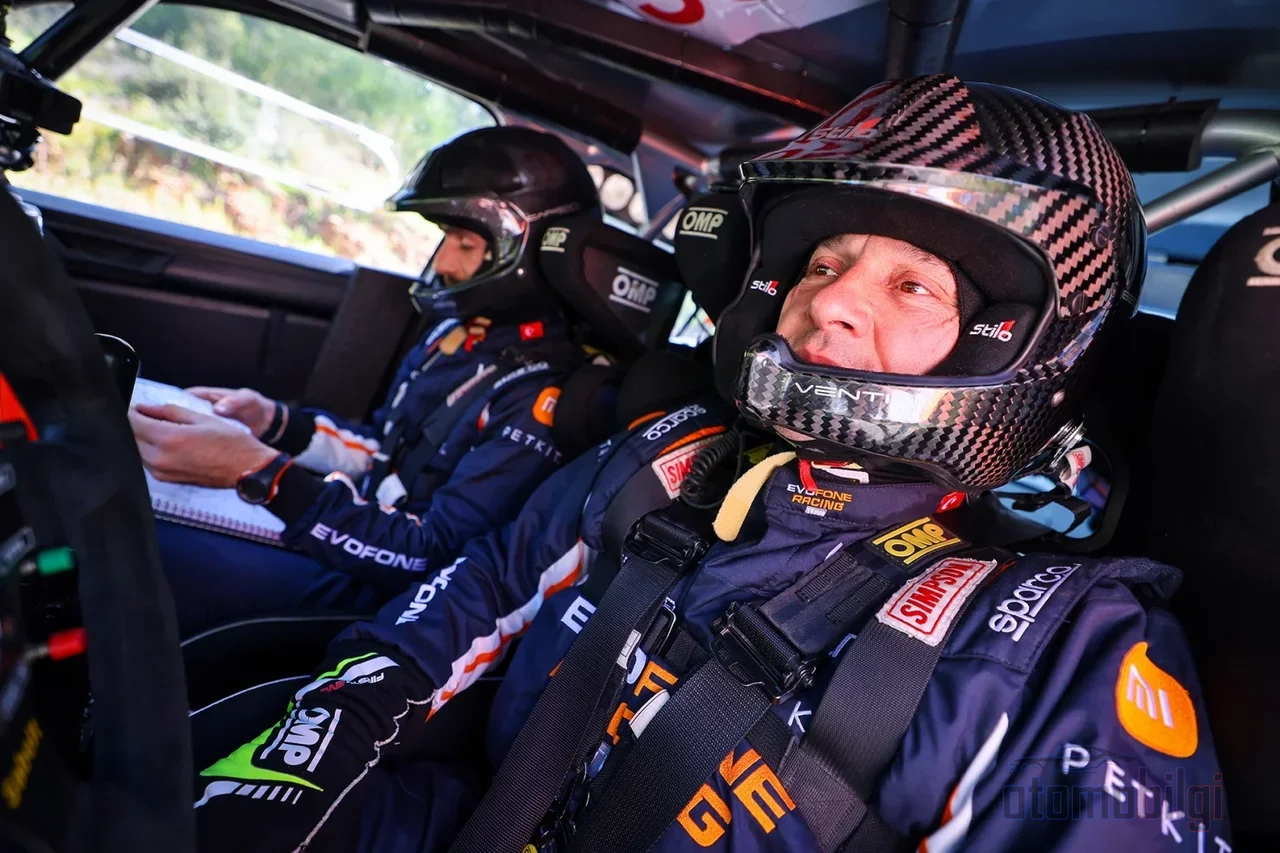
The part of the budget that cannot be cut is safety. In stage rally cars, a roll cage, FIA-approved seats and harnesses, and two fire extinguishers are mandatory. The minimum requirement for personal equipment is an approved helmet and a fireproof suit; gloves and fireproof shoes are also on the standard list. Staying stuck in a remote corner here is both forbidden and foolish - the last item you should cut corners on when buying second-hand gear is the helmet, trust me.
Becoming a co-driver: The seat next to the driver's is a career of its own
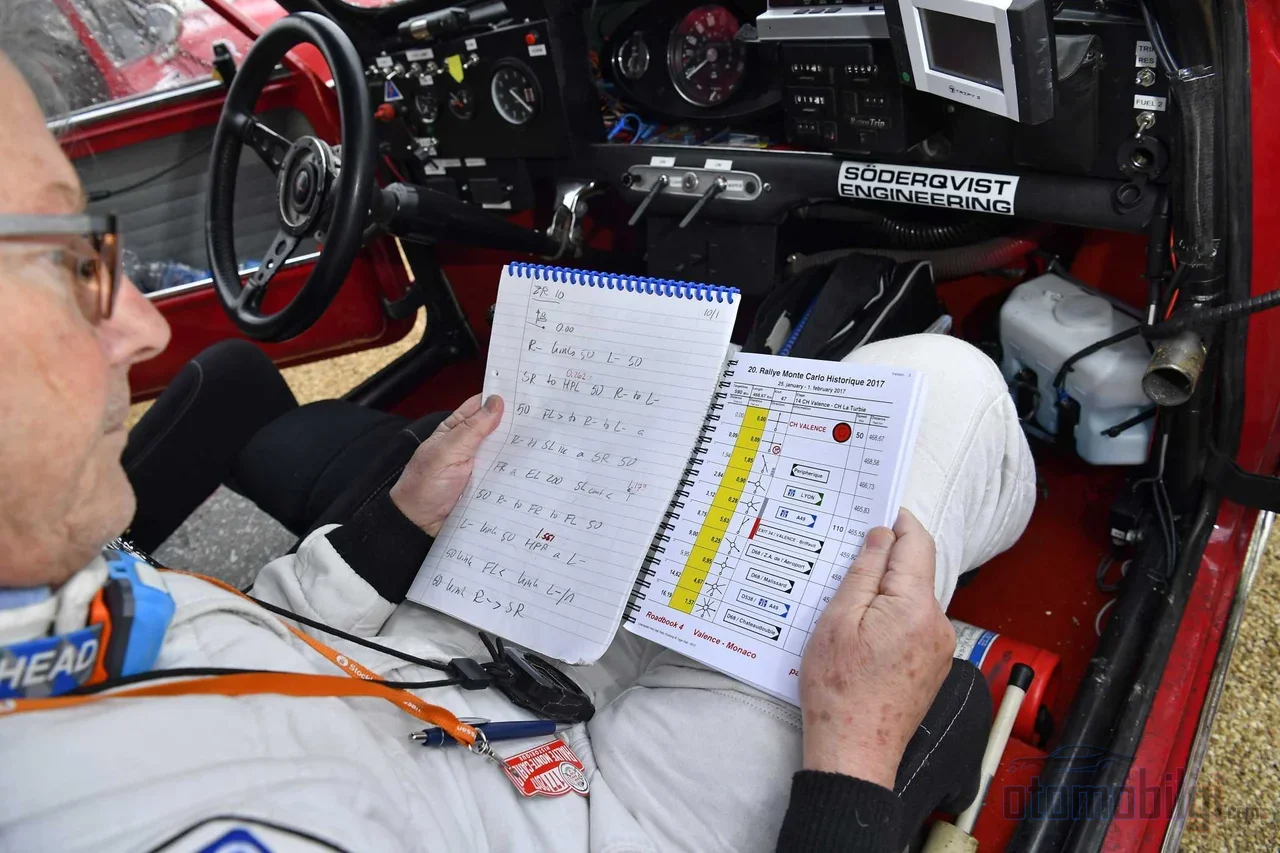
Just because you won't be the driver doesn't mean you have to turn your back on rallying, because the other side of the front seat is a full-fledged profession. The co-driver is the navigator sitting at the front of the car; whose main job is to guide the driver through the stages with pace notes. And here's the interesting part: In the UK, many famous WRC co-drivers came out of the road rally scene. So the navigation side of rallying is a genuinely proven ladder that lets you start earlier and more cheaply than driving.
The barrier is low, too: road rallies can be entered with a regular road car and a free RS Clubman license. For co-driving, you don't even need to take the driving safety course that drivers must pass in some countries; a separate navigator license is obtained instead. The age side is flexible too - in road rallies, 17 is enough for driving and 12 for navigating. In stage rallies, young drivers can get behind the wheel in the junior category from age 14.
What makes a good co-driver?
The list of requirements is surprisingly physical: resisting motion sickness, a sense of rhythm, and good physical condition stand out. Add knowing rally types and first aid knowledge, and the portrait becomes clear - co-driving is not "reading a book in the passenger seat," it's a disciplined job of reading route notes and keeping time for hours on end. Small events with a limited number of entries, limited to maps, map magnifiers, and map lamps, are the training ground for this craft. Entering a regional rally and observing experienced crews is the most natural way to learn good practices. So, do you trust the map or the gas pedal more? Your answer might determine your career.
The road to rallying in Türkiye: From TOSFED to the national championship
The history of professional rallying in Türkiye dates back to 1972, to the first event organized by Ali Sipahi. So the roots of this business run very deep in these lands. Today's station is TOSFED: the licensing process runs through the federation, a visa procedure is defined separately for previously licensed athletes, and the federation's "TOSFED Is Looking for Its Star" talent scouting program opens applications periodically. If you're a young driving hopeful, following the announcements of such programs can get you up the first rung of the pyramid faaar faster than an ordinary step.
The pinnacle of the national scene is the Petrol Ofisi Maxima 2026 Türkiye Rally Championship. The season opened with the Aegean Rally, and the sixth round, the Kocaeli Metropolitan Rally, was won by the Soylu-Tamer crew from GP Garage My Team; the calendar includes stops such as the Eskişehir Rally, the Kocaeli Rally, and the Istanbul Rally. In the championship, "Class 2. There are also class-based categories such as "Pilot/Co-pilot first places" - meaning you don't have to jump straight into the overall standings in your very first race; it's entirely possible to shine in your own class, and that's actually the most sensible path.
Türkiye's WRC journey continues to inspire
If you want to broaden your horizons, look back at the past: Türkiye entered the WRC calendar in 2003, and that year only 27 of the 62 entered cars managed to finish the race - there's no better statistic to illustrate how unforgiving the stages were. The first two years were reserved for the junior categories, and the first winner was Carlos Sainz with Citroën. In 2019, Marmaris hosted 68 cars from 22 countries over 875 kilometers. The subsequent list of winners is full of stars: Ott Tänak in 2018, Sébastien Ogier in 2019, and Elfyn Evans with Toyota in 2020. On the Turkish side, names like Volkan Işık, Burcu Çetinkaya, Hakan Dinç, Doğan Kabak and Erkut Kızılırmak hang on the wall of our rally history; Ercan Kazaz and Serkan Yazıcı, who won the Rally of Türkiye with a Subaru Impreza WRX, are also on that list. And the freshest milestone of all: Ali Türkkan became the first Turkish rally driver to be crowned Junior WRC champion. So a Turk sitting in that seat is no longer a dream, but a fact written into the archives.
How do you chart your course when moving from an amateur series to the national championship?
Once you piece all these parts together, the roadmap reveals itself. Start your career with small and inexpensive events, then move up by jumping classes - the FIA's emphasis on grassroots accessibility and career maps is built on exactly this logic. The advice compiled from WRC drivers by Red Bull agrees: join a car club, find a mentor, go to a rally school, find a car even if it's slow, prioritize safety, and drive every car you can if possible. That last point is especially valuable; every car teaches you something new, and your ability to adapt prepares you for the next class up. Buying a car isn't even a requirement - many schools and organizers offer car rental as an option, and the new FIA classes make this even more accessible.
Let's also note the age issue in our notebook: starting early is of course an advantage, but age is not a barrier. There are many highly successful people who started late; what matters is not when you started, but how consistently and consciously you progressed after starting. Taking inspiration from Kalle Rovanperä's early start is nice, but progressing according to your own calendar is a perfectly legitimate strategy too. Remember, the winners on a stage are not the ones who started fastest, but the pair with the lowest total time - that's how life works too, I suppose.
So the answer to the question is very clear: a license, training, an affordable car, safety, small races, and patience. As long as you don't break that order, the "amateur" label will one day remain nothing more than an old race record in the past. Now there's only one thing left to do: open the federation's page, check the calendar for the first course, and experience this story not from the spectator seat, but from the driver's seat.
Sources
- Rallying – Motorsport UK
- Start Rally Racing: Tips to Begin Your High-Speed Adventure – Caneva Rally School
- FIA Rally Car Pyramid Brochure (February 2021)
- Rally roadmaps and grassroots affordability focus – FIA
- Groups Rally – Wikipedia
- About Rally2 – Toyota Gazoo Racing
- Beginner's Guide to Categories in Rallying – Škoda Motorsport
- How to Become a Rally Driver – Demon Tweeks
- How to Become a Rally Driver in 2026 – Grixme
- How much does it cost to enter a rally? – NASA Rally Sport
- 7 Things you need to have to be a good rally co-driver – Škoda Motorsport
- Co-driver – Wikipedia
- Road Rallying Co-Driver – Motorsport UK Get Started
- 12 Traits of Highly Effective Rally Co-Drivers – The Race Torque
- How to become a Rally Driver Part 1 – Rally Action
- How Can I Get a License? – TOSFED
- License Fees – TOSFED
- Athlete License, Visa and Transfer Directive – GSB/SHGM
- TOSFED Is Looking for Its Star
- Türkiye Rally Championship 2026 Event Calendar – Motorsport.com
- Istanbul Rally Supplementary Regulations – İSOK
- Event History – ETİ Odunpazarı Esok Rally
- Rally History – Rally Türkiye
- The History of Rally Türkiye – Škoda Motorsport
- World Rally Championship Türkiye starts – Anadolu Agency
- Rally Türkiye results archive – FlashScore
- FIA WRC Rally Türkiye 2020: Event report – Red Bull
- Ali Türkkan Junior WRC – Instagram/WRC
- Category: Turkish rally drivers – Wikipedia
- Türkiye Rally – Wikipedia
- How to start rally driving: 7 tips from WRC drivers – Red Bull
- How to become a WRC driver: 8 tips – Kalle Rovanperä – Red Bull