From Loeb to Ogier: Legendary Drivers at the Top of the WRC
Share This Page
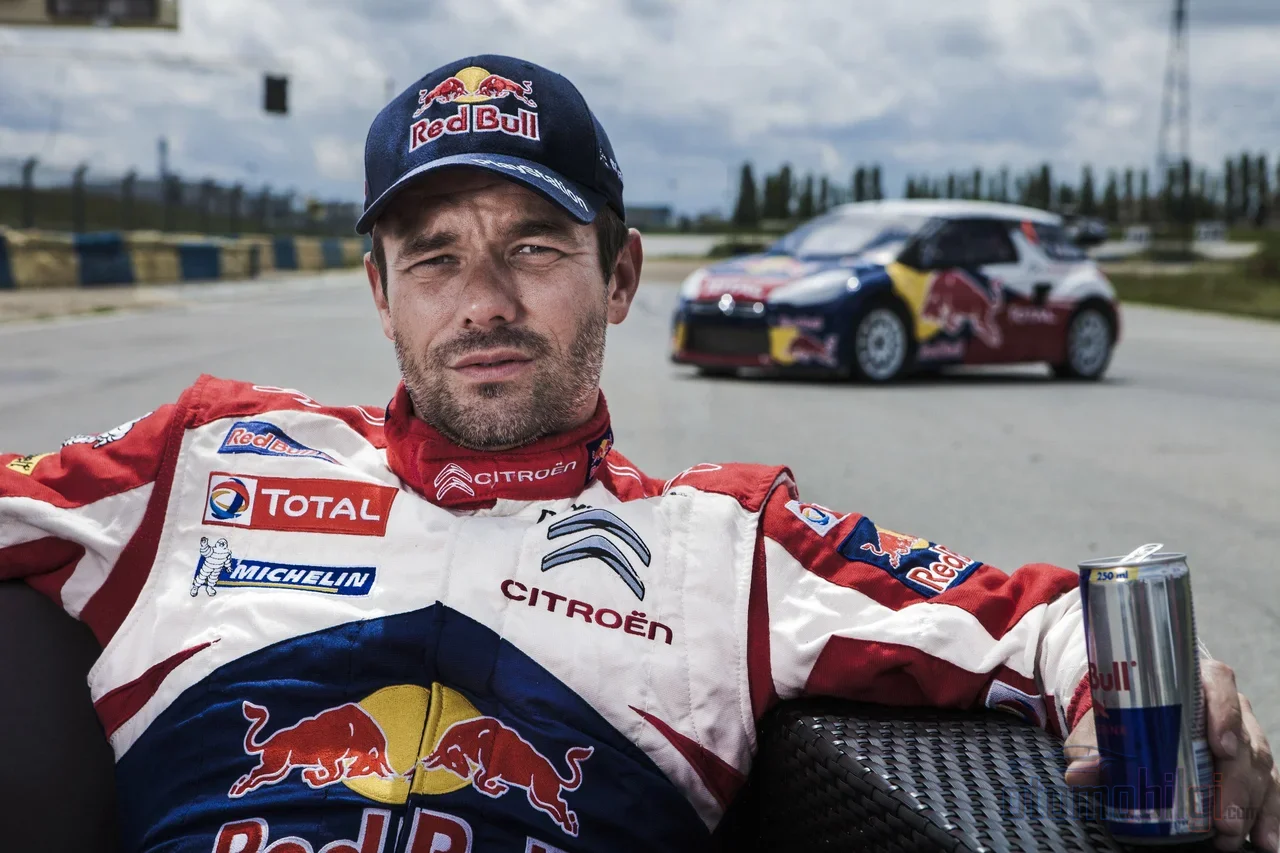
Who are the greatest drivers in WRC history? Sébastien Loeb stands at the top with nine consecutive world championships; he is followed by Sébastien Ogier, who reached the same number in 2025. Tommi Mäkinen and Juha Kankkunen's four championships each, Colin McRae's "flat out" spirit, and Walter Röhrl's legend are also names that have left their mark on this list.
Highlights
- Sébastien Loeb: 9 consecutive world championships (2004-2012) and 80 rally wins
- Daniel Elena: With 9 co-driver championships, the most successful co-driver in WRC history
- Sébastien Ogier: In 2025, reached his 9th championship, equaling Loeb's record
- Walter Röhrl: the only German driver to win a WRC title, won Monte Carlo 4 times
- Türkiye hosted the WRC 6 times between 2003 and 2010, and returned in 2018
Sébastien Loeb and Daniel Elena: The Duo That Pushed Boundaries for Nine Years
Just think about it: being the best in the world in a sport for nine consecutive years. It's hard even at the gym, nearly impossible in the WRC. But Sébastien Loeb did exactly that: nine times from 2004 to 2012, he became world champion in a row. Still the most successful driver in WRC history.
Here's the interesting part: Loeb didn't start out as a rally driver. He was a gymnast, with four Alsace championship titles. In 1995, at the age of 21, he switched to rallying. In 2001, he became the first Junior WRC champion; he won five of the series' six rounds. So from the early days, it was clear this kid was something different.
In 2002, he took his first WRC victory at Rallye Deutschland with Citroën. In 2003, he lost to Petter Solberg by an incredible margin of just one point. Then the doors opened: in 2004, he won his first championship by a 36-point margin, and from then on, there was no stopping him.
A Career Like a Book of Records
He finished his career with 80 WRC victories and 9 driver championships; he also holds the records for most wins, most podiums, and most stage victories. In 2011, he broke Markku Alén's stage victory record. At the 2005 Tour de Corse, he became the first driver to win every single stage of a rally - meaning he didn't leave his rivals even a single meter.
As for Loeb's driving style... It's described even in forums as "clean, front-end priority." A style that tucks the car's nose into the corner, economical yet ruthless. Much like a swimmer gliding through the water without struggling on every stroke: it looks calm from the outside, but there's immense speed within.
On asphalt, he was practically from another planet: of the asphalt rallies he entered between 2005 and 2013, he failed to win only three. He became the first non-Nordic driver to win the 2004 Swedish Rally; and in the homeland of snow and ice, that was a huge deal. By winning Finland twice as well, he entered the club of legends.
So who was sitting in the co-driver's seat? Daniel Elena. 9-time co-driver champion the winner, the most successful co-driver in WRC history. Nine championships for a driver, nine for a co-driver... This duo is an inseparable package. And the emotional side of the story: when Michael "Beef" Park lost his life in the WRC in 2005, Loeb deliberately took a 2-minute penalty and dropped to third place - he didn't want to celebrate the championship that way. It's details like this that make the sport bigger than sport itself.
Loeb left full-time WRC at the end of 2012 but never went away: he finished second at the Dakar three times (2017, 2022, 2023), continues racing in W2RC, and took his 80th victory at the 2022 Monte Carlo with M-Sport Ford.
Sébastien Ogier: The Name That Matched the Record in the Hybrid Era
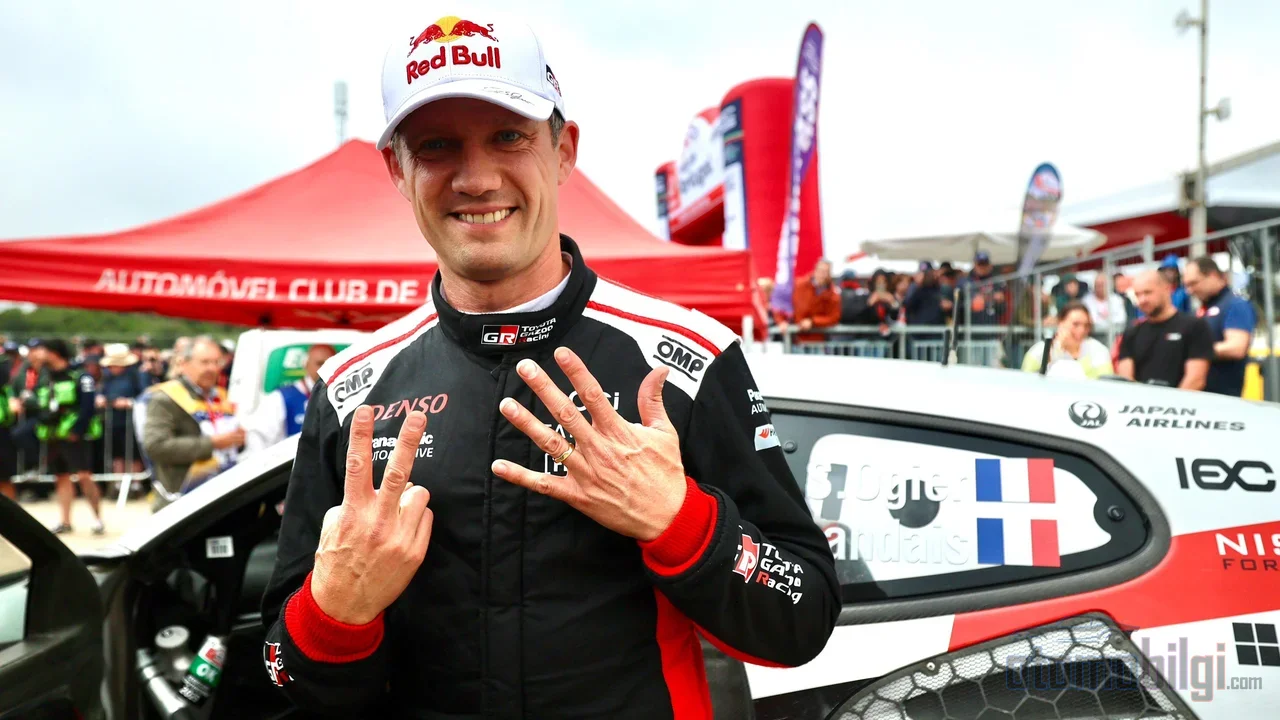
Now we come to the heart of the question: who matched Loeb's record of nine championships? The answer: Sébastien Ogier, in 2025. The Frenchman, racing for Toyota, is one of only two names in WRC history, along with Loeb, to reach nine championships. Toyota even released a special production run in his honor called the GR Yaris "Ogier 9x World Champion Edition" - that's how big the nine-club is.
Ogier's story is just like a movie script. In 2010, he took his first WRC victory in Portugal with the Citroën Junior Team. Then he moved to Volkswagen and won four consecutive championships between 2013 and 2016 . Then he added two more championships; his 2021 title came with the Toyota Yaris WRC.
Ogier's era coincides with WRC's hybrid period. Along with the Rally1 class, hybrid technology entered the top level of the championship - much like fitting an electric motor to a bicycle: part of the power now comes from the motor when you pedal, but at the top the human factor is still decisive. Ogier is the name at the peak of this new generation. And an interesting detail: both Loeb and Ogier are among the only two drivers who could become world champions with two different co-drivers (the other being Tommi Mäkinen).
As of 2025, he is still racing and says he is worried about the ranking debates reigniting over the 2027 regulations; he believes the matter could become complicated in 2027. Clearly, that racing fire still burns within him.
Loeb or Ogier? The Heart of the GOAT Debate
This is one of the most debated questions on rally forums: who is the greatest of all time (GOAT)? The debates mostly lean in Loeb's favor - nine consecutive championships and a cabinet full of records is a genuinely strong argument. Ogier's fans, however, point out that he reached the same number in the deeper and more competitive field of the hybrid era.
There is also the shared history of the two Sebs: in 2011 they fought under the same team, under Citroën's roof. According to reports, within the team it was referred to as "the war between the two Sebs." The team froze the standings at the Rally Germany, and in Australia Ogier was given an order to slow down. So much rivalry under the same flag... This was probably one of the reasons why they went their separate ways in later years. If it were you, which side would you take?
The Finnish Battle of the 90s: Mäkinen and Kankkunen
Before the French arrived, the center of the WRC was in the North. Juha Kankkunen (b. April 2, 1959), 1986, 1987, 1991 and 1993 he won the world championship four times; he raced in the WRC from 1979 to 2010 - thirty years! Tommi Mäkinen, meanwhile, 1996, 1997, 1998 and 1999 brought him four consecutive championships. Their combined total: 8 world championships.
Would you like to compare the two? Here is the table:
| ... | Juha Kankkunen | Tommi Mäkinen |
|---|---|---|
| Championship years | 1986, 1987, 1991, 1993 | 1996, 1997, 1998, 1999 |
| Consecutive championships | None, the years are spread out | 4 (1996-1999) |
| Rally victories | - | 24 (fifth on the all-time wins list) |
| Stage wins | - | 362 |
| Highlight | WRC career from 1979 to 2010 | Manufacturers' championship for Mitsubishi in 1998 |
Mäkinen's 1998 is a story of its own: after crashing at the season finale, Rally GB, he had to retire from the rally but had still secured the championship; moreover, that year he also delivered the manufacturers' championship to Mitsubishi. In the same season's finale, Carlos Sainz was battling Mäkinen directly for the title - Sainz himself was a giant name with 13 victories and the 1990 and 1992 championships. Even in the 1994 season, seven different rally winners had emerged; in other words, those years were neither the reign of a single brand nor of a single name. Real chaos, real competition.
Colin McRae and Walter Röhrl: Two Extremes of Style
When rally is mentioned, which driving style comes to mind? Half of your answer is probably Colin McRae. The Scot, the 1995 World Champion, is known for his "flat out" - that is, all-out, brake-defying - driving style. Watching a stage with him was like a heart attack, wondering at every corner "will he save it?" In a readers' poll of the best WRC drivers of all time, he was placed exactly second.
At the other end is Walter Röhrl: the winner of that same poll. In 1980 with the Fiat 131 Abarth, in 1982 with the Opel Ascona he became WRC champion; the only German driver to win the title. He was named "Rally Driver of the Century" in Italy and "Rally Driver of the Millennium" in France - two giant titles from two different countries!
Röhrl's job was hard: he won the 1982 championship in a "heroic" way with the Opel Ascona, which had a less advanced drivetrain. In other words, he beat his rivals' technological superiority with pure driving skill. His career includes 14 victories and he won the Monte Carlo Rally four times - in his 1984 victory he beat his teammates Blomqvist and Mikkola in the Audi Quattro. His last WRC victory came at 1985 Sanremo, with the Group B monster Audi Quattro S1. In 1987, he set a record at Pikes Peak with the Audi Sport Quattro S1 E2. Fiat, Opel, Lancia, Audi, Porsche, Ford and BMW... Which brand didn't he win for?
The Heroes Behind the Seats: Why Are Co-drivers So Important?
If you're new to the WRC, you might be wondering: what does the man next to the driver do? The answer is very simple and very critical: the co-driver warns the driver of dangers in advance with pace notes. in advance Is there a tight right after the corner, a rock, how many meters is the jump? The driver cannot know these without the notes being read. In other words, the co-driver is the very map that shows the way on a foggy road at night.
An interesting detail: some drivers raced with a single co-driver throughout their careers - names like Achim Warmbold, Joginder Singh, Bruno Saby, Ingvar Carlsson, Mikael Ericsson and Kenjiro Shinozuka are on that loyalty list. But none shone as brightly as Daniel Elena: Elena's 9 co-driver championships is still the record. The 2025 WRC Co-Drivers' Champion, meanwhile, was Vincent Landais of Toyota; so the seat on the right has its own championship too, and it is taken seriously.
How Did Türkiye Host These Legends?
Here is a personal favorite section: most of these legends also raced in Türkiye! The WRC was founded in 1973 and is described as "the world's toughest motorsport championship." Türkiye hosted the WRC 6 times between 2003 and 2010; after a 7-year break it returned in 2018, and in 2019 Rally Türkiye was run in Marmaris on September 12-15.
Even the winners' list is a story of its own: Loeb won both the 2004 Rally of Türkiye (on gravel stages!) and the 2010 Rally of Türkiye. In the modern era of Rally Türkiye, Sébastien Ogier finished on top in 2019 and Elfyn Evans in 2020. So some of the names on this page truly ate dust on the Kemer stages.
Rallying in Türkiye began professionally in 1972 with Ali Sipahi's "Günaydın Rallisi," and there is a line running from that day to today. There is also good news on the Junior WRC front: Ali Türkkan, as Junior WRC World Champion, brought Türkiye its first world championship in rallying. So one day another Turkish name may appear on that list - who knows, maybe a Turk will join the race for nine championships too. Are you ready to watch?
Final Word: Who Is at the Top?
Every era has its own hero. Röhrl showed pure talent against technology, McRae fearlessness, Mäkinen and Kankkunen Finnish endurance, and Loeb showed how to turn pressure into power. Ogier reached the same number in the hybrid era. The numbers are debated, but this is clear: the WRC's number one seat was never left empty - only its name changed.
Sources
- Sébastien Loeb
- Sébastien Loeb: Find out more about his amazing career
- Sébastien Ogier
- Sébastien Ogier
- Ogier's fresh argument to reintroduce WRC qualifying
- GR YARIS Sébastien Ogier 9x World Champion Edition
- Tommi Mäkinen
- WRC: These are the greatest rally drivers ever
- WRC History
- Walter Röhrl
- Walter Röhrl
- Autosport readers choose the greatest WRC drivers in history
- That time we rode with Walter Röhrl in an Audi Quattro
- List of World Rally Championship Co-Drivers' champions
- WRC | Toyota GAZOO Racing WRT
- About WRC - Rally Türkiye
- Rally Türkiye results archive
- Organization History - ETİ Odunpazarı Esok Rally
- WRC Rally Türkiye tickets
- Who Had Reached Victory in WRC Races in Türkiye?