From Audi Quattro to Lancia Delta: Rally Legends
What makes a rally car legendary? Is it engine power, the championships it won, or simply the way it warms your heart every time you look at it? This question isn't easy to answer; because every icon from history has its own story. And that's exactly why today we're putting the rally legends that changed WRC history under the microscope one by one: from an Italian dream with a Ferrari engine to Japan's all-wheel-drive battle. Fasten your seatbelt, here we go!
Lancia Stratos: The First Car Born for Rallying
It all started with a prototype showcased at the 1971 Turin Motor Show. Yet the prototype's predecessor was even crazier: The Stratos Zero concept shown in 1970 had no doors, and with the windshield integrated into the glass, the driver had to climb into the car through the front windshield. Yes, you read that right - no doors, entry through the front windshield! From this madness, one of the most important vehicles in rally history would be born.
Names like Cesare Fiorio, Mike Parkes, and Sandro Munari left their mark on the project; and the engineering calculations were handled by Nicola Materazzi. The body design came out of Marcello Gandini's drawings at Bertone. The biggest problem they heard about was the engine, which makes sense: Lancia didn't have a ready-made V6 at hand. The solution would come from Ferrari, but Enzo Ferrari wasn't keen on providing engines until Dino production ended. With the Dino's retirement, the door opened, and 500 Dino V6 engines were delivered.
The result became a turning point in the world of automobiles: The Lancia Stratos HF is considered the first car designed from scratch entirely for rallying purposes. Mid-engined, rear-wheel drive, and perfectly balanced. Approximately 492 units were produced between 1973 and 1978. The Stradale, i.e., the road version, produced 190 hp and weighed just 980 kg; it went from 0 to 100 km/h in 6.8 seconds and reached a top speed of 232 km/h. The racing versions dropped to ~880 kg in weight; the 12-valve engine offered ~275 hp, while the 24-valve version offered ~320 hp.
And its track record? It won the WRC manufacturers' championship three years in a row, in 1974, 1975, and 1976. It claimed Monte Carlo victories with Sandro Munari in 1975, 1976, and 1977; and in 1979, the private Chardonnet team took Monte Carlo to the top once again. It took its final WRC victory at the 1981 Tour de Corse with Bernard Darniche. Set alongside it: the 1974 Targa Florio, five Tour de France Automobile titles between 1973 and 1980, and three Giro d'Italia victories. What was the only thing missing? When the Fiat group handed over rally responsibilities to the Fiat 131 Abarth, the Stratos's championship journey was cut short. But its influence never ended: The New Stratos, based on the Ferrari F430 Scuderia, with 540 hp, a 4.3-liter V8 engine, and a weight of 1,247 kg, was announced in 2010; and from 2018 onward, only 25 units were produced.
Highlights
- The Lancia Stratos won the WRC manufacturers' championship three years in a row, in 1974, 1975, and 1976.
- The Audi Quattro fundamentally changed rallying with its four-wheel-drive system starting in 1981.
- The Ford Escort Mk II RS1800 brought Ford its first WRC manufacturers' title in 1979.
- The Lancia Delta HF Integrale is considered the most successful rally car in history, with six world championships.
- Tommi Mäkinen achieved 4 championships and 24 victories with the Lancer Evolution.
Audi Quattro: How Did the AWD Revolution Begin?
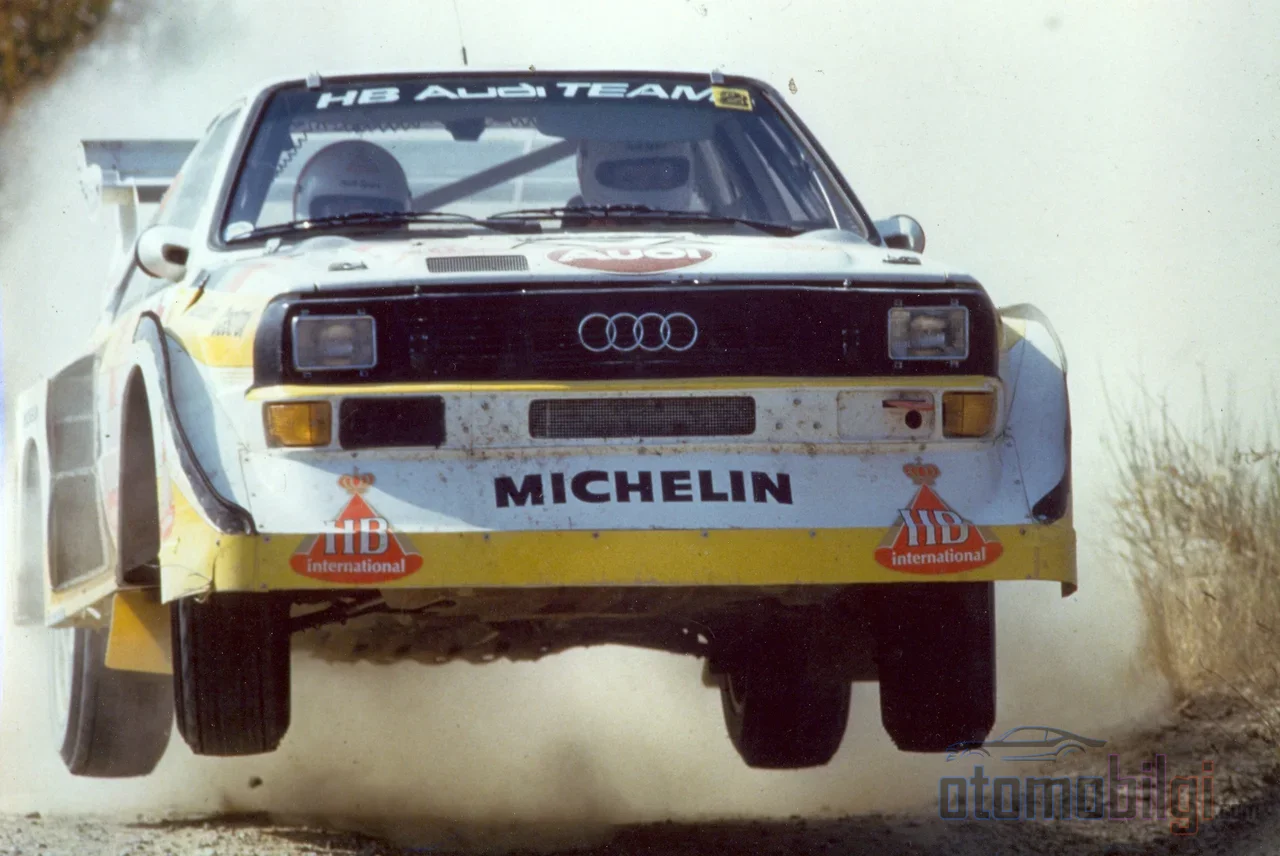
Today you can't imagine a car without all-wheel drive in the WRC, right? But did you know that it becoming standard is owed to a single car? Audi introduced the quattro all-wheel drive system to motorsport starting in 1981 and quickly began winning. Until then, finding traction on mud, snow and gravel meant relying on the front wheels; quattro distributed power to all four wheels at once. Let's make an analogy from daily life: it's like climbing a ladder holding on with both hands instead of going up on one foot - if the upper wheels slip, the lower ones finish the job.
The most brilliant representative of the revolution was the Audi Sport Quattro S1. With its turbocharged 5-cylinder engine producing over 500 hp, this car is remembered as one of the most iconic Group B cars, and even the 1985 model is described by some experts as the most powerful rally car ever built. The road and racing variant, the Sport Quattro, produced 306 hp with a 2.1-liter 20-valve DOHC engine with an aluminum block; in rally versions, this figure climbed to approximately 450 hp.
Let's also remember Group B: introduced by the FIA in 1982, this regulation had its golden age in the mid-1980s but was both incredibly fast and incredibly risky; in Turkish rally culture, its name became established as an era that paid the "price of speed" and was later banned. Only 22 units of the Group B racing Sport quattro were produced - they were built between 1984 and 1985 to meet the homologation requirement, that is, the condition for entering legal competition. The number is small, but the significance is enormous. In fact, within two years, every winning car had switched to all-wheel drive; the Quattro's influence is unquestionable.
Ford Escort RS1800: 1979's Double Peak
Some years are a brand's golden year. 1979 was exactly that: The Ford Escort Mk II RS1800 won Ford both the drivers' and manufacturers' WRC championships in the same year, delivering the brand's long-awaited first WRC manufacturers' title. The name at the wheel was Bjorn Waldegård; the Swedish driver claimed the 1979 WRC drivers' championship with the Group 4 specification Mk2.
The RS1800's story doesn't end there. Two years later, in 1981, the same model made Ari Vatanen the WRC drivers' champion. In other words, a single model produced the world champions of two different years. The Escort's place in rally history is still crystal clear today: even in 2026, Ford still tells the brand's WRC heritage through this model. Meanwhile, the sale of a Mk2 Escort RS1800 at auction for a world record of 276,848 pounds shows just how valuable these cars have become. Does spending millions on a classic race car while passenger cars exist surprise you too?
Lancia Delta HF Integrale: The Most Successful Rally Car in History
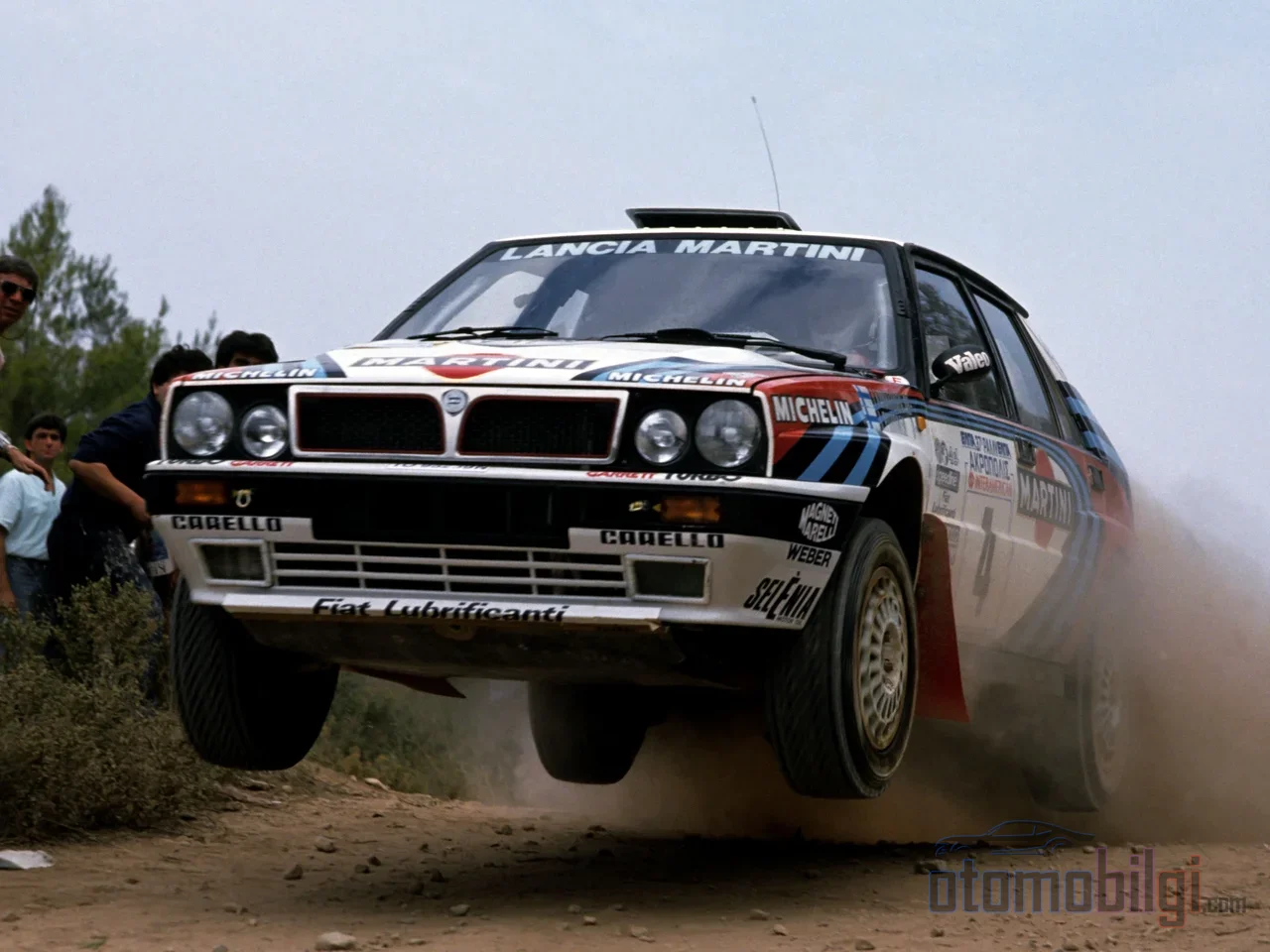
Now it's time for the boldest name on our list. The Lancia Delta HF Integrale, with its various evolutions, is referred to as "the most successful rally car of all time." Six world championships, the trophies it won for Lancia one by one... The numbers alone are impressive, but the real story happened in 1987.
That year, Lancia won 9 of the 13 rallies on the WRC calendar. And it didn't just win; It swept every podium against the Audi 200 Quattro. In other words, even the brand that started the all-wheel-drive revolution couldn't stop the Integrale wave. This car, which dominated the WRC from the late 1980s to the early 1990s, also guaranteed the establishment of all-wheel drive in the rally world.
Of course, the debate among Lancia enthusiasts never ends: Which is "the best Lancia," the Delta S4 or the Delta HF Integrale? The S4 camp finds it extremely rational and an engineering marvel; The Integrale front puts the number of victories on the table. If it were you, which side would you take? My vote goes to the Integrale - the results speak for themselves!
Subaru Impreza and Mitsubishi Lancer Evolution: Japan's Great Rivalry
From the early 1990s onwards, two Japanese giants left their mark on the rally scenes, and a rivalry lasting about 20 years began between them. On the whole, the Mitsubishi Lancer Evolution represented the speed and sharpness side, while the Subaru Impreza represented the comfort and balance side. During this period, two names stood out: While legends like Colin McRae emerged at Subaru, the Finn Tommi Mäkinen became Mitsubishi's star. Mäkinen amassed 4 championships and 24 victories with the Lancer Evolution - the numbers speak for themselves.
If you want to see the two icons side by side, 1996 is the finest example: The Mitsubishi Lancer Evolution III and the Subaru Impreza 555 were the two great symbols of that season, and years later they shared the same stage again at the Japan Mobility Show. If you'd like a visual comparison, here's the summary:
| Aspect | Mitsubishi Lancer Evolution | Subaru Impreza |
|---|---|---|
| Racing identity | Speed and sharpness | Comfort and balance |
| Standout star | Tommi Mäkinen | The Colin McRae generation |
| Iconic years | From the early 1990s onwards | From the early 1990s onwards |
| Iconic model examples | Evo III (1996) | Impreza 555 (1996) |
| Cultural impact | Global icon of JDM culture | All-wheel-drive rally hero |
Today, Evo models are among the most sought-after collector cars. The transformation of Japan's "JDM" domestic market car culture into a global icon shows that this rally rivalry extended all the way to the streets. On the Subaru side, the overall picture is striking: the brand won three manufacturers' championships and three drivers' championships between 1995-1997 - McRae in 1995, Burns in 2001, Solberg in 2003. Six championships in eight years - not bad at all!
Which Is the Greatest Rally Car of All Time?
Now we've come to the heart of the question. You ask the question, and we open it up: what makes a rally car "the best"? Is it emotional beauty, engineering brilliance, or the number of championships? Among rally enthusiasts, this debate never ends; some point to the Stratos's stage presence, some to the Delta S4's rational engineering, some to the Escort Mk2's character, and others to the Integrale's record of victories.
In my view, the honest answer goes like this: if the measure of "best" is wins, the undisputed favorite is the Lancia Delta HF Integrale; if you're looking for the first car designed from scratch for rallying, the model that started history, it's the Lancia Stratos; if you want the car that technically transformed rallying, the answer is the Audi Quattro; and if it's the car that made the biggest impact in a single season, it's the Escort Mk II RS1800. Rally history is not a single hero, but a vast story of complementary parts. And the most beautiful part of this story: since the WRC's first season in 1973, every new generation has carried the legacy left by these legends even further. Which one do you think is the best? Let's meet in the comments!
Sources
- Lancia Stratos
- Lancia Stratos HF - Stellantis Heritage
- quattro in rallying - Audi
- Audi Sport quattro Group B - Ihle Motorsport
- Stage Presence: Nine Cars that Define Ford's Rally Heritage - Ford
- Ford Escort RS - WRC.com
- Japan's Greatest Car Rivalry: Subaru vs Mitsubishi - Forbes
- The 10 best WRC cars of all time - Goodwood
- The Greatest Rally Cars Ever Made - Supercars.net
- Group B - Wikipedia