Why Is Ari Vatanen Rally's Most Beloved Champion?
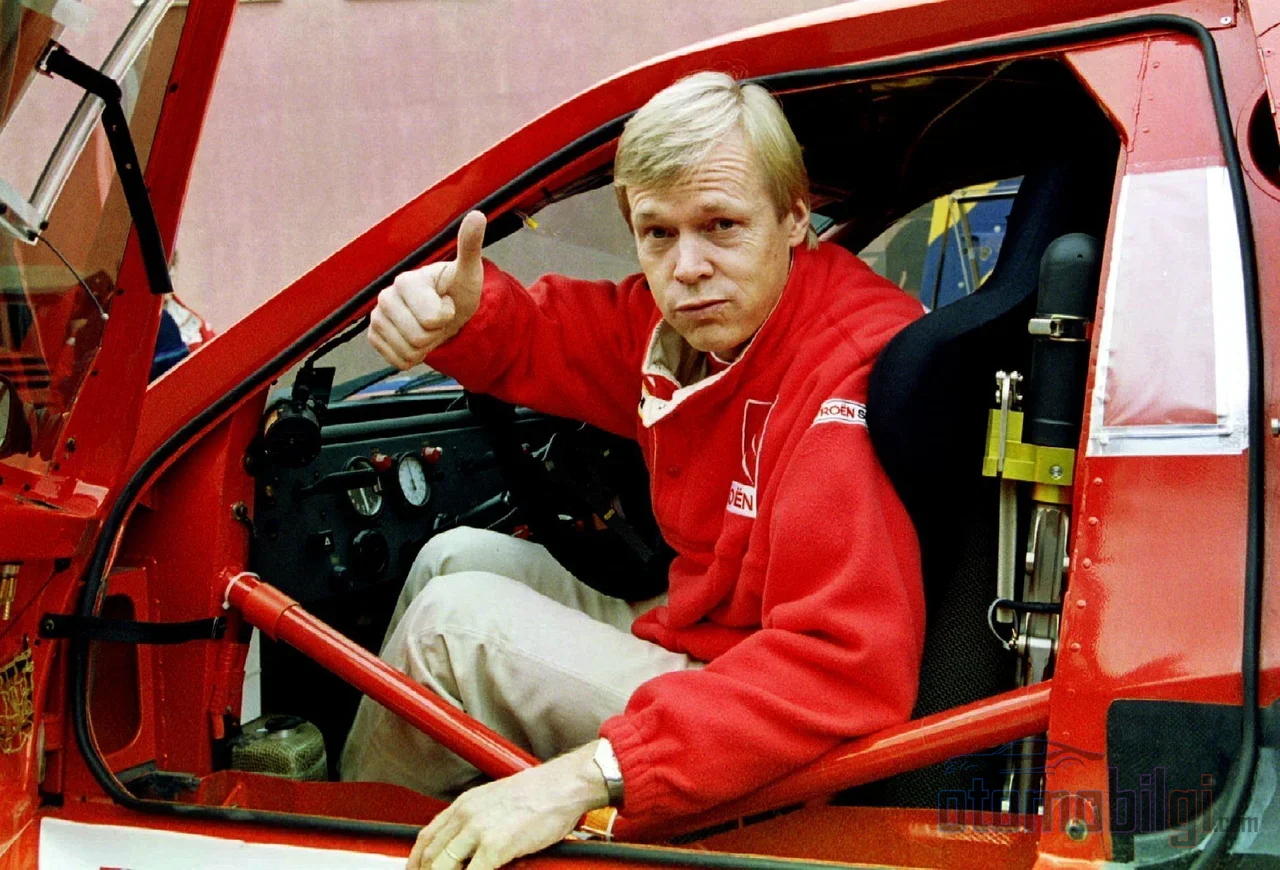
Say I asked a friend who the most beloved champion in rally history is. My answer comes without hesitation: Ari Vatanen. But why? For the trophy cabinet? No. The world has legends like Walter Rohrl and Sébastien Loeb, and their victory counts are much higher. Vatanen has just one world championship, ten rally wins and 27 podiums. The numbers look modest compared to the other giants. But once you have heard this man's story, he can never be erased from the list again. He wrote his name into history both with a Ford Escort in 1981, with the Peugeot 205 T16 in the crazy years of Group B, and in the deserts of Dakar. And while doing all this, he carved out a place in rally fans' hearts that no one else can fill. How, you ask? Let's start from the beginning.
From Tuupovaara to the World Stage: The Finnish Kid's Path
Ari Pieti Uolevi Vatanen was born and raised in Tuupovaara, in eastern Finland, on April 27, 1952. He is a classic product of the Finnish rally school: a young man who learned to hold a steering wheel among forests, lakes and fragile ice roads. His WRC career began in 1974 with the 1000 Lakes Rally, and his first victory came at the 1980 Acropolis Rally. But the real leap had already begun: He won the British Rally Championship in 1976 and 1980, signed with Rothmans Rally Team in 1979, and from 1977 onwards became a regular competitor in the World Championship with the Ford Escort RS1800.
Up to this point it looks like a classic rise story, doesn't it? It does. But an incident at the 1976 Scottish Rally showed for the first time just how different this man's story would be. Vatanen's car's differential failed, and the Ford factory team found the solution by stripping parts from a spectator's Ford Capri parked at the roadside. That moment was captured on camera as one of the most colorful memories in rally history. Rallying was such a thing, and Vatanen was right at the heart of that world.
1981: History's Only Privateer World Champion
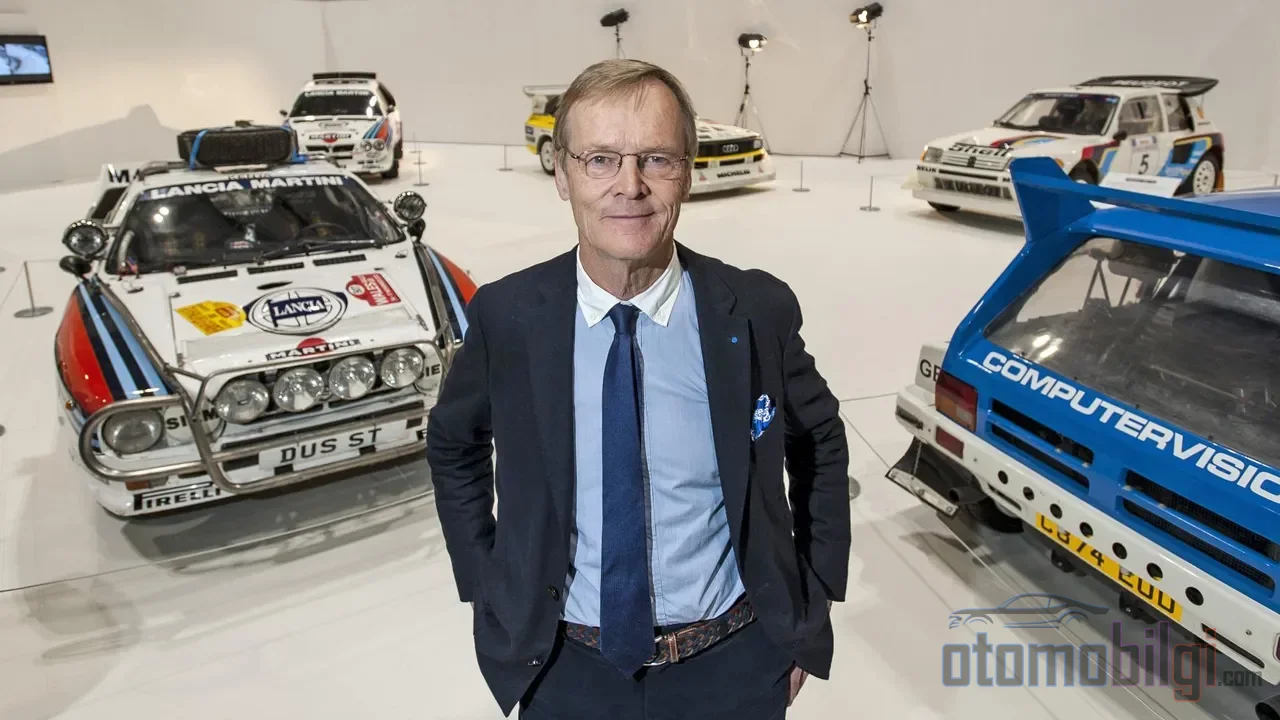
Now let's get to the main story that made Vatanen a legend: The 1981 season. That year, while doing his military service in the Finnish army, Vatanen was also racing for the world championship. His car was the Ford Escort RS1800 MkII in Rothmans colors prepared by David Sutton Motorsport, and David Richards sat in the co-driver's seat. This car had a character more prone to crashing than to winning; but the duo stamped their mark on the season with three victories and collected enough points for the championship.
Highlights
- Ari Vatanen is the only driver in WRC history to win the championship as a privateer
- Between 1984 and 1985, five consecutive world rally wins with the Peugeot 205 T16
- At the 1985 Argentina rally, he rolled over at over 190 km/h, and his recovery took 18 months
- He won the Paris-Dakar four times: 1987, 1989, 1990 and 1991
- WRC career: 101 rallies, 10 wins, 27 podiums, 590 stage victories
The most striking detail here is this: Vatanen won this championship not in the shadow of a factory team, but as an independent outfit. To this day, he is the only driver to have won the World Rally Championship as a privateer, that is, with a private entry. It is something like: while everyone at school follows the study program and becomes top of the class, you study on your own and still reach the top. That is why 1981 is remembered not just as a championship; but as one of the most romantic surprises in rally history.
The Peugeot 205 T16 and the Group B Storm
In 1984, Vatanen joined the strongest project of his career: the Peugeot factory team and the legendary Peugeot 205 T16. Terry Harryman took over as his co-driver, and Vatanen became the team's lead driver. The 205 T16 made its competitive debut at the 1984 Tour de Corse, and took its first victory that same summer at the 1000 Lakes Rally, with Vatanen at the wheel. Then things got completely out of control, in a good way: From the 1984 1000 Lakes to the 1985 Swedish Rally, he won five world rallies in a row. Sanremo 1984 and Monte Carlo 1985 were also among them. The Monte Carlo victory was such a big surprise that it was widely regarded as an impossible result, practically a miracle.
Not Just a Driver, But Part of the Project
Vatanen's role in the Peugeot era was not limited to driving. He was truly part of the 205 T16 project; a name who contributed to the car's development and carried the brand forward. In the 1985 season, the 205 T16 Evolution 2 version was producing over 450 hp, and the team won the manufacturers' championship in both 1985 and 1986. As for the drivers' championship, it went in 1985 to his teammate Timo Salonen, who led that season. Vatanen's own season, for a reason I will explain soon, ended early and painfully.
Argentina 1985: A Roll at 190 km/h and 18 Months of Darkness
The 1985 Rally Argentina is the most fragile moment of Vatanen's career. The car rolled at a speed of 120 mph, that is, over 190 km/h. His seat broke, he suffered severe injuries to his legs and body, and a life-threatening internal bleeding began. Recovering from both the physical injuries and a severe depression after the accident took a full 18 months. He was one of the people who experienced the brutal face of the Group B era most closely.
But the story does not end here; in fact, this is where it turns. Vatanen fully recovered and returned to motorsport. Exactly nine years after the accident, in 1994, he returned to Rally Argentina for the first time with a Ford Escort RS Cosworth, and left with a podium. A textbook example of getting back up where you fell. I believe the secret of Vatanen's lasting affection lies exactly here: he shared with us not only the speeds, but also the fall and the rise.
Dakar, Pikes Peak, and the Second Act of His Career
Outside the WRC, Vatanen's name became another legend through desert rallies. He won the Paris-Dakar exactly four times: with Peugeot in 1987, 1989, and 1990, and with Citroën in 1991. At the 1988 Dakar, while he was leading the race, his car was stolen, and the incident caused a major controversy; in the results table that year, he is listed as disqualified. In 1997, with the Citroën ZX and co-driver Fred Gallagher alongside, he also claimed the FIA World Cup for Cross-Country Rallies championship.
Climb Dance: The Short Film That Climbs the Mountain
After Peugeot withdrew from the WRC in 1986, came the Peugeot 405 T16, developed with lessons learned from the 205 T16: at least 600 hp, four-wheel drive and four-wheel steering. Vatanen set a record at Pikes Peak with this monster, and that climb became the subject of the award-winning short film Climb Dance. The film is still watched today as one of his best-known works; if you haven't seen it yet, consider your evening plans sorted.
He also returned to the WRC from time to time: he raced with a Mitsubishi Galant VR-4 in 1989-1990 and with Subaru in 1992-1993; he even led for a while in the Impreza's first rally. His final world rally was the 2003 Rally Finland, in keeping with his birthday tradition, it was the 2003 Rally Finland. His last Dakar adventure came in 2007 with Volkswagen and ended in a vehicle fire on the seventh stage.
So Why Is He So Loved?
Here is the answer to our question, and believe me, it is not just about the numbers. Vatanen had an approach that summed up his understanding of driving: he said in his own words that he listened to his heart more than his brain, saw himself as a kind of artist, and that this is why he gave up some victories, but his life was never boring. Driving style was, for him, like a person's handwriting: it said a great deal about one's character. He believed you could not change the character of nature, and his style carried a wild, exuberant naturalness. The rally world gave him the title Poet of Rallying, and Wales Rally GB officially declared him a Rally Legend.
The source of the affection showed itself out in the field and among the fans. In the words of team boss David Sutton, Vatanen had a smile that instantly disarmed you. When he returned to Canberra in Australia, the fans practically swarmed him; that rally is counted as one of the most memorable motorsport moments Down Under. Even when recalling a Finnish great like Hannu Mikkola, he spoke admiringly of how Vatanen shone with his charisma even at a small event in 1974. In short, Vatanen never lost that intimate bond he built with the public.
He also led a busy life outside rallying: he served as a Member of the European Parliament from 1999 to 2009, first elected from Finland and later from France; he worked on everything from vehicle taxation to traffic policy, from development aid to agricultural policy. In 2009, he lost the FIA presidency election against former Peugeot team boss Jean Todt. In 1993 he settled in southern France, buying a farm and winery; he is married to Rita and the father of four children. His son Max raced in the British Rally Championship in 2016, and his son Kim managed Sébastien Ogier for many years. Rallying runs in the blood, truly. And there is some lovely news: Vatanen was reunited years later with that Ford Escort RS1800 MkII with which he won the championship in 1981.
Conclusion: Being Loved Is Not About a Trophy, It Is About Character
So our clear answer to the question at the start: Ari Vatanen is one of rally's most beloved champions because his story doesn't fit into a results table. The romance of being history's only privateer world champion, the confidence of five consecutive victories with the Peugeot 205 T16, the character that got back on its feet within 18 months after that terrible crash at 190 km/h, four Dakar victories and the Pikes Peak record... All of these are contained in a single résumé. But above all, a character who drives with his heart, wins hearts with his smile, and never makes his fans feel like strangers. He won the championship once; he won the love anew every season. In my opinion, that is the greatest victory of all.