Juha Kankkunen: Four WRC Titles with Four Brands
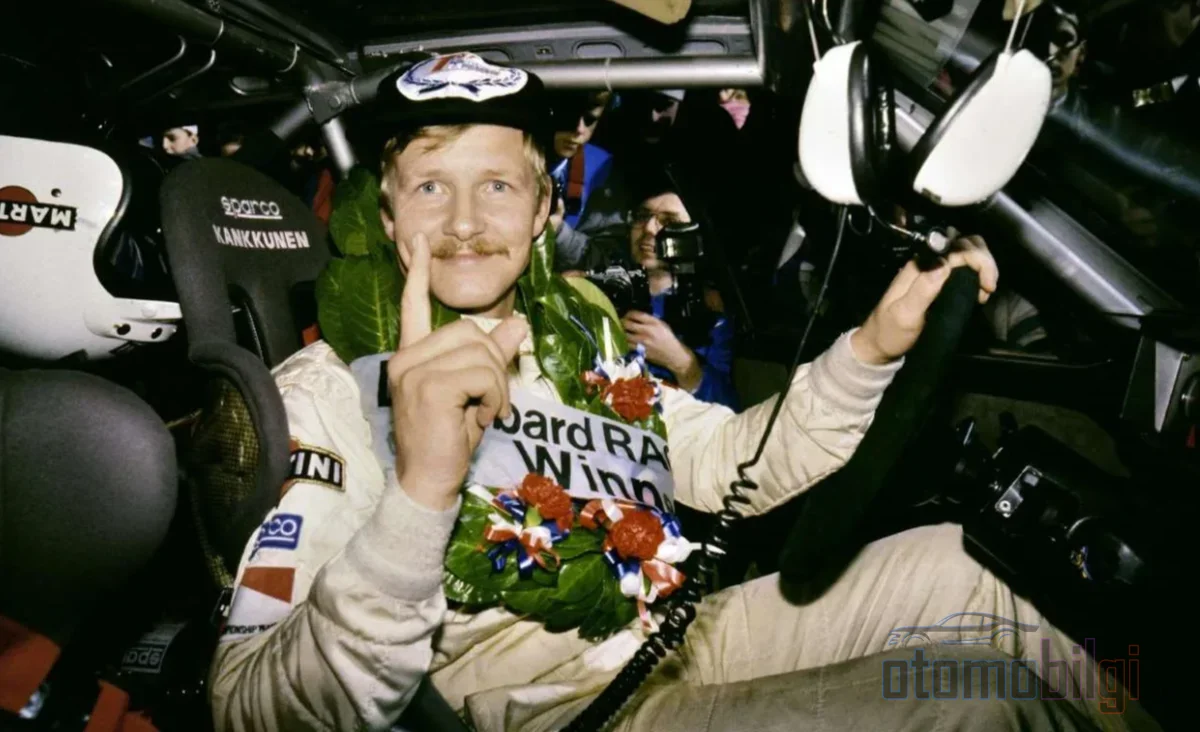
In those strange days of November 1986, the world rally championship was taken away from a driver and given back 11 days later. On one side, disqualification claims; on the other, an era closing in the shadow of Group B. This is the story of Juha Kankkunen, which begins right in the middle of that chaos and continues with four different marques and four different titles. So how did this Finnish driver manage to climb to the top year after year with Peugeot, Lancia and Toyota? If you're ready, let's examine it together, piece by piece.
Finland's Ice-Covered Rally School
Juha Matti Pellervo Kankkunen was born in 1959 in the town of Laukaa in Central Finland, the son of a farmer. I don't know what comes to mind when you hear Laukaa, but if you look at the rally map, it's a village right next to Jyväskylä, the traditional home of Rally Finland. In other words, it wouldn't be wrong to say his childhood was spent in the shadow of the world's fastest gravel roads.
What we call Finland's rally school is, of course, not a school building; it's learning car control on slippery forest roads in winter, elbowing your way on ice, developing a feel for the nose of the car. Imagine learning to take corners by sliding in karting at the age of 16; Finns do the same thing on real roads, among real trees. There is a common trait in drivers who graduate from this school: when the car starts to slide, instead of panicking, they talk to it with the throttle. Kankkunen was one of the brightest students of this school.
His factory team career began in 1983 and lasted 19 uninterrupted years until 2002. That means a lifetime in the rally world; and within that life, 23 WRC victories and 4 world drivers' championships fit. I've gathered all the numbers below, but first let's move through it title by title.
Highlights
- 4 WRC championships: 1986 (Peugeot), 1987 and 1991 (Lancia), 1993 (Toyota)
- The first WRC driver to reach four titles; the only name to have been champion in Group B, Group A and WRC classes alike
- 23 WRC victories in his career; his last victory at the 1999 Rally Finland
- The 1988 Dakar Rally championship and a Race of Champions victory the same year
- Factory driver career 1983-2002: 19 years without interruption
First Title with the 1986 Peugeot 205 Turbo 16: The Last Champion of Group B
The Accident That Opened the Door and Vatanen's Seat
Kankkunen's move to Peugeot actually came about through another man's misfortune. In 1985, he had caught the eye of Peugeot management by winning the Kenya Safari and Ivory Coast rallies with Toyota. When Ari Vatanen was seriously injured at the 1986 Rally Argentina, Kankkunen took the vacant seat. Life is sometimes like that; while one door closes, another opens.
The Season When the Championship Changed Hands in 11 Days
In the 1986 season, he won the Sweden, Acropolis and New Zealand rallies. But things were not as smooth as thought. At the Sanremo Rally, first a timing error occurred, then Lancia boss Cesare Fiorio raised the claim that the 205s were using unauthorized aerodynamic underbodies, and the Peugeots were disqualified. When Markku Alén in a Lancia won the season finale at the Olympus Rally, the championship briefly went to him. That is, until FISA annulled the Sanremo results. Eleven days later, the trophy returned to its rightful owner, Kankkunen.
This season also had a dark side: Henri Toivonen and his co-driver Sergio Cresto lost their lives in the accident they had at the Tour de Corse on May 2, 1986. This tragedy led to Group B regulations being completely abolished at the end of that year. So Kankkunen holds the title of the last World Champion of the Group B era; the man of both the victory and the farewell season.
That year, Kankkunen's guide was co-driver Juha Piironen. Although he would later work with names like Juha Repo and Nicky Grist, Piironen was there on the road to that first trophy. A rally driver does not work alone; the co-driver reads pacenotes, calculates the distances, becomes the driver's second brain. This duo did the job successfully in the fastest days of Group B.
205 Turbo 16 Evo 2: Terrifying Even on Paper
So what was this Group B monster really? Underneath lay a transversely mounted, 1775 cc, 16-valve, turbocharged inline-four engine. The compression ratio was kept low (7.0:1), because they were boosting power with turbo pressure. Let me make a simple analogy: this is like forcing twice the air into a small engine; small displacement, massive power.
| Specification | Peugeot 205 Turbo 16 Evo 2 |
|---|---|
| Engine | 1775 cc, inline-4, 16 valves, turbocharged, mid-mounted |
| Power | 430 hp (some records cite 500 hp for the Evo 2) |
| Torque | 490 Nm |
| Weight | 910 kg |
| Drivetrain | Four-wheel drive, 5-speed gearbox |
| Compression ratio | 7.0:1 |
Let's be honest about the power figure: For the Evo 2 version, rally archives cite 430 hp, while the motorsport press cites 500 hp. Which one is correct? Probably a picture that varied by specification and period; the power lost on the way from the gearbox to the wheels should also be taken into account. Fortunately, the torque side is clear: 490 Nm serving a 910 kg body. That is a crazy power-to-weight ratio even for a hatchback of today. When asked, Kankkunen says this was his favorite car, that long stages of 30-50 kilometers required far more tactical driving than today's, and that you could wear out the tires in 5 kilometers at full throttle. In other words, this car was built only for serious drivers.
Second and Third Trophies with the Lancia Delta in 1987 and 1991
When Group B ended, the WRC moved to a much more civilian regulation called Group A. Imagine being at the wheel of a 430+ hp monster one day, and racing the next season in a car that would almost count as a street car. Managing this transition is the lot of few drivers; Kankkunen, as one of those few, moved to Lancia in 1987 and successfully defended the championship in the first season of the Group A era. Two trophies in a row, two different brands, two different regulations: this is not coincidence, it is the ability to adapt.
On the Lancia side, the car was the Delta family, which became legendary. The Group A Delta won a total of 46 WRC events over its rally life and took the manufacturers' championship 6 years in a row from 1987 onward. Kankkunen's third title came in 1991 with the Delta HF Integrale. The road-going Integrale's 2.0-liter turbocharged Lampredi engine produced 163 hp, with torque at around 192 lb-ft; the Evo 2 version reached 215 PS. The race versions were of course even further ahead; its contemporary rival, the Delta S4 (Group B), could produce 500 PS.
Fourth Title with the 1993 Toyota Celica Turbo 4WD
1993 was the peak of his career. Kankkunen won his fourth world championship with the Toyota Celica Turbo 4WD (ST185); that same year, Toyota also took the manufacturers' title. So both driver and team were at the summit. Over the season, the co-driver seat saw names like Dennis Giraudet and Nicky Grist this time. He won Rally Finland with Giraudet and Rally GB, one of the season's key victories, with Grist. His ability to build this rapport with different co-drivers throughout his career is another proof of his adaptability.
With this fourth title, Kankkunen became the first WRC name to reach four drivers' championships; the record was later matched or surpassed by names like Tommi Mäkinen, Sébastien Loeb and Sébastien Ogier, but the "first" title belongs to him. He is also the only driver to have won championships in each of the Group B, Group A and WRC classes. If you think of it through an athlete, it's like winning three championships under three different sets of rules; when the game changes, you change too, but you always win.
In 1996, he was allowed to enter the championship with a private Celica GT-Four and finished second in the 1000 Lakes Rally (today's Rally Finland). His last WRC victory came at the 1999 Rally Finland; with Subaru. Approaching the age of 40, he was still lifting a trophy at his home rally.
Beyond the WRC: Dakar and Race of Champions
Of course, he didn't limit himself to the WRC. He won the Dakar Rally in 1988; that same year he also emerged victorious at the Race of Champions. He returned to Dakar in 2005 after 1988. There is a world of difference between desert sands and Finnish forests; but he was a driver who had figured out the formula for being fast on every surface.
How Did Kankkunen Reach Four Titles? Short Answer
Let's give a clear answer to the question: Juha Kankkunen became world rally champion four times: with the Peugeot 205 Turbo 16 in 1986, the Lancia Delta in 1987 and 1991, and the Toyota Celica Turbo 4WD in 1993. What made this possible was not just speed; it was his ability to adapt, every single time, to the rules shifting from Group B to Group A, to changing cars and to different co-drivers.
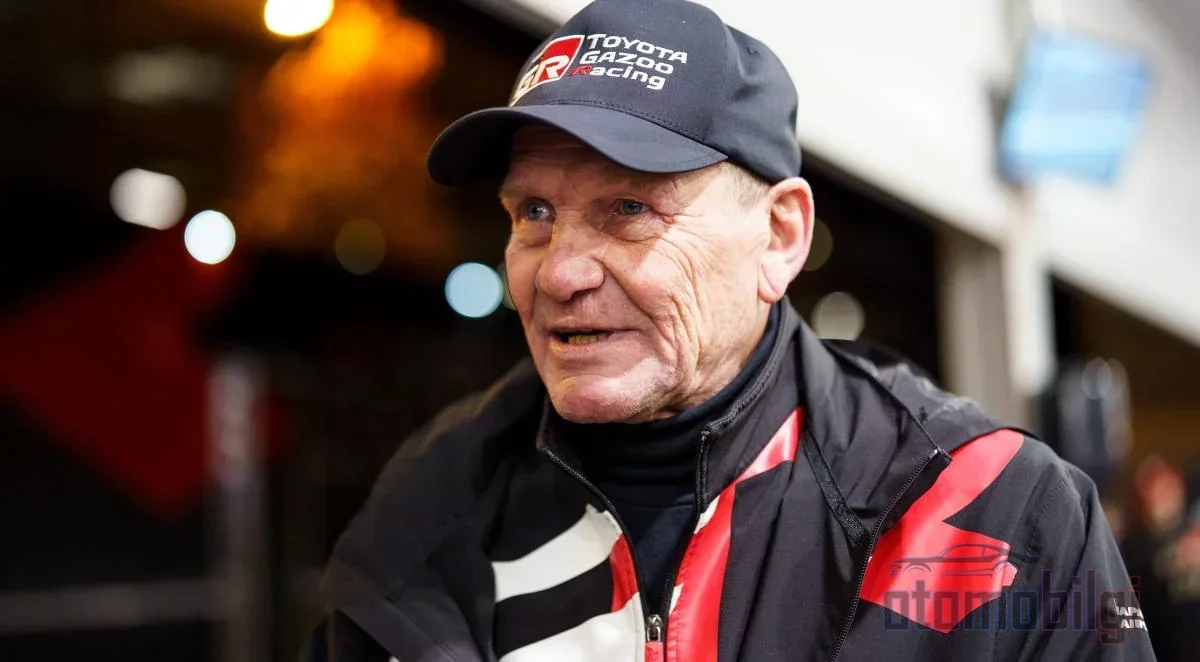
Looking back on his career, Kankkunen says he is very happy with what he achieved and wouldn't want to change a single day. Today he appears at WRC events as a Toyota ambassador; his legend was written into history, starting on the gravel roads of Jyväskylä and passing through the garages of four different teams. The next time you watch a rally, think about this: every one of those fast Finns behind the wheel carries a bit of this man's imprint.
Sources
- Juha Kankkunen | WRC.com
- Peugeot's Group B gold standard that began Kankkunen's legend
- Peugeot 205 Turbo 16 Evo2 | juwra.com
- Juha Kankkunen - Drivers | juwra.com
- Juha Kankkunen - Peugeot 205 Turbo 16 (1986 Rallye Sanremo)
- Peugeot 205 T16 (1984) | Autozine
- WRC: These are the greatest rally drivers ever | Red Bull
- Kankkunen Juha / Repo Juha | 48 Neste Rally Finland 1998 | ewrc-results