The Marcus Gronholm Legend: The Man Who Beat Loeb by 0.3 Seconds
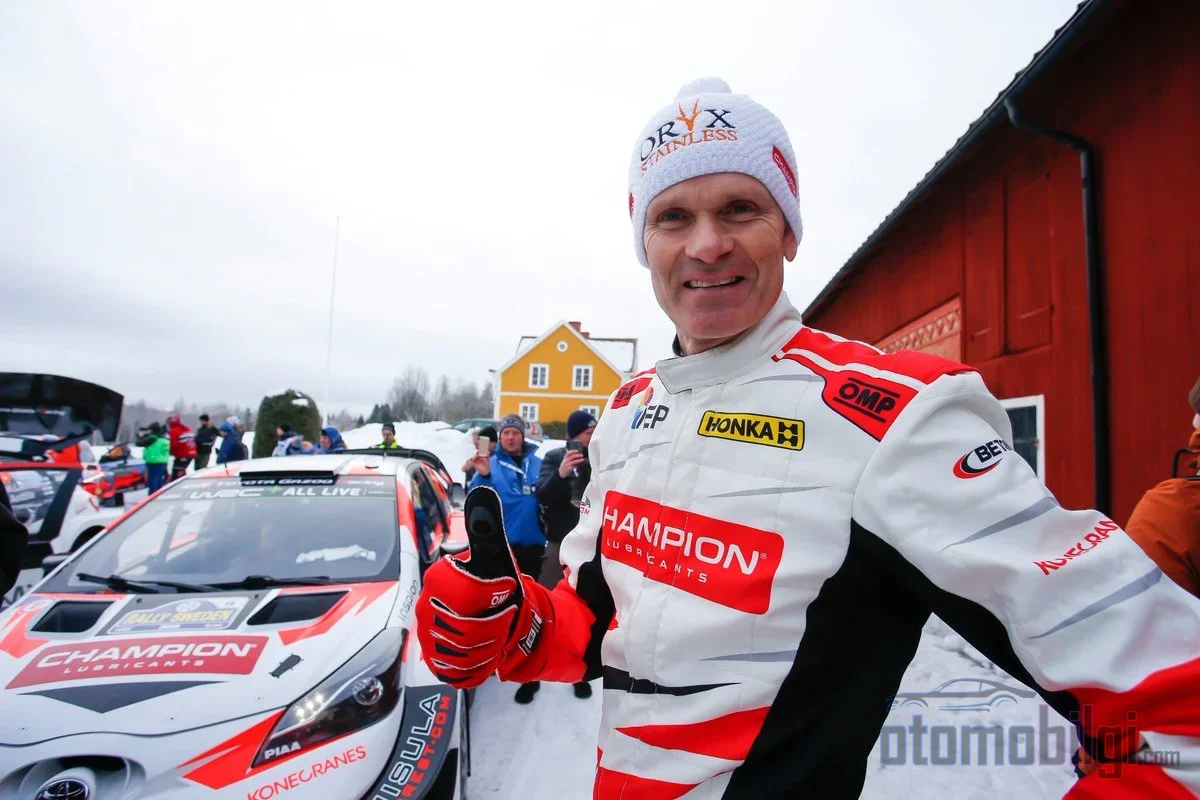
0.3 seconds. Imagine a world where two cars finish a race in less time than a single blink of an eye. At the 2007 New Zealand Rally, Marcus Gronholm beat Sébastien Loeb by exactly that margin, signing one of the closest victory margins in WRC history. The story of that man is on this page: A driver who emerged from Finland's lake district and shook the rally world, nicknamed "Magic Marcus", yet for half of his career no one dared to give him a full season.
Meanwhile, let's start with a small correction, because some numbers circulating on the internet may mislead you: The number of world championships Gronholm completed is two, not three. He reached the top in 2000 and 2002 with the Peugeot 206 WRC. So where does that third trophy come from? While listening to the story of a driver who came within minutes of the championship in the 2007 season, yet finished second to Loeb twice by margins of 1 and 4 points, the answer to this question will emerge on its own.
The Finnish Rally School: In His Father's Footsteps, From the Motocross Track
Gronholm was born on February 5, 1968, in Kauniainen, and comes from Finland's Swedish-speaking community; he read his pace notes in Finnish, meaning his brain was constantly switching between two languages. Rally was seemingly in his blood: his father Ulf "Uffe" Gronholm was an active rally driver in the late 70s and early 80s, and had been the Finnish champion twice. But this story has a painful turning point. In February 1981, during practice before the Hankiralli, his father crashed his Fiat Abarth 131 into a snowplow and lost his life along with his co-driver. Marcus was only 13 years old that day.
So why did he start with motocross? Because in those years, access to motocross was much easier; rally had a minimum age limit. When a knee injury ended his motocross career, with the 15,000 Finnish marks in compensation paid by the doctor, he bought his first rally car, a 1.3-liter Mk1 Ford Escort. In other words, the price of his health became the beginning of his career. He entered his first rally in 1987, said hello to the WRC at Rally Finland in 1989 with a Lancia Delta Integrale, and finished 23rd. place.
But here's the strange part: Throughout the 90s, this man couldn't find a full-season factory seat. Due to budget shortages, he was a speed monster known as "part-time." He was the Finnish champion five times between 1991 and 1998, and drove a factory car for Toyota at Rally Finland several times, but no one ever extended a long-term contract. In 1997, he had led a rally from the start with the factory Corolla, yet the door never opened. Then came the 1998 Rally Finland: on the final day he set the fastest stage time exactly six times, and Ford, Toyota and Peugeot came knocking at his door one after another. That was the day the fate of a pilot over the age of 30 changed.
How Did He Win His First Titles with the Peugeot 206 WRC?
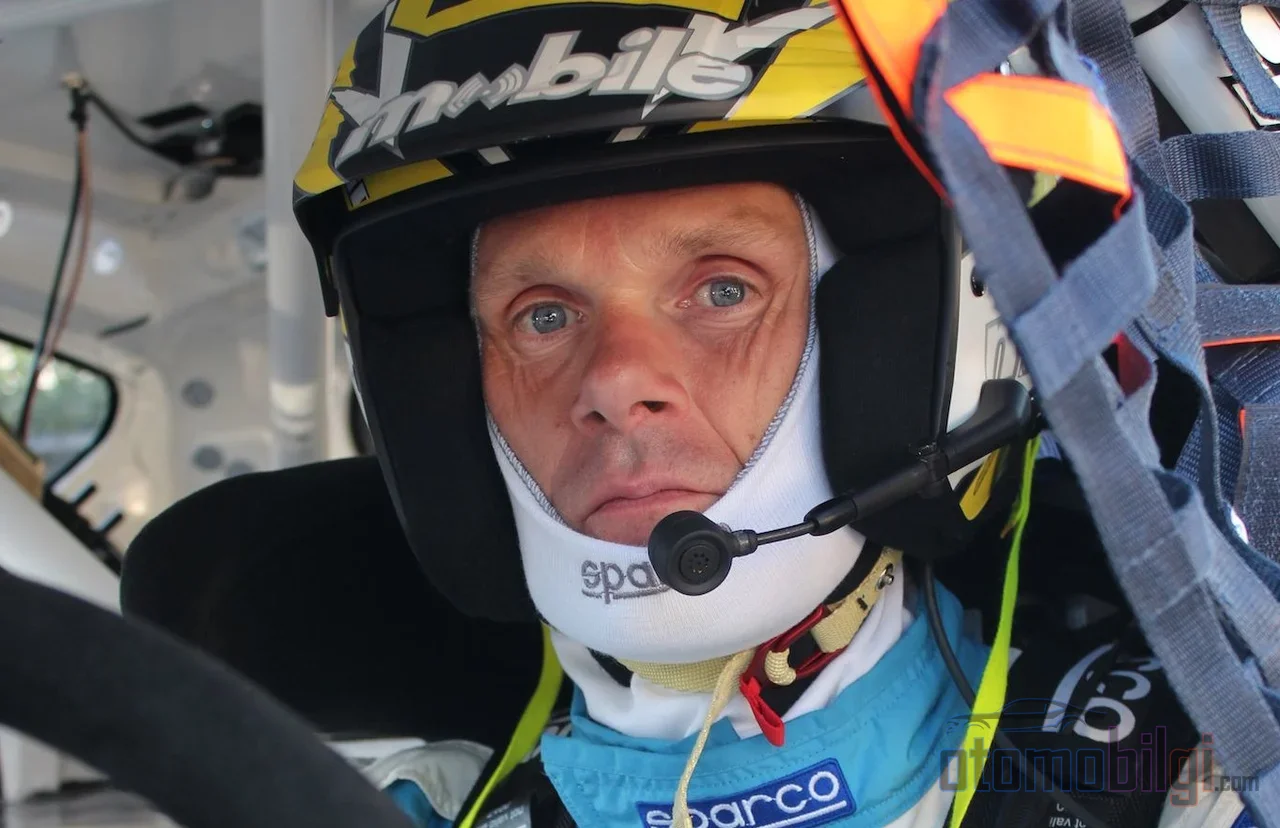
The 2000 season started with an engine failure at Monte Carlo. Peugeot was thinking with a plan to split the rallies. Peugeot was thinking with a plan that would split up the rallies. Then came the Swedish Rally, and the first WRC victory. This victory changed everything: Peugeot entered him in all the remaining rallies of the season. That year he took four wins and three more podiums, and locked up the championship by finishing second to Richard Burns at the season finale in Wales. Since no one expected it, it was a first trophy that stunned everyone around.
Highlights
- 2 world championships (2000 and 2002), both with the Peugeot 206 WRC
- 30 rally wins, 61 podiums, 153 WRC starts and 542 stage wins
- 7 wins at Rally Finland, a home record set consecutively
- The historic 0.3-second margin by which he beat Loeb in New Zealand in 2007
- With co-driver Timo Rautiainen, 30 wins and 2 championships between 1995-2007
206 WRC: The Little Car That Changed the Rules
Let's get to know the Peugeot 206 WRC a little, because without this car there would be no story. A turbocharged 2.0-liter four-cylinder engine, four-wheel drive and a compact body. By beating its longer-wheelbase rivals it changed the rules of success, and between 2000-2002 it won the manufacturers' championship three times in a row. This was also Gronholm's favorite rally car.
| Specification | Peugeot 206 WRC (1999 spec) |
|---|---|
| Engine | 2.0 L turbocharged, 4 cylinders |
| Power | Around 300 bhp |
| Torque | 535 Nm @ 3,500 rpm |
| Weight | 1,230 kg |
| Drivetrain | Four-wheel drive |
In 2001 his title defense fell apart with mechanical problems and he finished the season fourth. But 2002 was another story: he had a nearly trouble-free year, Rally Australia was one of the decisive rounds, and he wrapped up his second championship comfortably. The second trophy - that was it.
The 307 Era and a Short Chapter with Subaru
By 2003 the 206 was getting old; he took three wins, but a fuel pressure issue in Greece and a driveshaft problem in Cyprus ruined the season. The 307 introduced in 2004 was plagued with gearbox and hydraulic steering troubles; Gronholm's frustration with the car was so obvious that he didn't even try to hide it. In 2005 he took his fifth home win in Finland and delivered Peugeot's final WRC victory in Japan, but the brand withdrew from the championship at the end of the season.
So what about the Subaru in the headline? In 2009 he returned to the Rally Portugal with a Subaru Impreza WRC2009 prepared by Prodrive. The deal, initially planned for 12 rounds, was cut to four for financial reasons, and it ended when Subaru withdrew from the championship. While Gronholm was running fourth, he crashed on the first stage on Saturday, and that chapter closed. So no trophy with Subaru; just a brief comeback by a legend.
Seven Wins at Rally Finland: King of the Lake Shores
When Gronholm's name is mentioned, every rally fan thinks of the same thing: domination of his home rally. He won Rally Finland a full seven times: 2000, 2001, 2002, 2004, 2005, 2006 and 2007. The 2005 victory was the race that broke Loeb's streak, as he had won six rallies in a row that season. The sixth home win came in 2006 and the seventh in 2007; in the latter, he and his Ford teammate Hirvonen finished 1-2, with Loeb third.
Why is this record so important? Because Rally Finland is the fastest race on the rally calendar, with its fast gravel stages, cars flying through the air, and zero-forgiveness jumps. Winning there seven times takes not just courage, but the ability to calculate a car's landing moment and contact with the ground to the millimeter. Just like feeling the takeoff angle in motocross; this is exactly where Gronholm's motocross background comes into play.
Raw Speed and "Sisu": What Made Gronholm Different?
There is no debate about Gronholm's raw speed; when he closed out his career with 30 wins, that number ranked third in history, and 542 stage wins speak for themselves about how fast a driver he was. 24 of his victories came on gravel, 5 on snow, and one on a mix of asphalt and snow; so his real kingdom was loose surfaces.
So what set him apart from his rivals? A feel for grip on loose surfaces and the ability to exploit sliding, which came from his motocross background. One of the classic loose-surface techniques in rallying is the Scandinavian flick: flicking the car sideways with a brief counter-steer before entering the corner and turning the nose inward, allowing the driver to get on the throttle much earlier. Another is left-foot braking: with the right foot staying on the throttle, braking with the left foot keeps the car's balance constantly under control. These are techniques every rally driver uses; what made Gronholm different was that he had developed this feel over years on motocross tracks.
And there is that famous word from his culture: sisu, meaning stubborn determination and courage. Gronholm would say he carried plenty of sisu, maybe even too much of it; because he attributed both of his championship losses in the Ford years to that excessive drive. In 2006 he finished second to Loeb by 1 point, and in 2007 by 4 points. One point! Even thinking about it makes you feel bad, doesn't it?
2007: Retirement 0.3 Seconds Away from the Championship
The 2007 season was the year that third trophy fairytale was at its most realistic. After finishing third in Monte Carlo, he won Sweden, and in Greece claimed his 28th career victory by beating Loeb, entering the summer break 9 points ahead. In Finland, Ford finished 1-2. Then came that 0.3-second epic in New Zealand: he beat Loeb by a historic margin, and with 10 points in hand and five rounds remaining, he had closed in on the championship. Then came back-to-back crashes in Japan and Ireland, and the lead returned to Loeb. On September 14, 2007, he announced he would retire at the end of the season; he stated that he preferred to stop while still fast enough to win rallies.
He did not stay idle after retirement either: in 2008 he dove into rallycross with a Ford Fiesta ST ERC producing 560 bhp and 800+ Nm of torque, winning his first race at Holjes. In 2011-2012 he took five wins in Global RallyCross, and the injury he suffered in practice at X Games Los Angeles 2012 ended his rallycross career. In 2019 he took a one-race farewell lap in Rally Sweden with a Toyota Yaris WRC. Today his son Niclas Gronholm carries the family name on rallycross tracks; so yes, we are talking about a bloodline.
Timo Rautiainen: The Quiet Architect of the Right Seat
A Gronholm story is incomplete without a co-pilot story. Timo Rautiainen and he raced together from 1995 to 2007, and the bond between them was not merely professional: the two were also brothers-in-law. Together they amassed 30 WRC victories and two world championships, and at the end of 2007 they retired together as well. Throughout his career, Rautiainen served with the Toyota, Seat, Mitsubishi, Peugeot and Ford factory teams; meaning that in that right seat sat one of the most experienced voices in the world.
During the 2005 Finland victory, Rautiainen suffered a spine injury, and in 2004 in Turkiye he made headlines with the crash he was involved in; meaning that co-driving is not the silent ride everyone imagines it to be. Years later, in 2024, Rautiainen returned to the seat for Niclas Gronholm, and in 2023 the duo raced together again in a classic car rally. Some partnerships truly never end.
Conclusion: Trophies, Near-Trophies and a Real Legacy
So let us give the clear answer: Marcus Gronholm became world rally champion twice, in 2000 and 2002, in both cases at the wheel of the Peugeot 206 WRC. In 2006-2007, which he spent not with Subaru but with the Ford Focus RS WRC, he finished runner-up twice, and the gap in 2006 in particular was a single point. It cannot be said that he won a third trophy; but with a victory by 0.3 seconds against a legend like Loeb, records waiting to be broken, and his seven victories at Rally Finland, he left a legacy that goes beyond the number of trophies. Sometimes a driver's greatness is measured not by the trophies he won, but by how close he came to the ones he didn't. Gronholm is a legend by both measures.
Sources
- Marcus Grönholm - Wikipedia
- Marcus Grönholm | WRC Official
- How it Started: Marcus Grönholm - DirtFish
- Peugeot 206 WRC | WRC Official
- Peugeot 206 WRC: Marcus Grönholm's Favorite Rally Car - DirtFish
- Timo Rautiainen (co-driver) - Wikipedia
- Gronholm seals sixth Finland win - BBC Sport
- The moment Grönholm knew he should retire from WRC - DirtFish
- What it's like to become WRC champion: Grönholm's journey to the top - WRC Official
- WRC champion Marcus Gronholm set for rally return - Motorsport.com