How Did Colin McRae Become a Rally Legend?
November 1995, the forest rally stages of England. In the dust cloud sweeping through the trees, a blue-and-yellow Subaru Impreza 555 is practically sliding sideways, locking through the corner in a dramatic drift, leaving one of the most iconic images in rally history on the camera recordings. At the wheel is a 27-year-old Scot: Colin McRae. By the end of that season, he would become the first British driver to win the World Rally Championship, and his name would turn into a legend that would never fade. But how? Can you become a legend with just a single championship, and in a car that kept rolling over from time to time at that? The answer to this story lies precisely in that question.
If you're ready, let's begin; because this story has speed, family, a games console and, unfortunately, a very sad ending.
Rally Was in His Blood: The McRae Family of Lanark
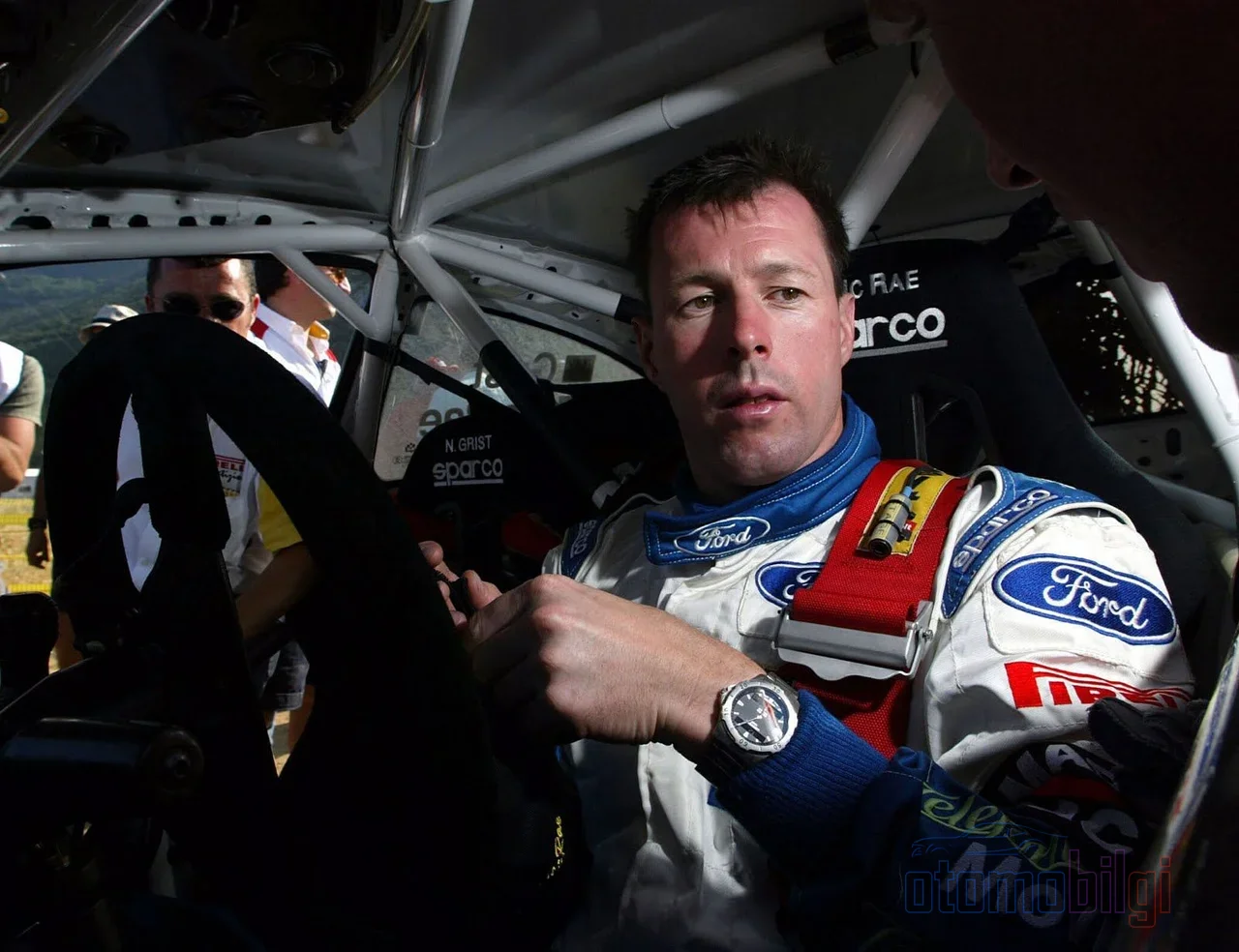
Colin Steele McRae was born on 5 August 1968 in the town of Lanark, Scotland. Rallying was not a sport he "discovered by chance one day"; it was a family business. His father Jimmy McRae became British Rally Champion five times, his brother Alister McRae competed as a professional rally driver, and his uncle Hugh "Shug" Steele was a former rally driver. So while dinner conversation in other homes probably revolved around football, in this house it revolved around pacenotes and tyre strategy.
In 1987, at just 19 years old, Colin made his WRC debut at the Swedish Rally in a Vauxhall Nova and finished 36th. Not a dazzling start, I know. But no one could have known back then that this young driver would take his first victory six years later, become British Rally Champion in 1991 and 1992, and receive the MBE title in 1996 for his contributions to motorsport.
Highlights
- In 1995, he became the first British driver to win the World Rally Championship at the age of 27
- Over the course of his career: 146 rallies, 25 victories, 460 stage wins
- Co-drivers Derek Ringer and Nicky Grist; The Subaru, Ford, Citroën and Škoda eras
- At the 2002 Safari Rally, he set the record for the most rally wins up to that date
- On 15 September 2007, he lost his life in a helicopter crash at the age of 39
1995: The Season Where the Championship Was Born
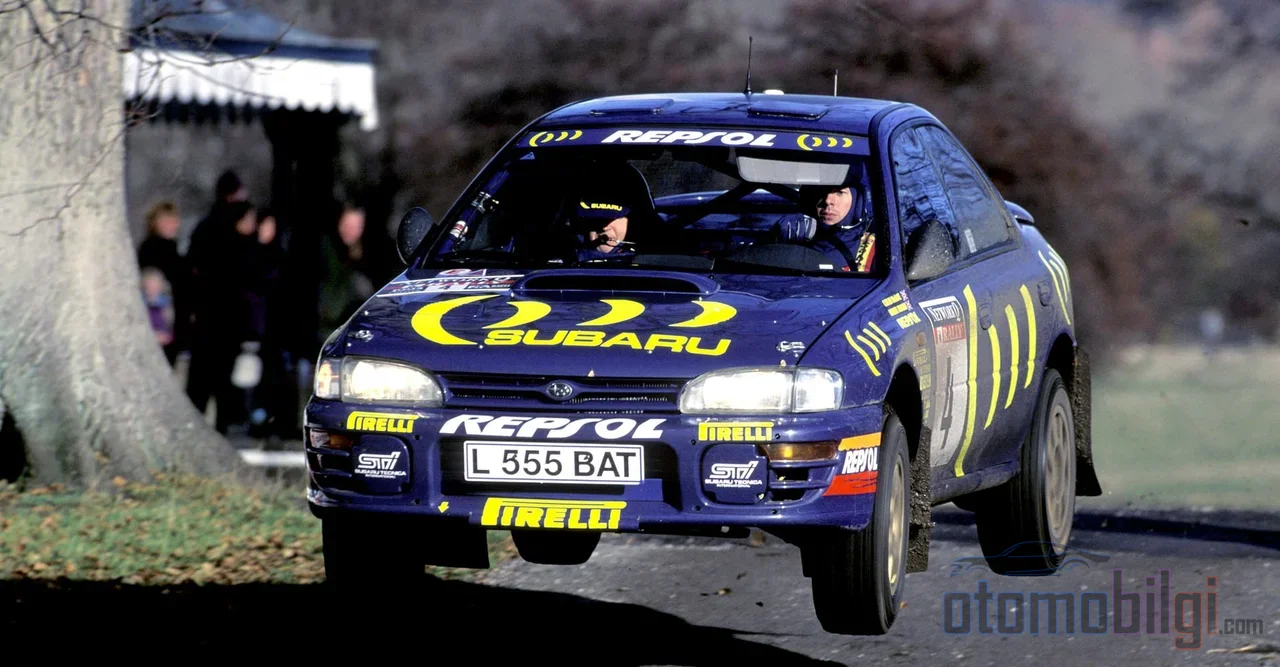
1995 was the peak of Colin McRae's career, but also his most controversial year. The season consisted of eight rallies, and McRae won only two of them; one was New Zealand - the rally he could not compete in due to the injury of his rival Carlos Sainz. At the season-ending British Rally, everything became clear: McRae won the duel with world champion Sainz, who came from the same Subaru team chasing the title, secured the drivers' championship, and also delivered the manufacturers' championship to Subaru.
There was another drama in the background of the season: Toyota's factory team had been expelled from the championship after the Catalunya Rally due to an illegal air restrictor. So the weakening of rivals played a role in Subaru's rise. As for critics calling it a "lucky championship" - they may have a point to some extent. But this is also true: McRae, who became world champion at the age of 27, also held the record as the series' youngest champion, and that record went unbroken for a full 27 years, until 2022.
"If in Doubt, Flat Out": What Is the McRae Style?
To be fast in rallying, you have to drive with calculation; pilots who read the map well and take risks in the right measure become champions. Colin McRae was written as the complete opposite of this book. His motto was always the same: if you hesitate, keep your foot down. He would take the Impreza through corners with the inner rear wheel almost off the ground, leaning it sideways like a motorcycle. This style sometimes led to a crash, sometimes to a rollover, and most of the time to the podium.
It was said his style resembled the bold approach of his idol, Ari Vatanen. And here's the beautiful part: that was exactly what the spectators wanted to see. Even when McRae didn't win a race, he made the headlines, because he was the most entertaining driver in the world to watch.
The Subaru Years and Becoming One with the Impreza
His first WRC victory came at the 1993 New Zealand Rally; that win, achieved with the Prodrive-built Group A Subaru Legacy, was also the first victory for the newly established Subaru team. Then the Impreza 555 era began, and the driver's name became so intertwined with the blue-and-yellow car that even today, when someone says "Colin McRae," that Impreza appears in a corner of your mind - I'm sure it appeared in yours too.
The Subaru-McRae duo won three consecutive manufacturers' championships in 1995, 1996, and 1997. On the drivers' side, however, they hit the Tommi Mäkinen wall: second in 1996 and 1997, third in 1998. In 1998 he won three rallies and added the Race of Champions to his trophy cabinet at the end of the season.
Ford and Citroën: Changing Colors, Unchanging Speed
In 1999 he moved to the Ford factory team, becoming the highest-paid rally driver of his era with a deal worth 6 million pounds over two years. He delivered the Ford Focus WRC's first victory: the 1999 Safari Rally. That same year he also won Portugal, making it a streak, and finished the season sixth. In his four years at Ford he won a total of 9 rallies; his 2001 season is not easy to forget: after failing to score points in the first four rounds, McRae went on to win three in a row in Argentina, Cyprus, and Greece, but when he crashed in the final rally, he lost the championship to Richard Burns by just 2 points.
In 2002, by winning the Safari Rally, he broke the record for the most WRC victories by a driver up to that date. However, the paths parted when Ford failed to meet his demand of 5 million pounds per year.
In 2003 he moved to Citroën. He didn't win, but together with his teammates Sébastien Loeb and Carlos Sainz he secured a 1-2-3 finish for the Citroën Xsara WRC at Monte Carlo, contributing to the team's first manufacturers' championship. In 2004, a rule change reduced the number of points-scoring drivers per team from three to two, forcing Citroën to choose between McRae and Sainz, and they kept Sainz. Thus, for the first time in over a decade, McRae was left without a WRC seat.
He didn't stay idle, of course. At the 2004 24 Hours of Le Mans, he finished 9th overall and 3rd in his class with the Ferrari 550-GTS Maranello; He raced with Nissan in the 2004 and 2005 Dakar Rally and won two stages in 2004; In 2005 he won the Baja 500 Portalegre and entered two more WRC rallies with Škoda. Finishing second just 0.13 seconds behind Travis Pastrana, who won the 2006 X Games despite flipping over on the final corner and still completing the race, is one of the moments that sums up McRae's character in a single sentence. That same year, he made his final WRC appearance with Citroën, replacing the injured Loeb at the Rally of Turkiye; He was eliminated in the final stage with an alternator failure. In 2007, a Subaru return with David Richards was being discussed for 2008, but that reunion would never happen.
September 15, 2007: The Day That Shook the Rally World
On September 15, 2007, the Eurocopter AS350B2 helicopter McRae was flying crashed approximately 1.6 km north of the family home in Lanark. In the accident, McRae, his 5-year-old son Johnny, family friend Graeme Duncan and 6-year-old Ben Porcelli lost their lives.
The official investigations conducted after the accident revealed a grim picture. The accident report stated that the helicopter struck trees while maneuvering at high speed at low altitude and that the engine was producing power; The exact cause could not be determined, but the pilot's turning maneuver at low altitude - a combination of an error, disorientation or distraction - was considered the most likely explanation. The judicial investigation concluded in 2011 spoke more clearly: It was determined that the flight was carried out at an unnecessary and unsafe low level, that McRae was unqualified and untrained for such maneuvers, and that his type rating had expired in March 2007. It was also revealed that Ben Porcelli's family had not given permission for their son to be taken on the helicopter.
At the funeral, Colin and his son Johnny were laid to rest in the same coffin. Approximately 700 people inside and up to 15,000 outside attended the memorial service in Lanark. Formula 1 driver David Coulthard competed in the Japanese Grand Prix wearing a helmet reminiscent of McRae's helmet design; Valentino Rossi dedicated his MotoGP victory in Portugal to him and said that his passion for rallying began thanks to McRae; Tommi Mäkinen, meanwhile, stated that he was a pleasant person and a tough competitor.
How Does a Driver Create a Generation? McRae's Legacy
So, can you become a legend with just one championship? The answer came from his console in 1998. Released that year for PlayStation and PC, Colin McRae Rally became, in the hands of Codemasters, a series that pioneered rally games. A generation everywhere in the world, including Turkiye, fell in love with rallying through this game; New-generation drivers like Oliver Solberg say that a generation of rally fans grew up with this game. Ken Block, meanwhile, notes that McRae's flat-out style inspired an entire generation. The series' continuation, the DiRT franchise, achieved commercial and critical success.
The legacy is not only on screens either. The famous jump spot on the Vargåsen stage of the Swedish Rally was named "Colin's Crest," and every year the pilot who jumps the farthest is awarded a trophy bearing this name. In 2008, McRae was inducted into the Scottish Sports Hall of Fame in his immortality; the same year, legends such as Ari Vatanen, Hannu Mikkola, Bjorn Waldegård, and the McRae family attended the memorial rally held in Perth. At the 2015 Rally GB, the 20th anniversary of the championship was celebrated with an exhibition, and in 2020 the 25th anniversary was commemorated with a documentary. In 2025, the 30th anniversary of the championship, the Impreza 555 was brought back onto the world stage with events such as the Goodwood Festival of Speed and Rallylegend.
So, the Conclusion: Why Is Colin McRae a Legend?
Let's look at his career in numbers: 146 rallies, 25 wins, 42 podiums, 460 stage victories, one world championship. On its own, this record is not enough to say "the greatest driver of all time," and in fact no one is exactly claiming that. McRae's legend goes beyond the numbers: a youth record that stood unbroken for 27 years, a fearless driving style that risked crashes, an immortal partnership he forged with the Subaru Impreza, and a game series that instilled a love of rally in millions of young people from their consoles. Rally history owes him a great deal, and despite everything he packed into his 39-year life, perhaps his greatest achievement is that his true legacy is still growing today.
What do you think - if a McRae-style driver competed in today's rally, could they stop him? Let's talk in the comments.
Sources
- Colin McRae
- WRC Season Archive 1995
- On this day in 1995, Colin McRae became the UK's first World Rally Champion
- Colin McRae's 1995 Championship to be remembered at Goodwood
- Rallylegend commemorates Colin McRae's triumph in 1995
- Colin McRae blamed for fatal helicopter crash
- The History of Subaru and Colin McRae