Sequential Gearbox: Why Is It Indispensable in WRC?
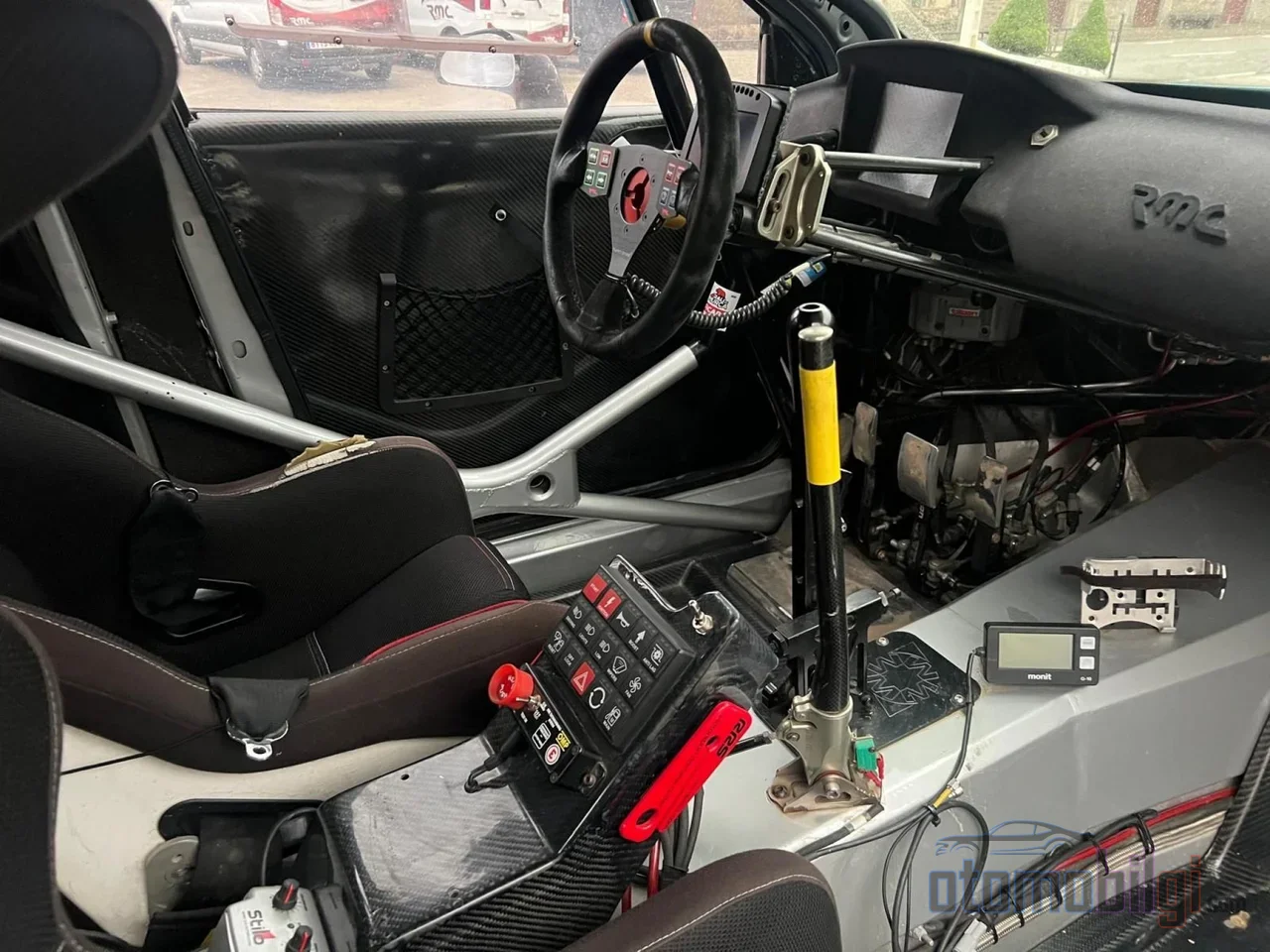
Suppose you're on a gravel stage doing 160 km/h, there's a crest ahead, and in that half second your car is airborne you need to shift from 5th to 4th. In a car with an H-pattern gearbox, that means your eyes popping out of their sockets, and maybe engaging 4th instead of 2nd. In a sequential gearbox, all you have to do is pull the lever down once. That simple change of movement changed - and still is changing - the fastest years of rallying. So why did the WRC make this switch, what did it gain, and what did it sacrifice? Let's take a look step by step.
From H-Pattern to Sequential: How Did Rallying's Big Shift Happen?
In older race cars, the gearbox had an H pattern, just like in your own car: the gear lever moved side to side, forward and back, hunting for exactly the gear you wanted. Until the early 1990s, all WRC cars raced with this layout. Then the wind changed direction: GT1-class sports cars adopted sequential boxes in 1996-97, and in the WRC, from 1997 to 1999, each team switched to the new system one by one. As the seasons went by, the H pattern vanished into history on rally stages.
An interesting detail from the transition period was this: The Toyota Corolla WRC came with an Xtrac-built sequential gearbox but also carried a familiar H-pattern shifter as a backup. Subaru sold its sequential boxes first in its 1999 WRC car, then in the 2001 model to customer teams; the paddle-shift version came later. So this technology didn't arrive overnight - it settled in gradually over the years.
Key Highlights
- A well-executed gear change in a sequential box is completed in 5 milliseconds or less.
- A sequential box is actually a mechanism, not a lever movement: when you turn the lever, the selector barrel rotates and the forks drag the gears.
- In Rally1 cars, the number of gears dropped from 6 to 5.
- A gearbox change in the WRC service park takes 10 minutes.
- As of 2022, paddle systems were removed and the sequential lever returned.
How a Sequential Gearbox Works: From Lever Movement to Dog Gears
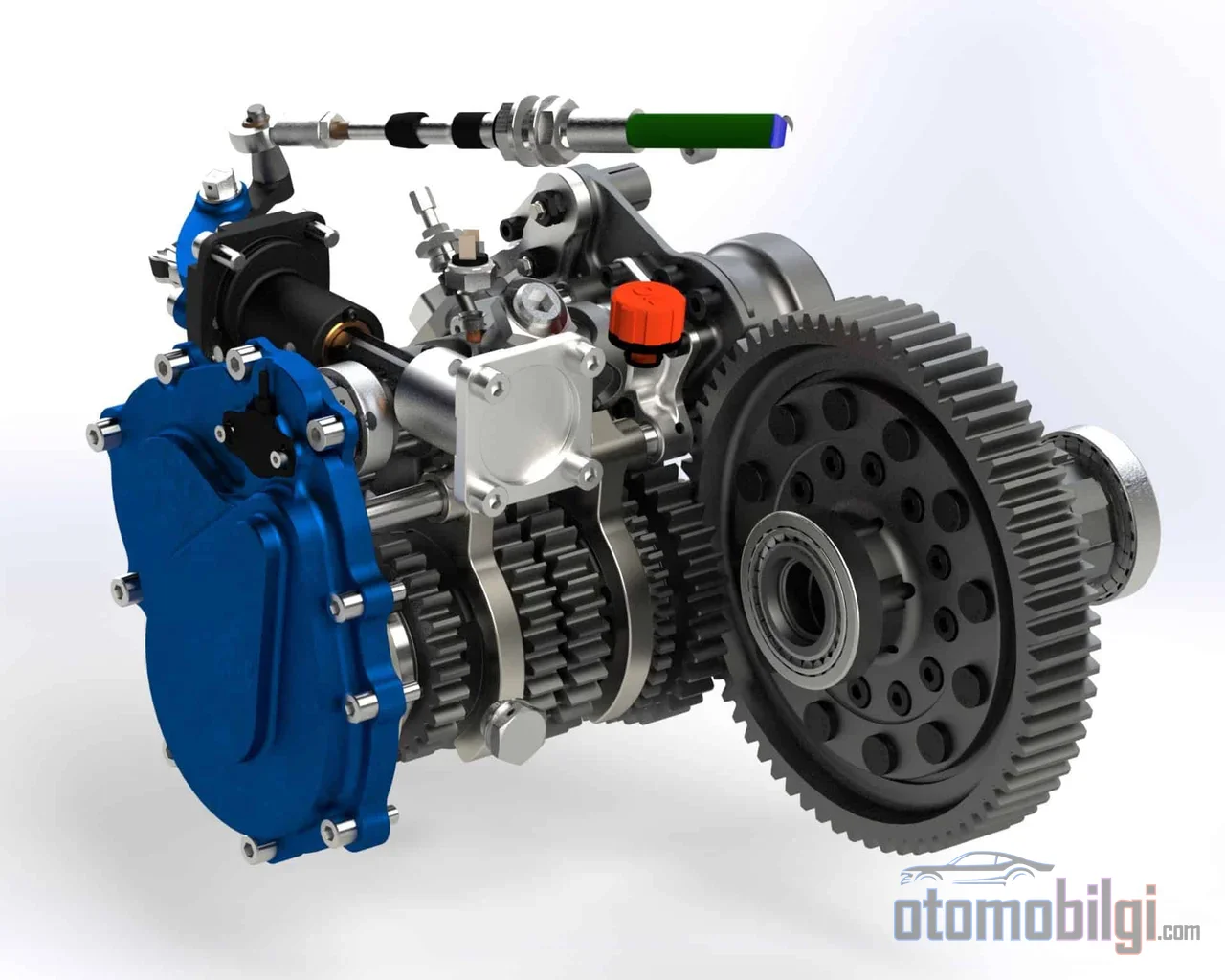
The Selector Barrel: The Real Hero
For those wondering what happens inside: pushing the lever forward and back in a sequential gearbox is translated, via a ratchet mechanism, into the rotation of a selector barrel. The guide tracks on this barrel direct the selector forks and position the correct gear. So when you pull the lever, a cylinder acting like a guide rotates, and you simply reach 4th gear by passing from 2nd and 3rd. 2nd gear. and passing through 3rd to get there. No interruptions, no getting out of order.
Dog Ring: Harsh But Fast
The gearbox in a road car has a synchromesh system that softens gear changes. In race boxes, there's no need for this patience system: instead, bracelets with a small number of square-cut teeth, called dog rings, are fitted. These slide axially and lock directly into the slots in the gears. There is no progressive synchronization, but thanks to this harsh engagement, a well-adjusted box completes a gear change in about 5 milliseconds or less; a synchro replacement is a full order of magnitude faster.
You can think of it like this in daily life: a synchro is opening the door gently and slipping inside; a dog gearbox is kicking the door in with a single blow. The latter is harsh, but you can guess just how fast it is. What's more, the angles of dog teeth actively pull the gear into engagement, meaning the system loves locking itself in.
The Electronic Brain: How Are Gear Shifts Made Without the Clutch?
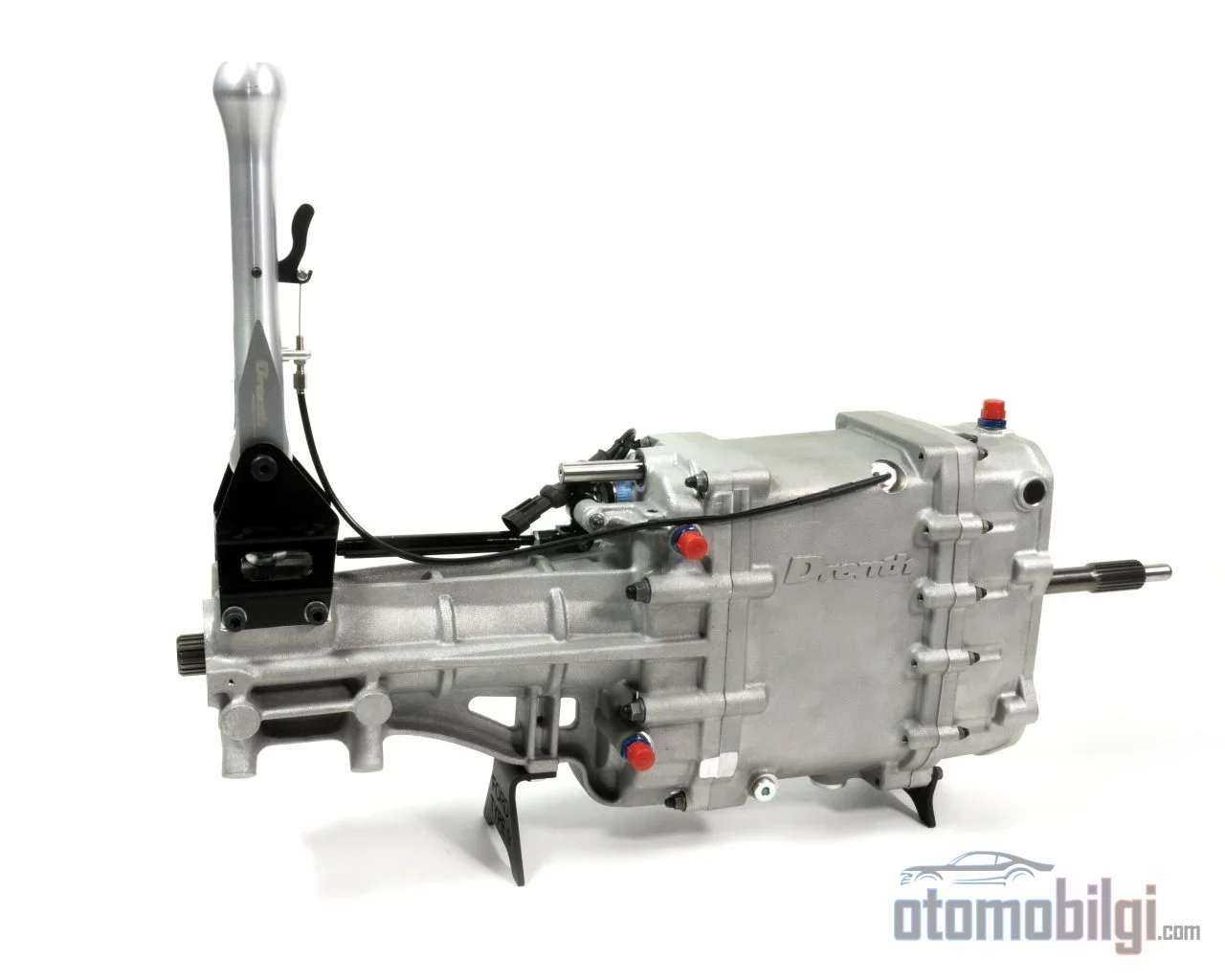
In modern race cars, it doesn't end with the mechanics. The electronic control unit called the ECU choreographs the gear change: when the driver moves the lever, it detects a request via a load cell (strain gauge), and the barrel position sensor knows which gear it is in. Then it goes through these stages: gear request, mask time, gradual torque reduction (so the dogs are freed from load), ignition cut, and torque restoration. In a sample log, the shift from 4th to 5th was completed in 94 milliseconds with this entire strategy.
The sweetest part of this for rallying is: the gear can be shifted without touching the clutch, and even in a turbocharged car without fully lifting off the throttle. Since the throttle stays open, post-shift turbo lag is also eliminated. Of course, there is another side to the coin: if you try to downshift early without electronic control, you risk damaging the engine, and without consistent torque reduction the dogs wear out early and the box can deteriorate rapidly.
From Group A to Rally1: Gearbox Comparison
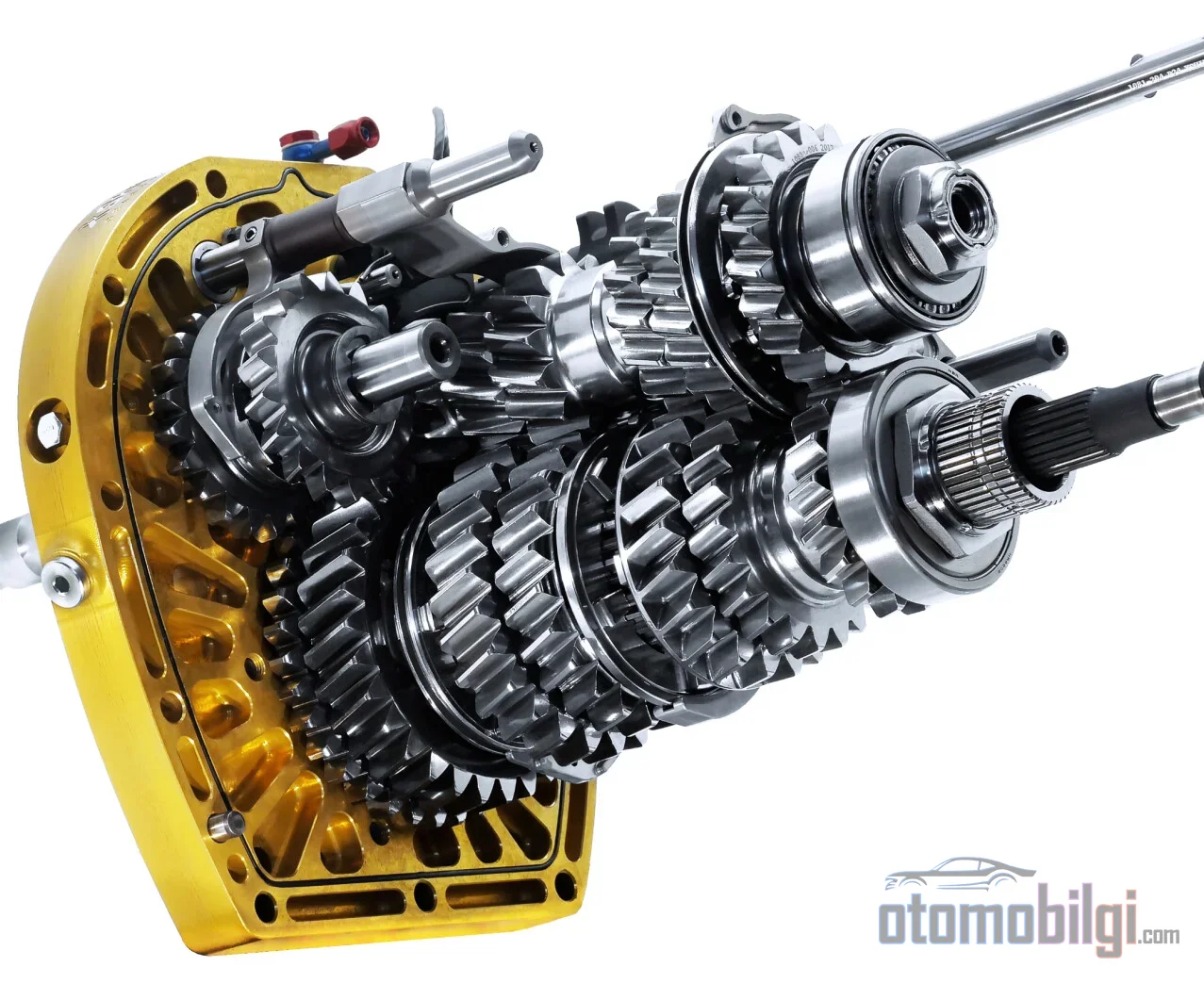
When the two eras are placed side by side, the magnitude of the change becomes clearer:
| Feature | Group A / Late-Era WRC Cars | Rally1 (2022- ) |
|---|---|---|
| Gear shift method | H pattern, later sequential lever | Sequential lever (paddle ban) |
| Number of gears | 6-speed | 5-speed |
| Differential | The era of active differentials was experienced | Mechanical center differential, no active systems |
| Gearbox type | Transition from synchro to dog gears | 5-speed sequential dog-box |
| Approximate power | Varies by era | Approximately 365 hp |
The Rally1 rules that came into force in 2022 brought two striking decisions: the number of gears was reduced from 6 to 5 (shared with Rally2) and the paddle systems on the steering wheel were removed; meaning the drivers returned to shifting gears with a sequential lever from start to finish. The teams quickly adapted to this new arrangement during shakedown. The current Toyota GR Yaris Rally1 technical page also confirms this arrangement: 5-speed sequential gearbox, four-wheel drive, and mechanical differentials. The 5-speed gearbox is also preserved in the next-generation concept announced for 2027; meaning the sequential arrangement retains its place in the future of rallying.
Half Engagement, Wear, and the Service Park Reality
Every beauty has a price, and this price is paid at the service park. A WRC gearbox endures constant abuse from rock strikes and torque spikes from landings; in one era, the gearbox of the Ford Focus RS WRC frequently suffered clutch damage because it had no torque limiter, and the problem could only be tamed with an external torque limiter solution. The example of what happened to Jari-Matti Latvala also shows how serious the matter is: when the paddle system failed, he tried to downshift with the emergency manual lever, and the gearbox failure directly affected the race result.
Dog-ring engagement is inherently high-wear; under aggressive use, inspection and even a complete rebuild may be needed after only a few thousand miles. That is why race teams have achieved incredible speed: an experienced mechanics crew can complete a full-speed gearbox change in 10 minutes, and finish the car's overall service in 15 minutes. So those frantic service scenes you see on TV are not for nothing; seconds mean championships.
On the cost side, the figures circulating on forums (such as a gearbox renewal budget of roughly 20,000 euros per season) are not officially confirmed; but the high cost itself is not disputed by anyone. According to general consensus, a race gearbox is built on the order of tens of thousands of dollars, and the maintenance of the drivetrain, made up of hundreds of parts, is planned according to stage distance, not by years.
The Co-Driver's Notes and the Sequential Box: Perfect Harmony
Here is the least talked about but most enjoyable part of this page: the pace notes read by the co-driver work in perfect sync with the sequential gearbox. The system of legendary driver Colin McRae and his co-driver Nicky Grist is a fine example of this: McRae used numbers as gears, where 6 meant the fastest and 1 the slowest corner, and for corners between 2 and 5 there were three speed variations indicated by plus and minus. In other words, the numbers in the pace notes also roughly referenced which gear to shift into.
The sequential lever makes this discipline possible. Push up = higher gear, pull down = lower gear. The driver selects his gear with a single plane of movement on gravel or snowy stages, even while the car is airborne, without taking his eyes off the road. In an H-pattern, shifting into 4th instead of 2nd under braking can destroy the engine with knocking; in a sequential box, such an error is mathematically impossible. The risk of engine damage from a missed gear is minimized, which means both speed and safety.
Why Is the Sequential Gearbox Indispensable? Short Answer
Let's sum up: the sequential gearbox is indispensable in the WRC because it changes gears within milliseconds, without a clutch and without cutting the throttle, completely eliminates the risk of wrong gear selection, keeps the driver's hands on the wheel over jumps and slippery surfaces, and works in perfect harmony with the co-driver's pace note discipline. The price: noise, high cost and frequent maintenance; the return: seconds and championships.
So why isn't it in your own car? Because every shift involves a mechanical shock, the noise is loud, wear is rapid, and it is not at all suitable for smooth starts in stop-and-go traffic. Your gearbox is designed to work quietly for years; a race box lives to fight for every meter. Two worlds, two philosophies. And as for which world wins on the rally stage, we have known since 1997.
Sources
- RaceCal Tech Insight - Sequential Gearbox Control Part 1
- How Sequential Gearboxes Work - The Pit Speed
- Quaife Motorsport Gearboxes
- Why did they switch to a regular sequential gear lever - Reddit
- Do all sequential gearboxes use dog engagement - Reddit
- How Sequential Gearboxes Work - HowStuffWorks
- Gearboxes in rallying - RallySport Magazine
- WRC rally transmissions - High Power Media
- Dog Boxes & Sequential Transmission - How It Works
- Sequential gearbox explained - World of Speed