Beating Turbo Lag: The Anti-Lag Trick in WRC
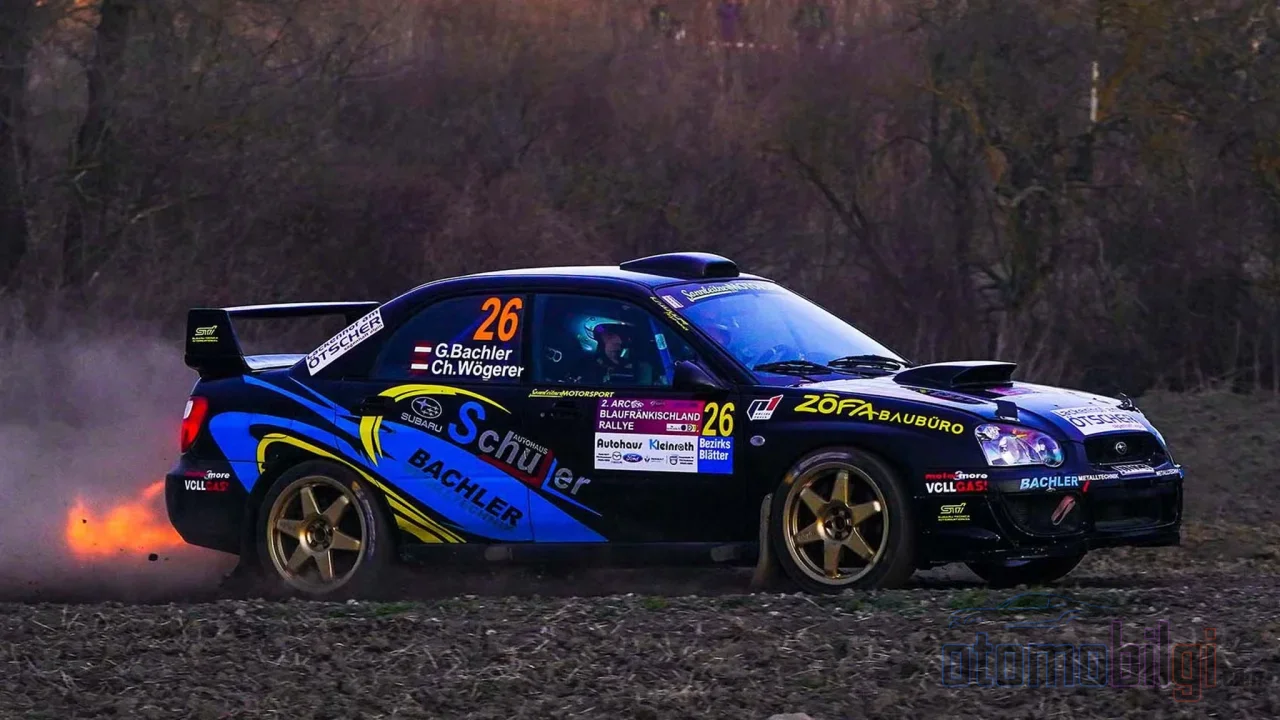
If you've ever watched rallying, you've surely heard that sound: the moment a cornering car lifts off the throttle, the exhaust crackles like a machine gun - pop pop pop - and flames sometimes shoot out the back. Is it just for show? Absolutely not. That sound is the outward face of the anti-lag system (ALS), which keeps turbo pressure alive so a rally car can deliver instant power on corner exit. But how does this system protect the turbo - or does it actually sacrifice it rather than protect it? The full story is more striking than you might think.
First, let's clarify that finger-wagging detail: anti-lag is known as a system that "protects" the turbo, but what it actually does is keep the turbo alive at high rpm at all times. What it protects is turbo pressure; the price it pays is usually the turbo itself. In the WRC this bargain has been going on for years, and engineers are looking for ways to lower the cost.
What Is Turbo Lag, and Why Is It Unbearable in Rallying?
A turbocharger consists of a turbine spun by the energy of the exhaust gas and a compressor driven by that turbine. The problem is this: the moment you lift off the throttle, exhaust flow drops and the turbine slows down. When you get back on the throttle, it takes several hundred milliseconds for the turbine to spin up and produce pressure. That wait is turbo lag. On the road you feel this lag only vaguely, but on a special stage where tenths of a second win races, it is not a conventionality but an outright unacceptable weakness.
There is one detail that makes things even harder in rallying: WRC cars have a restrictor, an air-restricting plate mandated by the FIA, on the intake side. This plate limits the amount of air entering the engine and slows down the turbo spooling. In other words, rally cars are forced to use one of the engine setups most prone to turbo lag.
How Does the Anti-Lag System Work?
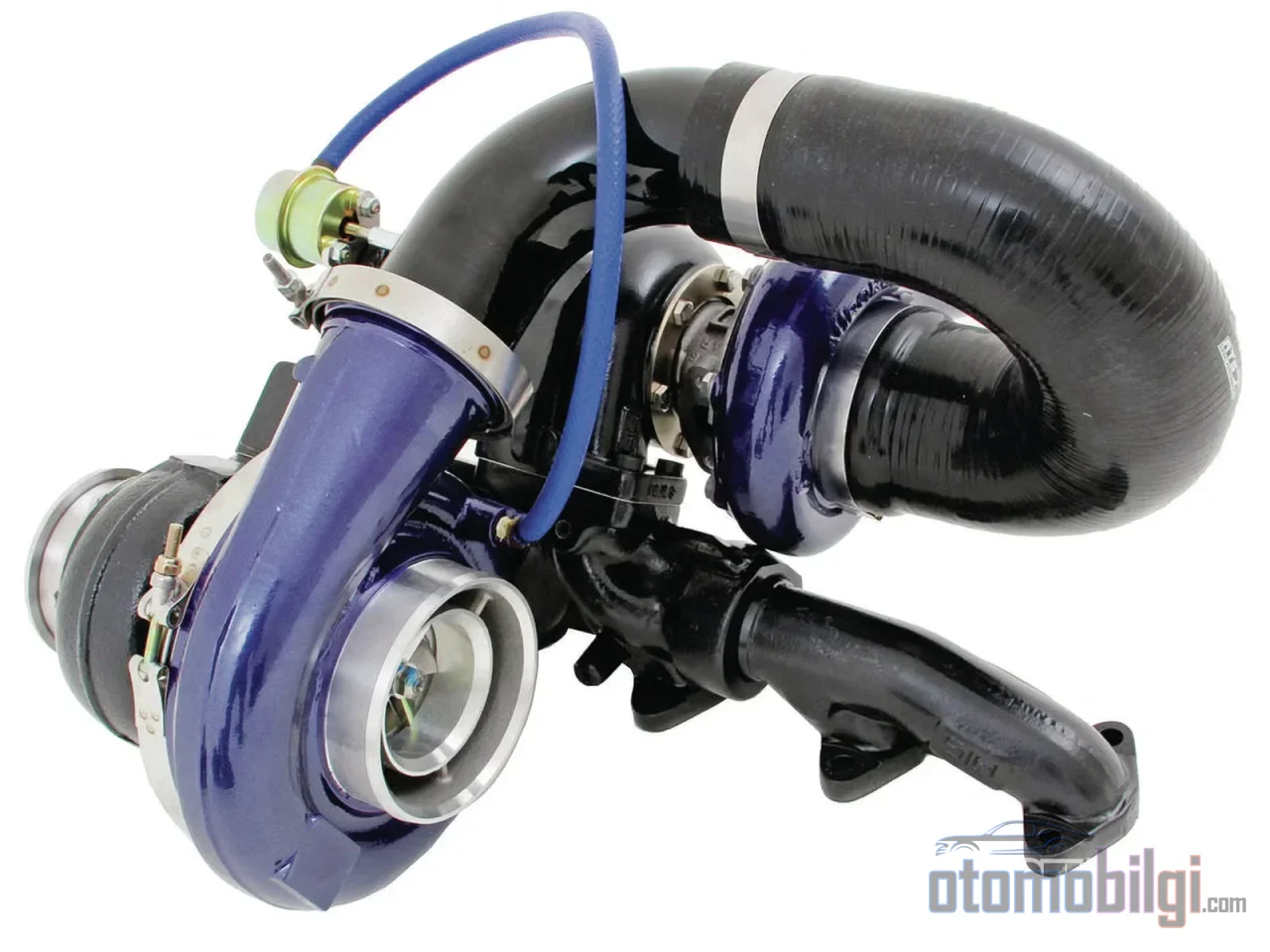
The logic is actually surprisingly simple: if exhaust gas is what spins the turbo, and exhaust drops when the throttle is closed, then produce the exhaust yourself. Anti-lag accomplishes this by deliberately running the engine "inefficiently" while the throttle is closed.
- The ECU retards the ignition timing; ignition takes place 35-45 degrees after top dead center, so most of the combustion energy goes to the exhaust instead of the crank.
- Depending on the system, the throttle is held slightly open by 12-20 degrees via a solenoid, or compressed charge air is fed directly into the exhaust manifold.
- When the mixture, still containing unburned fuel, passes into the exhaust manifold, it ignites on the hot metal.
- This combustion in the manifold sends a powerful flow of gas toward the turbine, and the turbo keeps spinning without dropping in rpm.
- When the driver gets back on the throttle, the pressure is already there; the lag is reduced to almost nothing.
And this is exactly the source of that famous bang: these violent combustion events and pressure fluctuations in the exhaust manifold. The flames and pops are a side effect, but for rally fans they have become the most recognizable sound signature of the sport.
Highlights
- Anti-lag retards ignition by 35-45 degrees and allows excess fuel to burn in the exhaust manifold.
- The first ALS applications were seen in the turbo era of Formula 1 in the early 1980s.
- The 1995 Mitsubishi Lancer Evolution III and Toyota Celica GT-Four (ST205) are the earliest known WRC applications.
- When coolant reaches 110-115 °C, most systems automatically shut down ALS to protect themselves.
- In 2026, power in non-hybrid Rally1 cars is limited to 330 bhp; the fresh air valve was removed.
Restrictor, Toyota and the Journey of Technology to Rallying
The arrival of this system in rallying is a chain-reaction engineering story. In the early 1980s, turbo-era Formula 1 teams tried similar setups; Ferrari used a system that burned a fuel-air mixture in the exhaust manifold. However, fuel restrictions made this approach unfeasible in F1.
On the rallying side, the picture was the reverse. In the early 2000s there was a 2-liter engine limit, but turbos were relatively unrestricted; teams were fitting big turbos producing over 400 horsepower. The FIA then introduced restrictor plates with a diameter of 34 mm and pinned power at roughly 300 horsepower. The price? Turbo lag increased significantly. Solutions like Lancia's supercharger-plus-turbo pairing (twin-charging) worked, but added weight and complexity. Taking inspiration from Formula 1, Toyota modified the ECU: it allowed air and fuel to bypass the engine and burn in the exhaust manifold. The earliest known WRC applications appeared in 1995 with the Mitsubishi Lancer Evolution III and Toyota Celica GT-Four (ST205) versions; both systems were controlled by two pressure valves operated by the ECU.
The Temperature Problem: Does It Protect the Turbo, or Burn It?
Here lies the heart of the issue. When anti-lag is active, combustion happens not in the cylinder, but in the exhaust line. This means the exhaust leaving the engine block reaches the manifold much hotter than normal. The engine, turbocharger and exhaust manifold are under great stress; under heavy use, manifolds and the turbine wheel can melt, which is why teams carried spare parts. Uncontrolled turbo speeds can also quickly destroy the turbine. In most applications, when coolant reaches 110-115 °C, the system automatically shuts itself down to prevent overheating.
The side effects don't end there: fuel consumption soars, conventional engine braking disappears, and brakes wear faster because drivers rely more on the mechanical brakes. Repeated aggressive use significantly shortens turbo life; the severity depends on the turbo design and the ALS setting.
Throttle-Jacking or Fresh Air?
There are two main schools. The classic throttle-jacking type burns fuel in the manifold by cracking the throttle open slightly and delaying ignition: effective, but a method that generates extreme heat and strains the turbo. The fresh air school instead feeds the fresh air compressed by the turbo directly into the exhaust via a valve. Subaru's setup, known as Rocket Exhaust, sent fresh compressed air to the exhaust through piping made of heat-resistant materials like Inconel, spinning the turbo with a high-velocity gas flow; was more efficient and extended turbo life. Toyota's Fresh Air Anti-Lag also directs intake air straight into the exhaust, offering a cleaner and cooler-burning setup and reducing stress on the components. In short, engineering is about doing the same job with less and less heat.
Changing Roles in the Rally1 Era
The Rally1 era, which began in 2022, brought a plug-and-play hybrid unit to the cars; it recovered energy during braking, and this stood beside the turbo like an electric countermove to turbo lag. Its Formula 1 counterpart was the MGU-H: this unit, which nearly eliminated turbo lag by spinning the compressor electrically, was banned with the 2026 power unit regulations.
On the Rally1 side, however, the calendar changed quickly. The FIA paused the use of plug-in hybrids for 2025; after a reversal, it was approved that hybrid cars would continue until the end of 2026, but the 2026 season is actually being run with non-hybrid Rally1 cars. Among the changes introduced in the regulations during this period are the removal of the fresh air valve in the anti-lag system and a simplified turbo. So that famous sound is still on the stage in the non-hybrid era. In 2027, comprehensive new technical regulations are coming.
| Period | Engine and Restriction | Power |
|---|---|---|
| Hybrid Rally1 (2022-2025) | 1.6 L inline 4-cylinder turbo, 36 mm restrictor | Approximately 380 bhp (including hybrid) |
| Non-hybrid Rally1 (2026) | Same engine, restrictor reduced to 35 mm, fresh air valve removed | 330 bhp limit, audited against a reference torque curve |
| Early 2000s (before the 34 mm restrictor) | 2.0 L turbo, turbo relatively free | 400+ hp |
| After the 34 mm restrictor | 2.0 L turbo, air restricted | Approximately 300 hp |
Toyota's GR Yaris Rally1 power unit also remained essentially unchanged in 2026: a 1.6-liter inline 4-cylinder, direct-injection turbocharged engine. As for the torque figure, apart from a limit audited by the FIA with a reference curve, no specific Nm figure has been announced; so you will not see a made-up number here. The 2026 cars are also subject to a cost cap of 400,000 euros.
So How Does It Really Protect the Turbo?
If we've come this far, you've earned a clear answer: Anti-lag, when the throttle is lifted, burns fuel or fresh air in the exhaust manifold, sending a constant stream of gas toward the turbine, so turbo speed and boost do not drop; when the driver presses the throttle, the power is instantly there. That is exactly what the "protection" is - it protects not the turbo's mechanical life, but the boost reservoir. As for mechanical life, it lengthens with fresh air solutions depending on the system's type and tuning, and shortens with the classic fuel-burning method.
Why Didn't It Make It to Road Cars?
This is the question everyone who hears the pops and wants it fitted to their car asks. The answer is clear: apart from electric solutions, anti-lag is almost certainly not road-legal. The system dumps excess air and fuel, running into noise and emissions regulations. It requires an aftermarket ECU and, most critically, causes serious wear on components including the transmission. The instant throttle response gained in street use is weighed against turbo wear and noise, and the math usually doesn't add up.
Still, the industry isn't completely closed off: Word is circulating that McLaren has had a patent study done on a hybrid-based solution for its rolling anti-lag concept, which eliminates delays during acceleration; however, this remains on file as a single-source, unverified claim. On the road side, the future may lie in spinning the turbine with electricity rather than burning fuel.
The next time you hear those bangs in an upcoming corner, you'll know what you're hearing: the sound of an engine struggling to never stop, at the cost of destroying itself. That's exactly why rallying is so good.
Sources
- Antilag system - Wikipedia
- Anti-Lag Explained: The Tech Behind Rallying's Turbo Boost
- What Is Turbo Anti-Lag? - MotorTrend
- What Is Anti-Lag? Understanding Throttle-Jacking vs. Fresh Air - Walton Motorsport
- WRC Rally1 spectacle maintained following technical changes - FIA
- Toyota Gazoo Racing 2026 WRC Car Details
- Hybrid ditched as part of major WRC regulation change - DirtFish
- Rally1 - Wikipedia