How Active Differentials Worked in WRC and Why They Were Banned
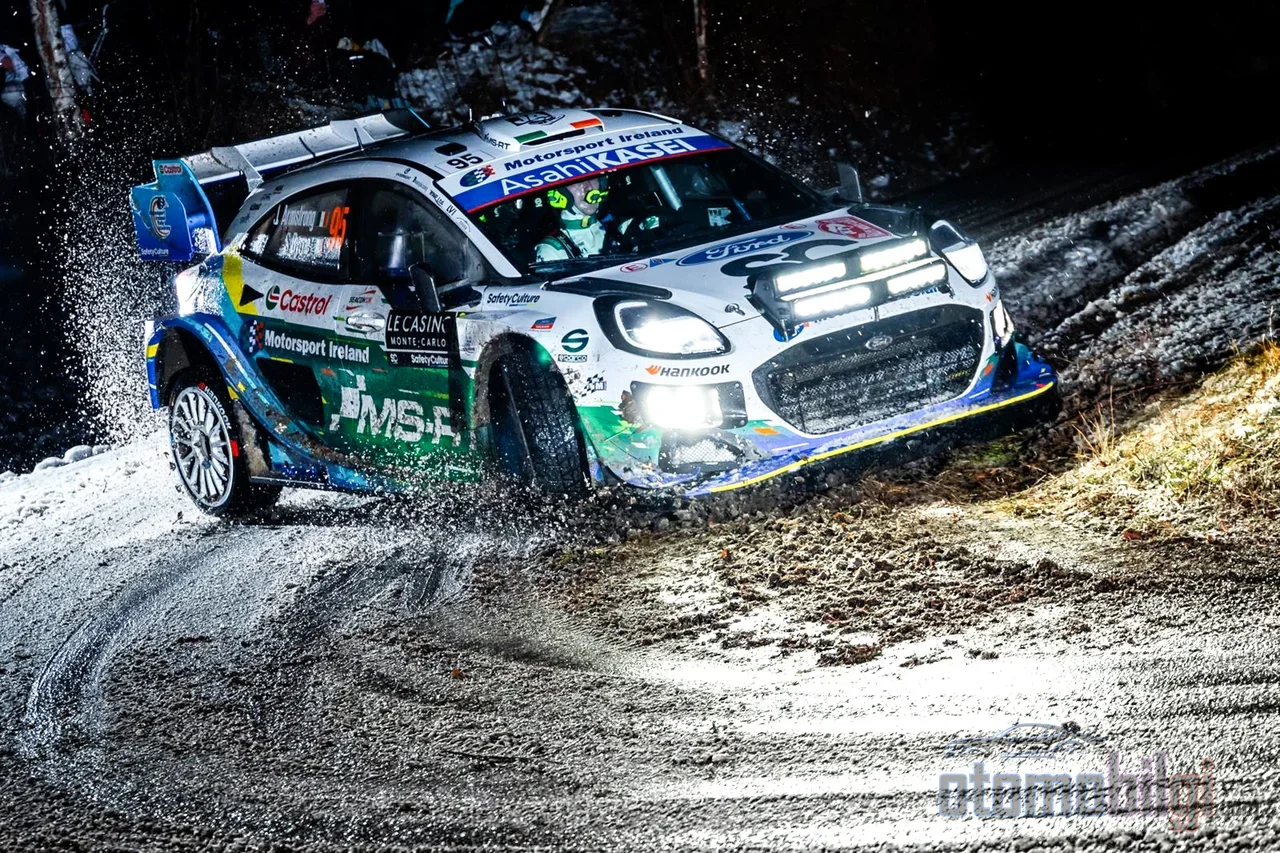
Have you ever watched a WRC car exit a corner so quickly and asked yourself how? While the tires are scrabbling on the gravel, the front of the car seems to be drawn toward the apex, then suddenly it launches forward and is gone. It is almost as if the car itself knows what it is doing. Well, let me confess: for a while, I too believed the secret lay entirely with the drivers. But in reality, at every moment of the corner, while the driver's finger rested on the throttle, a computer inside the car was adjusting the front, rear and center differentials one by one. This millisecond-long dance is called the active differential, and it was one of the smartest mechanical components in rally history.
On this page, I will explain how the active differential works in WRC cars, how traction is distributed from corner entry to exit, why this technology was banned, then why it was allowed again and finally removed altogether. Yes, you read that right: this story has the birth, the peak and the fall of a technology.
What Is an Active Differential? Let Me Explain Simply
First, let's grasp the concept with a simple analogy. A normal differential is a balancer that allows the inner wheel to rotate less than the outer wheel in a corner; it has to do this because the two wheels travel different arcs. The problem is this: a standard open differential always sends torque to where it meets the least resistance, that is, to the wheel that is slipping the most. If one of your wheels spins on ice, all of the engine's power flows to that uselessly spinning wheel. For a rally car, this is an unacceptable scenario.
The active differential is the answer that solves this problem: a clutch pack is placed inside the classic differential. An ECU gradually tightens this clutch using a hydraulic pump or electric current; if the clutch is fully closed, the differential locks as if it does not exist at all, and if it is fully open, it behaves like a standard open differential. Every value in between, that is, the percentage of lock, is the computer's decision. When locked, engine torque goes to where grip exists; even if the rear wheels are on ice, if the front ones have grip, the power still does useful work.
Three Differentials, One Brain
A four-wheel-drive rally car has three differentials. The front and rear differentials manage the speed difference between the left and right wheels on their own axles, while the center differential manages the relationship between the front axle and the rear axle; in a corner, the front and rear axles must rotate at different speeds because they travel different arcs. In the active differential era, all three units were connected to a single master ECU, and wheel slip at each of the car's four corners could be monitored individually. Torque could be directed both left-right and front-rear; these were some of the most sophisticated units ever seen in a race car.
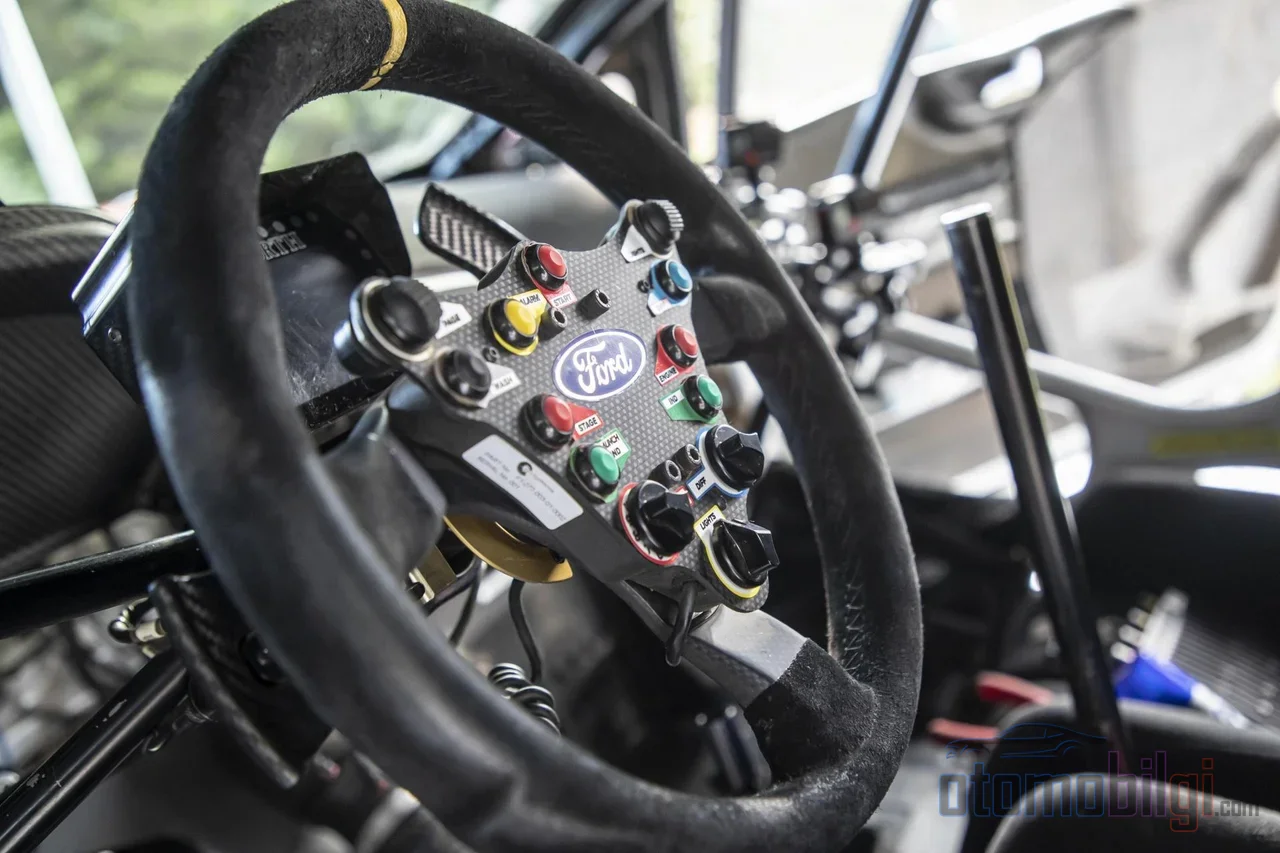
How did the system make decisions? The ECU read sensor data such as throttle position, engine rpm, speed, brake pedal, handbrake and steering angle, interpreted them on a three-dimensional map, and calculated the amount of lock appropriate to the driving conditions at that moment. Each differential was mapped much like an engine ECU, and drivers could switch between several different maps using the control on the dashboard. The center differential, for example, used throttle and steering sensors to determine how much locking it would apply throughout the entire corner. With no current, that is, at zero percent locking, the center differential's mechanical torque distribution worked like an open differential - in some cars 65 percent rear - 35 percent front, in others 60 - 40.
Highlights
- The active differential, with its ECU-controlled clutch pack, adjusted the amount of locking within milliseconds according to driving conditions.
- Active front and rear differentials were banned in 2006, and in 2010 the active center differential was banned for cost reasons.
- The 2017 rules allowed a mechanically locked center differential; while in Rally1 the center differential is completely gone.
- Mitsubishi carried the rally-derived active center differential (ACD) to the road with its Lancer Ralliart models.
How Is Traction Distributed at Corner Entry and Exit?
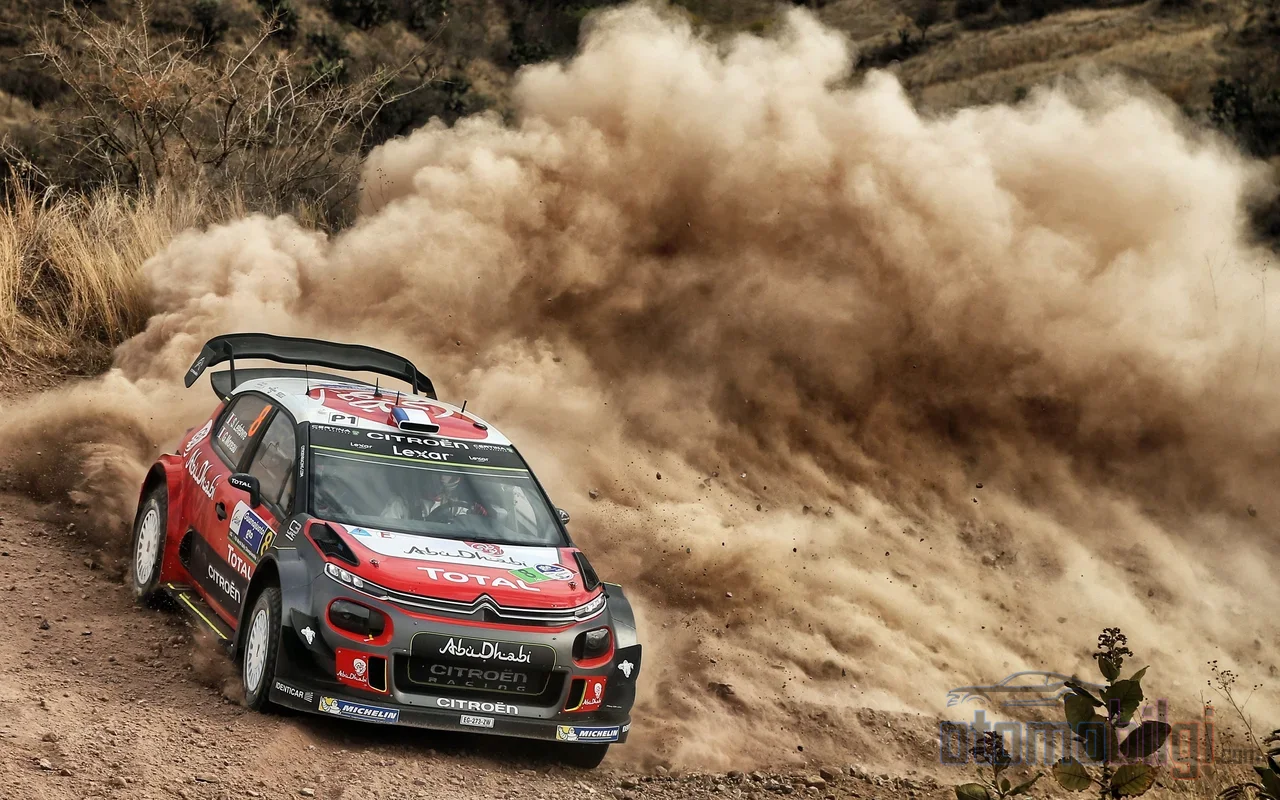
That is where the real magic lies. Let's follow a corner piece by piece, because the active differential took on a different task at each stage.
Approaching the corner and braking, the differentials were initially fully locked. This meant a very stable platform where all four wheels worked together at the moment of braking. But when the driver turned the steering wheel while still braking, the system reduced locking to prevent understeer, that is, the car's desire to go straight. The same device transformed from a stabilizer under braking to a releaser in the corner.
When the driver applied throttle, a dance began between the three differentials. The front differential locked noticeably and practically pulled the car toward the apex, the inner point of the corner. While the center differential kept the car's balance neutral, the rear differential gradually increased pressure to support traction; but not so much as to produce oversteer, that is, to swing the rear out. This relationship between throttle position and differential behavior was of vital importance for drivers to be able to predict how the car would behave throughout the corner.
Even in sharp turns known as hairpins, a solution was ready: some drivetrains could completely decouple the rear axle drive to prevent the gearbox from being overloaded. In addition, thanks to externally adjustable preload, drivers and mechanics could change the slip tolerances mid-turn and at turn exit according to their own driving styles.
Why Was It Banned? The Price the Computer Paid for Cost
So why did such a clever system fade into history? The answer is short and a bit bitter: money. Open-ended technical development meant a big budget, and the WRC was after cutting expenses. The new regulations introduced in 2006 first banned the electronically controlled front and rear differentials; in 2010 it was the turn of the active center differential. In the same period, the gearbox was also reduced from 6 speeds to 5. Cost savings was clearly cited as the justification for removing the center active differential.
After the ban, the permitted setup was as follows: front and rear mechanical differentials, plus a manual center clutch that allowed initiating corner entry with the handbrake by disabling the rear shaft. The rules also banned viscous and hybrid viscous-plate differentials; by definition, a mechanical limited-slip differential was any system operating entirely mechanically, without the aid of a hydraulic or electric system. As a result, the car now had to be set up with a single compromise setting for the entire rally. The perfect setting for asphalt might not deliver the same performance on gravel.
A Brief Comeback in 2017, a Full Close with Rally1
The story doesn't end here. The 2017 World Rally Car rules removed electronically controlled differentials and switched to mechanical differentials, but once again allowed a mechanically locking center differential. The assessment from the drivers at the time was clear: the active center differential helped drivability especially at corner entry and exit, allowed the driver to flow through and out of corners more smoothly, and made it much easier to adapt the car's behavior to the road surface.
Then came the Rally1 era, and the line hardened once again. In Rally1 cars, the center differential is completely banned; not only was the electronic control removed, the unit itself no longer exists in the car. When the handbrake is pulled, power to the rear wheels is cut. In other words, today's WRC cars have deliberately distanced themselves from the technological peak of decades past. It's worth clarifying the regulations period by period: before 2006 all three differentials were fully active, between 2017 and 2021 a mechanical locking center differential returned, and in Rally1 there is no center differential at all.
| Period | Front differential | Rear differential | Center differential |
|---|---|---|---|
| Before 2006 | Active (electronic) | Active (electronic) | Active (electronic) |
| 2006 - 2010 | Mechanical | Mechanical | Active (electronic) |
| 2010 - 2016 | Mechanical | Mechanical | Manual center clutch |
| 2017 - 2021 | Mechanical | Mechanical | Mechanically locking |
| Rally1 (2022 - ) | Mechanical | Mechanical | None |
Ford Focus RS WRC 06: The Peak of the Active Differential
Want to see a concrete example of the theory? The Ford Focus RS WRC 06 is precisely a product of this era. M-Sport and Ricardo together developed a transverse 5-speed gearbox; inside it was an active center differential managing the power distribution between the front and rear axles. The hydraulic control system supported fast power shifts, which were critical for the best stage times. The externally mounted clutch, meanwhile, allowed quick servicing and replacement against the sudden torque loads caused by gravel stones and jump landings.
The results speak for themselves: The car was introduced at the final race of the 2005 season in Australia, the 2006 season opened with a win at the first round in Monte Carlo, and in the same season Ford won its first manufacturers' championship since 1979 by a 29-point margin, with 8 wins. The following year, the championship once again belonged to Ford. These Ricardo-technology transmission components continued to compete until the regulation changes in 2010.
How Can You Tell the Difference Between Drivers: Viewing Guide
So, can we see the effect of the differential in videos? Partly, yes. What to watch for is clear: watch for wheel slip at corner exit and whether the car holds its line, but evaluate corner entry behavior separately from behavior under throttle. Keep in mind that the same car may react differently when the surface changes, and don't draw firm conclusions from a single corner. Also, it's worth knowing this: torque distribution and traction are not the same thing. More torque on an axle does not automatically create more grip; torque distribution is the sharing of the engine's force within the drivetrain, while traction is the effectiveness with which the tire transfers that force to the road. More locking also does not automatically mean better traction in every condition; the setup radically changes the car's front-rear balance and its ability to hold its line.
One more detail: Those watching WRC cars have noticed that the powertrain pulses like a heartbeat. This effect may not come from the engine, but from the differentials searching for grip and locking and unlocking.
Technology That Leapt into Road Cars
So, was this technology buried completely? Absolutely not. Mitsubishi introduced the Lancer Ralliart and Lancer Sportback Ralliart models with a race-derived active center differential (ACD): an electronically controlled multi-plate clutch center differential that distributes torque between the front and rear wheels according to driving conditions. The system was managed by AWC, which took charge of the car's entire traction management.
Looking from a broader perspective, the differential is already considered one of the most important technologies in the history of road and rally cars; because it solved the cornering dilemma, that is, the contradiction between the wheels' need to rotate at different speeds and power delivery. The entry of electronically limited-slip differentials (eLSD) into passenger cars, meanwhile, was inspired by Formula 1; the 1992 Williams FW14B was the first F1 car to use an eLSD. Today, in the era of torque vectoring, that is, directing torque to each wheel individually, the ability to control electric motors individually within milliseconds offers noticeably faster response than internal combustion systems with active differentials. An idea born on the rally stage has found a new body in the electric era.
Short Answer: How Did the Active Differential Work?
Let's sum up. The active differential was a clutch pack placed inside the differential, commanded hydraulically or electrically by an ECU fed by throttle, brake, steering, and speed sensors. The system calculated the correct locking percentage for every moment, providing full locking for stability under braking, reduced locking for agility in corners, and balanced distribution under throttle for maximum traction. The driver could also choose between different maps using the control on the dashboard. From 2006 onward it was banned piece by piece due to cost, the center differential was completely removed in Rally1, and its legacy lives on today in the electronic traction systems of road cars. In my opinion, you will have to think about differentials the next time you watch a WRC video; I warned you.
Sources
- WRC differentials
- WRC rally transmissions
- WRC Center Differential: How Rally Cars Manage Traction
- Ford Focus RS WRC 06 50 Years of Motorsport
- WRC - The 2017 World Rally Car - Technical Issues
- Knowledge Is Power. WRC Dictionary
- How a World Rally Car's Enormously Complex Center Differential Works
- Mitsubishi Lancer Ralliart ACD press release