Racing in a 70°C Cabin: The Physical Toll on WRC Drivers
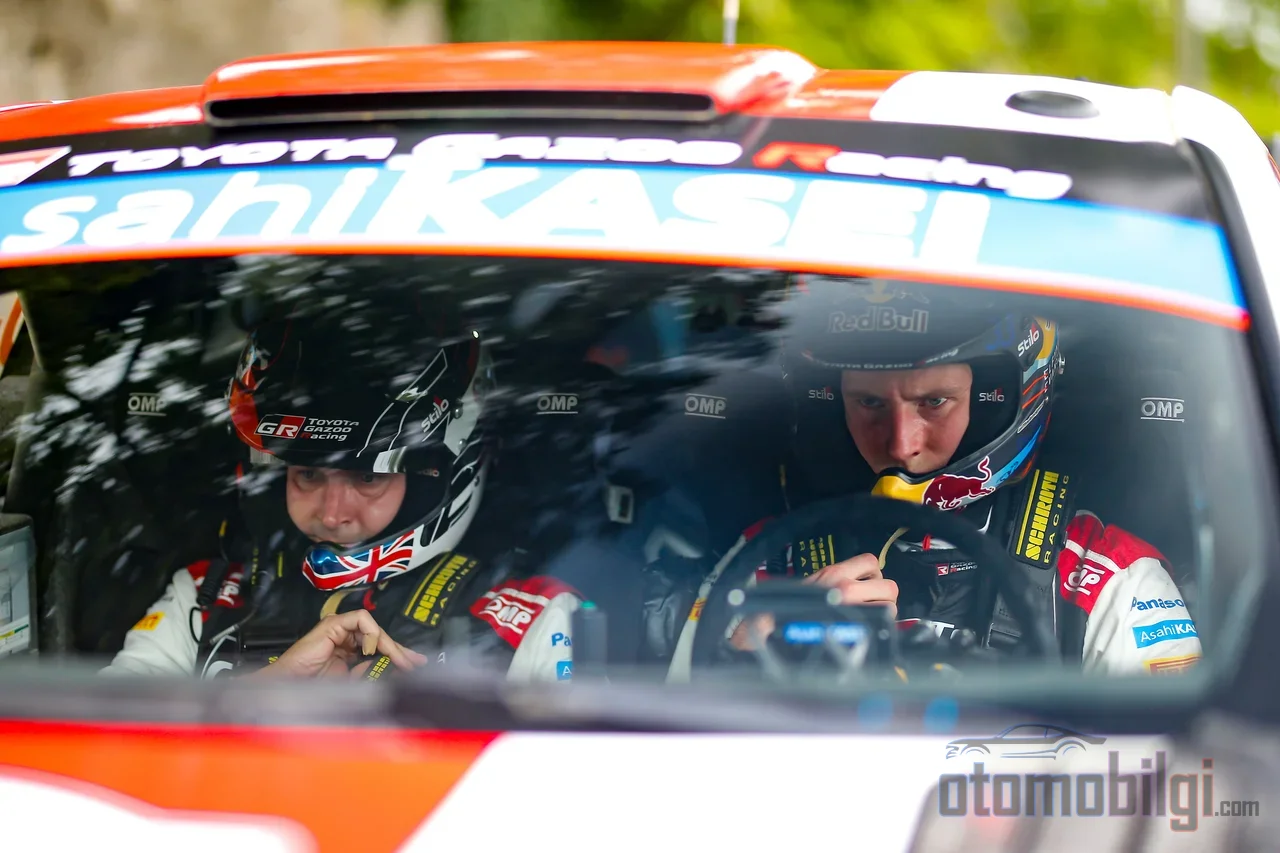
Imagine it's a Saturday afternoon, you're speeding through Portugal's gravel roads at 150 km/h, through a forest as dark as a ski goggle. Every stone flying toward you is a jolt to your arm on the steering wheel; every corner is an invisible hand gripping your seat. And the strangest part of it all? The inside of the cabin is hotter than a sauna. Slowly. And seriously. Have you ever really wondered what WRC drivers physically experience during a rally weekend? Because I watched rally for years and kept looking at the car - whereas the real story is in the human body inside that race suit.
On this page, we'll set the machine aside and talk about bodies: the scorching heat in the cockpit, the G-forces compressing the body, liters of fluid lost by the end of the day, the chaos of pace notes spinning inside the co-driver's head, and the training and nutrition strategies developed against all of this. If you're ready, buckle up - no spoilers, all facts.
How Hot Is the Cockpit, Really?
Let's look at the numbers first, because there's no need to guess here. Drivers reported that cockpit temperatures in Rally1 hybrid cars exceed 70°C, and the issue was brought before the FIA as an outright safety concern, not a matter of comfort. The source of the problem is a technical detail: the relocation of the exhaust system from the center of the car to the right side increased heat leakage into the cabin. The FIA has begun working with WRC teams on this; and in the 2026 season, airflow for cockpit cooling was significantly increased with a third vent added to the roof vent.
General motorsport literature describes heat stress in closed-cockpit races in the range of 50-100°C. While cabin temperature alone doesn't show the driver's physiological load - what matters is monitoring direct symptoms - how brutal the environment is can be clearly understood from this range. Let me make an analogy: sitting in a race suit in a 60°C cabin is like doing boxing training inside a closed sauna. And there's no way out, because you can't let go of the steering wheel before the stage ends.
Key Takeaways
- Temperatures in Rally1 cockpits can exceed 70°C; drivers reported this to the FIA as a safety issue.
- Losing just 2% of body weight impairs endurance; yet liters of fluid are lost by the end of a race.
- Even a rise of just 0.8°C in core temperature weakens hand-eye coordination and decision-making.
- For heat adaptation, ideally 7-10 days of consecutive heat exposure are required.
- In F1, drivers finish races with an average heart rate of ~170 bpm - a similar system is applied for rally fitness too.
G-Force, Heart Rate and Invisible Fatigue
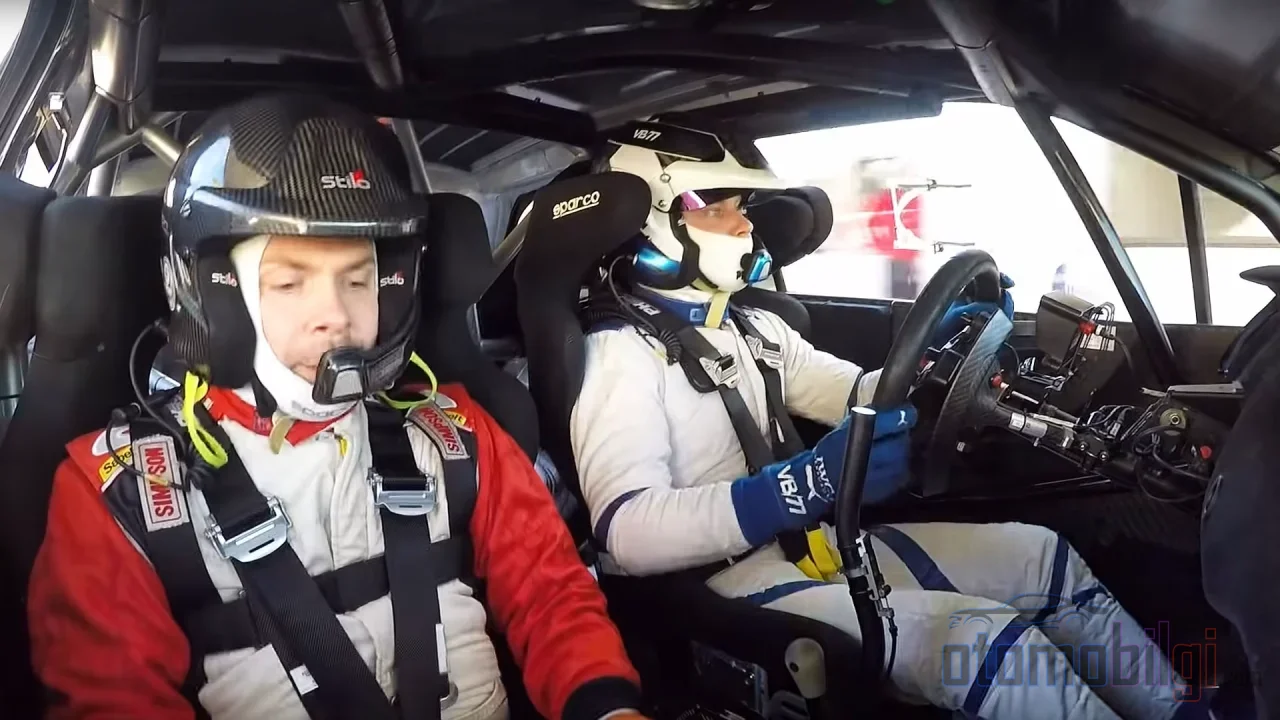
A rally car is a machine that constantly throws the body from side to side in corners and under braking. According to motorsport physiology studies, forces below +4 Gz alone can raise heart rate to 120-140 beats per minute - even before you press the pedal. Data from Formula 1 makes the picture clear: In closed-cockpit motorsport, core body temperature can rise by 1.7–2.5°C per hour of racing, and drivers can lose up to nearly 4 kilograms of weight over the course of a race. Unfortunately, measured data specific to the WRC is limited; but for a rally driver facing hundreds of kilometers of special stages per day, three days in a row, the picture is at least as harsh as F1 - in fact, an endurance test that lasts even longer.
The critical detail here is this: heat and dehydration go hand in hand. Heat stress reduces G-tolerance by roughly 0.3 G. So a hot cabin doesn't just make you sweat - it also breaks down your body's resistance in the corners. Losing just 2% of your body weight impairs endurance performance; more strikingly, even ~1% mild dehydration increases driving errors in amateur drivers. And on a rally stage, an error usually means meeting a tree or a rock face.
The Brain Sweats Too: The Cognitive Cost of Heat
This is the part that scares me the most. An increase in core temperature of just 0.8°C starts to impair hand-eye coordination and decision-making. When temperature exceeds the 38.5–39°C range, executive functions, working memory, attention, and processing speed suffer - and these effects appear before you even feel voluntarily fatigued. Just think about it: you're on a narrow mountain road at 200 km/h, and your brain is starting to slow down without you even knowing it. The fact that the driver still feels fit makes the situation even more dangerous; even the sensation of cooling can mask physiological deterioration. In a test conducted with a cooling garment, participants reported feeling more comfortable while their measured core temperature turned out even higher under some conditions - the feeling of relief can hide the real danger.
What's Going On Inside the Co-Driver's Head?
While talking about the driver's load, let's not forget the co-driver - because calling the person in that seat a "passenger" is an insult to rallying. The co-driver reads the pacenotes (the road book), a sequence of precise instructions the driver follows in real time, continuously throughout the stage: conveying the road's course, the sharpness of the corners, and speed information second by second. On fast sections, there isn't even time to look up ahead and point out the road; everything depends on the notes and the rhythm of the reading. A small error in the notes or a momentary lapse of attention causes the co-driver to get lost in the book, costing the crew time - or something worse.
That's why co-driving, too, is a full-blown cognitive endurance sport. Elite rally crews train processing real-time pacenotes, monitoring the car's behavior and grip, and instantly adapting to surface changes and hazards all at once. In other words, the co-driver's brain works like an air traffic control tower that stays continuously open throughout a rally stage - and that tower is sitting in a 60°C cabin.
How Are Drivers Preparing for This Load?
Now for the good part: the solution. At the center of rally teams' training philosophy lies a single word - endurance. Strong neck muscles and overall conditioning are essential to sustain the highest pace for three consecutive days; teams are focusing on endurance training. Formula 1 drivers work on neck strengthening at least five times a week, almost every day - because the helmet and head-and-neck system carries a total mass of about 6.4 kg, and in every corner this weight is exposed to lateral forces. Isometric neck exercises are valued at every level of motorsport for withstanding the lateral and rotational forces in corners.
Cardiovascular conditioning is also on the table: F1 drivers complete a race at 65-75% of maximum oxygen capacity, and a 90-minute race burns roughly 540 kcal. The same logic applies to the rally driver - without a strengthened cardiovascular system, it is impossible to endure the physiological pressure from a hot cabin for days on end.
Heat Acclimation: Training Like a Sauna
Heat acclimation can improve psychomotor performance in rally drivers, and the most effective way to reduce physiological load is considered to be exercise-based heat exposure. The prescription is clear: ideally 7-10 days of regular heat exposure in a row. This process expands plasma volume by 5-10%, lowers heart rate and core temperature, and can even increase VO2max. In other words, before getting into a hot cabin, drivers deliberately train their bodies in the heat, essentially switching them into "summer mode."
Hydration and Pre-Race Cooling Protocol
Fluid strategy is also a scientific discipline. It is recommended to consume 5-7 mL of fluid per kilogram of body weight within the last 4 hours before the race; it is advised that in-race fluid contain, if possible, 30-60 g of carbohydrates per hour and 0.5-0.7 g of sodium per liter. An interesting finding: drinking ~5°C cold water during a simulated race at 40°C significantly reduced the rise in core temperature compared to water at ambient temperature - all 8 drivers participating in the trial completed the cold water condition, while only 2 managed to endure with water at ambient temperature. For pre-race cooling, a layered protocol is applied: cold water immersion (15-20 minutes at 10-15°C, 45-60 minutes before the race), followed by an ice vest and neck wrap, and hand cooling in the final 10-20 minutes before getting into the car.
Concrete steps have also been taken on the regulatory side: From the 2025 season onward, the FIA made water-circulating cooling garments mandatory at events declared a "heat hazard" (estimated ambient temperature of 31°C or above); from 2026 onward, this garment is worn at every event, with only whether it is switched on left to the driver's discretion. However, the cooling garment alone is not a cure-all; it was found that the garment's effectiveness diminishes after about half an hour, and in some tests it did not even lower core temperature. Therefore, the garment should be thought of as a safety net - a minimum standard on top of which pre-race strategies can be added.
What Does a Rally Driver Eat on Race Day?
The nutrition section is a bit more grounded, but it is significant enough not to be dismissed. Rally teams supply practical and quick energy sources for drivers during the race: options like a ham-and-cheese toast, bananas, and protein bars that can be eaten from the cockpit without burdening the stomach. As an endurance sport, rallying also makes adequate protein intake and its timing mandatory during training and competition periods. The situation is similar for co-drivers; nutrition and training routines are part of performance regardless of which seat you occupy.
Does Endurance Extend a Career?
So, does this physical preparation have a long-term payoff? This is where one of rallying's beautiful features comes to light. It is a matter of curiosity whether rally drivers have longer careers than other categories of motorsport; for instance, Juha Kankkunen managed to score points at the 2010 Finland Rally even in his 50s. Champions like Sébastien Loeb and Sébastien Ogier keeping their careers close to the peak for years also support the same idea: here, the most decisive trait is not raw power or reflexes, but endurance. Rallying is a sport in which a driver who manages their body correctly can compete for a very long time. Moreover, starting from 2026, the new-generation Rally1 architecture introduced with the WRC27 concept brings change on the car side as well - but that is the subject of another page.
In short: Is Rallying an Endurance Sport?
The answer is clear: absolutely yes. During a rally weekend, a WRC driver races for days in a cabin reaching 50-70°C, under constant G-forces and heavy control load, with a cognitive intensity shared with their co-driver, losing fluids liter by liter along the way. In return, teams are equipping themselves with endurance-focused training, neck and back strengthening, 7-10 day heat acclimation blocks, layered hydration, and pre-race cooling protocols. So no matter how advanced the car is in rallying, what wins is still the prepared body and mind inside that suit. Next time I watch a Rally1 on screen, I will look at the driver, not the car - and I recommend you do the same.
Sources
- Cooling Strategies For Formula 1 Drivers
- How Do Rally Drivers Keep in Shape?
- Rally1 Cars Are Too Hot for Safety, Drivers Say
- FIA working with WRC teams to combat increased cockpit temperatures
- 2026 Rally1/Rally2 Technical Innovations
- Physiological responses of race car drivers
- The role of hydration in motorsport performance
- A Brief Review Drawing from Broader Motorsport Evidence
- What does a WRC driver eat during a rally?
- Performance enhancement in rally car drivers via heat acclimation and race simulation