Tommi Mäkinen: From Tractor to Four WRC Championships
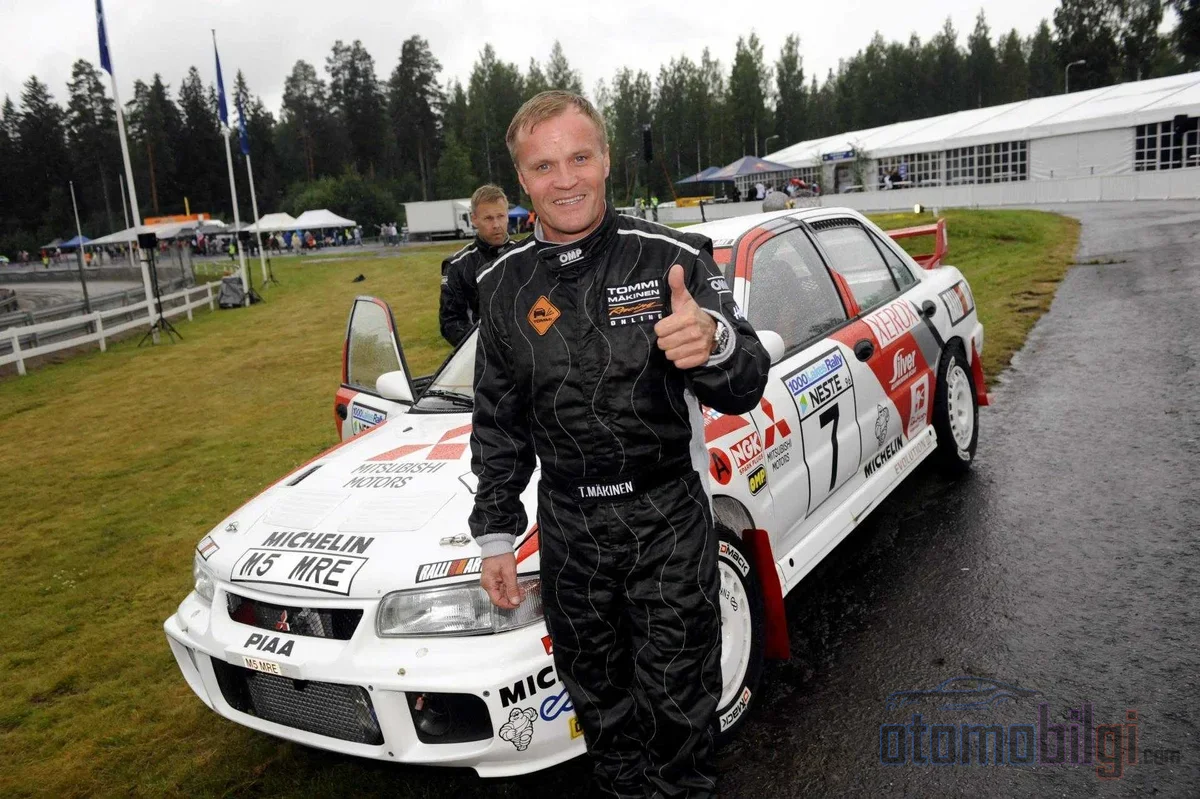
Say you got hold of a trophy list from the late-1990s WRC archive. You look at it: 1996, 1997, 1998, 1999. Four years, four different seasons, thousands of kilometers of gravel, snow and asphalt. And next to all four, the same name is written: Tommi Mäkinen. The only one who achieved this before Loeb. What's more, he did it with a single make, the Mitsubishi Lancer Evolution. So how did a quiet Finnish farmer become a champion during rally's loudest era, four years in a row, with no one able to touch his crown? If you're ready, this story is quite entertaining.
Coming Out of the Finnish School: From Tractor to Cornering
Tommi Antero Mäkinen was born on June 26, 1964 in Puuppola, near Jyväskylä. Right in the very heart of Finnish rally, in other words. But my favorite part of the story is this: At 18, Mäkinen became the Finnish plowing champion. Yes, you read that right; a tractor plowing competition. Even before his WRC career had begun, he had already learned to be smooth and precise in a straight line, and to read the surface. Between finding the perfect racing line on a rally stage and carving a flawless furrow in a field, I think there's more in common than it appears.
He made his WRC debut in 1987, at the 1000 Lakes Rally. But here's the surprise: Between 1987 and 1995, Mäkinen was by no means a shining star. He had only one win, the 1994 1000 Lakes, which he took with a Ford Escort RS Cosworth. He wasn't the darling of the era; he was someone waiting on the sidelines; one of the first names that come to mind when you say "late bloomer". In 1988 he had also pocketed the Group N Finnish championship with a Lancia Delta HF 4WD, but the big table was still far away.
1995: The Seat That Opened the Door
In 1995, everything changed. He took his first full-time manufacturer seat alongside Kenneth Eriksson and finished the season 5th with the Group A Mitsubishi Lancer Evolution. . Though it looks like just a number, what really mattered was the trust it inspired: Mitsubishi was now investing in this Finn. The following year, the whole world would see just how wise that investment was.
Highlights
- 1996-1999: Four consecutive WRC drivers' championships, all with the Ralliart Mitsubishi Lancer Evolution.
- His career: 139 rallies, 24 wins, 45 podiums, 361 stage wins.
- In 1996, the championship was sealed with 5 wins with two rounds to spare.
- He won all four of his championships with a single manufacturer (Mitsubishi).
- He won Monte Carlo 4 times (1999-2002).
1996: The Anatomy of a Surprise Championship
No one was tipping Mäkinen as a favorite going into the 1996 season. The season opened with the Swedish Rally, and the fastest one on the snow-covered special stages was the Finn. His first win came from there. Then things picked up speed: his first Safari Rally victory, where the tactic he employed was full attack, driving it like a sprint rally. Applying speed pressure even in an endurance event like the Safari; beyond boldness, it was a sign of self-confidence. Then a 2nd place at the Acropolis, and back-to-back wins in Argentina and the 1000 Lakes. As for his third consecutive win at Rally Australia, the title was sealed with two rounds to spare: 5 wins and 123 points in a 9-rally season, and the first world championship.
Another detail went down in history: Exactly 30 years after Mitsubishi's first WRC entry, the 1967 Southern Cross Rally, came the first drivers' championship. It is no coincidence that the team entered every round of the series with a full line-up for the first time in 1996; that was the plan. That same year, Mitsubishi also won the manufacturers' championship for the second consecutive time. The second name behind Mäkinen was like the announcement of a rivalry that would last for years: the Scot at Subaru, Colin McRae.
The Evo Legend: Four Crowns with the Lancer Evolution
Now let's come to the part of the story that spanned generations. Mäkinen's four championships were intertwined one-to-one with the Lancer Evolution's evolution from Evo III to Evo VI. He took 4 wins in 1997, 5 in 1998, 4 in 1999; a different Evo generation each year, the same result every year. As the car improved, so did Mäkinen; the two fed each other. In 1998, Mitsubishi won the only manufacturers' championship in its history, with a line-up of Mäkinen and Richard Burns. In other words, the team's peak falls precisely on these four years.
One of the most debated moments of this period was Sanremo 1998: Mäkinen gave the Evo 5 its first asphalt rally victory. Proof that a driver thought to be the king of gravel could also be king on asphalt. On the road side, the traces of these successes can still be seen today: To commemorate the 1999 championship, Mitsubishi produced the Tommi Mäkinen Edition version of the Evo VI; with its different front bumper and the red-and-white paint on some examples, it became a legend that collectors chase after. The ironic detail of the legend: There is no TME in Mäkinen's own garage.
Driving Style and the Partnership with Mannisenmäki
The common refrain of those who watched Mäkinen goes like this: fearless driving and unmatched consistency. Aggressive and bold at the wheel, quiet and humble in the stands. That contrast became his signature. The classic traits of the Finnish rally school; drifting through corners, the reflex to read the surface in advance, and cool-headedness were at their purest in him. But there was also a period after his crash in New Zealand in 1999 when his morale dropped and he questioned his will to win. Champions are human too; even as the fourth crown was coming, there were inner struggles.
Forgetting the name beside a driver is unforgivable in rallying. The co-driver seat of Mäkinen was occupied by Seppo Harjanne, Kaj Lindstrom, and for many years Risto Mannisenmäki. Harjanne, after serving 1985 champion Timo Salonen, had continued with Mäkinen; so there was a true master in the seat. The pairing with Mannisenmäki formed the backbone of the four championships. Unfortunately, in the 2001 crash in Corsica, Mannisenmäki broke his back, which effectively ended his top-level career; Mäkinen contested the remaining rallies with substitute navigators, driving in Australia with Timo Hantunen.
After the Summit: Turning Points and Farewell
After the four titles, the story of course continued. He opened 2000 with a Monte Carlo victory but finished the season 5th, and lost the title to Marcus Gronholm. That same year he won the Race of Champions. Monte Carlo was practically his second home: in 1999, 2000, 2001 and 2002, he won four times in a row. In 2001 he won the Safari with the Evo 6.5 WRC and Mitsubishi's first World Rally Car was introduced at San Remo; he finished the season 3rd. finished. In 2002 he moved to Subaru in place of Richard Burns and took his final win once again at Monte Carlo; when road stage winner Sébastien Loeb was penalized for a technical violation, the victory went to Mäkinen. It was the years when the rivals were changing generations. He retired at the end of 2003, closing the curtain by taking the podium (3rd) in his final rally, Rally GB.
Beyond the Track: Team Principal Mäkinen
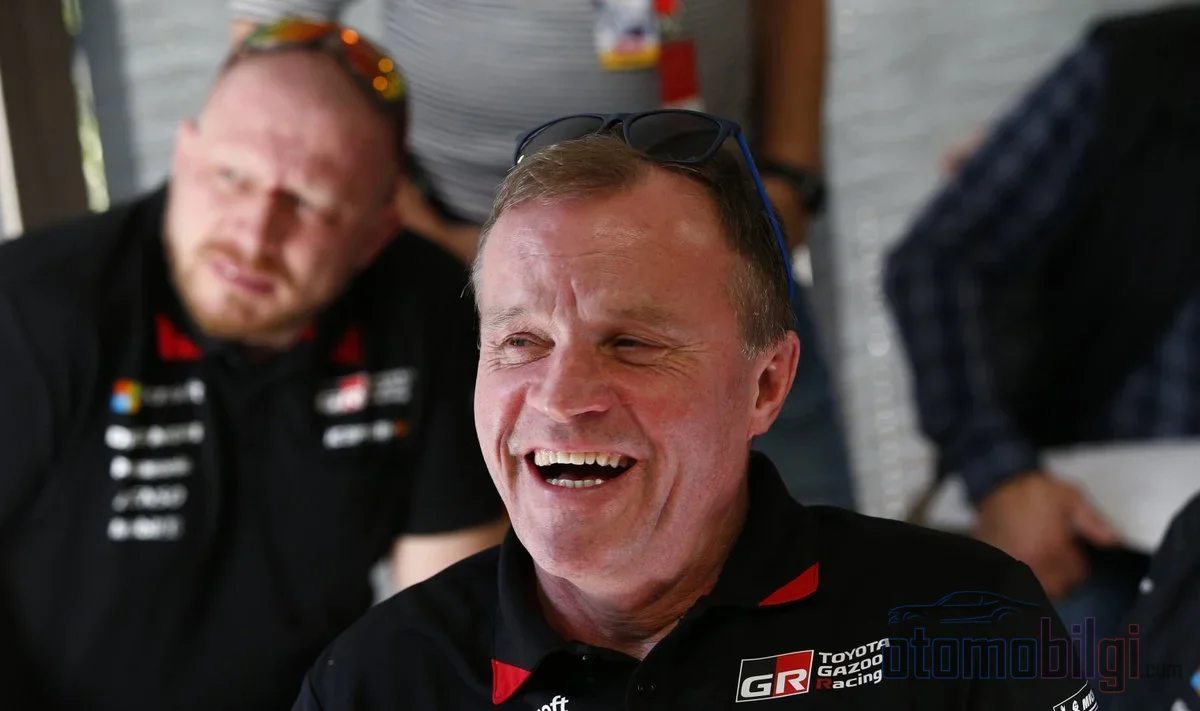
Retirement was a new beginning. In 2004 he founded Tommi Mäkinen Racing, opened a racing school in Finland, and back in 1998 a rally video game bearing his name had even been released. The big move came in 2016: he became team principal of Toyota Gazoo Racing and in 2018 brought Toyota its first manufacturers' title since 1999. Thus he became the first person in rally history to win championships both as a driver and as a team principal. At the end of 2020 he stepped down from the principal role and became Toyota's motorsport consultant; he handed the seat over to Jari-Matti Latvala. And yes, even in 2026 his name still appears in event announcements; a February 2027 date is being discussed for an experience in Finland that includes driving the GR Yaris. Legends don't leave the stage, they just change roles.
What Was the Formula Behind Four Championships?
To answer briefly: Mäkinen took the four championships through a combination of the evolving power of the Mitsubishi Lancer Evolution from Evo III to Evo VI, the solid partnership he built with Risto Mannisenmäki, and an aggressive yet consistent driving style. In other words, it wasn't a single magic formula, but a car, a co-driver and a character all converging in the same years.
The numbers also confirm the story: in his career he has 139 rallies, 24 wins, 45 podiums and 361 stage wins; with 24 wins he is among the top six winningest drivers of all time. In championship count, with 4 titles he shares third place with Juha Kankkunen; ahead of them are only Sébastien Loeb and Sébastien Ogier with 9 titles each. And let's underline it once more: all four titles came with a single manufacturer. Today, when an Evo passes by, if it has red-and-white stripes on its tongue, that car carries a champion's signature.
McRae's up-and-down courage and Loeb's robotic consistency are talked about a lot; Mäkinen was undoubtedly somewhere in between the two. Not bad, right? A farm boy's champion climbing to the summit of the world's fastest series' road network and staying there for four years is one of the most beautiful aspects of rally history. See you in the next driver introduction; if the steering wheel were yours, who would you write about?