Carlos Sainz Sr: The Living Legend of WRC Known as El Matador
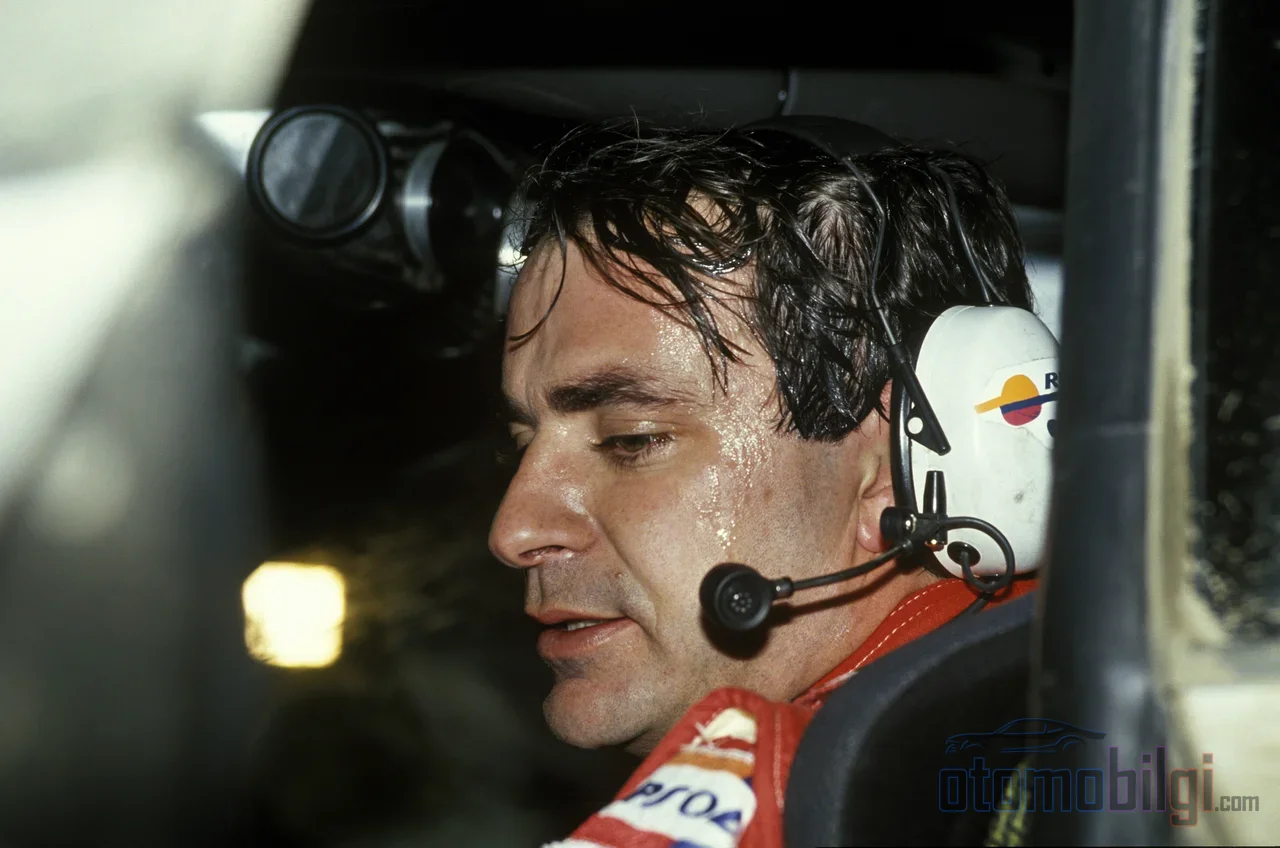
Think about it: 300 meters from the finish line, smoke pouring from the engine of a championship-winning car, and the only thing left in your hands is the steering wheel. That is exactly what happened to Carlos Sainz at the 1998 Rally of Great Britain, and that moment became both the most painful and the most instructive moment of his career. So how did this pilot from Madrid leave his mark on WRC history with two championships, why did Toyota sell a Celica bearing his name, and where did the nickname El Matador come from? If you are ready, we are taking a close look at one of the most compelling careers in rally history.
Carlos Sainz Cenamor was born on April 12, 1962, in Madrid. He stepped into the WRC at the 1987 Rally of Portugal with a Ford Sierra RS Cosworth, and remained in the field for 18 years until the 2005 Acropolis Rally. The tally of this long marathon is dazzling: 196 race starts, 26 victories, 97 podiums, 756 stage wins, and two world championships in 1990 and 1992. But the story behind the numbers is far more colorful than the figures themselves.
Highlights
- Carlos Sainz became world rally champion twice with Toyota, in 1990 and 1992.
- His career lasted 18 years: 196 starts, 26 victories, 97 podiums.
- In 1998, the championship went to Tommi Mäkinen after an engine failure struck 300 m from the finish.
- He reached victory four times at the Dakar, in 2010, 2018, 2020 and 2024.
- His son Carlos Sainz Jr. competes in Formula 1; the family bond stretches from rallying to rally-raid.
The Toyota Years: The 1990 and 1992 Championships
Sainz's rise was no accident; it was the result of a patient climb. After two learning seasons at Ford, he moved to Toyota Team Europe in 1989 and finished eighth overall with the Toyota Celica GT-Four (ST165). The following year, everything changed. In the 1990 season, with Luis Moya as co-driver, he won the Acropolis, New Zealand, 1000 Lakes and RAC rallies, becoming the drivers' champion with 140 points. Moreover, with the 1000 Lakes victory, he became the first non-Nordic driver to open the door to Finland's fast gravel roads, which Nordic drivers had for years considered almost their monopoly. That same year, they also secured the Asia-Pacific championship with the Celica GT-Four.
Sainz, who closed 1991 in second place with five victories, took the crown for the second time in 1992, stringing together wins at Safari, New Zealand, Catalonia and RAC with the Toyota Celica Turbo 4WD (ST185) and finishing with 144 points. Toyota became so attached to this Spanish driver who won its first world rally championship that in 1992 it produced a special series in Spain called the Celica Turbo 4WD Carlos Sainz Limited Series. In the road version, the 2.0-liter turbocharged engine was upgraded to 208 hp and 278 Nm of torque; the number 3175 example of the limited production series still changes hands today. A model that a car manufacturer put into series production inspired by one of its own drivers is one of the rarest badges of honor in rally history.
As for the ST185's competition specification, the story is different: Under Group A regulations, the engine produced 299 ps at 5600 rpm and 459 Nm of torque at 4000 rpm. One of the old Sainz cars circulating at auctions today has been prepared with a 3S-GTE engine delivering up to 330 hp. The same chassis also brought championships to Juha Kankkunen and Didier Auriol; three titles, three different drivers, three different styles.
El Matador in the Lancia, Subaru and Ford Eras
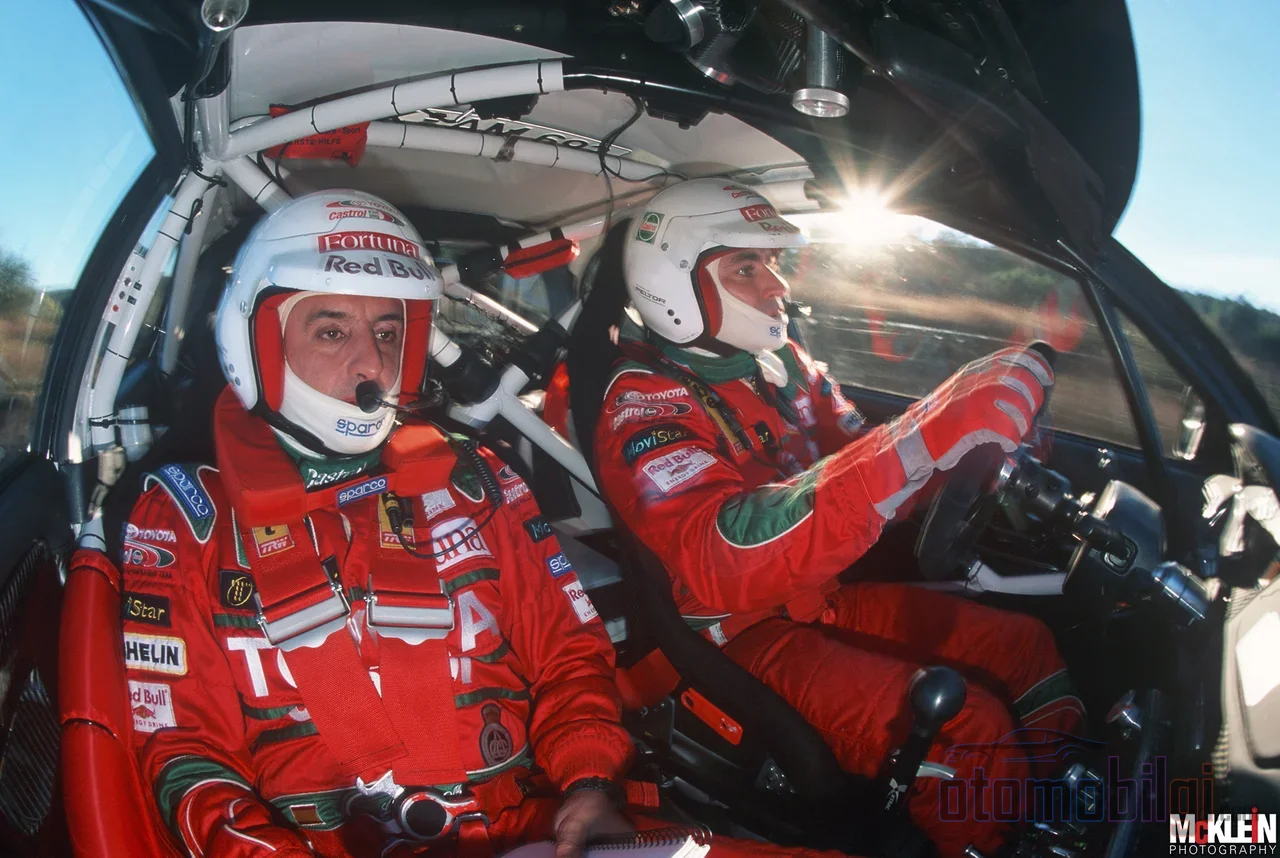
In 1993 he moved to the Lancia Delta HF Integrale with Jolly Club and finished the season in eighth place. Then, in 1994, he transferred to the 555 Subaru World Rally Team. In his first Subaru season, he finished second overall by winning Acropolis with the Subaru Impreza 555. The 1995 season was unforgettable in terms of intra-team rivalry: Sainz once again finished second, but this time behind his teammate Colin McRae and in the shadow of a controversial season. That same year, Subaru lifted the manufacturers' championship with 350 points; the victories in Monte Carlo, Portugal and Catalonia were the building blocks of that cup.
In 1996-97 at Ford he finished third twice with the Escort RS Cosworth and the Escort WRC, contributing with victories in Indonesia and Acropolis, and at the end of the 1997 season he also won the Race of Champions in Gran Canaria. Then he returned to Toyota, to the Corolla WRC. The 1998 season is remembered as the most dramatic year of his career.
The championship was at the door at the Network Q Rally in GB. With only 300 meters to go, the engine failed, and Sainz had to stop with a heavy heart. The championship went to Tommi Mäkinen. Life sometimes really does act like a scriptwriter; but the Monte Carlo and New Zealand victories that season also belonged to him. In 1999 the manufacturers' championship came with Toyota, followed by the Cyprus 2000 and Argentina 2002 victories with the Ford Focus WRC between 2000-2002. In 2003 he took the Citroën Xsara WRC seat; he won the 2003 Turkiye Rally with Marc Martí, lifted the manufacturers' cup with Citroën, and in Argentina 2004 signed the 26th and final WRC victory of his career. In 2005 he returned for two races in place of Francois Duval, finishing fourth in Turkiye and third at Acropolis, bidding a true farewell. He was one of the names who signed such a long WRC career with a competitive identity; this continuity record was later broken by the Finnish co-driver Miikka Anttila.
Where Does the Nickname El Matador Come From?
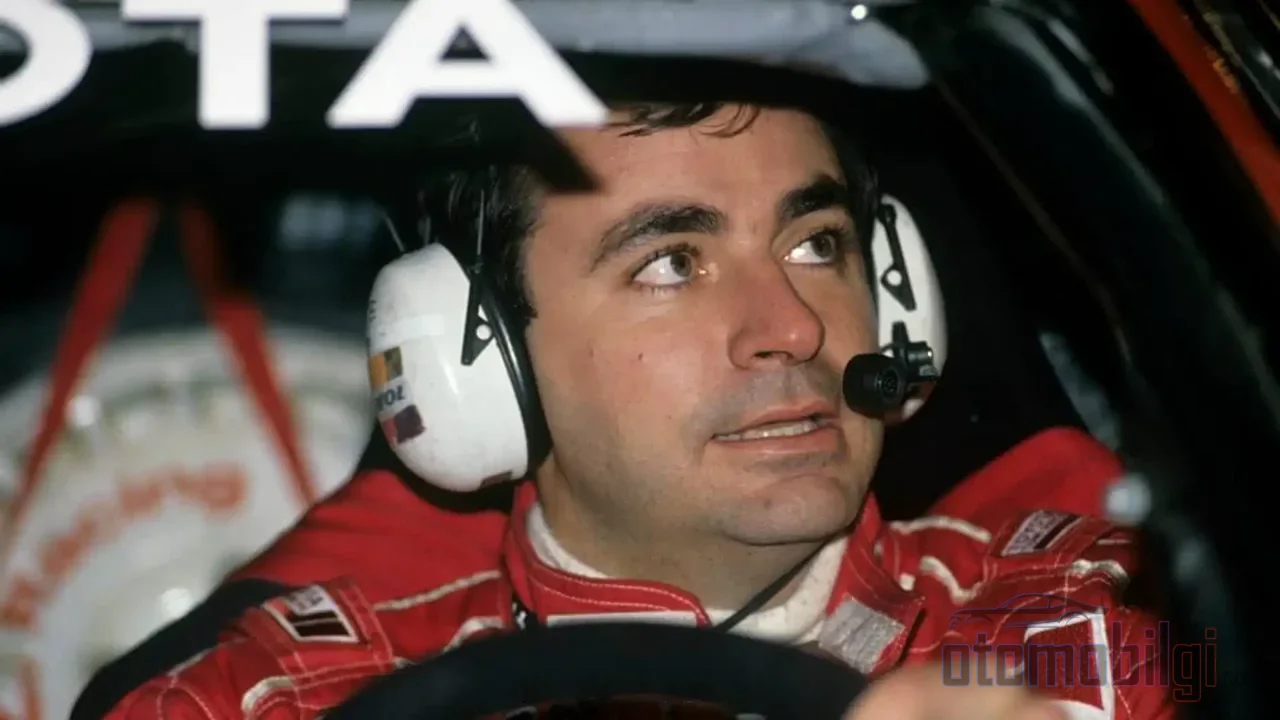
Here is the answer to the question in the page's title, and to be honest, there is no single definitive account. According to what is told, after the 1990 championship, while returning to Spain, thousands of people greeted him at the airport chanting his name; a new nickname circulating among the chants stuck to him that day: El Matador. Like the matador in bullfighting, the man who keeps control in his hands and carries the crowd with him. Sainz himself says the nickname dates back to the very early days of his rally career, a period when he was seen as an unusual figure in the rally scene.
The beauty of the nickname is this: it passed not only to the father, but to the son as well. Some of those who follow the Formula 1 driver Carlos Sainz Jr. also call him El Matador; two generations, two different eras, one legendary nickname. At the 2004 Rally Catalunya, drivers, co-drivers and team managers voted for Sainz and chose him as the best rally driver of all time. And in 2020, on WRC's official platform, journalists and fans voted to award him a similar title. So the nickname is not for nothing.
Dakar and the Family Legacy: The Road to Rally-Raid
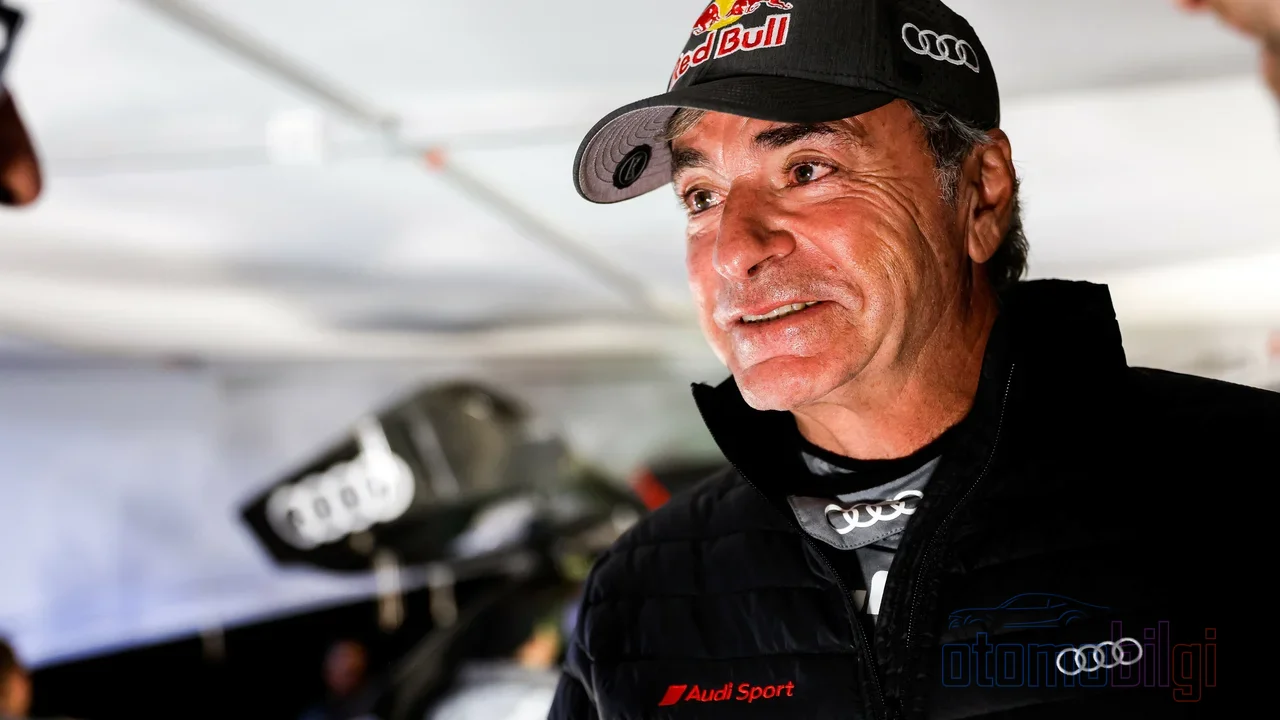
Withdrawing from the WRC did not mean withdrawing from competition for Sainz. He turned to the rally-raid scene, and he did not sit idle there either: In 2007 he won the FIA Cross Country World Cup with Volkswagen, adding victories in events such as the Transibérico, Silk Way Rally and Dos Sertões. As for Dakar... 2010 with the Volkswagen Race Touareg II, 2018 with the Peugeot 3008 DKR Maxi, 2020 with the MINI JCW Buggy, and in 2024 his fourth victory. Four different cars across four different decades, the same man. In 2025 he took another stage win with Audi's electric RS Q e-tron E2.
The family side is the warmest part of the story. When his son Sainz Jr. watched his father's 2024 Dakar victory, he described it as the smartest Dakar driving he had ever seen; and on the 2018 victory he joked that revenge had been taken for the advice he received in childhood. In 2025, when his father was 63, he did trial laps in the Raptor T1+ at Ford's test in Zaragoza; his son's reaction was brief: that his father doing these things at that age blew his mind. Sainz Jr. also says he could one day compete in the Dakar, and that he has even talked about it with his father; adding that by then his father will probably have long passed 70. It seems the legacy is safe.
Still on the Field: An Outlook from 2026
The word retirement does not seem to exist in this man's dictionary. In 2026, Sainz and his former co-driver Luis Moya competed together in the Rally de Asturias Histórico, which bears Moya's name, and won; they sealed the victory by winning five of the 10 asphalt stages totalling 126.65 kilometres. He also did a demonstration run in the current-generation WRC car, the Ford Puma Rally1, and won that too. So at 64, he is still keeping up his podium habit, even with hybrid Rally1 machinery. The awards keep coming too: the 2020 Princess of Asturias Sports Award, the 1997 Spanish Olympic Committee Medal, and in 2001 the Grand Cross of the Royal Order of Sports Merit from King Juan Carlos I.
In summary: El Matador was born with a chant at an airport, was consolidated with two Toyota championships, and was hardened with four Dakar victories. Even a championship lost with 300 metres to go cannot cast a shadow over this story; because the true measure is that competitive appetite that never faded for 18 years.
Sources
- Carlos Sainz - WRC official
- Carlos Sainz - Red Bull
- Carlos Sainz official site - Honors
- Your GT-Four Carlos Sainz resource - Turbocelica
- Carlos Sainz Interview: World Rally Champion 1990 and 1992
- Carlos Sainz: Son of El Matador comes of age - BBC
- Rally legend Carlos Sainz drives WRC Ford Puma Rally1 to victory
- Carlos Sainz and Luis Moya Celebrate Rally History - Ford