Walter Rohrl: The Quiet Genius of Rallying
Think of a rally driver: he won Monte Carlo four times on the world's toughest roads, but each time he did it with a different brand. On top of that, he clashed with his sponsors for refusing to appear in cigarette ads, never went to 1000 Lakes because he detested the jumps, and still became world champion twice. Walter Rohrl is one of the most stubborn, most perfectionist, and most honest characters in rally history. So how did this quiet man from a small Bavarian town become such a legend of rally history?
From Skis to the Steering Wheel: The Quiet Child of Regensburg
Walter Rohrl was born on March 7, 1947 in the city of Regensburg, Bavaria. He was the youngest of a stonemason's three children, and most of his youth was spent not behind the steering wheel, but on skis. He was so good that he even became a certified ski instructor. So how did a skier get into rallying? Everything changed with his first rally, to which he was invited in 1968.
But the really interesting detail is this: Before his rally career began in earnest, he worked as a chauffeur for a company's commercial director. And he took on this job by driving up to 120,000 kilometers a year. In other words, years before his world championship, Rohrl was learning to feel a car's limits on roads of thousands of kilometers every day. Those thousands of hours spent in traffic became the foundation of that road mastery that later left all his rivals stunned. So what kind of driver emerged when his sense of balance on skis combined with his precision on the roads?
The Opel Years and the First Great Victories
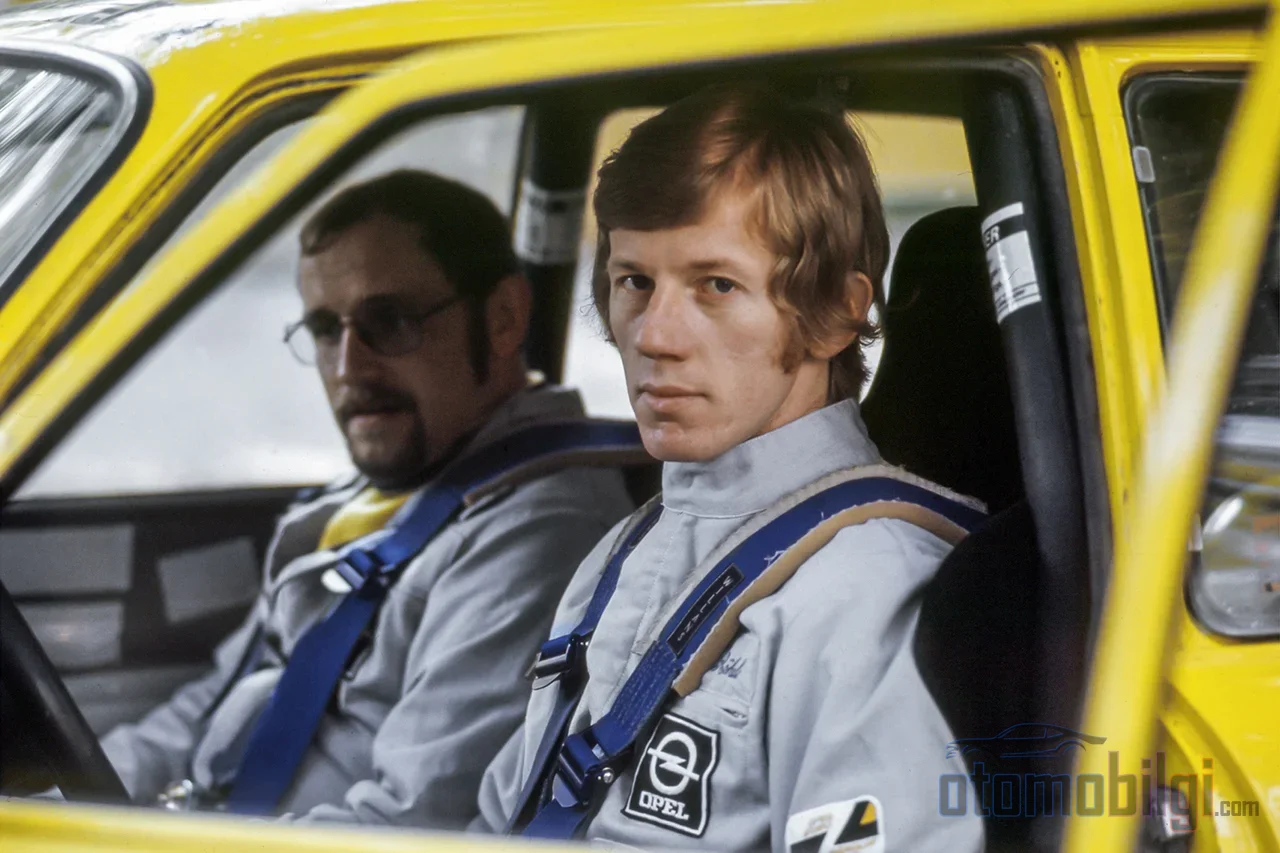
Rohrl's WRC adventure began with the 1973 Monte Carlo Rally. He spent his early years at Opel and quickly made a name for himself: In 1974, he became European Rally Champion with the Opel Ascona A. During this period of hard work with his co-driver Jochen Berger, he also took his first WRC victory by winning the Acropolis Rally in 1975. While winning on Greece's dusty, rocky, punishing stages was a feat in itself, Rohrl did it at the start of his career.
Then the Fiat door opened, and in 1978 came victories at the Acropolis and Critérium du Québec. The real explosion came in the 1980 season: With victories at Monte Carlo, Portugal, Argentina, and San Remo, he reached the world championship with the Fiat 131 Abarth. Moreover, the title was sealed with the victory at San Remo. To crown the championship in front of one of Italy's most passionate rally crowds... At the heart of that year's story lies this question: How do you become champion in a revolution of four-wheel drive with a rear-wheel-drive, horse of a classic?
Highlights
- 2-time WRC world champion: 1980 (Fiat 131 Abarth) and 1982 (Opel Ascona 400)
- 4 Monte Carlo victories, with 4 different brands: Fiat, Opel, Lancia, Audi
- The only German driver to win the WRC drivers' title
- WRC career: 14 victories, 31 podiums, 420 stage wins
- The 1987 Pikes Peak victory: He completed the 19.99 km course in 10:47.850
The Second Championship with the Ascona 400: Two Wheels Against Four
Here is one of the most romantic titles in rally history: In 1982, Rohrl returned to Opel and won his second world championship with the rear-wheel-drive Ascona 400. Why romantic? Because he was up against the Audi quattro - the four-wheel-drive revolution that turned rally upside down. The Ascona 400 had around 260 horsepower and weighed 1,050 kg. In a battle of power and traction, this car that looked small against Audi took the title in Rohrl's hands. Think of it this way: while everyone was playing on the new-generation game console, the guy won the tournament with the old one.
The season's most unforgettable moment came in Monte Carlo. On the final night of the rally, at Col de Madonne, he held a 31-second advantage over Hannu Mikkola and, instead of driving it safe, took risks to go for the win. He secured the championship at the 5,000-kilometer marathon of the Ivory Coast Rally, with a total of 109 points. He also won the African Rally Championship the same year - he kept on winning from one end of the world to the other. Yet despite all the wins, team boss Tony Fall dropped him from the team. That's how hard it can be for a perfectionist character to fit into a corporate environment.
The Mercedes Scandal, and the Lancia and Audi Era
The strangest stop of Rohrl's career was 1981. He signed a five-year contract with Mercedes-Benz - a massive deal. So what happened next? Mercedes cancelled the 500 SL project and the entire Group B rally plan before the season had even begun. Rohrl received 900,000 DM in compensation, but in return could not find a single seat for that season. The project of his dreams evaporated - his pocket was full, but he wasn't racing. A champion spending a full year in the middle of his career doing absolutely nothing…
A short but intense Porsche interlude
The Porsche years opened other doors. In 1981, he entered six rallies in the German rally championship with the Porsche 924 Carrera GTS; that same year, with Jurgen Barth, he took a class win and an overall 7th place at the 24 Hours of Le Mans with the Porsche 924 Carrera GTP, and also won the 6 Hours of Silverstone with the Porsche 935. So the man wasn't just in rally - he was on the track too. At the 1983 San Remo, he started with the 911 SC and was running second when a driveshaft failure knocked him out of the rally - the moment he described as his most painful retirement.
Final victories with the Lancia 037 and Audi
In 1983 he moved to Lancia and won Monte Carlo, the Acropolis and New Zealand with the rear-wheel-drive Lancia 037. Then he transferred to Audi: In 1984 he took his fourth Monte Carlo victory with the Quattro A2, and at the 1985 San Remo he signed off his final WRC win with the Audi Quattro Sport S1. His final rally of his career was the 1987 Acropolis. Four Monte Carlo wins with four different brands - a record still talked about today. Which modern driver would dare to adapt to four different teams and try to win at Monte?
| Walter Rohrl – WRC Career Card | |
|---|---|
| Active years | 1973–1987 |
| World championships | 2 (1980 Fiat, 1982 Opel) |
| Rally victories | 14 |
| Podiums | 31 |
| Stage wins | 420 |
| Points scored | 494 |
| First victory | 1975 Acropolis (Opel Ascona) |
| Last victory | 1985 San Remo (Audi Quattro Sport S1) |
Method, Integrity, and a Hatred of Jumping
It wasn't just speed that made Rohrl a legend; it was his approach to the job. While other drivers chatted in the service area, he would be in his car studying the pace notes for the next stage. He was someone who practically memorized the stage in his head, living every corner in advance - like a musician studying a score, but with no turning back once the ticket was punched. His legendary memory and ability to memorize stages became his signature, and for many years the synchronization with his co-driver Christian Geistdorfer was built on this discipline.
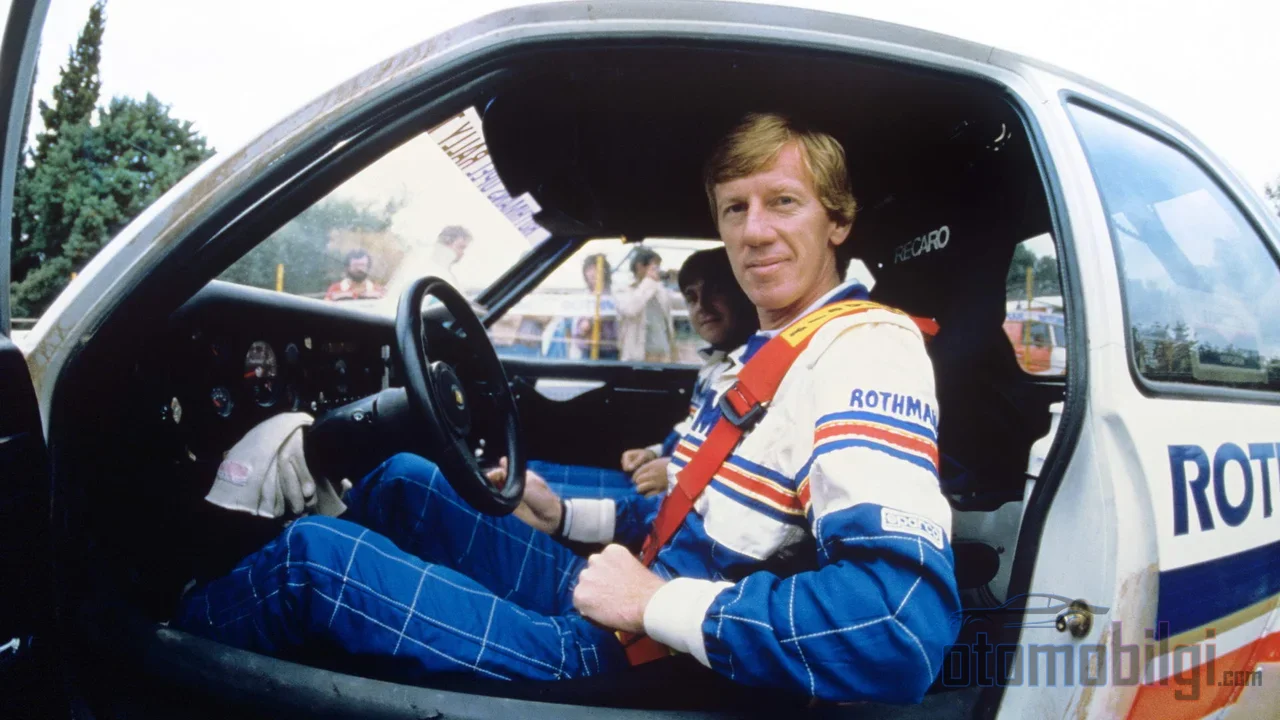
The integrity side is another story. He refused to shoot advertising material for the campaigns of tobacco sponsor Rothmans - because as someone who didn't smoke, he saw himself as someone hired to be a driver, not an actor. This attitude caused serious tensions with the team, but he didn't back down. He also hated jumps and cars getting airborne, so he never entered the 1000 Lakes Rally, ran the Swedish Rally only twice (finishing third in 1982), and never returned to the RAC Rally after 1979. Despite this selective race program, accumulating 14 WRC victories is the clearest proof of the scale of his talent. Staying honest in the world of motorsport can somehow be even harder than winning - Rohrl managed both.
This character also earned international recognition: He was named rally driver of the century in Italy, and in November 2000 a jury of experts in France declared him rally driver of the millennium; A jury of 100 pointed to him as the greatest rally driver of all time. In 2011 he entered the Rally Hall of Fame, and in 2016 the German Sports Hall of Fame.
Pikes Peak and Dakar: Beyond the Asphalt
One of Rohrl's wildest moments happened not on rally stages but on a mountain road climbing toward Colorado's sky. At the 1987 Pikes Peak Climb, he completed the 19.99-kilometer course in 10:47.850 in the 600-horsepower Audi Sport Quattro S1 E2, becoming the first driver to break the 11-minute barrier - and that year the road was mostly gravel. Mastering four-wheel drive on the face of a mountain with endless corners at the highest altitude... The roots of his early rally career, tied to hill climb racing, appear before us once again here: Rohrl had always been someone who loved steep climbs.
And what about desert rallies? The dream of racing the Porsche 959 in Group B rallying fell through with the category's cancellation after the 1986 season. But Porsche entered the 1986 Paris-Dakar with two 959s and took both first and second place - the winning car belonged to the team of Jacky Ickx and Claude Brasseur. Rohrl's role in this story was shaped through test drives and development work with the 959's predecessor, the 953. So while his career doesn't directly wrap around the Dakar victory podium, he was part of the engineering effort behind that victory. His ties with Porsche were never severed either: From 1993 onwards, he served as brand ambassador and development driver, testing road cars on the Nurburgring Nordschleife. At the 1992 Nurburgring 24 Hours, stories are still told of how he barely slowed in night fog and downpours, anticipating corners through timing. The grinning detail is this: even in his late 40s, the man could read the track like a metaphor.
Rohrl's Legacy: Why Is He Still Talked About Today?
Summarizing Walter Rohrl's career in a single sentence is hard, but the most honest description might be: the only German WRC champion who won two world championships with two different brands, four Monte Carlo victories with four different brands, combined his speed with understatement, and never sacrificed his seat to sponsorship politics. All modern rally stars are products of technological support, long contracts, and media campaigns. Rohrl, on the other hand, was someone who came from ski slopes, memorized stages in his head, could say no to his sponsor, and spoke through his talent. Today, as Rally1 cars take to the stages with hybrid power units, the championship he won against the four-wheel-drive revolution with his Ascona 400 is still told as rallying's purest story.
If it were you, which Rohrl memory would you celebrate the most - the four-brand record at Monte, the 11-minute barrier at Pikes Peak, or saying no to his sponsor? And consider this too: Today's drivers work with pace notes, simulators, and massive data analyses. Half a century ago, Rohrl committed stages to memory without any of these. That is exactly why rallying's quiet genius remains a benchmark even as generations change.
Sources
- Walter Röhrl - Wikipedia
- 40 Years Ago: Walter Röhrl Won World Title in Opel Ascona 400 - Stellantis Media
- Walter Röhrl - wrc.com
- Walter Röhrl - Porsche Newsroom (biography)
- Röhrl in Review - Porsche Newsroom Christophorus
- Porsche preserves the history of the 959 Paris-Dakar - Porsche Newsroom
- Walter Rohrl, who has won a record four Monte - UPI Archives
- Walter Röhrl: The Greatest Driver of the Century - Škoda Motorsport