What Do Autonomous Vehicles Do When Faced with Police and Ambulance Sirens?

Share This Page
Autonomous vehicles can detect sirens; Waymo's external microphones and Cerence's audio AI do this at distances of up to 800 meters. But detecting something and responding correctly are not the same thing: robotaxis stop in front of fire trucks, block fire station exits, and close off an emergency vehicle's path while waiting for a police officer's hand signal. In short: they have ears, but their reflexes are still lacking.
Key Takeaways
- Cerence's sound recognition system recognizes more than 1,500 siren sounds and can detect them from over 800 meters away.
- In August 2023, a fire truck with its siren on in San Francisco hit a driverless Cruise vehicle going through a green light.
- NHTSA issued a public warning to autonomous vehicle developers in July 2026 following more than 75 incidents.
- Waymo has been training its vehicles since 2017 to recognize fire trucks, ambulances, and police vehicles.
- In California, as of July 1, robotaxis can be penalized for blocking emergency responders.
Is There an Ear for Sirens in the Sensor Package?
Think about how an autonomous vehicle sees its surroundings: lidar draws a three-dimensional map, radar covers long distances and bad weather, cameras recognize lights, and ultrasonic sensors handle close range. Nice, but this package has a common weakness: they all rely on line of sight. If a fire truck is behind a corner, the cameras see an empty street. That is exactly where sound comes into play, because siren sounds can come from behind walls and from outside the line of sight. It is the same logic as not being able to hear the engine when you roll up your car window in the middle of traffic.
This is why Waymo's vehicles have external microphones; they are placed on the outside to detect sirens and horns. When multiple microphones record the same sound at different moments, it becomes possible to calculate the direction the sound is coming from based on the time difference. So the vehicle does not just say "there is a siren"; it also tries to estimate its direction and whether an approaching vehicle is present. Pretty cool, right? Now let's look at where this breaks down in the real world.
Why Is Recognizing a Siren So Hard?
The frequency bands of sound are covered by city noise almost at every moment: tractors, motorcycles, construction, music with bass. Add to that the sirens' own variety. Patent records mention two basic siren patterns: the slowly oscillating "wail" and the rapidly fluctuating "yelp". Also, the maximum sound pressure typically concentrates in the 1,000-2,000 Hz band, and this band overlaps with the range where city noise is densest. For the system to separate the siren from the noise, the audio recording is divided into clips, converted into a spectrogram, and passed through a pre-trained convolutional neural network. It sounds complicated because it really is complicated.
The truly hard part is not technical, but operational: the detection system's weakest point comes in situations where the emergency vehicle is hidden behind a building, a truck, or a row of trees. Both in software and in academic studies, this "hidden vehicle" scenario is treated as a separate problem. The same finding is repeated in news coverage of Nvidia's emergency vehicle detection patent: autonomous vehicles struggle to recognize emergency vehicles and respond correctly. So the issue is not the question "can't you see it?" but rather "if you can see it, what are you doing?"
How Reliable Are the Figures?
Sound recognition systems promise striking success rates: one academic study reports an accuracy above 99 percent for detecting the presence of a siren in the critical range of 10-50 meters. But note: this figure comes from controlled data sets. On a real street, two sirens are blaring at once, the wind is howling, and the vehicle is hiding behind a truck. The gap between the range and accuracy values that manufacturers highlight and real-world performance in daily traffic is the most important yet least discussed part of this story.
How Are Manufacturers Trying to Solve the Problem?
One of the most ambitious players is on the sound side. Cerence's emergency vehicle detection system Emergency Vehicle Detection (EVD) is certified in 47 countries and supports more than 1,500 siren sounds; it detects from 300 meters away with in-car microphones and over 800 meters with external microphones. The external microphone setup also provides directional information. Mercedes-Benz and BMW have integrated this system into their automated driving programs; it also appears in robotaxi and autonomous truck projects. In other words, the industry has learned at some point to say "the camera isn't enough, let's give the vehicle ears."
On the Waymo side, the story goes further back. Since 2017, the company has been training its vehicles to recognize fire trucks, ambulances, and police vehicles; its sensors have collected samples from different speeds, distances, and angles. A behavior hierarchy that detects traffic police and waits for their hand signal is also defined. Tesla's approach is different: it relies mainly on cameras and radar, and sound-based siren detection is not clearly established in its systems. Starting from version 13, the pull-over behavior for emergency vehicles with flashing lights has been reported by users; in one incident, Full Self-Driving changed lanes while stopped at a red light to make way for an approaching ambulance. Still, this area at Tesla is not documented with engineering detail as concrete as Waymo's or Cerence's.
| System | Approach | Key Data |
|---|---|---|
| Cerence EVD | Sound AI, in-car and external microphones | 1,500+ siren sounds, detection over 800 m, certification in 47 countries |
| Waymo | External microphones (EAR) + visual recognition, police gesture detection | Emergency vehicle training since 2017 |
| Tesla FSD | Mainly camera and radar | Pull-over behavior with version 13 (user report) |
Why Do Robotaxis Struggle in the Face of Sirens? Concrete Cases
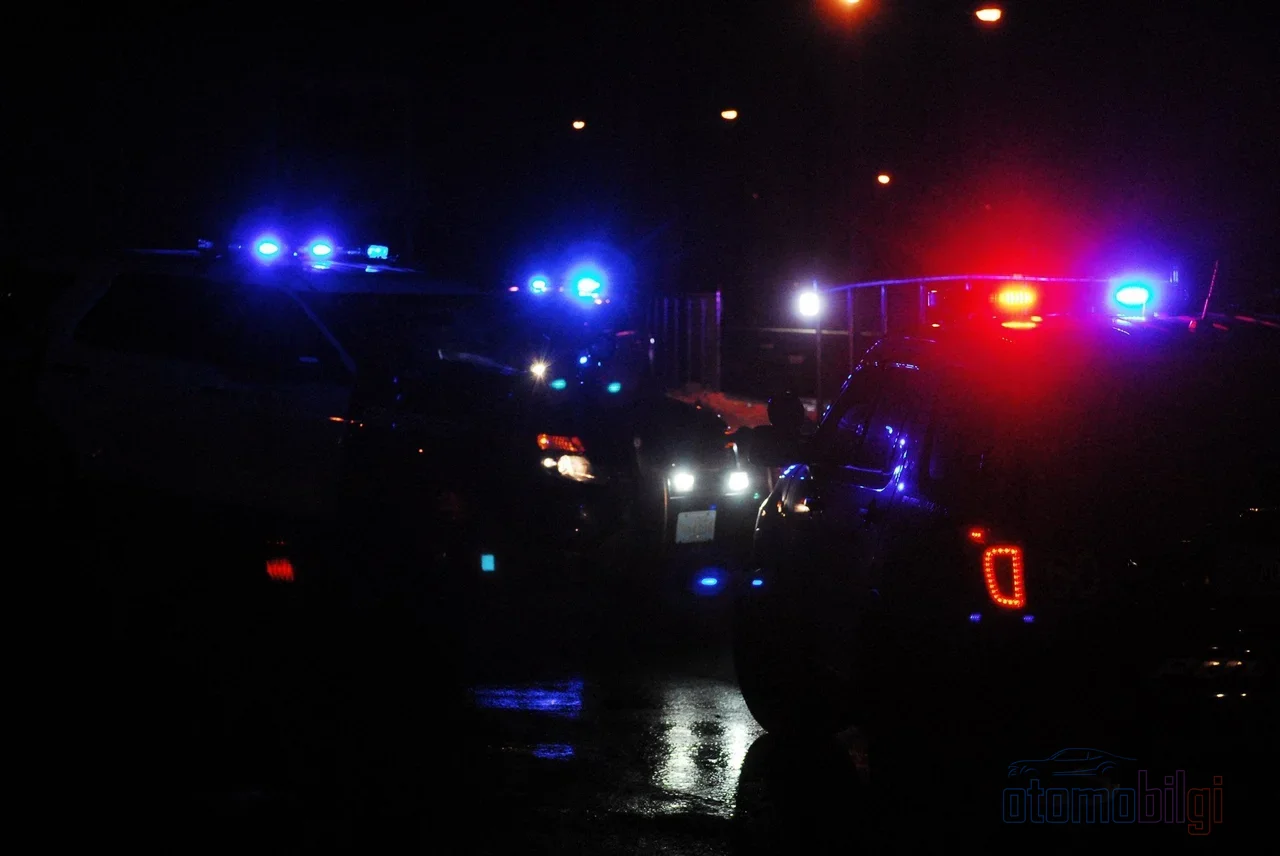
The theory is beautiful, the practice is merciless. The most striking case occurred in San Francisco in August 2023: a fire truck on an emergency call, with its siren and lights on, struck a driverless Cruise robotaxi going through a green light, and one person was injured. Just think about it - the most obvious things the technology should see - flashers, siren, emergency vehicle - and the system still made the wrong call.
Similar scenes played out on the Waymo front as well. In Austin, an empty robotaxi blocked the path of a fire truck responding to a hotel fire report; the vehicle made small back-and-forth maneuvers and honked, but could not properly clear the way. In May 2024, in Dallas County, a law enforcement officer encountered an empty Waymo blocking the road near a deadly structure fire. San Francisco firefighters have also complained about repeated obstructions: there are recorded cases of vehicles blocking fire station exits and stopping in front of ambulances and fire trucks. In one incident, firefighters had to move the vehicle aside with their own hands. A video of a robotaxi honking for 30 seconds is actually the most benign of these.
The picture is not rosy on the police side either. A December 2025 report from a specialty organization focused on law enforcement confirms that autonomous vehicles have trouble with irregular traffic situations such as emergency vehicle traffic, road closures, verbal instructions, and hand gestures. Even the U.S. Department of Justice's police division published a guide in September 2025 explaining to officers how to interact with automated driving systems. The state is training its police to deal with robotaxis - read that sentence once more to appreciate how odd it is.
When Did the Regulators Step In?
Officials with enough patience finally spoke up. In July 2026, the federal traffic safety administration in the U.S. identified a clear pattern of driverless vehicles blocking law enforcement and first responders and demanded a rapid solution from the companies; after more than 75 incidents, this was less a gentle warning than a slap in the face. In the same period, a new rule came into effect in California: As of July 1, robotaxi companies can face penalties when their vehicles block police or firefighters.
Harsher ideas are also on the table: a bill was proposed requiring two separate sensing modalities for robotaxis, a 24-hour first responder hotline is being discussed, and so is the idea of geofencing to keep vehicles away from certain areas. These are not yet finalized regulations, but they point to a direction: if the technology does not correct itself, the rules will try to correct it.
The Gap Between Promise and Reality: Who Is Driving the System?
The industry's promise is clear: multimodal sensor fusion and audio AI will solve the problem; we will give the vehicle both eyes and ears. The reality right now is this: even a vehicle that detects correctly may fail to respond properly; instead of clearing the way, it honks, waits with small maneuvers, or freezes up completely. When a robotaxi stops in front of your car, the most practical solution right now is still a human being: Waymo's guide published for first responders defines a manual takeover procedure. In other words, a firefighter can open the car's door and take control. Emotionally a bit heartbreaking, engineering-wise quite candid.
My question is this: figures like a 99 percent hit rate and an 800-meter range are put on display, while real-world street performance remains unverified. In my view, NHTSA stepping in after more than 75 incidents is the clearest proof that the technology has not reached operational maturity. University research also points in the same direction: manufacturers must improve their emergency vehicle detection and response capability. Hearing a siren is a fine thing, but there may be a life behind that fire truck; the waiting time is measured against that life.
Summary: Ears Equipped, Reflexes Missing
Autonomous vehicles can now hear sirens - thanks to microphone arrays, audio AI, and visual recognition, that part is done. The next threshold is harder: responding to the heard siren with a reliable and fast reflex. The line from the 2023 Cruise crash to the 2026 federal warning shows that this is not an issue that can be solved overnight with a software update. The fire truck waiting behind a robotaxi is, in my view, this technology's most honest report card - and it has not passed yet.
Sources
- Emergency Vehicle Detection: Enhancing Safety with Audio AI - Cerence AI
- Emergency siren detection for autonomous vehicles - US20220122620A1, Google Patents
- Can Self-Driving Cars Detect Emergency Vehicles? - TCS Upfitting
- Companies must address self-driving car interference with emergency vehicles, U.S. says - Reuters
- Recognizing the sights and sounds of emergency vehicles - Waymo Blog
- Waymo self-driving cars can now respond to traffic cops' gestures - CNET
- Cruise (autonomous vehicle) - Wikipedia
- VIDEO: Driverless Cruise car struck by SF firetruck, injuring ... - ABC7 News
- Waymo Robotaxi Blocks Fire Truck Responding To Austin - Yahoo News
- Firefighters Had to Move a Waymo Themselves After It ... - Inc.
- New PERF report helps police prepare for autonomous vehicles - Police Executive Research Forum
- Guidance for Interacting with Automatic Driving Systems - COPS Office, US DOJ
- Do driverless cars have a first responder problem? - Understanding AI
- Nvidia patent helps autonomous cars detect emergency vehicles - The Robot Report
- Investigation of the impacts of the deployment of AVs - Emerald