Is It Sensible to Pay a Monthly Fee for Autonomous Driving?
Share This Page
Short answer: for most drivers, at today's prices, yes - but not every month. Tesla's Full Self-Driving subscription costs $99 a month and, despite its name, is not fully autonomous; Mercedes' Drive Pilot really is Level 3 but barely works under any conditions; robotaxis, meanwhile, don't charge a subscription but charge per ride. So whether you're getting your money's worth depends on how many kilometers you drive per day and under what conditions. Now let's put these three systems on the table under real-world conditions.
Highlights
- Tesla FSD subscription $99/month; the purchase option as of February 14, 2026 is being discontinued.
- Mercedes Drive Pilot works only below 64 km/h, on mapped highways, in California and Nevada.
- An average Waymo ride costs $19.69; the Uber average is $17.47.
- At Level 3, while the system is engaged, accident liability shifts from the driver to the manufacturer .
- Level 5 full automation is not expected to arrive within the next decade.
Let's Clear One Thing Up First: Is Your Car Really Driving Itself?
Autonomy is not a single box; the SAE standard defines six levels from 0 to 5, and today these levels are the common language of everyone from the US Department of Transportation to the UN. Between Level 0 and 2, the steering wheel is in your hands: at Level 2, the system manages steering along with acceleration and braking together, but you can't take your eyes off the road. Think of it like training wheels on a bicycle - they support you, but you're the one pedaling and the one who notices you're about to fall.
Level 3 is exactly where the line changes: the system takes over the entire drive under certain road types, speeds and weather conditions, and only notifies you when you need to intervene. Level 4 can operate completely driverless within a limited area; if a fault occurs, it moves itself into a safe state. Today, the best driverless systems in the US are Level 4 in those limited zones. Level 5 - that is, driverless everywhere, in all conditions - is unfortunately not on our doorstep within the next decade.
Tesla FSD: What Does the $99 Monthly Payment Get You?
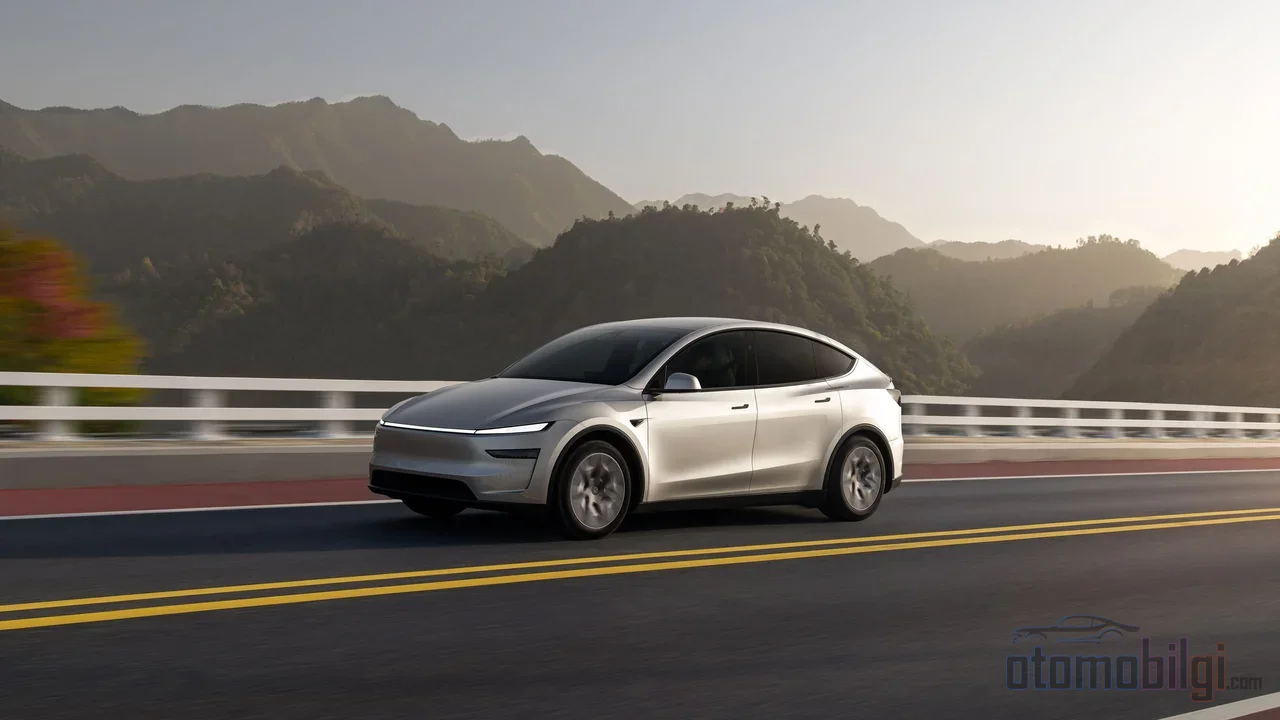
Tesla's Full Self-Driving (Supervised) package costs $99 a month. For a long time there was also an $8,000 one-time purchase option, but it was announced in early 2026: as of February 14, 2026, this software will be offered only as a monthly subscription. There is also a discounted $49 option for vehicles with Enhanced Autopilot. In other words, even Tesla is saying this software is not a one-time purchase product, but a continuously paid service.
So what does this money get you? Route navigation, steering control, lane changes and parking. There is a wide range of capabilities extending all the way to city streets, which is why the industry calls FSD Level 2++ - beyond 2 but still assistant-class. The word "Full" in the name is unfortunately marketing: the cabin camera monitors your attention, issues graduated warnings, and you are the one responsible in an accident. Even if you take your hands off the wheel, your obligation doesn't end; it's like the payment app on your phone reminding you to pay your bill - it reminds you, but the payment is on you.
How reliable are the safety figures?
According to Tesla's own report, vehicles with FSD had one accident per 5.3 million miles in early 2026, and Tesla states that accidents are less frequent with FSD active than without it. But let's not skip this detail: the source of these figures is Tesla itself, and the debate continues over whether robotaxi incidents throughout 2026 need to be examined with independent analysis. Sellers' figures always look brightest in their own shop windows; keep that in mind before paying 99 dollars a month.
Mercedes Drive Pilot: Does Paying Really Let You Stop Driving?
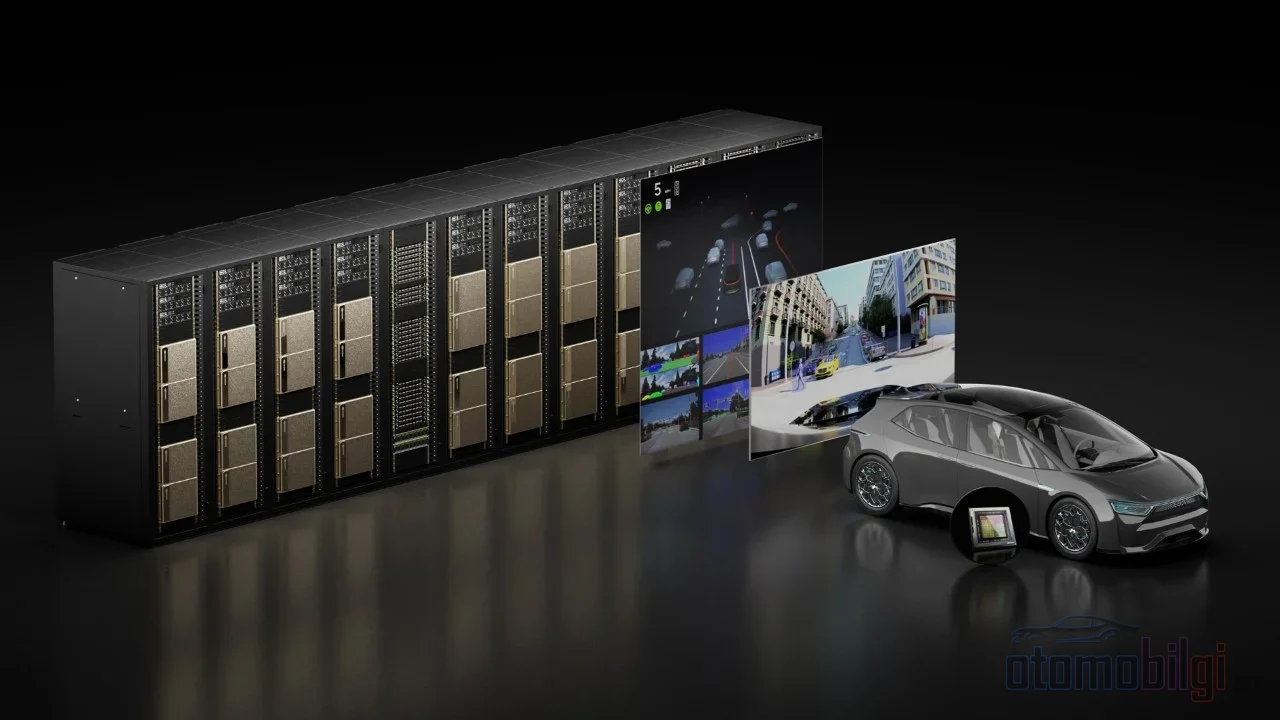
Mercedes' DRIVE PILOT system is SAE level 3, and that's exactly why it's in a different league: while the system is engaged, you can take your hands and eyes off the road, because if there's an accident, the manufacturer is responsible. In return, its area of use is very narrow. It requires conditions such as mapped highways, a speed limit of roughly 64 mph - that is, 64 km/h - heavy traffic and sunny daytime. It is certified in the US only in California and Nevada, and available on suitably equipped S-Class and EQS models. This is not a vehicle you can drive around the whole city on Sunday; it's a commuter set that lets you sit reading a newspaper on a jammed morning highway. Mercedes says the system can reduce typical highway accident rates by 25%.
Technically it's also a classic Mercedes: a full set of lidar, radar, camera and driver monitoring sensors. The complete opposite of Tesla's approach relying on a single camera. But the interesting part is that Mercedes will replace Drive Pilot with the level 2++ class MB Drive Assist Pro in the 2026 S-Class. Together with Honda, Mercedes has also slowed its level 3 private vehicle plans. In other words, even the most ambitious system that takes on responsibility is pulling back in the market - that's a good clue to the answer money is asking for.
Is the Robotaxi Ride More Expensive Than a Taxi, or Comparable to a Train?
Robotaxis use a pay-per-ride model, not a subscription, so the logic is completely different. Waymo charges 1.50-2.50 dollars per mile, and an average ride costs 19.69 dollars in early 2026 - roughly a 13% premium compared to Uber's 17.47 dollar average. Lyft's average is 15.47 dollars. Around 2,500 Waymo robotaxis currently operate in San Francisco, Los Angeles, Phoenix, Austin, Atlanta and Miami; they aim to reach 20 cities by the end of 2026. In Austin and Atlanta you can summon them via the Uber app.
Tesla, meanwhile, entered the robotaxi market as a price disruptor: a 2.25-mile ride costs 6.15 dollars with Tesla in Dallas, while Waymo quoted 13.93 dollars for the same route - nearly double the difference. But there's no free breakfast: the average wait time with Tesla can reach 15 minutes. Moreover, in San Francisco Tesla robotaxi prices rose 41% and Waymo averages 18%, meaning the era of the "cheap robotaxi" is closing fast.
| System | Payment Model | Price / Cost | Driver's Role |
|---|---|---|---|
| Tesla FSD (subscription) | Monthly subscription | 99 $/month (discounted 49 $/month option) | Full attention, intervene at any moment |
| Mercedes Drive Pilot | Sold with the vehicle hardware | Only on certain models | Available when conditions are met |
| Waymo | Per ride | Average $19.69, $1.50-2.50 per mile | None (in a limited area) |
| Tesla Robotaxi | Per ride | Average ~$8, sometimes a 15-minute wait | None (in test zones) |
As for trains: there is no direct train-robotaxi cost comparison in today's data. But you can do rough math - when you calculate a long distance at $1.50 per mile, the robotaxi doesn't compete with a train ticket; when it comes to door-to-door comfort and the last mile where you don't take public transit, the picture flips.
The Legal Side: Who Is Liable, and Does the Money Go to Them?
Here's where the subscription looks most expensive: in Level 2 and 2++ systems, you are the one legally responsible in case of an accident. Every feature of FSD, whatever its name, operates under your supervision, and you are responsible for staying attentive on the road. What you get for $99 isn't a license to get distracted, but an assistant that lets you hold your attention more easily. Level 3 changes the game: while the system is active, responsibility shifts to the manufacturer, and that's a major step in automotive history - Mercedes is taking on that risk within its narrow set of conditions.
The regulatory front is also moving. In mid-2026, NHTSA announced a wide-ranging package: a robotaxi deployment permit for Zoox, a three-year partnership for a national autonomous vehicle performance standard, and updated federal guidance. But alarm bells rang too - there were documented cases of driverless vehicles cutting off ambulances and failing to recognize flashing lights and traffic cones. In other words, the industry is learning the ropes and still has homework to do.
So In Which Scenario Do You Get Your Money's Worth?
For someone who covers long highway distances every day, an FSD subscription could make sense; for someone who only does a few short city drives a week, $99 a month is often money wasted. Independent evaluations show a similar picture: in the permanent subscription model, there doesn't appear to be a big difference for most drivers. One user explains that with his leased Model 3 he drove about 95% of roughly 9,000 miles on the subscription and that the technology works very well - so for a heavy user, the experience is genuinely valuable. But a reminder: an earlier assessment by experts noted that the monthly payment could cost consumers more in the long run and that it doesn't add to the vehicle's resale value. With the purchase option removed, this balance has now tipped entirely in favor of the subscription.
On the Drive Pilot side, the question is clearer: a system that works in such a narrow set of conditions, on so few models, and in so few states is only worth the money for someone who fits the conditions exactly - and judging by the guidance for the new generation, even for Mercedes it's a temporary luxury. Robotaxis make sense when you use them in the city like hailing a cab; whether the 13% premium is worth the peace of a driverless ride is entirely up to your budget. Today's real-world performance doesn't yet fully earn the money paid for bold promises - but in the right scenario, for the right user, it is gradually starting to earn it.
Resources
- Full Self-Driving (Supervised) Subscriptions - Tesla
- Full Self-Driving (Supervised) - Tesla
- Full Self-Driving (Supervised) Vehicle Safety Report - Tesla
- Tesla to offer self-driving software only on monthly basis - Reuters
- DRIVE PILOT Automated Driving - Mercedes-Benz USA
- Mercedes-Benz shifts autonomous driving tech in 2026 S-Class - WardsAuto
- SAE Levels of Driving Automation Refined for Clarity - SAE International
- Levels of Automation - Alliance for Automotive Innovation
- State of Self-Driving in 2026 and Beyond - GreenCars
- Green Lights and Red Flags: AVs Summer 2026 - Holland & Knight
- What Drivers Need to Know About Autonomous Car Liability - Clifford Law
- Is Tesla's "Full Self Driving" Worth $99/Month? - CleanTechnica
- Tesla's Subscription Model for FSD - Consumer Reports
- Tesla Robotaxi vs Waymo vs Uber: Full Price Comparison 2026 - Ridewise
- Robotaxi vs Uber vs Lyft Cost Comparison 2026 - NextGenAuto
- Tesla Undercuts Waymo by Half in First Dallas Fare Comparison - eletric-vehicles.com
- Tesla Robotaxi Prices Are Up 41% In San Francisco - Obi
- Tesla's FSD Safety Data Under the Microscope - nai500
- Where are we with Driverless Cars in the U.S. (2026) - Traffic Safety Store