Lidar or Camera? The Scorecard of the Sensor War in Autonomous Driving
Share This Page
Lidar or camera? In short: there is no single right answer - Tesla is moving forward with cameras and neural networks, while Waymo and Mercedes rely on multi-sensor redundancy with lidar at the forefront; which one wins depends on the balance of cost, safety, and regulation. So this is a sensor war, and the winner is not yet clear.
Highlights
- In Waymo's 6th-generation driver there are 13 cameras, 4 lidars, 6 radars ; Tesla FSD, on the other hand, has been fully camera-based since 2022.
- IIHS finding: In darkness, camera- and radar-based emergency braking systems in no instance could see the pedestrian; in the US, 75% of pedestrian deaths occur at night.
- Radar with a range exceeding 250 meters leaves lidar (~200 m) behind, but its resolution is low.
- The automotive lidar market is expected to reach 9.59 billion dollars by 2030.
- Mercedes Drive Pilot holds Level 3 approval on German highways at speeds up to 95 km/h.
First, Let's Get to Know the Cast: Three Sensors, Three Different Personalities
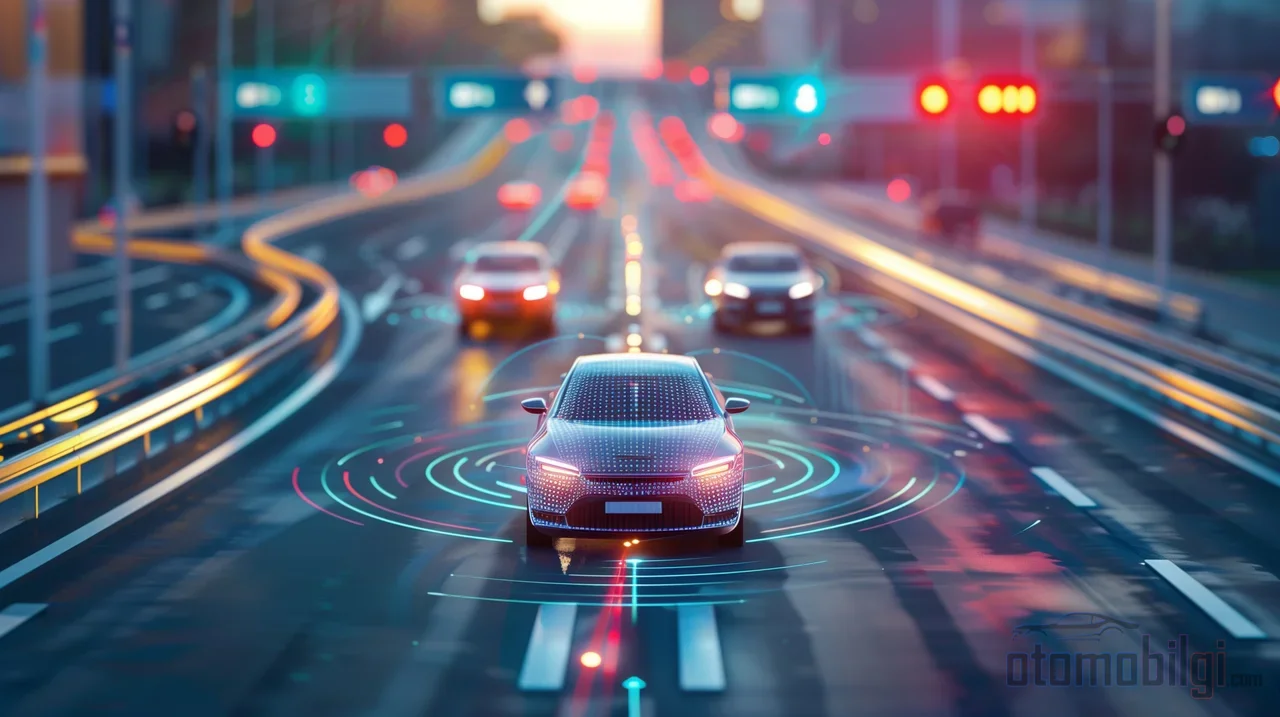
In the perception stack of autonomous driving, there are three key players, and each has a completely different character. Think of it like a film crew: one is constantly shouting out the situation, one measures distances one by one, and one quietly records everything.
Lidar sends near-infrared laser light and measures the return time of the reflected light (this is called "time-of-flight"). The result is a 3D point cloud with centimeter-level precision - a nearly millimeter-accurate map of whatever is really around the vehicle. Radar uses radio waves and, thanks to the Doppler effect, can measure speed directly; because of its long wavelength, it is resistant to fog and light rain, and its range can exceed 250 meters (lidar is around 200 meters). A camera is a passive sensor: it only captures light and produces a 2D color image. It has no depth information and does not work in darkness; but it is the best and the cheapest at scene understanding and object classification.
Lidar and radar are "active" sensors: since they generate their own signals, they work in total darkness and direct sunlight. The camera is seriously affected by both of these conditions. A single figure summarizes how critical darkness is: in the US in 2020, 75% of pedestrian deaths occurred at night. Moreover, in a test on automatic emergency braking systems, camera- and radar-based systems failed to detect the pedestrian in any instance under dark conditions. The camera loves daylight, yes - but for someone walking on the sidewalk at midnight, this picture is frightening.
What Do We Get If We Put the Sensors Side by Side?
| Feature | Lidar | Radar | Camera |
|---|---|---|---|
| Operating principle | Laser light, time-of-flight distance measurement | Radio waves, Doppler speed measurement | Passive image capture |
| Output | 3D point cloud (cm precision) | Low resolution, mostly 2D | Color 2D image |
| Range | ~200 m | 250 m+ | Depends on light |
| Field of view | Up to 360° | ~90° | Depends on lens |
| Strength | Precise distance and shape measurement | Speed measurement, weather resistance | Scene understanding, classification, low cost |
| Weak side | Affected by heavy rain, fog, snow, and dust | Can confuse static objects | Does not work in darkness, no depth information |
Things get complicated in snowy weather: While cameras cannot recognize lanes and signs, lidar's lasers can also fail. Radar, thanks to its wavelength, is the most resilient sensor to weather conditions but sees the least detail. So none of them is a hero on its own - the question is which one plays which role.
Tesla's Bet: Is Camera + Neural Network Enough?
Since 2022, Tesla has relied entirely on cameras in its Full Self-Driving system: no radar, no ultrasonic sensors, no lidar. The rationale seems quite logical: Extra sensors were complicating the algorithm; rather than reconciling two different data streams, building a neural network fed with massive data based purely on vision, like a human, was a cleaner path. According to Tesla engineer Ashok Elluswamy's signal, cameras continue to be the foundation of the driving stack.
Tesla's official support page claims 7 times less risk in major and minor collisions, and 5 times less risk in off-road collisions for FSD (Supervised). The intervention interval is also improving rapidly: from one in 0.8 thousand miles in 2022 to one in 11.3 thousand miles in early 2026 - a 1,300% reliability improvement with 6.2 million miles of data. That is truly an impressive curve.
But there is another side to the coin. Critics' summary is brief: "This is a matter of physics; cameras are limited by light, contrast, and training data, while lidar measures physical reality." There is also the strategy side: There is a widespread belief that Tesla could return to lidar if its price drops, competition forces it, or regulators demand it. Moreover, in his analysis on Forbes, Brad Templeton questions the claims by Tesla representatives that FSD safety has increased "1000 times"; the figures do not look that bright.
Waymo's Recipe: Throw In Plenty of Everything
Waymo is moving in the opposite direction. The 6th-generation Waymo Driver has 13 cameras, 4 lidars, 6 radars, and external audio receivers; the total sensor count per vehicle reaches 29, and the system offers detailed vision up to 300 meters. Waymo summarizes this in a single sentence: by combining camera, lidar, and radar inputs, they create a rich, redundant view of the world that no single sensor could produce. Waymo's co-CEO also emphasizes that multiple sensors are essential for safety in adverse conditions such as dust or glare.
But what about cost? Here's the interesting part: the 6th-generation Driver was introduced as a package with optimized costs and higher performance compared to its predecessor, and as of February 2026 it has begun fully autonomous operations. As sensor prices fall, the "lidar is expensive" argument is weakening. The safety figures in the robotaxi arena also favor Waymo: against Tesla's roughly 100,000 miles per collision robotaxi "mile/collision" figure, Waymo's 2025 figure is 134,410 miles per collision; an analysis based on data reported to NHTSA finds Waymo's driverless taxis 4.7 times safer than Tesla robotaxis. There is also an assessment that, with 271 million driverless miles of history, Waymo vehicles experienced 68% fewer police-reported collisions than human drivers. Waymo is currently leading in this field - but whether Tesla, starting out with a massive data set, will catch up is an open question.
Mercedes' Path: Lidar + Legal Liability
Mercedes-Benz enters this battle from a completely different front: Level 3. DRIVE PILOT has achieved legal Level 3 approval on German highways, with assistance at speeds of up to 95 km/h; in its first version the activation conditions were quite restrictive - a speed limit, having a vehicle ahead to follow, and so on. And Mercedes makes it clear with a single sentence that it takes this business seriously:
For SAE Level 3 and above, the use of lidar is fundamental to safe automated driving for Mercedes-Benz.
The key point here is not money but the law. Mercedes became the first manufacturer to take responsibility for Level 3 technology in the US: when the system is active, "the car is considered the responsible party." Automotive safety expert Phil Koopman, however, argues that Mercedes has softened this position over time and does not stand behind it at truly critical moments. Still, the contrast is striking: Mercedes sells a lidar-based, gradually restricted system while taking on legal liability; Tesla, since it remains at Level 2, keeps the responsibility with the driver. The current legal guide in Texas summarizes the situation clearly: Tesla (L2) leaves liability with the driver, Waymo (L4) with the manufacturer, while GM Super Cruise creates a "gray zone."
The Distance Between Promise and Reality
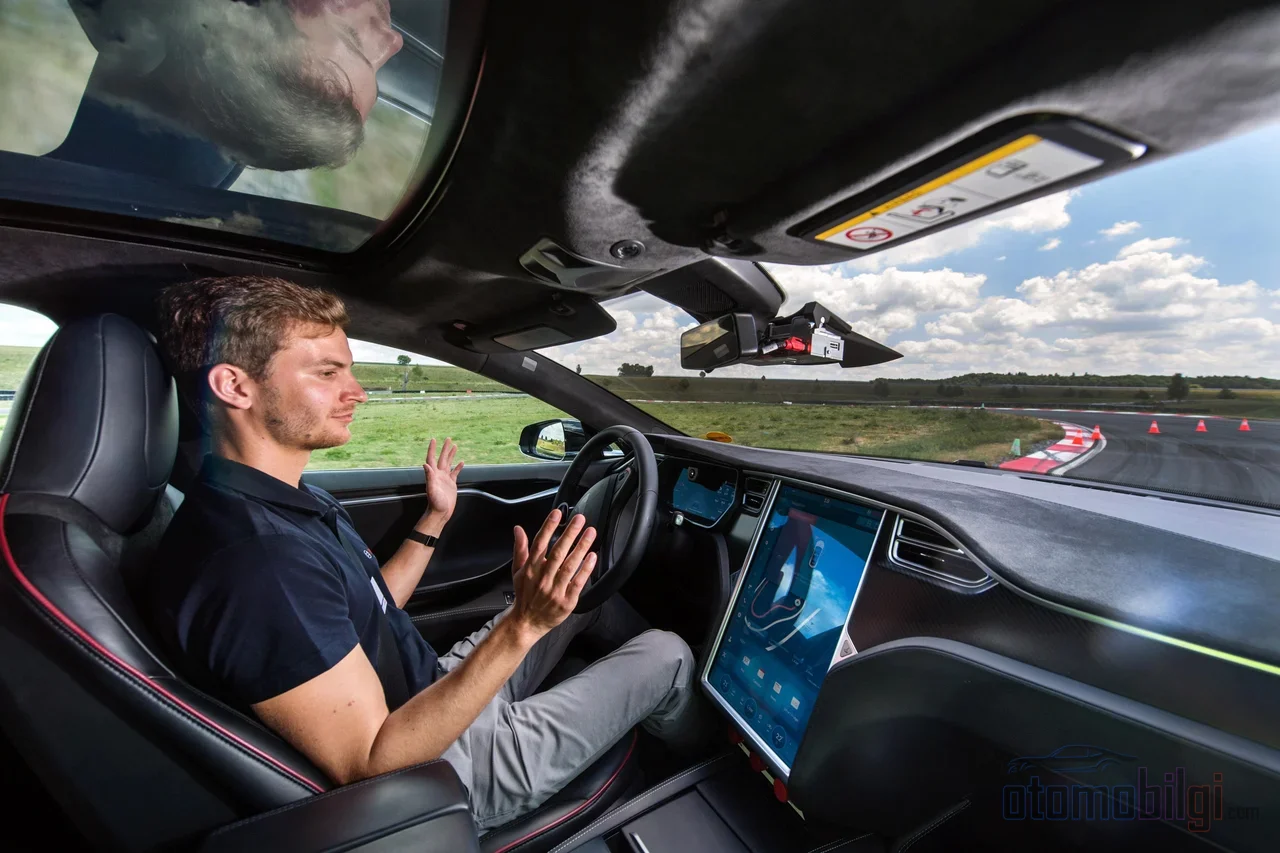
Now let's get to the real question: Is any of these systems truly "autonomous"? Let's recall the six levels defined by SAE: 0 is fully manual, 5 is fully autonomous - everywhere, in all conditions, with no human intervention. In levels 0 through 2, the human driver is at the wheel and must remain constantly attentive. Level 3, in systems like Mercedes' Drive Pilot, allows you to take your hands off the wheel under certain conditions.
The fact is: expert assessments say Level 5 won't arrive before 2035. On the other hand, Level 2 and 2+ assisted driving technologies are predicted to remain the most dominant technologies in newly sold vehicles in 2030 and beyond. So in the near future, none of us will be getting a fully autonomous car; autonomy will be an assistant that complements our attention. Nuro offers a nice framework for this debate: one camp requires the camera+lidar+radar combination for "super-human sensory redundancy"; the other trusts vision.
The Future of Sensors: New Generations Are at the Door
The tactics of the war are also changing. On the lidar side, FMCW (4D) lidar capable of directly measuring speed via the Doppler effect and solid-state designs that abandon mechanically moving parts are coming to the fore. On the radar front, there is an explosion of 4D imaging radar offering high-resolution 3D point clouds and speed measurement with MIMO antennas - so much so that in 2024 Mobileye announced it would shut down its entire FMCW lidar division to focus on proprietary 4D imaging radar.
The market figures also tell where things are heading: the automotive lidar market is growing from $1.19 billion in 2024 to $9.59 billion in 2030, and the radar market from $6.6 billion to $33.6 billion. So contrary to those saying "lidar is dead," both markets are very much alive. A peer-reviewed study on end-to-end driving models also makes an interesting note: on a new route in familiar weather conditions, lidar-based models performed equal to or better than camera.
So Who Wins? My Report Card
There is no winner in this war, there are two different strategies. Tesla is staying at Level 2, keeping responsibility with the driver, and progressing on a cost-free and scalable path; billions of miles of real road data are accumulating. Waymo and Mercedes are taking slower but more guaranteed steps with sensor redundancy and assuming legal liability. From a regulatory standpoint the picture is also clear: Level 3 and above approval processes are accelerating lidar-based systems.
In my view the most honest answer is this: in darkness, fog, and unlit roads, physics doesn't change - one eye cannot see what two eyes can see. But neural networks are also getting better every year. As lidar prices fall, camera intelligence rises; perhaps the winner of this war will be the one who combines the two in the cheapest and safest way. If it were you, which camp would you choose - one sharp eye, or five different senses?
Sources
- An in-depth comparison of LiDAR, Cameras, and Radars | Outsight
- LiDAR vs RADAR: How 4D Imaging and FMCW Disrupt AV Tech | Think Autonomous
- LiDAR vs Radar in Autonomous Vehicle Race | LTS GDS
- LiDAR v Radar: The Future Of Autonomous Driving Systems | Oliver Wyman
- LiDAR-as-Camera for End-to-End Driving | PMC
- Full Self-Driving (Supervised) | Tesla Support
- Tesla's Big Bet: Cameras over LiDAR | Viks Newsletter
- Tesla FSD proves why vision-only isn't enough | Lukas Timm
- Meet the 6th-generation Waymo Driver | Waymo Blog
- Beginning fully autonomous operations with the 6th-gen Waymo Driver | Waymo Blog
- DRIVE PILOT 95 km/h | Mercedes-Benz Group
- Mercedes takes on liability of Level 3 Drive Pilot | Repairer Driven News
- Mercedes-Benz DRIVE PILOT and driver blame | Phil Koopman
- The 6 Levels of Vehicle Autonomy Explained | Synopsys
- Autonomous Vehicles Factsheet | University of Michigan
- Autonomous Vehicles: Timeline and Roadmap | WEF
- The Deep Story On The Waymo Vs Tesla Robotaxi Battle | Forbes
- Waymo vs. Tesla: A Safety Comparison by the Numbers | Autopilotwatch
- Why Tesla "Robotaxis" Won't Be Driverless For a Long Time | Brad Munchen
- Tesla FSD vs Waymo vs Cruise: The Safety Numbers | Thinkev
- A 2026 Guide to Autonomous Vehicle Liability in Texas
- To self-drive in the snow | MIT Robotics
- The Sensor Debate: Vision, LiDAR, and the Path to Real Autonomy | Nuro