The Postponed Promises of Autonomous Driving Since 2015
Share This Page
Since 2015, dates given for full autonomy and robotaxis have been systematically postponed; while Level 2 driver assistance systems are widespread on the roads today, true full autonomy is serving only in narrow conditions and limited areas. This article places the promises made and today's reality side by side and examines exactly where and why the gap between the two opened up.
Highlights
- Every date given for full autonomy since 2016 has been missed; since 2020, a new promise has come and gone almost every year.
- Tesla's system is officially still an SAE Level 2 driver assistance system even today; the company itself states it is not fully autonomous.
- Waymo moved to fully autonomous operation with its 6th generation driver in 2026 and is rapidly increasing the number of cities.
- Mercedes is one of the few brands with a genuine Level 3 certification, but the system is limited to 95 km/h and was paused in 2026.
- Tesla's robotaxi fleet was around 38 vehicles in mid-2026, while Waymo operates with thousands of vehicles across dozens of cities.
Promises vs. Facts: A Decade-Long Timeline
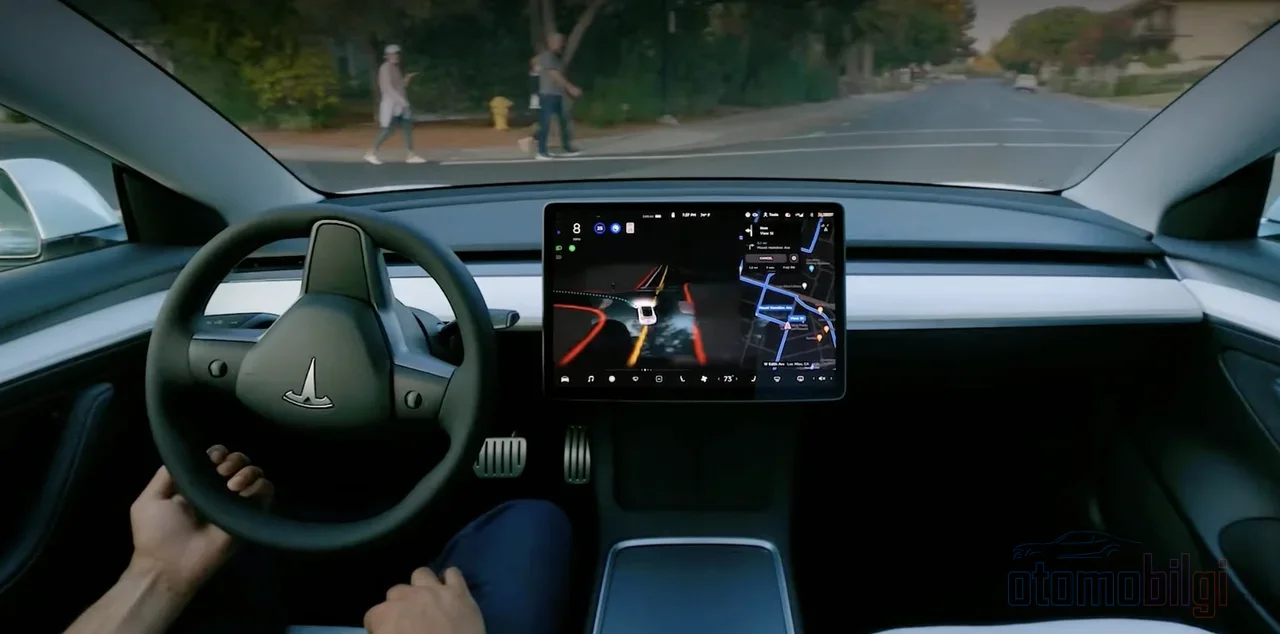
Let's jump straight into the topic with a concrete example. In 2016, it was claimed that full autonomous driving was a largely solved problem and that less than two years remained. By the end of that same year, a fully autonomous demonstration drive from Los Angeles to New York was promised; first the end of 2017 was targeted, then the date was pushed to 2018, and from there elsewhere. In 2019, it was announced that there would be more than a million autonomous robotaxis on the roads a year later. In 2020, it was said that Level 5 basic functionality would be completed that year. In 2023, it was claimed that full autonomy would happen within that year, and that by year's end the system would drive better than a human. In 2025, it was announced that sleeping in the car and waking up at your destination would be possible in many US cities by the end of the year.
The result? All of them, no. The number of robotaxis was not one million; in mid-2026 it was in the tens. Level 5 basic functionality still does not exist today. Sleeping in the car and arriving is still legally impossible. This is not a one-time deviation; Since 2020, a new full autonomy date has been given almost every year, and none of them held.
Now it's time for the table. Note that here we have not only the missed dates; the partially realized ones are also listed:
| Promise | Date | Realized? |
|---|---|---|
| 90% of kilometers driven per year will be autonomous | September 2013 (target 2016) | No |
| Full autonomy within about 2 years | December 2015 (target 2017) | No |
| LA-New York fully autonomous demonstration drive | October 2016 (target 2017) | No |
| More than 1 million robotaxis on the roads | April 2019 (target 2020) | No |
| Completion of Level 5 basic functionality | July 2020 | No |
| Driving better than a human by year's end | 2023 | No |
| Opening of FSD Beta to all North American owners | November 2022 | Partially, conditional |
| Supervised robotaxi service in Austin | June 2025 | Partially, with a safety attendant in the seat |
| Unmanned vehicle delivery from factory to customer | June 2025 | Yes, as a one-time promotional event |
Do you see the pattern? Every delay gives birth to the next promise, and every promise is more ambitious than the last. Meanwhile, whether the system's name stems from fear or marketing awareness is unknown, but even its official name carries a nudge: Full Self-Driving (Supervised). That is, fully driverless, but supervised. There is also the website's fine print: these advanced driver assistance features do not make your vehicle fully autonomous. The company says this on its own website, don't forget.
SAE Levels: Which Level Are We Really At?
When talking about autonomous driving, a common language is needed; that is SAE's J3016 standard. The system is divided into six levels, and these levels actually define who the problem belongs to. At Level 0 and 1, everything or almost everything is on you. At Level 2, the vehicle partially manages the steering and pedals, but you cannot take your eyes off the road - the driving task is still on you. Level 3 is the magic threshold: under certain conditions you can take your hands off the wheel, but when the system calls you, you must take the task back. At Level 4, the vehicle drives within a specific area without involving a human at all. Level 5 is unconditional full autonomy: in the desert, on snowy mountains, in the middle of the night, without depending on any condition.
The technology widely present in the vehicles sold on the roads today is Level 2. Tesla does not classify its FSD and Autopilot systems according to SAE levels, but as of January 2024 the system's classification is Level 2. That is, between the claimed full autonomy and legal reality there are still at least two levels. The fact that a system named Em>Full Self-Driving is Level 2 is, in my opinion, the clearest example of the difference between marketing and engineering on this subject.
Why Is Everything So Slow? Technical Reality
Okay, why don't the promises hold? There are three main answers to this question, and none of them are pretty.
Edge Cases: The List That Never Ends
The most troublesome enemy of autonomous driving is edge cases. Think of it this way: playing 99% of the game is easy, but even after learning that 99%, the oddities in that remaining 1% stop you. If a construction worker has hung his yellow vest on a rope and left it on a pole, should the vehicle count it as a human or a sign? Lane markings covered in snow? The hand signals of a fire truck passing in front of a burning vehicle? This list never ends, because the real world is not a test track. In the spring of 2026, it was announced that unsupervised FSD for consumer vehicles had been delayed again, with edge cases cited directly as the reason.
Sensor War: Camera or Lidar?
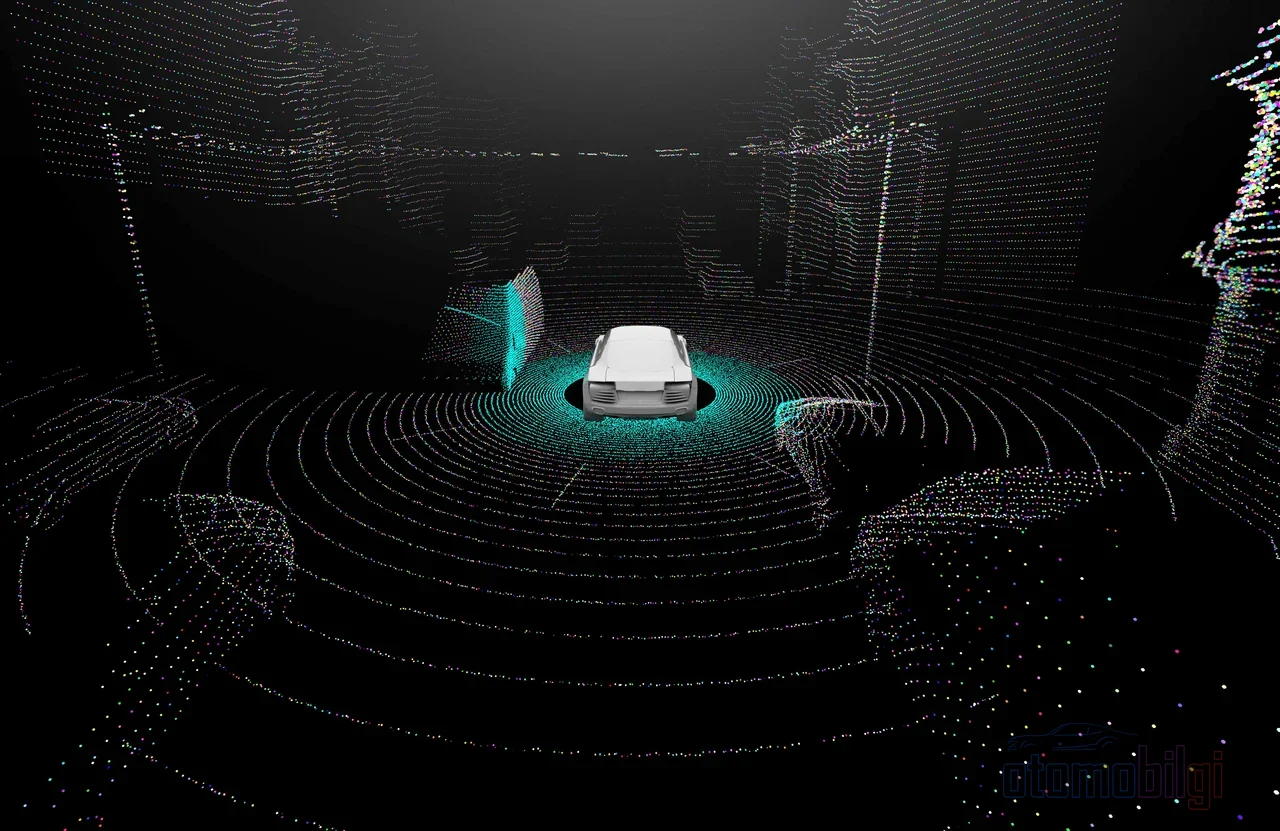
The second major issue is sensors. Tesla goes with cameras only; Waymo uses lidar and radar. Lidar is a sensor that emits laser beams into the environment and measures the return time to produce a three-dimensional map with millimeter precision. The problem is that it was historically expensive; figures were circulating that it cost tens of thousands of dollars per vehicle. But there was an interesting picture at the CES fair in early 2026: radar now produces imagery that looks almost like lidar, and lidar is getting almost as cheap as radar. So the sensor cost argument has been used in favor of cameras for years, but that argument is eroding. Waymo's scale also supports its claims: it moved to fully autonomous operations with its sixth-generation driver and reached thousands of vehicles.
Regulation: Where the Legal Engineering Begins
The third reason has nothing to do with engineering: law. In the US, there is still no federal liability legislation for autonomous vehicles; NHTSA only provides guidance. This means every state sets its own rules - a fragmented, unpredictable framework. As of July, California made a legal change holding the manufacturer or operator liable for traffic violations committed by autonomous vehicles. Internationally, UNECE's road safety working group adopted the first global draft regulation for unsupervised automation, but it is still a draft. So even if the vehicle is technically ready, the question of who pays when an accident happens remains unanswered - and for the company selling the car, that question is as critical as the algorithm.
Waymo: The Counterexample Where the Promise Came True
So is everything being postponed? No, and that is what makes this story interesting. Waymo is the example that turned its promise into reality in the robotaxi game. In late 2025, new cities were announced in Texas and Florida: Houston, San Antonio, Orlando. In February 2026, service launched in Dallas, Houston and San Antonio; In September 2026, expansion accelerated with launches in Denver, San Diego and Tampa. Since February 2026, operations have been fully autonomous with the sixth-generation Waymo Driver, meaning no driver in the vehicle.
The most striking figure concerns safety: data from roughly 170 million driverless kilometers shows about 13 times less risk of serious crashes compared to human drivers. Put that in context: 170 million kilometers means circling the Earth four thousand times. Waymo did this not by promising dates, but by scaling up; maybe that is the difference. Even in a year when Tesla's system was praised and chosen as the best driver assistance system, its timeline promises have not held for a decade. The technology is real; the dates are not.
Mercedes Drive Pilot: The Narrow Limits of Real Level 3
Mercedes took a different path: keep the promise small, then deliver it. Drive Pilot is one of the few systems carrying an SAE Level 3 certification; meaning under certain conditions you can truly take your hands off the wheel. In December 2024, the speed limit in flowing traffic was raised to 95 km/h across the entire 13,191-kilometer highway network in Germany. This is a genuine milestone, without question.
But its limits are also clearly visible: the system cannot change lanes, cannot take highway exits, and does not automatically follow the route guide. On the US side, it had a 40 mph speed limit and operated only in the states of California and Nevada. Then in January 2026, Mercedes announced it was pausing its expensive Level 3 Drive Pilot for now; in its place came MB.Drive Assist Pro, which works under broader conditions but is still a Level 2 system where the driver remains in charge. So even one of the brands with the world's best engineering track record took a step back in the face of the narrow world of true Level 3. Level 3's real problem is not so much the technology as the fact that responsibility shifts entirely to the manufacturer. When a mistake is made, it is no longer you who gets sued, but the car's manufacturer.
Puffery or Responsibility? The Legal Debate
There is also the courtroom front. In February 2023, investors filed a lawsuit claiming they had been misled by autonomous driving promises; the case was dismissed by the judge in September 2024. The reasoning is interesting: the statements were considered to fall under vague corporate optimism, in other words, what is known in American law as corporate puffery. This concept means that exaggerated marketing talk that contains no concrete, measurable claims is not legally binding. So according to the court, the dates given for future years are not a legal commitment, but an optimistic mood. Yet despite this, the lawsuits from consumers who bought FSD are still ongoing; following an appeal ruling in 2026, the class action is proceeding.
The lesson to be drawn from this, in my view, is this: be careful when giving dates, because a promise considered puffery today could be judged very differently tomorrow. The responsibility models discussed by institutions such as Brookings follow the same line: strict liability is reasonable only if the accident cannot be explained and human error cannot be monitored. The rule has not yet been settled, and this uncertainty is one of the invisible brakes on the technology.
The Real Picture of 2026 and What to Expect?
As of October 2026, the situation is this: Tesla's system still requires human oversight under the Supervised label, and the company is pushing for approval in the EU. In April 2026, it was announced that unsupervised FSD would come to consumer vehicles at the earliest in the final quarter of 2026; in May it was said it would be widespread in the US by the end of the year, yet in that same period there were only 38 robotaxis in the field. There was also a promise that safety drivers in robotaxis would be removed by the end of the year, and it has not yet happened. Meanwhile, Waymo is growing with thousands of vehicles in dozens of cities, Mercedes has shifted its weight to Level 2, lidar is getting cheaper, and the first global regulatory drafts are being written.
So there is plenty of reason not to be techno-optimistic, but to be realistic. The technology is genuinely progressing - Waymo's safety data and Mercedes' Level 3 certification are proof of that. But giving dates is a separate skill, and for a decade that skill has not been demonstrated. When you hear the next date for full autonomy, let me offer you a simple test: compare that date with the previous three promises and ask how many vehicles are actually in the field. Shall I tell you something? The pattern has not changed since 2016.
Sources
- List of predictions for autonomous Tesla vehicles by Elon Musk - Wikipedia
- Full Self-Driving (Supervised) - Tesla
- Tesla CEO Elon Musk dreams big but often delivers late - Reuters
- Musk says Tesla unsupervised FSD will be 'widespread' in the US by end of year - Electrek
- Elon Musk pushes unsupervised FSD for consumer Teslas - Electrek
- Tesla is browbeating the EU to approve its 'Full Self-Driving' tech - Reuters
- Waymo accelerates robotaxi expansion with launches in Denver, San Diego, and Tampa - TechCrunch
- Beginning fully autonomous operations with the 6th-gen Waymo Driver - Waymo Blog
- How Google's Waymo is Scaling Robotaxis in 2026 - AI Supremacy
- DRIVE PILOT Automated Driving - MBUSA
- DRIVE PILOT 95 km/h - Mercedes-Benz Group
- Mercedes pauses Level 3 driving assistance - electrive
- SAE Levels of Driving Automation Refined - SAE
- The Great Sensor War Behind Self-Driving Cars - MotorTrend
- Setting the standard of liability for self-driving cars - Brookings
- Tesla FSD Class Action: 9th Circuit Ruling 2026 - Tech Insider