Level 2 or Level 3? Promise vs. Reality in Autonomous Driving
Share This Page
In short: No, there are no fully self-driving cars on the roads today. Tesla's Full Self-Driving is still Level 2, meaning you are legally the one behind the wheel; Mercedes Drive Pilot, on the other hand, is a rare system with approved Level 3 status, and Waymo carries passengers without a driver as a Level 4 robotaxi in certain cities. Level 5, meanwhile, is still just a dream. So what exactly do these levels mean, and why is a system named "Full Self-Driving" still your responsibility? Let's take a look step by step.
Highlights
- Level 5 full autonomy does not exist at any manufacturer today.
- Tesla FSD, despite its name, is officially Level 2; legal responsibility lies with the driver.
- Mercedes Drive Pilot is the first Level 3 system certified in the US; in Germany it operates on highways at speeds up to 95 km/h .
- Waymo operates Level 4 robotaxis without safety drivers in US cities.
- At Level 3 and above, responsibility begins shifting to the manufacturer.
SAE Levels from 0 to 5: Who Exactly Takes On Responsibility?
When autonomous driving comes up, the same picture always comes to mind, but the matter is actually like a staircase: SAE's J3016 standard defines six steps from automation-free Level 0 to full autonomy at Level 5, and manufacturers, regulators, and insurers around the world all use this staircase. At each step of the ladder, the real question is this: If something goes wrong, who is at fault? And the point where the answer changes lies right in the middle, on that thin line between Level 2 and Level 3.
Six Steps in Plain Language
- Level 0: The system only warns - such as lane departure warning or blind spot alert - and does not touch the controls.
- Level 1: The system manages only ONE of steering OR speed, not both at the same time. Cruise control is the classic example.
- Level 2: Steering and speed are both handled by the system, but your eyes must stay on the road and your hands near the wheel. Legal responsibility is 100% on the driver.
- Level 3: Under certain conditions, the entire driving task is on the system; you don't have to watch the road, but when the system says "I'm stuck," you must take over within a few seconds.
- Level 4: Driverless driving within certain geographic areas and conditions. If the system exceeds its limits, it doesn't call you to the wheel, it stops safely.
- Level 5: Everywhere, in every condition, without a driver. Today, no such vehicle exists.
Let's also mention one detail, because it is the most misunderstood point in marketing: The levels are definitive and distinct; there is no such thing as "L3.5" according to SAE. The "Level 2+" or "Level 2++" labels circulating in the industry are also unofficial - in fact, these are polite terms invented to describe highly capable Level 2 systems that are still your responsibility. From L0 to L2, the human is obligated to monitor both the road and the system's mistakes; from L3 onward, the system takes on that job. In other words, the difference is not so much about the amount of technology as who is supervising.
What Level Is Tesla Full Self-Driving Really At?
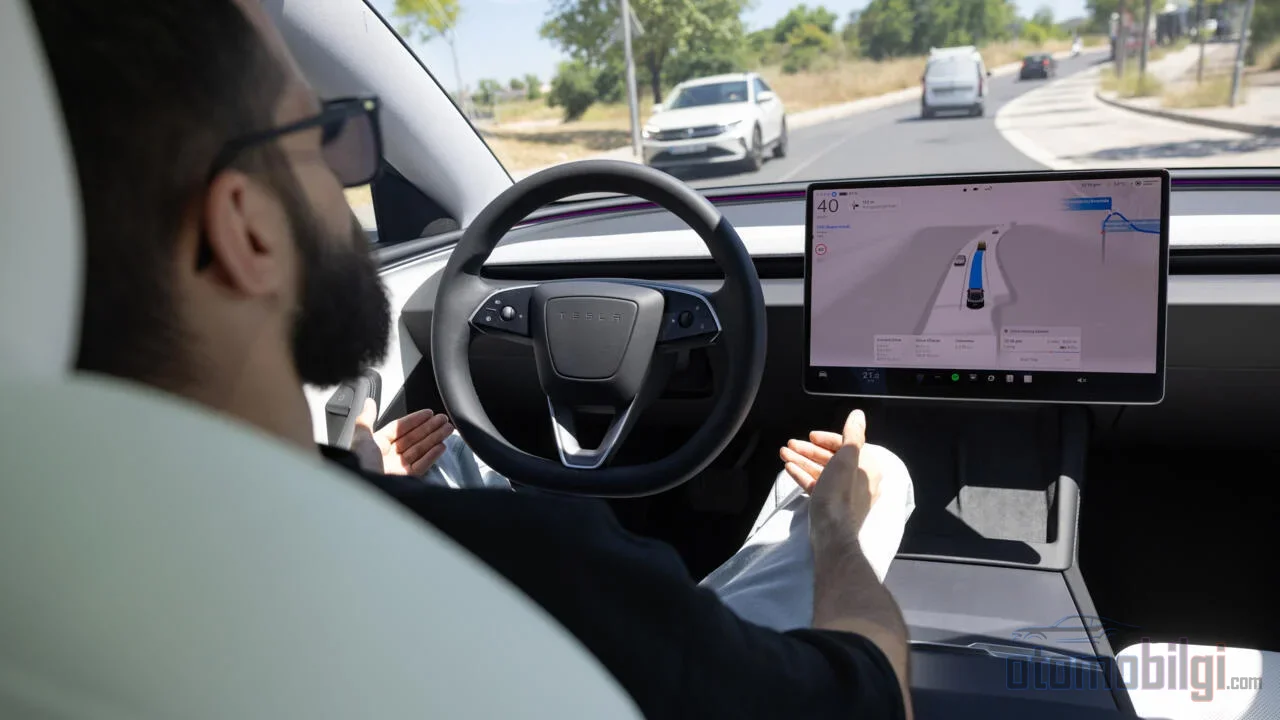
You might think the name says it all: "Full Self-Driving," meaning complete autonomous driving. But even Tesla's own official page describes the system Full Self-Driving (Supervised) it says, clearly warning: This is an advanced driver assistance system intended to be used with a fully attentive driver, and it does not make the vehicle autonomous. As a Level 2 system, the legal responsibility for everything the vehicle does, whether FSD is on or off, lies with the human driver.
Technically, FSD is rated in the informal "L2+" zone: It can drive under supervision on city streets, at intersections, and at roundabouts - and for a Level 2 system, that capability is a serious deal. But capability and legal status are not the same thing. Tesla's limited robotaxi trial in Austin counts as 22 fully driverless vehicles Level 4 operation in a defined area; so the company seems to be living in two worlds at once. If you are using a Tesla in California with a safety driver, you are in Level 2 territory, period.
"Hardware 3 does not have enough capacity for unsupervised FSD."
This sentence is critical, because it amounts to his own admission that older-hardware vehicles will never receive a "full autonomy" update. On the other hand, it was announced that a small robotaxi service would launch in the first half of 2026. The argument circulating in forums that "FSD is already L3, only regulations are holding it back" is more of a claim than proof; L3 certification requires taking responsibility away from the driver, and Tesla does not have that. Quite a few people also find the "Full Self-Driving" name misleading - and this is exactly where the gap between marketing language and technical reality is widest.
Mercedes Drive Pilot: How Far Does Approved Level 3 Go Today?
Now for the serious side of the coin: Mercedes-Benz Drive Pilot is officially classified as SAE Level 3 (conditional automated driving) and is offered on the S-Class and EQS Sedan. It is the only approved Level 3 system on publicly used vehicles - and it holds the distinction of being the first Level 3 system certified in the US, with approvals in California and Nevada. At Level 3, under suitable conditions, the driver can hand the driving task over to the vehicle and, for example, read a book. Yes, you can really read; because responsibility has partially shifted to Mercedes.
Know its limits too: The system initially operated at speeds up to 60 km/h and was limited to specific highway sections; the new version in Germany raised this limit to 95 km/h. If conditions deteriorate, the system sends a handover request to the driver. There is an interesting development on the 2026 S-Class side: It is reported that in the US market, Drive Pilot is being replaced by a more capable "Level 2++" Mercedes system, and that the 2026 S-Class is "Level 4 ready," pending regulatory approval. So even the most rule-abiding player is playing a one-step-back, two-steps-of-preparation strategy. Funny, isn't it? While companies put the word "Full" in their names, Mercedes is boasting with a polite "+".
Waymo: How Safe Is Level 4 as a Robotaxi?
What Waymo does is on an entirely different scale: it operates a driverless, geofenced Level 4 robotaxi service in cities like Phoenix, San Francisco, Los Angeles and Austin; in Austin it even carries passengers without a driver on highways. Between the driving you watch from the back seat of a camera-equipped Tesla labeled "Supervised" and the car here, there is a mountain - both legally and physically.
| System | SAE Level | Responsibility | Limit |
|---|---|---|---|
| Tesla FSD (Supervised) | Level 2 | With the driver | Everywhere but with full supervision |
| Mercedes Drive Pilot | Level 3 | Partly with the manufacturer | Highway, up to 95 km/h |
| Waymo Robotaxi | Level 4 | With the operator | Specific cities and regions |
What about safety? According to the company's official data dated June 2026, the Waymo Driver is associated with 94% lower risk in serious/injury or fatal crashes and 82% in crashes with airbag deployment. Community data collected by third parties points in a similar direction: an overall 68% reduction in crashes reported to the police, and 85% in single-vehicle crashes. But the other side of the coin is this: 219 crashes were reported in Los Angeles in 2025 - more than triple the previous year's 69. Of course, the number of vehicles on the road is also rising rapidly; percentage improvement and absolute crash counts are increasing together, and the comparison methodology is still disputed. There is also recall news: following reports of failure to recognize construction zones and ramps, roughly 4,000 robotaxis were pulled from the roads. In short, the data is impressive but not the whole story.
Camera, or Lidar Plus Radar? Behind the Scenes of the Perception War
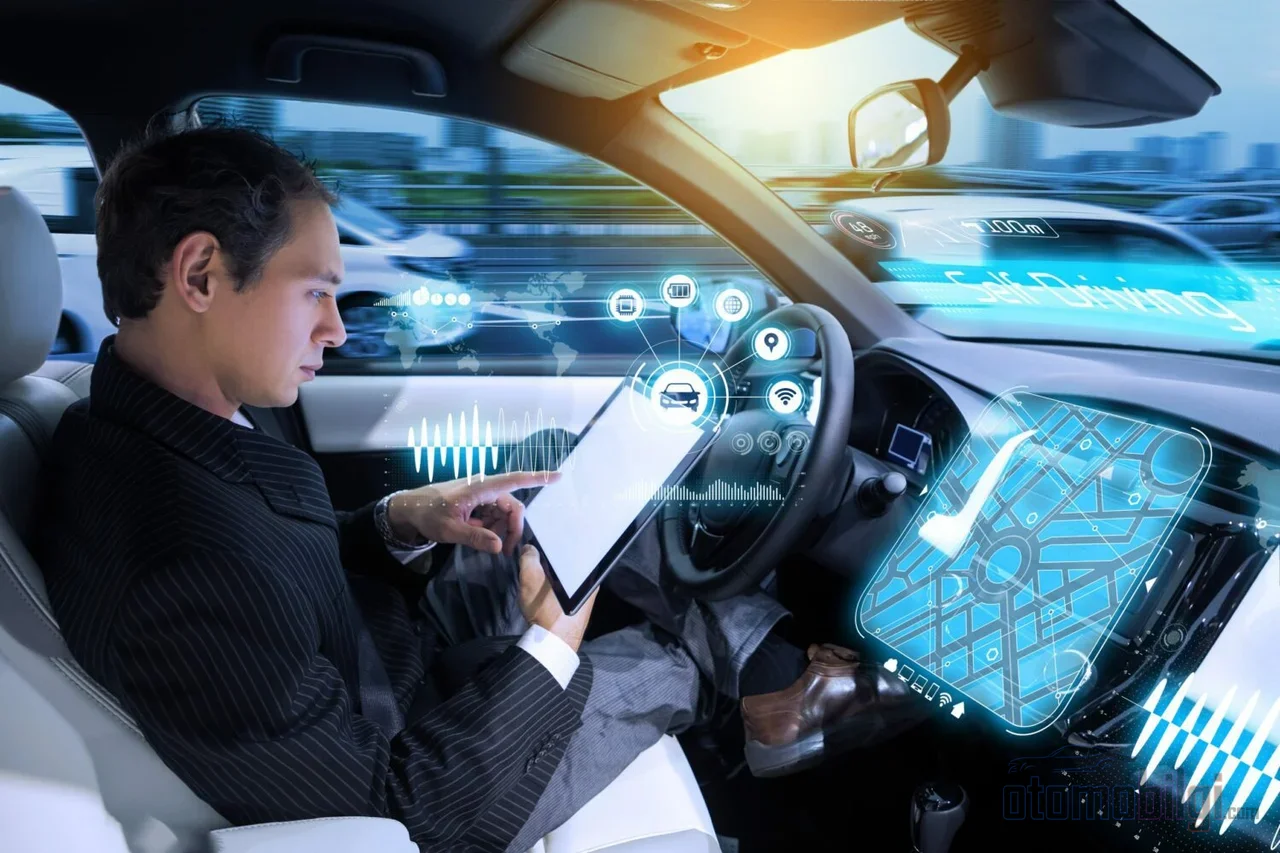
The philosophies of the two camps are completely opposite. Tesla relies solely on cameras - the "vision-only" approach - trying to solve the world from images, just like humans do. Waymo, on the other hand, uses camera, lidar and radar together. The argument by Waymo's co-CEO in August 2026 is striking: while cameras "estimate" depth, lidar plus camera gives "absolute depth"; radar, meanwhile, penetrates fog, rain and snow, and reads speed directly through the Doppler effect. The human eye cannot see 100 meters ahead on a foggy road, but radar can.
The Tesla camp's answer is cost and data: the camera-only approach, which accumulates far more training miles, avoids sensor hardware expenses - the cost difference is roughly summarized as "100,000 $ extra sensors in exchange for 50 times the training miles." This logic resembles someone who trains with habit instead of refueling. But the second half of the coin: lidar prices are falling, and cheaper lidar may over time weaken the camera-only approach's strongest cost advantage. Which camp will reach Level 5 first? The honest answer: an open debate that no one knows.
If a Crash Happens, Who Is at Fault? The Legal and Regulatory Reality
At Level 2 and below, no question is even asked: if there's an accident, the driver is responsible. At Level 3 and above, responsibility starts shifting to the manufacturer and the software provider - the UK's Automated Vehicles Act 2024 turned exactly this transition into law. In other words, the moment you start saying "the car is mine, the fault is in the system," the legal system enters new territory, and the map of that territory has not yet been fully drawn.
- The US Congress saw the SELF DRIVE Act (H.R.7390) proposed; the bill introduces a definition of an "automated driving system" covering SAE Levels 3-5 - the first time such a federal definition has been put forward.
- Some state laws assign responsibility for compliance with traffic rules to the owner or lessee of the automated vehicle.
- Regulators emphasize that as manufacturers move toward "eyes-free" driving, safety and liability questions are growing.
- According to legal experts, the gap between the marketing promise and what the vehicle actually does can turn into a powerful argument in a negligence lawsuit.
Read that last point again, because the essence of this entire article is there: if a system advertised as "Full Self-Driving" defends itself in court as "Level 2 driver assistance," that gap could one day prove costly. The design challenge of Level 3 is also brutally hard - the system must be built capable enough to sense whether the human will intervene; it is a fine line between leaving things to a capable human and leaving them to a statue.
Where Do Promise and Reality Meet?
Since everything is so clear, here is the summary: no vehicle you can buy today is a "self-driving car." In the vast majority of Level 1-2 vehicles, the steering wheel is in your hands, legally as well. Level 3 operates in only a handful of vehicles worldwide, under restricted conditions. You experience Level 4 only in robotaxis in a few US and Chinese cities. For Level 5, experts say "decades"; some even argue the last edge cases will never be solved. A realistic adoption window of roughly 2025-2035 is being discussed.
My answer to the question is clear: the promise and reality have not yet met, but they are getting closer. When you buy your next car, if you look not at the word in the brochure but at the SAE level and to whom the responsibility is assigned, you will be both a smarter buyer and a better driver. Which camp do you think will win - cheap cameras with massive data, or expensive multi-sensor proven safety? I am ready to give my opinion, you give yours too.
Sources
- SAE Levels of Driving Automation™ Refined for Clarity
- The SAE Levels of Driving Automation Fully Explained - Zego
- Autonomous Driving Levels Explained: SAE 0 to 5 - GVI
- Full Self-Driving (Supervised) | Tesla Support
- DRIVE PILOT Automated Driving - MBUSA
- DRIVE PILOT 95 km/h - Mercedes-Benz Group
- Mercedes-Benz shifts autonomous driving tech in 2026 S-Class - WardsAuto
- From the road: safety data, June 2026 - Waymo Blog
- LA has more driverless cars, more crashes - LA Times
- Tesla vs Waymo: Two Opposite Visions - ThinkAutonomous
- Waymo co-CEO on camera-only self-driving - Electrek
- Carmakers push toward 'eyes-off' driving - Reuters
- SELF DRIVE Act H.R.7390 - Congress.gov
- Tesla Unsupervised FSD and Hardware 3 - MotorTrend