How Do Autonomous Driving Systems Hit the Road?
Share This Page
No matter how impressive an autonomous driving system looks in its manufacturer's advertising, it only truly reaches the road when an approval authority legally clears it for traffic. So here is the essence of the matter: it is not the system's technical capability but its official type approval that is decisive. On this page, we will examine step by step the technical and bureaucratic steps behind a vehicle being considered 'legally autonomous', from the Mercedes DRIVE PILOT example to NHTSA's approach, from UNECE regulations to the concept of the operational design domain.
Highlights
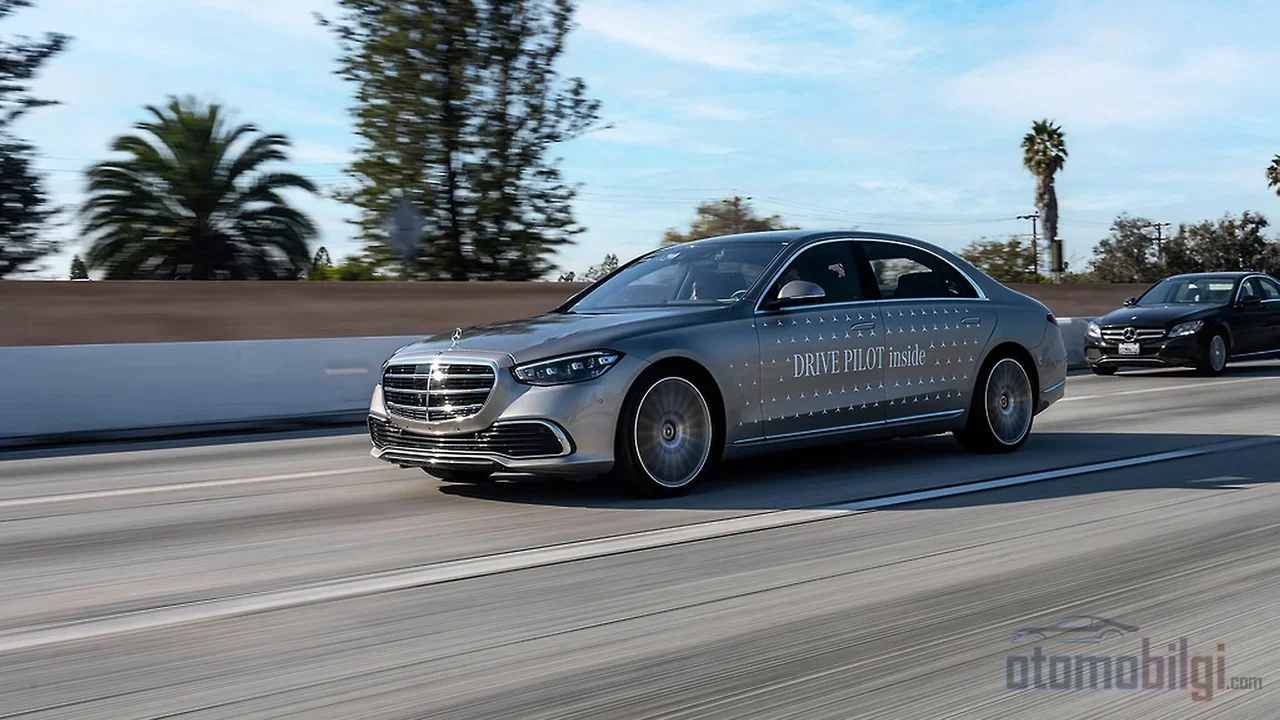
- Mercedes-Benz became the world's first automotive company to meet the legal requirements (UN R157) of a Level 3 system with DRIVE PILOT .
- On January 26, 2023, Mercedes became the first automotive company to receive SAE Level 3 approval in the USA; Nevada went down in history as the first state to approve it.
- DRIVE PILOT, with approval for use up to 95 km/h on German autobahns, is the fastest certified conditionally automated driving system.
- In June 2026, UNECE WP.29 adopted the first global regulatory framework that makes fully autonomous driving systems legal.
- The EU's Level 4 regulation has existed for years, but to date no vehicle has received type approval under this regulation.
How Does a System Count as 'Autonomous' Legally?
When we talk about autonomous driving, two things usually come to mind: how well the car drives and who is responsible if there is an accident. But have you ever thought about the huge question in between? With what authorities and what documents does a system enter traffic? The answer is not as simple as you might think, because there is a huge gap between 'existing in software' and 'being legally approved'.
Let's first clarify the basic concepts. In SAE's automation levels, Level 3 (conditional driving automation) is the critical threshold: the system takes over the entire driving task under certain conditions, the driver can take their hands off the wheel and get absorbed in secondary tasks. But you must be ready to take back control when the system says 'take over'. At Level 2, the driver is responsible at all times; the system is merely a support. At Level 4, the difference is this: the vehicle can intervene by itself in the event of a system failure and can come to a safe stop.
Operational Design Domain: The System's 'Playground'
At the heart of the approval process is a concept: operational design domain, in other words ODD. As a simple analogy, this is the system's 'playground': the definition of which roads, at what speeds, in which weather conditions, and at which hours it can operate safely. Outside this domain, the system is no longer covered by guarantee; you need to take over control.
Why is it so important? Because an autonomous system 'working' does not mean it will work everywhere. Conditions such as heavy rain or fog can push the vehicle outside its ODD. Mercedes' DRIVE PILOT is the best example of this: initially it could only be used below approximately 40 mph (64 km/h), that is, in heavy traffic congestion. Later, on German autobahns, up to 95 km/h received approval; this shows that the system's scope of operation has been gradually expanded with additional approvals over time. Let us not overlook an important question: the 'autonomous driving' dream in the manufacturer's presentation and the narrow conditional definition in the approval document are often not the same thing.
The European Type Approval Process: The Official Seal That Opens the Door
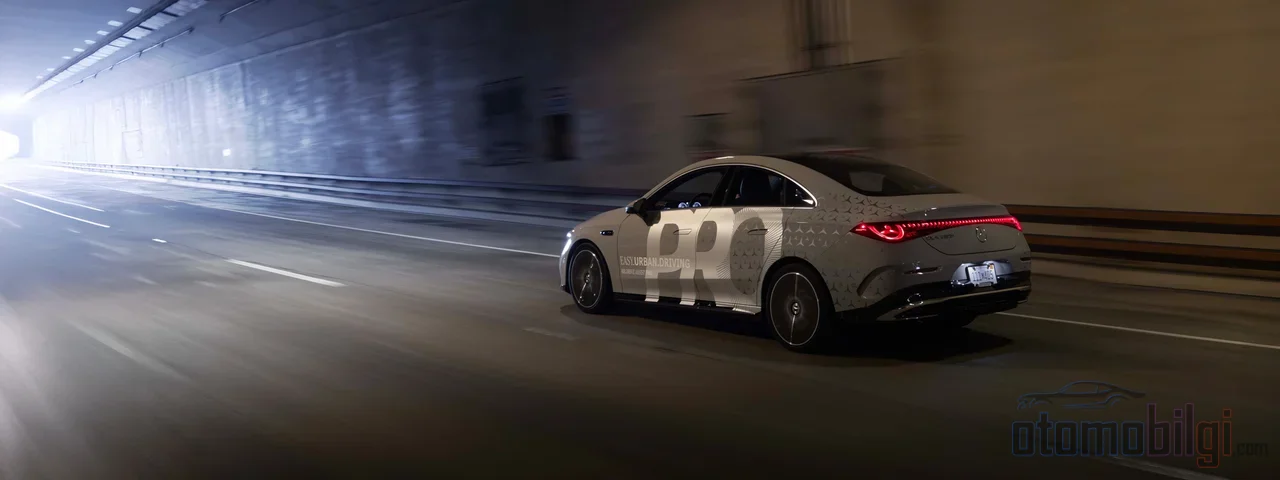
In Europe, a system legally requires a mandatory document called type approval in order to enter traffic. Think of it as the car's 'passport': the manufacturer proves the system's safety, an independent approval authority reviews the documents and stamps the seal. In Germany, this is done by the KBA (German Federal Motor Transport Authority), and in the Netherlands by the RDW . Without the seal, that system cannot legally be offered to customers.
UN R157: The Rules for Lane Keeping Systems
The first major regulation for Level 3 systems is UNECE's UN R157 regulation (ALKS, meaning Automated Lane Keeping Systems). This regulation covers type approval, technical requirements, audit and reporting conditions. Mercedes' DRIVE PILOT approval was granted by the KBA on exactly this regulation. So the history-making event was not a launch, but a bureaucratic process: for the first time in the world, an approval authority officially documented that a Level 3 system met the legal requirements.
The current situation in Germany is also interesting: Level 3 functions can typically be approved on public roads through the EU type approval route. The KBA can also issue national type approvals for Level 4 vehicles and test approvals for vehicles with automated/fully automated driving functions. So legally the road is open; but is everything going as expected? Now we come to the striking part.
Exists on Paper, Absent on the Road: The Level 4 Gap
The EU's specific regulation for Level 4 vehicles (2022/1426) has been on the books for four years. But it is known that, so far, under this regulation no vehicle has received EU type approval. How strange, isn't it? The regulation is ready, the door is open, but no one can enter. This gap actually shows how difficult the process is: there is a mountain of difference between being smart enough to be shown on stage and carrying the burden of proof an approval authority demands. On the other hand, in Germany, some public Level 4 applications, such as the EVA shuttle project in Karlsruhe with TÜV SÜD's participation, have already begun to make progress under test permits.
June 2026: A Global Threshold
One of the biggest moves in this field came in June 2026: UNECE WP.29 adopted the first global regulatory framework that makes fully autonomous driving systems (ADS) legally possible; countries including the EU, Japan and Canada are within this framework. This meeting did not only produce the main framework: a UN GTR, an ADS draft regulation and 92 amendments to existing regulations were also adopted. In other words, the idea of 'worldwide common rules for driverless vehicles' became a reality on paper for the first time.
The groundwork for this step also goes back years. The ALKS regulation in UN R157 was already a precondition for manufacturers to legally offer their lane-keeping systems; in the United Kingdom, the ALKS type approval implementation date had been set as February 1, 2026 . In other words, the global framework is not a move from scratch, but a layer built on top of foundations laid over the years.
What Is the Situation in the US? NHTSA's Different Path
The US has a very different structure from Europe. There is no comprehensive federal autonomous vehicle law; states play a significant role. NHTSA's demand is compliance with the Federal Motor Vehicle Safety Standards and a declaration of safety risk; Voluntary Safety Self-Assessment is not mandatory. So while Europe has a 'central seal' logic, the US presents more of a mix of 'general conditions + state rules'.
Nevertheless, on July 30-31, 2026 NHTSA announced a comprehensive package. The highlights are:
- A rulemaking process aimed at establishing performance requirements for fully driverless, highly automated ADSs (the 'AV Framework' announced in March 2026).
- Acceleration of Part 555 exemptions: the first exemption for a passenger-carrying vehicle, opening a path to commercial deployment for Zoox robotaxis.
- An update to the general exemption regulations through the interim final rule dated July 31, 2026.
So did everyone cheer at these moves? No. Safety advocates view NHTSA's 'red tape cutting' approach cautiously, reminding that the agency has documented thousands of crashes involving ADS/ADAS. Some assessments summarize these steps as carrying both 'green lights' and 'red flags'. To put it in analogy: it is as if the ministry opened the factory door but planted a detector at the head of the factory.
Tesla FSD in Europe: The Gap Between Promise and Approval
Now let's get to the most controversial side of the matter. Tesla FSD (Full Self-Driving), despite having 'full self-driving' in its name, is not an approved Level 3 or 4 system; it is positioned as a regulated (Supervised) system. The situation in Europe is as follows: On April 10, 2026 the Dutch approval authority RDW granted Tesla FSD Supervised a provisional EU type approval . This came after tests lasting longer than 18 months on test tracks and public roads, and was a first in Europe for Tesla FSD. The Czech Republic also took steps to recognize FSD Supervised.
But the other side of the coin must be questioned: in June 2026, international news agencies announced that Tesla had presented 'questionable/misleading safety statistics' to European regulators for FSD approval. In other words, FSD's European adventure is not a story of 'approved, can be driven everywhere'; it is a narrow-scoped, provisional, and still controversial stage. This is a living example of how large a gap can exist between the claim in a system's name and the scope approved by the regulator.
Manufacturer Declaration or Regulator Demand? Tension and Withdrawals
While manufacturers parade around showrooms with grand promises, regulators are examining the fine print behind closed doors. This tension has also produced concrete results: BMW and Mercedes have paused their 'eyes-off' (a more advanced level where the driver can take their eyes off the road) driving efforts, citing cost reasons. The regulation that came into force at the end of 2024 also focuses on driver monitoring and system behavior. So while the industry uses the term 'fully autonomous' at every opportunity, in the real world the approved version of this system is extremely limited.
Then there is the liability side, which is a riddle in itself. The 'black box' nature of end-to-end autonomous driving and its dependence on data create legal and regulatory problems: when an accident occurs, which data will be examined, whose fault is it, and how will it be proven? Whether liability falls on the manufacturer, the driver, or the importer has not yet been clarified in most cases. This is exactly why the approval process is slow: the regulator does not want to sign off where it cannot understand the system's decisions.
Frequently Asked Questions
Are there Level 3 vehicles on the roads in the US?
Yes. Mercedes DRIVE PILOT is a well-known example with its Nevada approval; it went down in the records as the first Level 3 system authorized for use on US highways in a standard production vehicle.
What is the difference between Level 2 and Level 3?
At Level 2, the driver is responsible at all times; the system only provides support. At Level 3, the system takes over responsibility under certain conditions and can request control back when necessary.
What is the difference between Level 3 and Level 4?
At Level 4, the vehicle can intervene itself and stop safely in the event of a system failure; the driver is not expected to take over.
Does the system work in severe weather conditions?
Not always. Heavy rain or fog can push the vehicle outside its ODD; takeover is required when the system leaves this domain. So the 'autonomous' label is not valid in every weather condition.
No Highway Without an Approval Certificate
The road debut of autonomous driving is not just a technology race but a race of trust and documentation. The process, which began under Mercedes' leadership, gained an international dimension with UNECE's global framework in June 2026; but the gap at Level 4, the controversial stage of Tesla FSD in Europe, and the safety criticism directed at NHTSA's accelerated moves show that on this road, it is not speed but provable safety that wins. What's next? The systems that can carry the burden of proof demanded by regulators will win; the rest is just window dressing.
Sources
- Mercedes-Benz DRIVE PILOT Nevada certification
- Mercedes-Benz DRIVE PILOT 95 km/h
- Mercedes-Benz system approval (KBA/UN-R157)
- DRIVE PILOT Automated Driving
- UNECE adopts first-ever global rules allowing fully autonomous driving
- UNECE ALKS Regulation press release
- UNECE Establishes Global Rules for Automated Driving
- Legal frameworks for autonomous driving and teledriving
- Automated lane keeping systems | ALKS regulation
- Automated Lane Keeping Systems (ALKS) and Listing of Self-Driving Vehicles
- KBA: Automated/Fully Automated Driving
- Autonomous vehicles in Germany: regulatory framework and key developments
- New AV Safety Standards & Zoox Robotaxi Exemption
- Guidance: AV Framework
- NHTSA: Automated Driving Systems
- NHTSA: Levels of Automation
- NHTSA Automated Vehicle Safety Public Meeting March 2026
- NHTSA Announces a Host of Actions on Autonomous Vehicles
- Green Lights and Red Flags: Autonomous Vehicles Rule the Roads
- Road Safe America statement on July 2026 NHTSA AV action
- Tesla presented misleading FSD safety data to European regulators
- Czech Republic recognises Tesla FSD Supervised / RDW approval
- Tesla FSD Europe Approval Status 2026
- BMW, Mercedes pause 'eyes-off' self-driving, citing cost
- Operational design domain
- What Are Operational Design Domains?
- Understanding operational design domains
- The 6 Levels of Vehicle Autonomy
- From Level 0 to 5
- Self-Driving Vehicles Enacted Legislation
- The Regulatory Road for Autonomous Vehicles
- JASIC: Status of EU regulatory activities on driving automation
- Tort liability and data governance in autonomous driving