What Happens When You Ride a Robotaxi? Real Experience and Safety
Share This Page
Robotaxi means boarding a fully driverless vehicle via an app, and today it is practically usable in dozens of US cities and in China. The short answer is this: the service is real, passengers really do ride it and are satisfied - but the safety data is not as rosy as the companies claim, the operating zones are still restricted, and when the system crashes you can end up trapped inside the vehicle. Here is that fine line between the promise and everyday reality.
Highlights
- Waymo, over 200 million miles of real-world driving and more than 20 million trips, reports 93% passenger satisfaction.
- According to company data, compared to human drivers there is a reduction of up to 95% in accidents with serious injuries.
- NHTSA records show that between July 2021 and November 2025 there were 1,429 Waymo accidents, 117 injuries and 2 deaths.
- In April 2026 in Wuhan, more than 100 robotaxis stopped at the same time; some passengers were stuck in the vehicles for hours.
- GM, citing costs, in December 2024 shut down the Cruise robotaxi unit.
How Does a Robotaxi Really Work?
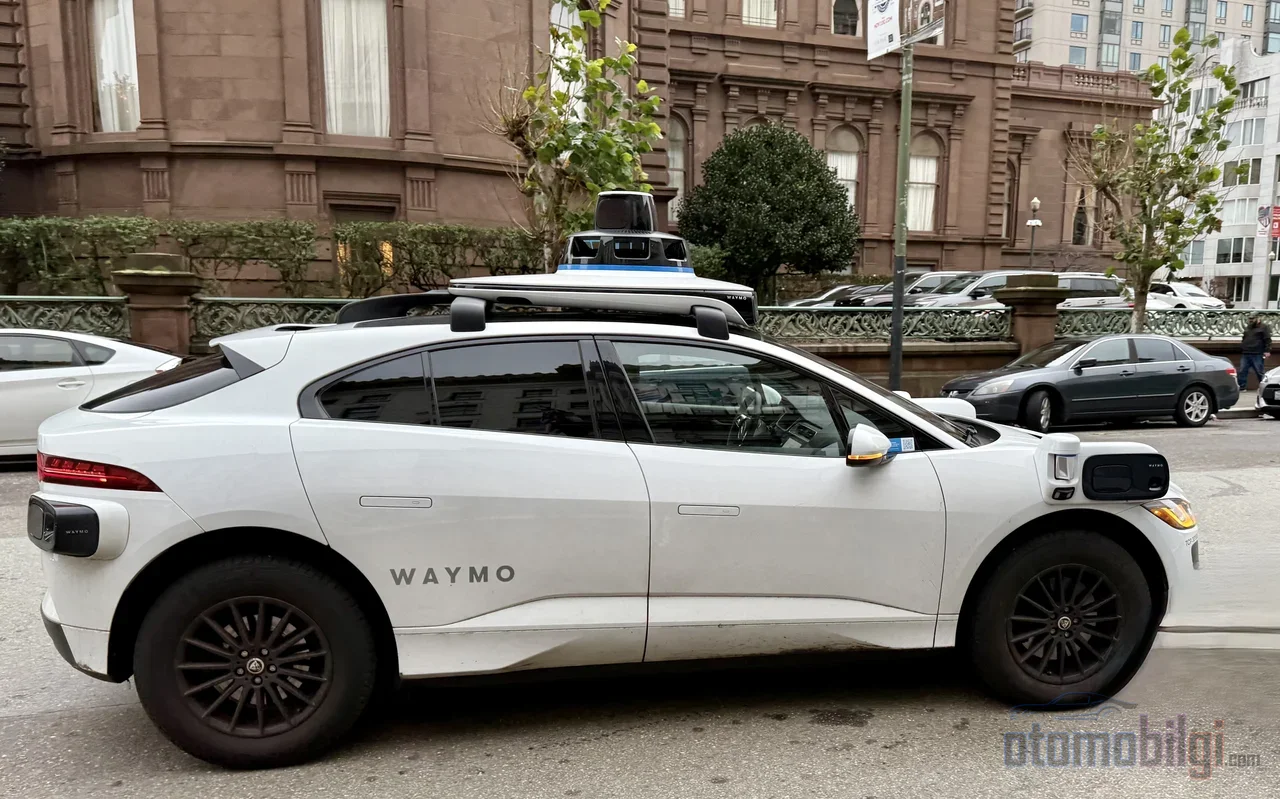
Think of it this way: you open a normal taxi app, enter your destination, the car arrives - but there is no driver in the seat to greet you. The steering wheel turns by itself, the pedals press themselves. You get in, fasten your seatbelt, and the journey begins. It sounds like science fiction, but in the cities where Waymo operates this scenario is an ordinary part of daily life.
For those curious about the technical side: SAE divides autonomous driving into levels from 0 to 5. At Level 0, the driver does everything (which is still the case for most vehicles on the road); at Level 2, the system offers partial automation but your eyes cannot leave the road. Robotaxis are at Level 4: driving without human intervention within a specific area and under specific conditions. Level 5, meaning full automation with no restrictions at all, is a goal that is unlikely to become widespread until 2035, according to the University of Michigan's assessment. So today's robotaxi is a very smart but limited system that operates only in the areas where the map has been drawn.
From the App to the Front Seat: The Journey Step by Step
In Waymo's case the process works like this: you download the app, create an account, hail a vehicle instantly or plan your trip in advance. When the vehicle arrives, you identify it by the two letters you selected in the app. What's inside? A fully electric fleet cleaned every day, the ability to add stops or change your destination during the ride, temperature control, and control of music and podcasts from the screen or your phone. In other words, sitting in the front seat is allowed - because there's no one there to sit in it!
Baidu's Apollo Go operates on a similar model in China: in the first quarter of 2026, 3.2 million fully driverless trips were completed, and in March the weekly trip count exceeded 350,000. The cumulative total has surpassed 22 million trips and more than 330 million autonomous kilometers. The company aims to grow the fleet beyond 3,000 by the end of 2026. These numbers are not speculation; this is already happening and it is scaling.
Where Are Robotaxis Being Used and How Much Do They Cost?
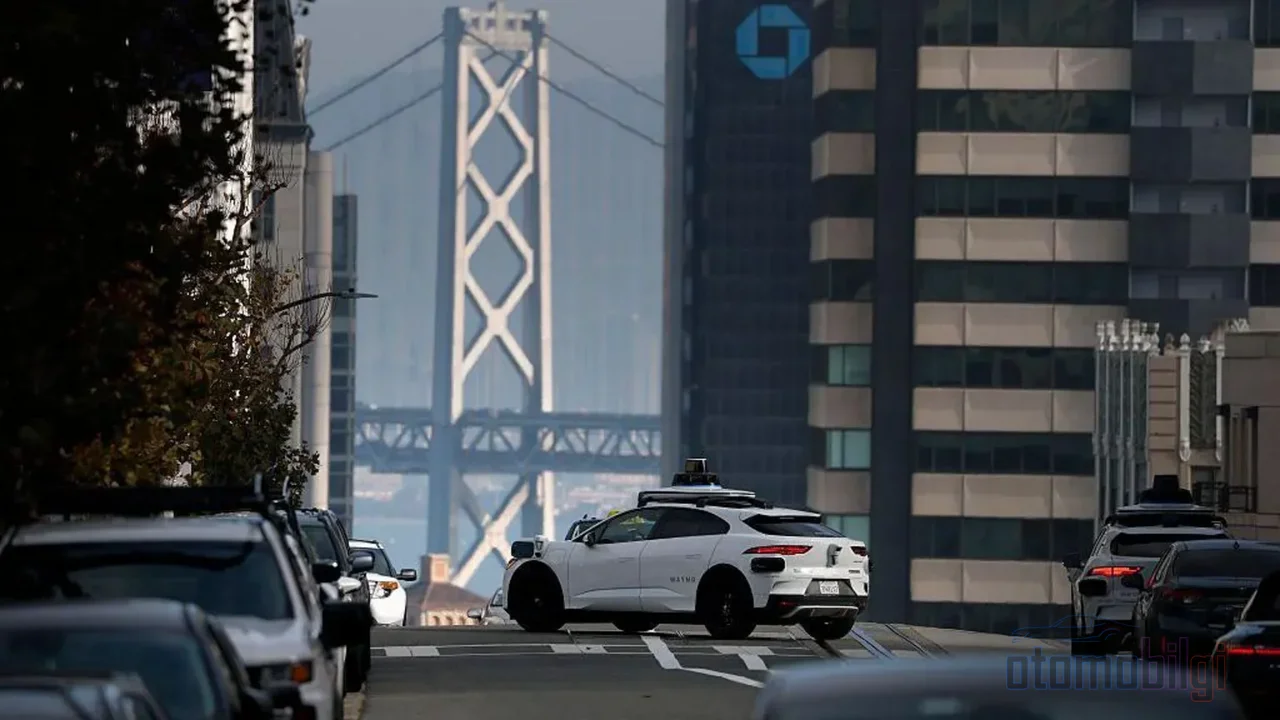
As of today, Waymo's service list includes more than 30 US cities such as the San Francisco Bay Area, Los Angeles, Phoenix, Austin, Miami, Washington DC, New York, and Boston; Tokyo and London are also on the list. Apollo Go, on the other hand, operates mainly in China, serving more than 22 cities; operations began in Hong Kong in August 2026, and Switzerland granted Level 4 robotaxi approval in June.
The question everyone is curious about is pricing. In an example described by a passenger in January 2025, short trips came to 11 and 17 dollars the difference came from surge pricing, i.e., demand-based pricing that kicks in during peak hours. In other words, the classic ride-hailing logic: if everyone wants a car at 6:00 PM, prices go up. In June 2026, Waymo launched Premier, an invite-only membership program open to selected users in San Francisco, Los Angeles, and Phoenix: $29.99/month in exchange for priority vehicle matching, 10% Waymo Cash back on every ride, early access in new cities, and 5 free cancellations per month. On the Apollo Go side, fares are reported to be below normal taxi rates in Beijing, or in the US and Europe.
Now stop and think: if this technology were truly ready for everyone, why an invite-only membership and selected cities? This is exactly where the tension between marketing language and operational reality begins.
What Do the Safety Data Say - And What Don't They Say?
Waymo's own data is impressive: compared to the average human driver over the same distance, there is a 95% reduction in accidents with serious injuries or worse (55 fewer accidents), an 82% reduction in accidents with airbag deployment, and again an 82% reduction in injury accidents. In the figures updated in June 2026, the reduction in accidents with serious or fatal injuries rises to 94%. The company also bases its claim of being "10 times safer than the average human driver" on these rates. Passenger satisfaction, based on 4-5 star ratings, is 93%.
But there is another side to the coin. According to records reported to NHTSA, between July 2021 and November 2025, 1,429 Waymo accidents were reported; there are records of 117 injuries and 2 deaths related to them. In Los Angeles County, Waymo reported 219 accidents in 2025 - more than three times the 69 accidents in 2024. In other words, the absolute number of accidents increases as the number of vehicles grows. The percentage in the company's rate table and the number in the city's incident log do not tell the same story. Johns Hopkins' 2026 assessment also sums up the reality in the middle: driverless vehicles can reduce serious accidents, but more data is needed before widespread use. That is a far more honest sentence than an exaggerated marketing line, in my opinion.
Tesla Robotaxi: Conflicting Numbers
Tesla's Austin fleet recorded 17 incidents in the 9 months from July 2025 to March 2026; the fleet's average speed was only 5.9 mph, meaning an operation almost as slow as walking. That is exactly where the contradiction blows up: while the same NHTSA data reads "no new crashes since January 2026" on Tesla's side, Waymo appears to have added 80 new crashes in the same period. But according to Tesla's own data, robotaxis are crashing at roughly 3 times the accident rate of human drivers even while safety personnel are in the vehicle - by another calculation this ratio goes up to 9 times, while an assessment made according to NHTSA standards shows 8 times. On the other hand, the company says paying customers have traveled 2.5 million miles and completed 380,000 miles of that without an in-vehicle safety officer. Which one is true? Probably neither on its own - the numbers change when the measurement method, distance, and definitions change. What is certain is this: while this data war continues, looking with suspicion is the healthiest approach as a consumer.
What Happens When the System Crashes? The Wuhan Lesson
In early April 2026, in Wuhan, China, dozens of Apollo Go robotaxis stopped on the road, even on highways, on suspicion of a "system failure." Passengers were trapped inside the vehicles and traffic was disrupted; police announced in a preliminary review that more than 100 robotaxis had stopped, and some passengers were reported to have been stuck in vehicles for hours. Roughly translated: the servers glitched and the car locked up while you were in the middle of it.
Can something like this happen in a human-driven taxi? No. Maybe if the driver faints, but the taxis of an entire city do not freeze at the same time. In a robotaxi, however, a single software bug can affect thousands of cars at once - just like an app on your phone crashing, except you are inside that app. This incident alone does not prove the technology is bad; but it is a concrete example showing how fragile the promises of "we are ready everywhere, all the time, in every condition" can be. And yes, the question "what will I do if I get stranded in the vehicle?" is no longer theoretical.
Cruise's Legacy: How Does Hype End?
The most cautionary chapter of the robotaxi story is GM's Cruise. On December 10, 2024, GM announced it was halting Cruise's robotaxi development, citing the costs of driverless ride-hailing, and shifted its resources toward driver assistance features for personal vehicles. The lead-up was also painful: GM froze funding, executives resigned, employees were laid off, and production of the purpose-built vehicle called Origin was halted. The events following the suspension of the license turned into a cautionary tale for the industry.
Why does this matter? Because such a rapid retreat by a giant saying "the future is here" shows how expensive hype can be. On one hand, Natixis's analysis says the robotaxi revolution moved from concept to commercial reality faster than expected, and that pioneers have started generating revenue; the market is expected to reach 174 billion dollars by 2045 is also estimated to be reached. On the other side, an evaluation from the alternative investment camp emphasizes that Tesla's robotaxi story still hasn't moved from promises to pilot deployment, and that Waymo and Chinese leaders are scaling faster today. Both views describe the same market - one focuses on speed, the other on fragility.
What Actually Happens When You Ride as a Consumer?
Now for the curiosity part: are those who ride satisfied? In J.D. Power's 2024 US robotaxi experience study, consumer satisfaction came out at 8.53 out of 10. In Motional's 2022 report, 35% of participants said they would feel safer traveling alone in a driverless vehicle. Awareness is striking: 70% of consumers 70% of know what a robotaxi is, but only 18% of have ridden one. So most of us know this technology, few of us have tried it - a perfect "I'm watching, I still can't dare" situation.
Let me write a few lines summarizing the gap between promise and reality:
- Promise: "10 times safer than a human driver." Reality: Company data shows major improvement, but accident reports in LA tripled and NHTSA records include fatalities.
- Promise: "You can go anywhere." Reality: The service is limited to selected cities and mapped zones; even Tokyo and London aren't on the list yet.
- Promise: "Seamless, uninterrupted transportation." Reality: Over 100 vehicles stopped on the road simultaneously in Wuhan, with passengers stuck inside for hours.
- Promise: "We are scaling." Reality: The Cruise example is proof of how cost and regulation swallowed the hype.
My summary is this: the robotaxi today is a real, usable service that satisfies most of its passengers. But it is also a technology that hasn't yet fully moved beyond its pilot phase, remains in the middle of data debates, and carries systemic risks. Once you ride, you'll probably love it - watching the steering wheel is an indescribable experience. But before believing the sentence "we've finished driving," I suggest reading this four-line promise-versus-reality table once more. Would you ride if it were you? I rode today, and I'd ride tomorrow, but I think I would try not to wonder how the door opens when the system crashes on the highway.
Sources
- Ride-Hailing App - Make the Most of Your Drive
- Waymo - Self-Driving Cars - Autonomous Vehicles - Ride-Hail
- Introducing Waymo Premier, an elevated rider experience
- Waymo Safety Impact
- June 24, 2026 - From the road
- Waymo Accidents | NHTSA Crash Data [Updated 2026]
- As robotaxi accidents increase in L.A., the data reveal the ...
- Apollo Go had a strong start to 2026
- Apollo Go
- Baidu Apollo Go wins Level 4 robotaxi approval in ...
- BIDU, PONY and WRD: In the Driving Seat of China's ...
- Robotaxi Outage in China
- Passengers stranded after robotaxi outage
- GM shuts troubled Cruise robotaxi unit
- How GM's Cruise robotaxi bet derailed
- Tesla's own Robotaxi data confirms crash rate 3x worse
- By Tesla's own math
- Elon Musk made a huge robotaxi promise
- Tesla Robotaxi zero crashes NHTSA
- The Safety Data on Autonomous Vehicles
- Most Consumers Have Positive Experience with Robotaxis
- Riders see promise in robotaxis
- The Tectonics of Robotaxis
- Robotaxi reality check
- SAE Levels of Driving Automation
- Autonomous Vehicles Factsheet